Keith SmithFebruary 01, 2026
© USA Today Sports

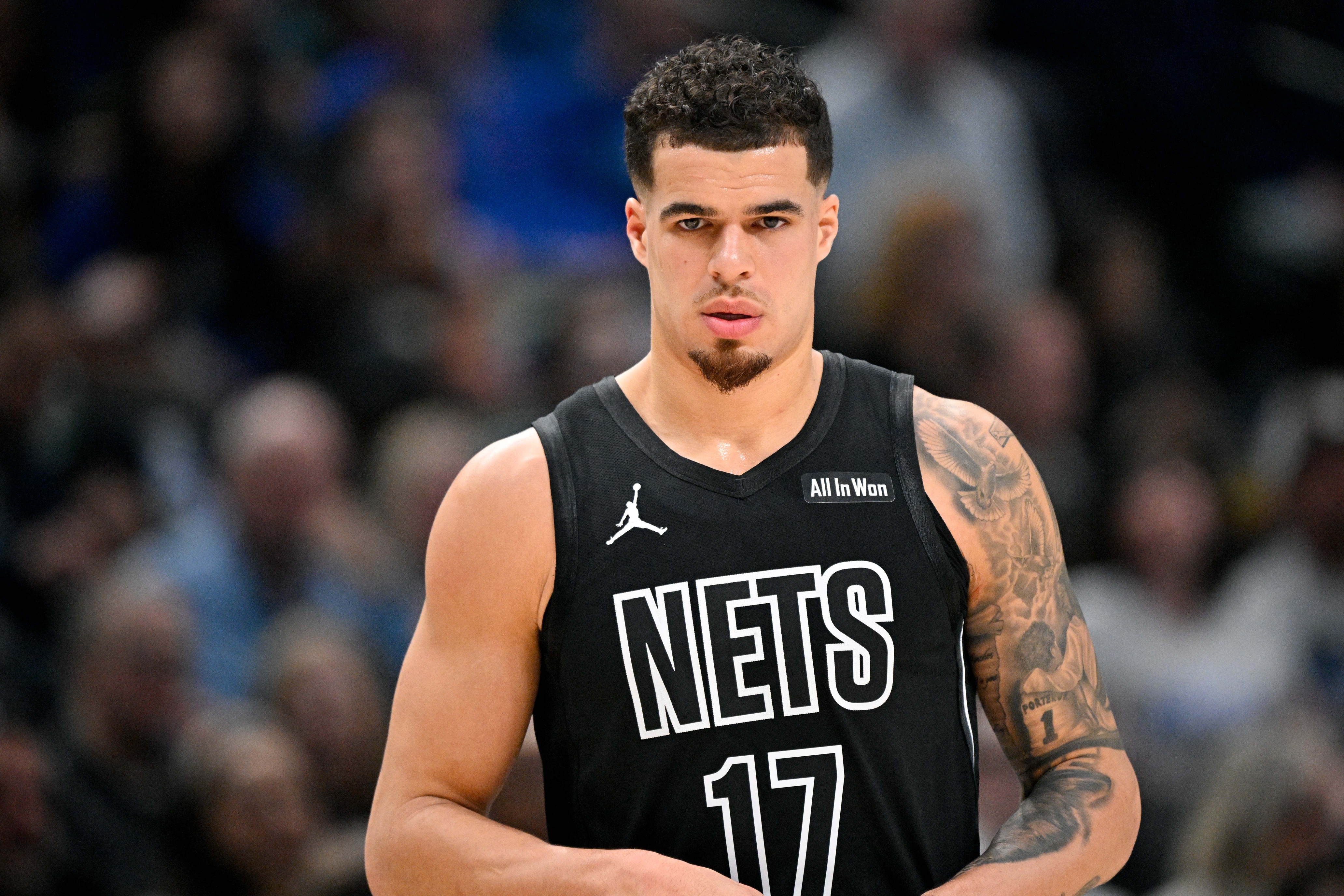
The Atlanta Hawks made their second swap of trade season, sending Vit Krejci to the Portland Trail Blazers for Duop Reath a couple of second-round picks.

Here are the particulars:

Portland Trail Blazers acquire: Vit Krejci

Atlanta Hawks acquire: Duop Reath, their own 2027 second-round pick, 2030 New York Knicks second-round pick

Let’s dive in!

Portland Trail Blazers

Incoming salary: $2.3 million in 2025-26

  • Vit Krejci (SG/SF, three years, $8 million (final season team option)

Outgoing salary: $2.2 million in 2025-26

  • Duop Reath (C, one year, $2.2 million)

Did you know that the Portland Trail Blazers shoot the third-most three-pointers per game in the NBA this season? Did you also know that the Portland Trail Blazers shoot the worst percentage on three-pointers of any team in the NBA this season?

Welcome to Portland, Vit Krejci!

This trade is helpful for Portland and all it cost them was a couple of second-round picks. All due respect to Duop Reath, who had looked like a real backup center, but he’s out for the season and had fallen out of the Blazers rotation. This deal was functionally two seconds for Krejci.

In 46 games this year, Krejci has shot 42.3% on 5.2 three-point attempts per game. He’s averaged 9.0 points in 22.3 minutes per game too. But Krejci isn’t just a catch-and-shoot guy.

At 6-foot-8, Krejci is a good ballhandler and self-creator. He can get his own shot, as well as spotting up or shooting while on the move off screens. He’s a good ball-mover too. In years past, it was thought Krejci might eventually develop into a big point guard, but he’s settled in quite nicely as a wing.

Portland desperately needed someone who was a maker and not just a shooter. They’ve got lots of the latter, and few of the former. Krejci will fill that role, while under team control at a shade above the minimum for the next two season after this one.

Reath had been a nice find by the Blazers front office, and their player development system had done a wonderful job coaching him up. But Reath recently had surgery for a stress fracture in his right foot, and he’ll miss the remainder of this season. Reath had also fallen well behind Donovan Clingan, Robert Williams III and rookie Yang Hansen in the Blazers center rotation.

This seems like a small, around-the-edges move for Portland. But sometimes those pay off huge. This feels like one that the Blazers will be happy they made as their teams grows into a playoff contender.

Atlanta Hawks

Incoming salary: $2.2 million in 2025-26

  • Duop Reath (C, one year, $2.2 million)

Outgoing salary: $2.3 million in 2025-26

  • Vit Krejci (SG/SF, three years, $8 million (final season team option)

When the Hawks acquired Corey Kispert as part of the Trae Young deal, you had the sense that Vit Krejci’s time could be short in Atlanta. There’s a lot of overlap in role and play-style between Kispert and Krejci. And Luke Kennard is still around for some additional bench shooting too.

By sending out Krejci, the Hawks add two more second-round picks. Atlanta now has seven tradable second-round picks to work with, and they’re about $6.8 million under the luxury tax. For a team that’s been active in trade talks, the Hawks have a lot to work with before the trade deadline.

There’s a good chance that Reath will be waived to open up a roster spot. The Hawks could use that to convert Christian Koloko to a standard deal. In the team’s banged-up frontcourt, Koloko has become an every-game contributor. In six games with Atlanta, Koloko has averaged 4.2 points, 3.2 rebounds and 1.2 blocks in 15.7 minutes per game.

Lastly, if Atlanta does an unbalanced trade, they have center N’Faly Dante, who is also out for the season, on the roster. Don’t expect waivers for Reath or Dante before the deadline but, if necessary, the Hawks have the ability to do what they need to create additional roster spots.

Keith SmithFebruary 01, 2026
spotrac

It took a while for trade season to get moving with a second deal, but when it did, we got a three-team trade! The Cleveland Cavaliers began the process of getting under the second apron, while adding backcourt depth. The Sacramento Kings added a combo forward for the future. The Chicago Bulls uncharacteristically jumped in to facilitate and picked up a couple of assets.

Here are the particulars:

Cleveland Cavaliers acquire: Keon Ellis, Emanuel Miller (two-way), Dennis Schroder

Sacramento Kings acquire: De’Andre Hunter

Chicago Bulls acquire: Dario Saric, 2027 Nuggets second-round pick, 2029 least-favorable second-round pick

Let’s dive in!

Cleveland Cavaliers

Incoming salary: $16.4 million in 2025-26

  • Keon Ellis (SG, one year, $2.3 million), Dennis Schroder (PG, three years, $44.4 million (final season $4.4 million guaranteed)), Emanuel Miller (two-way)

Outgoing salary: $23.3 million in 2025-26

  • De’Andre Hunter (SF/PF, two years, $48.2 million)

  • Luke Travers (two-way) waived

The Cleveland Cavaliers pulled off the rare double feat of clearing out some salary while also improving their team. This trade has both immediate impacts and long-term impacts for the Cavs.

De’Andre Hunter’s play has really slipped this season. After being a Sixth Man of the Year candidate last season, Hunter has fallen off to 42% shooting, including just 31% from behind the arc. Maybe it’s a one-year blip, as Hunter had been on an upswing as a shooter, but it came at an awful time for the Cavaliers.

Cleveland has battled injuries all year long. Part of Hunter’s value is that he should have been able to slide into Max Strus’ spot in the rotation without the team missing a beat. Instead, he’s been surpassed in the rotation by Jaylon Tyson. Now, Tyson has a runway to playing more, which is a win for him and the team. Add it all up, and this made Hunter, and the $48 million he’s owed through next season, a logical trade candidate for the Cavs.

Dennis Schroder and Keon Ellis should pay immediate dividends for the Cavaliers backcourt. As of this writing, Donovan Mitchell is the only healthy and productive playmaker on the roster. Craig Porter Jr. is day-to-day with a knee injury, while Darius Garland is out long-term with a toe injury. Lonzo Ball hasn’t been productive and has fallen out of the rotation. Off-ball, Sam Merrill is back, but he’s dealt with injuries all season. And, as referenced above, Strus remains out, as he recovers from a foot injury.

Schroder has his foibles, but he’s a reliable veteran playmaker and scorer. He’ll help take some of the pressure off Mitchell. Ideally, Schroder will help the Cavs offense from going to pieces when Mitchell is on the bench. Cleveland’s offensive rating drops by nearly nine points when Mitchell is off the floor.

Ellis will help by giving the Cavs a 3&D component they’ve lacked since Isaac Okoro was traded. Okoro wasn’t perfect, but he was the best 3&D player that Cleveland had. Ellis will step into that role. His shooting has slipped this year, but context is important here. All season long, Ellis’ role and playing time have been all over the place. He goes from playing a lot to not playing at all to being yanked in and out of games. It’s been impossible for him to find any kind of rhythm.

Emanuel Miller is coming in to satisfy the Chicago Bulls need to send something out in this three-team trade. Miller has seen very little NBA action in his two-year career, and his G League production has been mixed. The Cavaliers are waiving Luke Travers to open up the spot for Miller. This is probably a wash in terms of on-court value and production.

In terms of the bookkeeping, the Cavs win there too. They saved $6.9 million in salary in this deal. Because Cleveland is a second-apron team and deep into the tax, that results in more than $44 million in luxury tax savings. Altogether, the Cavaliers will knock just over $51 million off their books in salary plus tax penalties.

Long-term, Cleveland gets out of Hunter’s $24.9 million for next season too. Some of that savings will be taken up by the $14.8 million that is owed to Schroder for 2026-27. In addition, Cleveland is expected to pursue an extension with Ellis. On February 9, Ellis will be eligible for a three-year extension worth up to $52 million. He may not see that much, but expect Cleveland to keep Ellis in the fold on a new deal.

The second-rounder the Cavs gave up is a 2027 second from the Denver Nuggets. Cleveland still has three more tradable seconds in their cache (their own in 2026, 2028 and 2032).

Last thing to keep an eye on for Cleveland is roster spots. The roster is now full with 15 players on standard contracts. That means that there is no room to convert/sign two-way player Nae’Qwan Tomlin to a standard deal. Expect that to be rectified by the deadline, as Tomlin is a regular rotation guy for the Cavs. With the backcourt now strengthened, Lonzo Ball’s pseudo-expiring $10 million contract could be on the move. If Cleveland can get off Ball’s deal without salary coming back, that would save them another $65 million in salary plus tax penalties.

Sacramento Kings

Incoming salary: $23.3 million in 2025-26

  • De’Andre Hunter (SF/PF, two years, $48.2 million)

Outgoing salary: $21.8 million in 2025-26

  • Keon Ellis (SG, one year, $2.3 million), Dario Saric (PF/C, one year, $5.4 million), Dennis Schroder (PG, three years, $44.4 million (final season $4.4 million guaranteed))

The Sacramento Kings are the NBA’s preeminent sadness factory and this trade does little to change that. De’Andre Hunter is a good and helpful player, assuming this year’s shooting dip is a one-year blip and not the start of a slide. But this really doesn’t do a lot for the Kings on the court, hurts the cap sheet next year and is a disappointing return for Keon Ellis.

On-court, Sacramento is said to be excited about teaming Hunter with Keegan Murray in a versatile, interchangeable forward pairing. That’s a fair thing to be positive about. Murray now has a defensive partner, and one who has shown the ability to slide down and cover bigger guards. If Hunter gets his shot back on track, and history tells us that he will, that’s a good set of forwards moving forward.

The Kings lose backcourt depth and production in this deal with Ellis and Schroder headed out. Trading the two guards opens up even more of a runway for rookie Nique Clifford to play, but that was already happening. Ellis’ playing time and role were inconsistent all season, as the fourth-year guard never found a real role under Doug Christie.

Schroder will be a loss in terms of ballhandling and playmaking. He’s been inefficient as a shooter, but he’s still a solid volume scorer and creator to have off the bench or in the starting lineup. However, the Kings roster still seems in flux, so we’ll see what happens next with the backcourt.

It’s there where we have to pause and preach a little patience. Sacramento is tied to countless trade reports involving just about everyone on the roster except for Murray, Clifford and rookie center Maxime Raynaud. It’s hard to always sell hope, but we do have to see what comes next. This deal could be the first in a series that reshapes the roster.

The challenge is that when you are pivoting towards rebuilding, you really don’t want to take on money, unless you are paid to do so. The Kings didn’t receive any kind of draft capital in this deal to taking on about $10.1 million in additional salary for 2026-27. That will have Sacramento nudging up against the luxury tax next season, when you factor in a hopefully high draft pick and filling out the roster.

It’s kind of a neutral thing, but the second-round pick Sacramento gave up is a 2029 second that is the least-favorable of the Detroit Pistons, Milwaukee Bucks and New York Knicks. There’s a good chance that pick won’t be very good. You don’t want to be in the business of just giving picks away, but this shouldn’t hurt the Kings too much.

That leads to the next challenge here…Sacramento was said to be asking for a first-round pick for Ellis in trade talks. Going from looking for a first to giving up a second is either a mistake in execution or valuation. Either way, it’s not a good look for the Kings.

To finish on a positive, Sacramento now has the roster opening to convert two-way player Dylan Cardwell to a standard contract. The rookie big man has been a nice find for the Kings this season. He’s averaged 4.7 points, 7.1 rebounds and 1.7 blocks in 19.8 minutes per game. Sacramento’s defensive rating improves by nearly 11 points when Cardwell is on the court. For a team that struggles with interior defense, Cardwell has been an outstanding pickup. Look for the Kings to use some of the Non-Taxpayer MLE to give the rookie big man a multi-year deal.

Chicago Bulls

Incoming salary: $5.4 million in 2025-26

  • Dario Saric (PF/C, one year, $5.4 million)

Outgoing salary: None

  • Jevon Carter waived

  • Emanual Miller (two-way) traded

The Chicago Bulls have long-been criticized for the reluctance to take on salary in exchange for draft capital. The Bulls didn’t hit a homerun here or anything, but it’s a small step forward towards maybe a new era of roster management in Chicago.

The Bulls will take on the $5.4 million owed to Dario Saric, while eating the $6.8 million owed to Jevon Carter in this deal. Chicago is using most of their Traded Player Exception from when they dealt Zach LaVine to the Sacramento Kings to bring in Saric. The Bulls were over $13.6 million from the luxury tax, so taking on the additional salary for Saric doesn’t burden them at all.

Given that roughly half of Saric’s contract has already been in actual dollars by the Kings, the Bulls essentially bought two second-round picks for the price of about $2.5 million. Given that the going rate for second-round picks at the draft has landed anywhere from $1.5 million to $3 million in recent years, this is good work by Chicago.

The Bulls are getting a 2027 Denver Nuggets second-round pick from the Cleveland Cavaliers and a 2029 least-favorable second-round pick (Detroit Pistons, Milwaukee Bucks or New York Knicks) from the Kings to facilitate this deal. Even if neither pick pans out to be very good, it’s additional draft capital for the Bulls.

Saric has no real on-court value for Chicago. He may be waived to open up a roster spot when all is said and done. Jevon Carter rarely played in a deep backcourt. His loss will be felt more as a locker room voice than on the floor. And Emanuel Miller had rarely played in the NBA over two seasons, so there’s no production lost there either.

On the cap sheet for next season, there is no impact as Saric is on an expiring deal. We still projected the Bulls of have over $33 million in cap space this summer. It’s an uncharacteristic move from Chicago and one we haven’t seen in a while. It may be baby steps, but it’s still progress!

Bella MunsonFebruary 01, 2026
© USA Today Sports

Draft picks

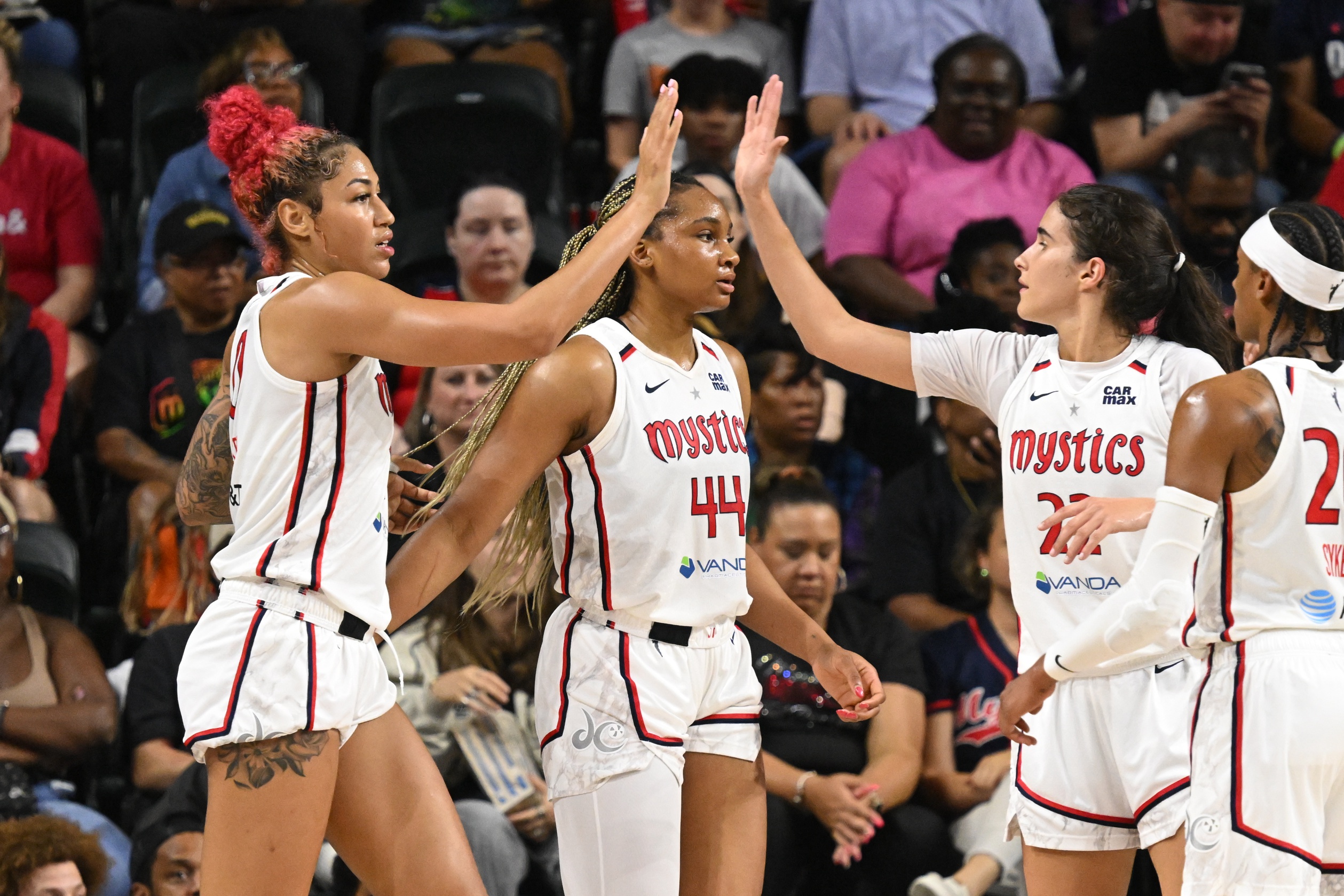
The Washington Mystics finished 2025 with a 16-28 record and in 10th place. It was a better performance than was expected, but it still put them in the draft lottery. As a result of the lottery and some auspicious trades, the Mystics have three picks in the first round of the 2026 WNBA Draft — their own, No. 4 overall, Seattle’s at No. 9 and New York’s at No. 11. Washington also has an extra second-round pick from their 2024 trade of Myisha Hines-Allen, so they’ll pick No. 19 and No. 30. Lastly, they retained their own third round pick, No. 34 overall, for a total of six picks in the upcoming draft. All this is good news for a team that began overhauling itself with youth last year and is looking to continue building through the draft.

Under contract

The Washington Mystics have a lot of young, cost-controlled depth, but the crown jewels are undoubtedly 2025 WNBA All-Stars Sonia Citron and Kiki Iriafen. After stellar rookie seasons, they are under contract for an unprotected $80,408 each. Citron could be a No. 2 option on a true contender — she broke the Mystics’ rookie season scoring record set by Chamique Holdsclaw in 1999 — and Iriafen looks like a quality big for years to come.

Georgia Amoore was Washington’s third first-round pick in 2025, picked No. 6 overall out of Kentucky, but missed the entire 2025 season after injuring her ACL on just the third day of training camp. The 5’6 point guard will be a 25-year-old rookie coming off an ACL tear, so it is hard to predict what her play will look like in 2026. She averaged 19.6 points, 6.9 assists, 2.3 rebounds and 1.0 steals per game in her fifth and final collegiate season. If her potential as the team’s long-term point guard comes to fruition, she is under contract for only $77,156, unprotected.

Lucy Olsen was comparably picked much later in the same draft, No. 23 overall, but had some impressive moments and played well above her draft slot. The 5’10 guard averaged 4 points, 1.2 rebounds, 1.2 assists in just 12.4 minutes per game with an effective field goal percentage of 47.5%. Outside of her solid performances, Olsen’s teammates and coaches praised her for staying ready, putting in extra work and continuing to support her teammates even as her minutes fluctuated throughout the season. Her $70,653 unprotected salary is the team’s cheapest contract.

The Mystics acquired second-year guard Jacy Sheldon in August via a trade that sent Aaliyah Edwards to the Connecticut Sun. This is Sheldon’s third team in two WNBA seasons, but the 25-year-old is a talented shooter and defender. Unfortunately, after playing 28 games for Connecticut — where she averaged 7.5 points, 1.9 rebounds, 2 assists and 1 steal in 24.1 minutes per game, shooting 47.0% from the field and 41.2% from 3-point range — she played just two games for Washington, then missed the remainder of the season to injury. The Ohio State product is under contract for an unprotected $82,399.

Extension candidate

Sheldon is Washington’s only player under contract not coming off their rookie season, so, during this offseason (pending CBA changes), Washington has to make a decision about the fourth-year team option on her contract. If the team does not exercise its option, Sheldon would become an unrestricted free agent after the 2026 season. The fourth-year option would pay $93,636 and be fully protected. Acquiring Sheldon at the cost of Edwards indicates that the Mystics had a firm belief in Sheldon’s potential impact. So, it is a smart move to keep her under low-cost, team control for another year.

Contracts

  1. Jacy Sheldon - $82,399

  2. Sonia Citron - $80,408

  3. Kiki Iriafen - $80,408

  4. Georgia Amoore - $77,156

  5. Lucy Olsen - $70,653

Value of all protected contracts: $0
Value of all contracts: $391,024

Unrestricted free agents

Compared to many other teams, Washington has very few unrestricted free agents — just Stefanie Dolson, Alysha Clark and Jade Melbourne. Two experienced, accomplished veterans and one of the league’s youngest players.

Dolson, a 6’5 center who was a 2021 WNBA Champion with the Chicago Sky, had a down year. With Iriafen’s quick adjustment to the WNBA and Shakira Austin returning from injury, Dolson rarely played more than 20 minutes a game and averaged a career low 3.7 points per game, plus 2.3 rebounds and 1.4 assists, less than her career average of 4.4 and 1.8. As a strong big who can also stretch the floor with her 3-point shot, Dolson is a great veteran to have on your team. But now 34 years old, she may not fit into Washington’s rebuild plans and look for more playing time elsewhere.

Clark is a similar story. The league’s oldest player at 38 years old, Clark returned to Washington via a midseason trade that she requested after having signed with Seattle in free agency ahead of the 2025 season. Clark had previously played for the Mystics when she joined as a free agent in 2021, after winning the 2018 and 2020 WNBA Championships with the Seattle Storm. Following two years in Washington, she spent two years in Vegas, winning WNBA Sixth Player of the Year and another championship in 2023. Unquestionably an experienced winner, the lockdown defender was, however, overpaid in 2025 given her playing time, which did increase in Washington after a sharp decrease in Seattle. Given that a desire to play and be utilized reportedly motivated her trade request, the same desire will likely shape where she decides to sign in free agency.

Free agent spotlight

Still just 23 years old and entering her fourth WNBA season, Melbourne is a young yet experienced point guard worth keeping around. The Australian already has a bronze medal from the 2024 Paris Olympics, where she was named the tournament’s Rising Star after starting all six games for Australia and averaging 7.0 points, 2.8 assists, 1.7 rebounds and 1.2 steals per game. Averaging the most playing time of her WNBA career in 2025 (23.4 minutes per game), the 5’10 guard’s averages of 5.9 points, 1.9 rebounds and 2.9 assists per game, shooting 40% from the field, aren’t exactly eye-popping, but they are solid. Pacey, creative and aggressive to the basket, Melbourne is likely to continue to improve and could add to the team’s young core.

Restricted and reserved free agents 

Washington has two restricted free agents, Sug Sutton and Shakira Austin, and two reserved free agents, Emily Engstler and Madison Scott. Both distinctions only become official when a Qualifying Offer (QO) is sent to the player, otherwise they become an unrestricted free agent.

If a QO is extended to a restricted free agent, the player can negotiate an offer sheet with a team other than their last team. However, that player’s prior team has a “Right of First Refusal” by matching the offer sheet. If the team matches the offer sheet, which must be for a multi-year contract, the player signs a contract with their original team on the terms agreed upon with the new club. If a QO is extended to a reserved free agent, however, the player is subject to that team’s exclusive negotiating rights.

The biggest question the Mystics will have to answer is how much Austin and Sutton are worth. Austin will be the player they should be most keen on retaining as her return to something close to full health reminded everyone that she is ideally part of Washington’s future, looking at an Iriafen-Austin post pairing for years to come. However, there are injury concerns with Austin, who played just 19 games in 2023 and 12 in 2024. They may hope to avoid paying Austin too much given that history, but they might not have a choice if another team is willing to take the risk on her.

Sutton is not as big a priority, but she did have a solid year after being thrust into a much bigger role than expected before Amoore’s injury. In 2025, the 5’8 guard appeared in all but one game for Washington, averaging 7.4 points, 1.8 rebounds and 3.9 assists per game shooting 42.2% from the field and 35.3% from beyond the arc.

Engstler should receive a reserved qualifying offer and continue to provide post depth in Washington. Though she is just 6’1, she plays bigger than she is with toughness and spaces the floor with her 3-point shooting. The No. 4 overall pick in 2022, Engslter had a winding WNBA career before finding a spot in D.C., where she has been a strong contributor and a good player to keep under team control.

There is no harm in Washington extending a reserved qualifying offer to Scott as well, as the money is unprotected, and she could be cut later. However, she only played 47 minutes across nine games. So the decision likely depends on whether they still see a potential future in the WNBA for Scott after such minimal impact as a rookie.

Analysis

After trading away Ariel Atkins and Karlie Samuelson in the preseason and later Britney Sykes midseason, for draft equity, it looked like it would be a rough rebuilding year in Washington. Instead, the new era got off to a promising start. They were fun to watch with Austin and Iriafen inside and Citron on the perimeter, and were in solid playoff contention until the final weeks of the season.

Similar to the other teams that missed the playoffs in 2025, Washington has a wealth of young talent on rookie-scale contracts and ample funds to spend in free agency, should players be interested. They don’t have quite as much top-tier talent as Dallas or Los Angeles, but they do have good depth and have been historically a more attractive destination in free agency. Plus, their young core should help attract free agents who’ll know players like Citron and Iriafen can help them win. However, playing in an arena that sits just 4,200 isn’t the most appealing; it is a margin that will likely be increasingly important as standards rise across the league.

Given the youth already on the team (and what will likely be more youth coming in through the 2026 draft unless they trade picks away), Washington general manager Jamila Wideman will want some veteran signings who can help lead the young players without limiting their growth. A veteran point guard could be particularly useful if Amoore struggles to adapt after returning from injury. And if Washington really wants to contend, they’ll be looking for a true No. 1 option in free agency or hope they get that quality with the No. 4 overall pick, which isn’t impossible, but it is unlikely. Another wing to complement Citron would be ideal, and there are plenty of strong free agent options — like Jackie Young, Allisha Gray and Kelsey Mitchell — but every team will want to sign them, and there is no guarantee they are interested in leaving their current teams.

Overall, soon-to-be second-year head coach Sydney Johnson and the Washington Mystics are in a solid spot for 2026, but can’t get ahead of themselves so early in the rebuild process.

Note: This will be updated accordingly with salary cap details and any relevant definitional changes when a new Collective Bargaining Agreement is signed.

Bella MunsonJanuary 31, 2026

The WNBA and WNBPA are set to meet in person on Monday, Feb. 2, for the first time since the fall. This meeting comes after the parties had not agreed to an extension or new CBA by the already extended Jan. 9 deadline and entered a “status quo” period. Since Jan. 10, the working conditions of the former CBA have been maintained, but anti-strike and anti-lockout clauses in the now-expired CBA have been lifted, giving either side the ability to initiate a work stoppage. Both sides reportedly agreed to a moratorium on league business though, halting the initial stages of free agency in which teams would have delivered qualifying offers and core designations to players from Jan. 11-20.

However, CBA talks have reportedly been at a standstill for weeks. The WNBPA submitted a proposal a month ago that the league has not yet officially responded to. The league believed it didn’t warrant a response because it wasn’t that different from previous ones the union had submitted. ESPN reported that the league is waiting for the players to submit a more “realistic” proposal. 

Revenue sharing and related salaries continue to be a sticking point. We previously broke down the revenue-sharing debate and other potential issues.

Despite the lack of CBA, the WNBA released the full 2026 schedule on Jan. 21. The regular season is scheduled to begin May 8 — less than 100 days away. And before the league’s milestone 30th season can begin, it still needs to host a two-team expansion draft and unprecedentedly large free agency. The WNBA college draft is scheduled for April 13. 

The WNBA players are prepared to strike if an agreement can’t be met, as they already voted to authorize the WNBPA executive committee to call a strike when they deemed necessary on Dec. 18.

WNBPA first vice president Kelsey Plum told reporters that she is not entering Monday’s meeting with any expectations. However, hoping to avoid “games of telephone,” this is an important last-chance effort. Plum, WNBPA president Nneka Ogwumike, WNBPA vice presidents Napheesa Collier and Breanna Stewart will be in attendance, The IX Sports reports. The players are hopeful that owners will also join the meeting.

“I’m not trying to put it on the meeting, but this is a meeting that I think everyone understands what’s at stake,” Plum said. “The league has their timelines; we as players understand what’s at stake. I always come into anything that I do with a great attitude, and I’m gonna see the best in this.”

Keith SmithJanuary 29, 2026
© USA Today Sports

The 2026 NBA trade deadline is a week-and-a-half away.  The trade market has been slow to get started this season. We’ve seen only Trae Young traded from the Atlanta Hawks to the Washington Wizards for C.J. McCollum and Corey Kispert. There have been other reports of trade talks, but nothing else has gotten done as of this writing.

We’re now a week out from the deadline, so things should start picking up. Teams that insisted on multiple first-round picks for their players come down to a single first-round pick, while their partners in trades come up from offering a couple of second-rounders to offering that single first-rounder. As desperation increases, so does reasonability in trade talks.

We covered the Eastern Conference earlier this week. Here’s where each of the Western Conference teams sits ahead of the deadline. We’ll be looking at the following:

  • How much space the team has under the cap or luxury tax. And for the apron-impacted teams, we’ll call out how much room they have under the first or second apron.

  • What usable Traded Player Exceptions (TPEs) they have. This will also include any money left in the Non-Taxpayer, Room or Bi-Annual Exception that can be used as a TPE. Reminder: TPEs can’t be aggregated together or with outgoing salary!

  • What tradable draft picks teams have to offer. We’ll run through the first-round picks, while giving a count of tradable second-round picks.

  • If the team is expected to be a Buyer, Seller, Either or Neither at the deadline. Everyone has different goals and we’ll analyze where each team stands.

  • Which player is most likely to be traded. Some might be stars, some might be salary dumps, most will fall in between. We’ll pick someone from every team.

Dallas Mavericks

Cap/Tax/Apron Picture: $1.2 million under the second apron

Notable Traded Player Exceptions: $11 million (Maxi Kleber), $4.3 million (Quentin Grimes)

Draft Pick Situation: Dallas owns their own first-round pick in 2026, 2031 and 2032. However, because the Mavs owe a top-2 protected pick to the Hornets in 2027, the 2026 pick can’t be traded due to the Stepien Rule. Dallas also owes a pick in 2029, as well as least-favorable swap rights in 2028 and 2030. The Mavs do have an incoming Lakers pick in 2029. 

The Mavericks have two tradable second-round picks.

Trade Deadline Strategy: Neither Buyers nor Sellers. It no longer feels very likely that Anthony Davis gets moved ahead of the trade deadline. Dallas has set high prices on players like Naji Marshall and Max Christie, so they’ll probably stick too. As far as buying, the Mavs seem motivated to make the most of this draft pick, since it’s the last one that they have control over for a while.

Most Likely to be Traded: Dante Exum. This would be a straight salary-dump to open a roster spot to convert Ryan Nembhard or Moussa Cisse to a standard contract.

Denver Nuggets

Cap/Tax/Apron Picture: $402,059 over the luxury tax, $2.8 million under the first apron

Notable Traded Player Exceptions: $14.1 million (Non-Taxpayer MLE), $6.8 million (Michael Porter Jr.), $5.4 million (Dario Saric), $5.1 million (Bi-Annual Exception)

Draft Pick Situation: The Nuggets have their own first-round pick in 2026 and 2031. They owe two separate top-5 picks to the Thunder in as early as 2027 and 2029. That means the Nuggets will likely have their own picks in 2028 and 2030. Denver also owes their 2032 pick to Brooklyn. All of the owed picks make it hard for Denver to include outgoing first-round picks in any trades.

The Nuggets have one tradable second-round pick.

Trade Deadline Strategy: Either Buyers or Sellers. Denver will look to add some talent if they can, but it won’t be any kind of blockbuster. The Nuggets would like to get another helpful rotation player while getting off some salary. At the very least, Denver will salary-dump a player to get under the luxury tax line by the deadline.

Most Likely to be Traded: Hunter Tyson. This may be the single most-likely player to be traded by the deadline. Tyson isn’t a rotation guy for Denver and trading him would get the Nuggets under the tax.

Golden State Warriors

Cap/Tax/Apron Picture: $11.6 million over the first apron, $264,372 under the second apron

Notable Traded Player Exception: $8.8 million (Kyle Anderson)

Draft Pick Situation: The Warriors own their own first-rounders in every season but 2030. In 2030, Golden State has a top-20 protected first, with Washington getting that pick if it lands 21-30.

The Warriors can trade only the 31-50 portion of their 2032 second-round pick, as far as tradable seconds go.

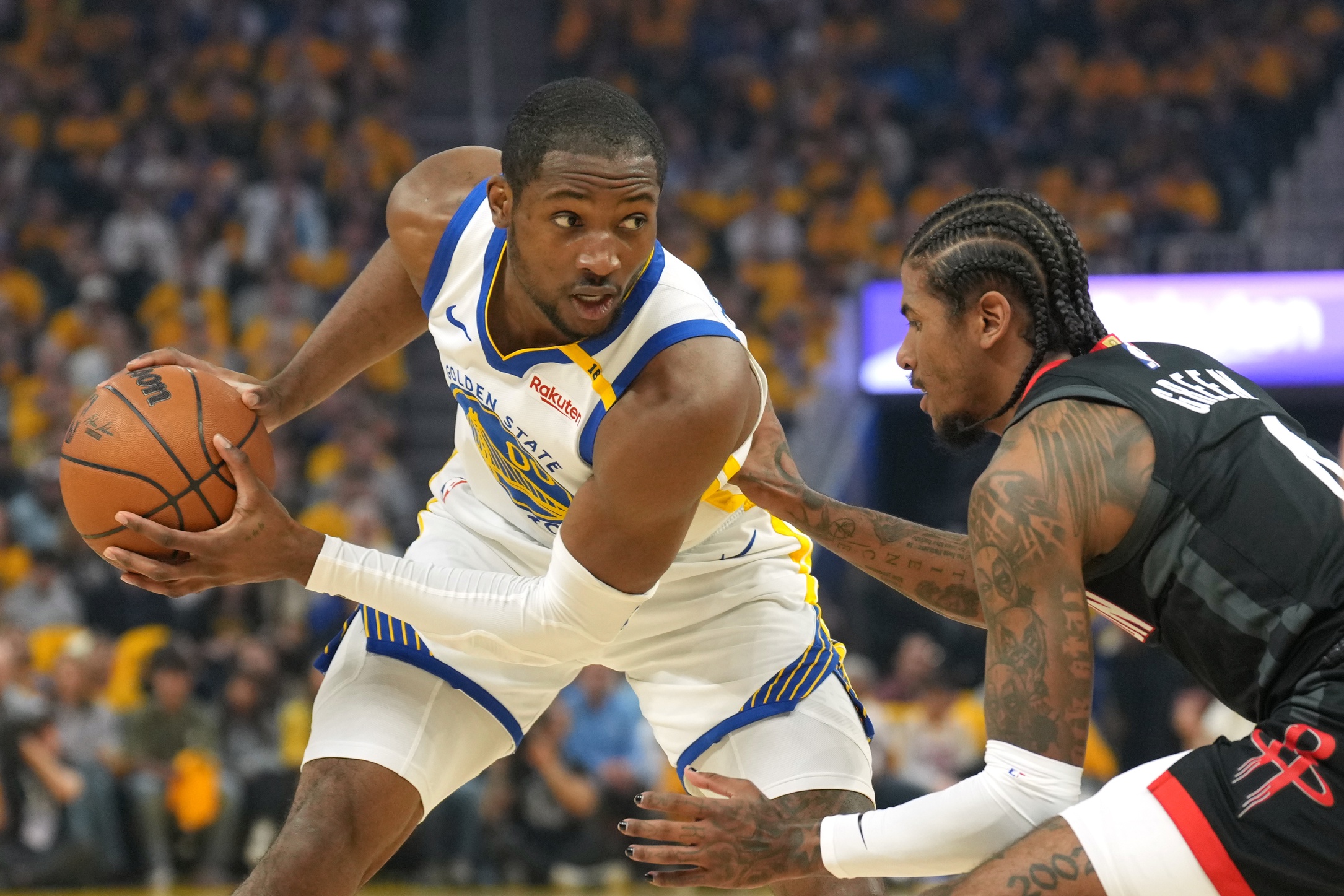
Trade Deadline Strategy: Buyers. The sense is that Golden State is committed to making the most of whatever years they have left with Stephen Curry. Jimmy Butler is out for the season, but the Warriors have Jonathan Kuminga’s pseudo-expiring contract to trade. Golden State also has draft capital that they could put into trades, as well as a few interesting younger players.

Most Likely to be Traded: Buddy Hield. Both the Warriors and Jonathan Kuminga would like if this was Kuminga. But the market has been there for Kuminga, and he’s now injured. That leaves Hield, who is on a tradable $9.2 million contract, with only $3 million guaranteed next season, as the guy who Golden State is most likely to move if they make a deal.

Houston Rockets

Cap/Tax/Apron Picture: $6.8million over the luxury tax, $1.2 million under the first apron

Notable Traded Player Exceptions: $12.5 million (Disabled Player Exception - Fred VanVleet), $3.5 million (Cam Whitmore)

Draft Pick Situation: Houston has their own first-round picks in 2028 and 2030-2032. They have most-favorable swap rights in 2027 (with Brooklyn) and the two most-favorable picks in 2029 (with Brooklyn, Dallas and Phoenix). The Rockets owe a top-4 protected pick to the Thunder in 2026.

Houston has at least four tradable second-round picks.

Trade Deadline Strategy: Buyers. The Rockets will look to add some rotation help, especially in light of losing Steven Adams for the season. Don’t expect a blockbuster though. It would more likely be a move or two to firm things up for the playoff rotation.

Most Likely to be Traded: Jeff Green. Houston may do at least a salary-dump to create more wiggle room under their first-apron hard cap. That would allow for a buyout addition, while also leaving room to convert a player from a two-way contract, likely J.D. Davison.

LA Clippers

Cap/Tax/Apron Picture: $6.9 million over the luxury tax, $1.1 million under the first apron

Notable Traded Player Exceptions: $6.5 million (P.J. Tucker), $4.1 million (Bones Hyland), $2.7 million (Disabled Player Exception - Bradley Beal)

Draft Pick Situation: The Clippers have their own first-round picks from 2030-2032. They have a least-favorable pick in 2027 and a top-3 protected swap in 2029. LA owes their 2026 and 2028 first-round outright.

The Clippers have at least two tradable second-round picks.

Trade Deadline Strategy: Buyers. In the midst of an incredible in-season turnaround, the Clippers will look to add to their roster if they can. One caveat: LA isn’t looking to take on money that extends past next season, at the most. That will self-limit their market to some extent.

Most Likely to be Traded: Chris Paul. If his contract isn’t included in a bigger deal, Paul will likely be salary-dumped to free up a bit more spending power under the Clippers first-apron hard cap. LA wants to convert both Jordan Miller and Kobe Sanders to standard contracts, as well as leaving room for a potential buyout addition.

Los Angeles Lakers

Cap/Tax/Apron Picture: $7.1 million over the luxury tax, $977,225 under the first apron

Notable Traded Player Exceptions: None

Draft Pick Situation: The Lakers have their own first-round picks in 2026, 2028, and 2030-2032. However, because of picks they have outgoing, Los Angeles can’t trade their 2026, 2028 or 2030 first-round picks due to the Stepien Rule. The outgoing picks are a top-4 protected first to Utah in 2027 and 2029 first to Dallas.

The Lakers have one tradable second-round pick.

Trade Deadline Strategy: Buyers. Much like the crosstown rival Clippers, the Lakers are looking to add to their roster. But they also don’t want to take on money. For the Lakers, they’re being even more conversative, as they don’t want to take on salary that extends past this season, unless that player is a long-term fit on the roster.

Most Likely to be Traded: Maxi Kleber or Gabe Vincent. There’s a good chance that Los Angeles will do something with either Kleber or Vincent, because both are on expiring deals that are very tradable. It’s possible both could be on the move before the deadline.

Memphis Grizzlies

Cap/Tax/Apron Picture: $15.8 million under the tax

Notable Traded Player Exceptions: None

Draft Pick Situation: The Grizzlies have all of their own first-round picks. That includes most-favorable swaps in 2026, 2029 and 2030. Memphis also has additional first-round picks coming in 2026 and 2030.

The Grizzlies have at least four tradable second-round picks.

Trade Deadline Strategy: Neither Buyers nor Sellers. Maybe the Grizzlies move Ja Morant, but that seems to have cooled way off. Keeping Morant means that Memphis will probably keep most of the rest of the roster too. Maybe they make a smaller move, but they have no tax concerns to worry about this season, and the Grizzlies are too far away to go for a big addition.

Most Likely to be Traded: Ja Morant. We’re going with Morant, only because he’s been involved in trade rumors for a while now. But the real answer here is no one. Memphis has a lot of guys on rookie deals, or team-friendly contracts. With no real reason to make a big move, the Grizzlies will probably sit out the deadline.

Minnesota Timberwolves

Cap/Tax/Apron Picture: $14.7 million over the tax, $8.3 million over the first apron, $3.6 million under the second apron

Notable Traded Player Exception: $7.6 million (Nickeil Alexander-Walker)

Draft Pick Situation: The Timberwolves have their own first-round pick in 2028 and 2032, but that 2032 pick is frozen and can’t be trade. Minnesota has a least-favorable pick in 2026. They have a top-5 protected pick in 2029 and top-1 protected swap in 2030. The Wolves owe their 2027 and 2031 picks outright to other teams.

Minnesota has at least six tradable second-round picks.

Trade Deadline Strategy: Buyers. The Wolves are looking for rotation help. They’d love to land some backcourt depth and have been linked to a lot of available guards in various trade rumors. They don’t have a lot of room under the second apron, and won’t go back over it. That means a blockbuster move probably isn’t in the cards for Minnesota, even if they’ll take a look at any star that become available.

Most Likely to be Traded: Rob Dillingham. This would be selling very early on Dillingham, but if the Wolves are bringing in help, his $6.6 million salary would be a nice matching piece in a trade. Recent reports are that veteran Mike Conley is going to stick around, so that leaves Dillingham as the only real choice here.

New Orleans Pelicans

Cap/Tax/Apron Picture: $1.9 million under the tax

Notable Traded Player Exceptions: $13.4 million (Kelly Olynyk), $13 million (Brandon Ingram), $6.1 million (remaining Non-Taxpayer MLE), $5.1 million (Bi-Annual Exception)

Draft Pick Situation: New Orleans owns all their own first-round picks from 2028-2032. They have a more-favorable first in 2027, and possible a second first-rounder that year. The Pelicans owe their 2026 first-round pick to the Hawks or Bucks (Atlanta gets the best, Milwaukee gets the worst).

New Orleans has three tradable second-round picks.

Trade Deadline Strategy: Neither Buyers nor Sellers. New Orleans isn’t ready to buy. They’ve sent word that they aren’t selling their most-valuable players either. That leads towards a team that may more or less sit out the deadline.

Most Likely to be Traded: Jose Alvarado. A handful of contenders who need backcourt help have expressed interest in Alvarado, who has a very tradable $4.5 million contract.

Oklahoma City Thunder

Cap/Tax/Apron Picture: $1 million under the tax

Notable Traded Player Exceptions: $14.1 million (Non-Taxpayer MLE), $5.1 million (Bi-Annual Exception), $2.3 million (Disabled Player Exception - Thomas Sorber)

Draft Pick Situation: The Thunder have all of their own first-round picks. They have the two most-favorable picks of their own, the Rockets and the Clippers in 2026. They have protected picks from the Sixers and Jazz in 2026, as well, but only the Philadelphia pick is likely to convey. The Thunder also have future first-round picks incoming from Nuggets (two picks), the Spurs (top-16 protected), and two sets of most-favorable swap rights in 2027 and 2028.

Oklahoma City has at least 15 tradable second-round picks, and up to 20, pending if first-round picks convey.

Trade Deadline Strategy: Neither Buyers or Sellers. The Thunder could buy if they wanted. They could use another big. They could use more ballhandling/shot creation. But those needs aren’t really so glaring that Oklahoma City is likely to make an in-season move.

Most Likely to be Traded: Ousmane Dieng. The Thunder don’t desperately need a roster spot. But if they want to open one, they could salary-dump Dieng using a couple of second-round picks from their stash. That would leave room for a buyout addition, while staying under the tax, or would create a roster spot for a two-way conversion.

Phoenix Suns

Cap/Tax/Apron Picture: $255,632 over the luxury tax

Notable Traded Player Exceptions: $14.1 million (Non-Taxpayer MLE), $5.1 million (Bi-Annual Exception), $3.6 million (Vasilije Micic)

Draft Pick Situation: The only unconditional first-round pick the Suns have is their own in 2032…sort of. That pick is frozen and can’t be traded! Phoenix has a least-favorable pick in 2027, 2028 and 2030. The Suns owe first-round picks in 2026, 2029 and 2031.

Phoenix has three tradable second-round picks.

Trade Deadline Strategy: Buyers. The Suns have played better than most expected. That’s got them in position to add to their team for a playoff run. Don’t expect anything huge though. Phoenix worked hard to get out from under second-apron rubble. But a smaller move or two to add rotation help seems reasonable.

Most Likely to be Traded: Nick Richards. Richards rarely plays, and he overlaps with Khaman Maluach as the third center. Moving him in a deal could also create some wiggle room under the luxury tax, which would allow for a buyout addition or converting a two-way player, likely Jamaree Bouyea.

Portland Trail Blazers

Cap/Tax/Apron Picture: $1.5 million under the luxury tax

Notable Traded Player Exceptions: $5.1 million (Bi-Annual Exception)

Draft Pick Situation: Portland owes a lottery-protected pick to Chicago sometime between 2026-2028. From 2029-2032, the Blazers own all of their own first-round picks, or have most-favorable swap rights. They also have additional incoming first-round picks in 2028 and 2029.

The Trail Blazers have at least seven tradable second-round picks.

Trade Deadline Strategy: Either Buyers or Sellers. Portland is in a bit of a weird spot. They’re pushing for a spot in the Play-In Tournament, but they have a lot of veterans that could fetch them assets. This might be one where the Trail Blazers make moves that rebalance the roster, but don’t amount to really buying or selling.

Most Likely to be Traded: Duop Reath. The Blazers could move someone like Matisse Thybulle or Robert Williams III in a bigger deal, but it’s unclear what will happen there. Salary-dumping Reath would open a roster spot to allow Portland to convert Sidy Cissoko or Caleb Love from their two-way contract. Look for both to eventually land standard deals with the Trail Blazers before the year is out.

Sacramento Kings

Cap/Tax/Apron Picture: $1 million under the luxury tax

Notable Traded Player Exceptions: $14.1 million (Non-Taxpayer MLE), $5.1 million (Bi-Annual Exception), $4.9 million (Jonas Valanciunas), $2.7 million (Kevin Huerter)

Draft Pick Situation: The Kings own all of their own first-round picks. They have additional picks inbound from the Spurs in 2027 (top-16 protected) and the Timberwolves in 2031.

Sacramento has at least three tradable second-round picks.

Trade Deadline Strategy: Sellers. All of the signs point towards Sacramento moving their veterans to start a rebuild. Zach LaVine, Domantas Sabonis, DeMar DeRozan, Keon Ellis and Malik Monk are just some of the guys who could be on the move before the deadline.

Most Likely to be Traded: Keon Ellis. Until recently, Ellis had fallen out of the Kings rotation. He’s on what amounts to a veteran minimum contract, which means just about everyone in the NBA can trade for him. If Sacramento doesn’t demand a haul for Ellis, he’ll move by the deadline.

San Antonio Spurs

Cap/Tax/Apron Picture: $5.6 million under the luxury tax

Notable Traded Player Exceptions: $5.1 million (Bi-Annual Exception), $3.1 million (remaining Non-Taxpayer MLE)

Draft Pick Situation: San Antonio has all of their own first-round picks, outside of their 2027 pick being top-16 protected. The Spurs also have most-favorable swap rights in 2026, 2028, 2030 and 2031 with several different teams.

The Spurs have at least 15 tradable second-round picks.

Trade Deadline Strategy: Neither Buyers nor Sellers. You can make an argument that San Antonio should be buying. They are really good, but could use some help to make a deeper playoff push. But the Spurs seem set on being patient for now and giving this group at least one playoff run before making moves. They aren’t likely to sell anyone off either.

Most Likely to be Traded: Jordan McLaughlin. The answer here is really no one. But if someone was going to go, trading McLaughlin would be the move. San Antonio has a lot of guard depth and could open a roster spot by moving McLaughlin.

Utah Jazz

Cap/Tax/Apron Picture: $43.8 million under the tax

Notable Traded Player Exceptions: $18.4 million (John Collins), $4.8 million (remaining Non-Taxpayer MLE), $3.5 million (P.J. Tucker)

Draft Pick Situation: The Jazz own all of their own first-round picks, barring their top-8 protected pick possibly going to OKC. They have most-favorable swap rights on first-round picks from 2026-2029. They also have additional first-round picks coming in 2027 and 2031, with two more additional first-rounders coming in 2027 and 2029.

Utah has at least seven tradable second-round picks.

Trade Deadline Strategy: Sellers. The Jazz will sell, if the right deals are there. Jusuf Nurkic is available for teams needing center help. Kevin Love. Georges Niang and Kyle Anderson could also help teams looking for frontcourt depth. And Utah will also sell in terms of taking on money in trades to acquire draft capital, since they are miles from the luxury tax line.

Most Likely to be Traded: Jusuf Nurkic. The contract is kind of big for Nurkic at $19.4 million, but he can really help a team that needs a starting-level center. He’s still really good on offense and can rebound. Given how many teams seem to be looking for a quality starting big man, Nurkic seems likely to be moved by the deadline.

Taylor VincentJanuary 29, 2026
© USA Today Sports

Yesterday FIFA published its breakdown of the 2025 women’s soccer global transfer report. 2025 showed another year of record growth with $28.6 million spent on international transfers—an 86% increase over 2024 (and more growth than the 50+% that 2024 saw going after 2023). 2025 also saw a 6.3% increase in the total number of international transfers going from 2,284 in 2024 to 2,440 in 2025. This was a slowdown in growth compared to the 20% that 2024 saw compared to 2023. There was also an increase in the number of transfers with fees up to 11.8% compared to 2024’s 8.7%.


Image 1: Spending on transfer fees and number of clubs with fees, 2025 FIFA Global Transfer Report


The Summer transfer window—July to September—which overlaps with the traditional European schedule off-season and the NWSL’s midseason window again saw almost 60% of all transfers and spending with a peak in April as the NWSL’s primary window was coming to a close.


Image 2: Distribution of number of transfers and spending on transfer fees across the year in 2025, 2025 FIFA Global Transfer Report


The majority of transfers (81.4%, down from 84.6% in 2024)) were for players who were out of contract–free agents–and almost all of the international transfer money was spent on players making permanent transfers


Image 3: Distribution of number of transfers and value of transfer fees by transfer type, 2025 FIFA Global Transfer Report


The majority of the transfer fees came from fixed fees—$24.5 million or 85.7% of the overall sum—while only $3.5 million came from conditional fees and $600,000 in release/buy-out fees. 2025 also marked the first year where there was a buy-out clause actually activated in women’s soccer. 

Despite the number of transfers involving a sell-on fee rose in 2025, the percentage of transfers with a sell-on fee remained level with 2024 around 31% and well below the level observed in the men’s side (~50%). 

Although the FIFA report does report the top five transfer fees of the year across the globe, there is no transparency into official numbers past what leaks out to reporters. The NWSL was involved in four of the five highest transfer fees globally in 2025. 


Image 4: Top five transfers by size of transfer fee (2025), 2025 FIFA Global Transfer Report

The average length of international transfers was 16.3 months (an increase from 14.9 months in 2024). The general distribution across length stayed within a few percentage points for every segment. Only 5.5% of contracts were over three years—up from 2.3% in 2024. In a similar trend to the men’s professional landscape, younger players were the most likely to receive the longest contracts with players under 18 averaging contracts of 27.9 months, and then a solid dropoff in the 18-23 bracket with average contracts around 16.8 months.


Image 5: Distribution of contract duration in international transfers, 2025 FIFA Global Transfer Report

FIFA published that the median annual fixed salary agreed upon in international transfers was only $19,800. More than one fifth of players (21.7%) earned over $50,000/year, an increase from the 17.4% in 2024. For the first time ever, 2025 saw contracts in women’s professional football with annual fixed remuneration exceeding USD 1 million, although only 0.5% of all contracts concluded in 2025 were $500,000 or more. 


Image 6: Distribution of yearly total fixed remuneration in international transfers in 2025, 2025 FIFA Global Transfer Report

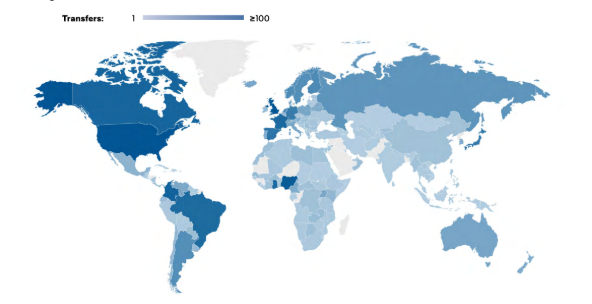
With 129 different nationalities involved, the United States had the most players transferred internationally (240 transfers), with the United Kingdom (108), Nigeria (94), Colombia (89), and Canada (87) rounding out the top five. Brazil dropped out of the top five list this year after finishing second with 121 in 2024.  


Image 7: Player nationality by number of international transfers in 2024, 2024 FIFA Global Transfer Report

Players from the United States also topped the charts in terms of spending on transfer fees, with $4.1 million — the United States hadn’t broken into the top 5 nations in this category in 2024. Of the 129 nationalities involved in transfers, 54 had at least one transfer that included a fee

Looking at all of the transfers in 2025, a roughly 60% were between clubs in the same confederation with 43% occurring between two clubs in UEFA (European Federation). Players moving from Concacaf (USA, Mexico, Canada, etc) to UEFA were the second-largest with 177 transfers. In 2024, the opposite direction, UEFA to Concacaf, was the second-largest, but it’s now dropped to third. 


Image 7: Number of transfers between and within confederations, 2025 FIFA Global Transfer Report

Once again, UEFA clubs led in spending on transfer fees, accounting for $8.4 million in 2024 (54.4% of all transfer fees) and all the way up to $19.3 million in 2025 (67.3%) Concacaf clubs spent the second highest amount, with $8.3 million spent, up from $6.9 million in 2024. Similarly to 2024, most of the transfer fees went to clubs in UEFA – 66%, equalling $18.9 million.

England completed the most incoming transfers with 135, while the United States moved down to third compared to 2024 with 111. The United States led the way in outgoing transfers with 227, up 120 from 2024 where they were third. 

As far as spending goes, clubs from England dethroned the United States at the top with $11 million spent in 2025. The United States increased from the $5.8 million spent in 2024 to $7.9 million in 2025. On the opposite side of that, clubs from the United States received the most transfer fees in 2025 with $5 million compared to 2024 where they didn’t even break into the top five. 

The largest transfer stream amount came from England transferring players from the United States (Alyssa Thompson, Naomi Girma) 


Image 8: Top three transfer streams in terms of spending on transfer fees (USD) in 2025, 2025 FIFA Global Transfer Report

Eight of the 14 NWSL clubs made it into the 2025 top spending clubs, the same number that were on the list in 2024. Bay FC went from first in 2024 to not on the list in 2025, Portland (10th), North Carolina (11th), and Seattle (13th) were in similar boats. Only Orlando, Utah, Houston, and Washington stayed on the list both years, while Angel City, San Diego, Chicago, and Gotham joined the top 20 ranking. 


Image 9: Top 20 clubs by spending on transfer fees in 2025, 2025 FIFA Global Transfer Report

Keith SmithJanuary 26, 2026
© USA Today Sports

The 2026 NBA trade deadline is a week-and-a-half away.  The trade market has been slow to get started this season. We’ve seen only Trae Young traded from the Atlanta Hawks to the Washington Wizards for C.J. McCollum and Corey Kispert. There have been other reports of trade talks, but nothing else has gotten done as of this writing.

Two weeks or so out from deadline day is when things usually start to pick up, so we’re now well within that window. Teams that insisted on multiple first-round picks for their players come down to a single first-round pick, while their partners in trades come up from offering a couple of second-rounders to offering that single first-rounder. As desperation increases, so does reasonability in trade talks.

Here’s where each of the Eastern Conference teams sits ahead of the deadline. We’ll be looking at the following:

  • How much space the team has under the cap or luxury tax. And for the apron-impacted teams, we’ll call out how much room they have under the first or second apron.

  • What usable Traded Player Exceptions (TPEs) they have. This will also include any money left in the Non-Taxpayer, Room or Bi-Annual Exception that can be used as a TPE. Reminder: TPEs can’t be aggregated together or with outgoing salary!

  • What tradable draft picks teams have to offer. We’ll run through the first-round picks, while giving a count of tradable second-round picks.

  • If the team is expected to be a Buyer, Seller, Either or Neither at the deadline. Everyone has different goals and we’ll analyze where each team stands.

  • Which player is most likely to be traded. Some might be stars, some might be salary dumps, most will fall in between. We’ll pick someone from every team.

Atlanta Hawks

Cap/Tax/Apron Picture: $6.8 million under the tax

Notable Traded Player Exceptions: $13.1 million (Bogdan Bogdanovic), $6.7 million (Clint Capela), $5.1 million (Bi-Annual Exception), $4.5 million (Kobe Bufkin)

Draft Pick Situation: Atlanta owes a future first in 2027 to the Spurs, as well as a swap in 2026. The Hawks own the best of the Pelicans and Bucks first-round pick in 2026. They also have a more-favorable swap in 2028 and own all of their own first-round picks from 2029-2032.

The Hawks have five tradable second-round picks.

Trade Deadline Strategy: Buyers. Let’s term this as tepid buyers. Atlanta could move Kristaps Porzingis’ expiring salary. But they aren’t looking to go all-in ahead of the deadline, because they’ve kept that Pelicans/Bucks pick off the table, as well as Zaccharie Risacher.

Most Likely to be Traded: Luke Kennard. It’s more fun to think about what Atlanta could get with Kristaps Porzingis’ expiring $30.7 million salary or C.J. McCollum’s expiring $30.6 million salary (Note: McCollum can’t be aggregated with other outgoing salary), but Kennard’s expiring $11 million salary is more likely to be moved in a smaller deal to round out the rotation.

Boston Celtics

Cap/Tax/Apron Picture: $12.1 million over the luxury tax, $4 million over the first apron, $7.8 million under second apron

Notable Traded Player Exceptions: $22.5 million (Kristaps Porzingis), $8.2 million (Georges Niang), $4.7 million (Jrue Holiday), $4 million (Jaden Springer)

Draft Pick Situation: The Celtics have their own first-round picks in 2026, 2027 and 2030 and 2031. Boston’s 2032 first-round pick is frozen and can’t be traded. The Celtics own a top-1 protected swap with the Spurs in 2028 and owe a 2029 pick to the Trail Blazers or Wizards.

The Celtics have five tradable second-round picks.

Trade Deadline Strategy: Buyers. Boston has transitioned from sellers to buyers. However, they aren’t likely to do anything too big. They’ve got some large TPEs which can help facilitate deals. But the Celtics aren’t going to push close to the second apron this year, nor are they likely to take on too much money that goes beyond this season.

Most Likely to be Traded: Chris Boucher. Most are focused on Anfernee Simons or Sam Hauser as the outgoing salary to bring back a big-name player, primarily in the frontcourt. That could happen, but trading Simons or Hauser would create other holes on the roster. That leaves Boucher getting moved as a likely salary-dump to bring down the tax bill some.

Brooklyn Nets

Cap/Tax/Apron Picture: $15.3 million under the cap

Notable Traded Player Exceptions: $8.8 million (Room Exception)

Draft Pick Situation: The Nets own their own first in 2026. They also own their own first-round pick from 2029-2032. They have the Knicks first-round picks in 2027, 2029 and 2031. Brooklyn also owns Denver’s 2032 first-round pick. The Rockets have swap rights for the Nets pick in 2027. Finally, Brooklyn has complicated swap rights that will see them have at least one pick in 2028 and possibly a second.

The Nets have at least 17 tradable second-round picks.

Trade Deadline Strategy: Buyers, but not in the traditional sense. The Nets will buy at the trade deadline, but they’ll buy by taking on unwanted contracts in exchange for young talent or draft assets. Brooklyn will use up their cap space to accomplish this, but don’t hold your breath waiting on the Nets to sell off their veterans. They intend to take steps forward next season, and may want those vets to be a part of that.

Most Likely to be Traded: Cam Thomas. Things seem to be coming to an end for Thomas in Brooklyn. He’ll lose his Bird rights if he’s traded, so he has a no-trade clause. But if Thomas can land with a team that could re-sign him without needing his Bird rights, he’d probably approve the trade.

Charlotte Hornets

Cap/Tax/Apron Picture: $14.4 million under the tax

Notable Traded Player Exceptions: $14.1 million (Non-Taxpayer MLE), $5.1 million (Bi-Annual Exception)

Draft Pick Situation: Charlotte has all of their own first-round picks. They also have three or four future first-rounders coming in from other teams, pending protections.

The Hornets have at least 13 tradable second-round picks.

Trade Deadline Strategy: Neither Buyers nor Sellers. Charlotte isn’t ready to make a big move yet, despite notable improvement this season. That improvement is also why they aren’t likely to trade away anyone of consequence either.

Most Likely to be Traded: Pat Connaughton. This is a $9.4 million salary slot that could be attached to other outgoing salary. If the Hornets do get involved in something big, Connaughton’s expiring deal will likely be a part of it.

Chicago Bulls

Cap/Tax/Apron Picture: $13.6 million under the tax

Notable Traded Player Exceptions: $14.1 million (Non-Taxpayer MLE), $6.2 million (Zach LaVine), $5.1 million (Bi-Annual Exception)

Draft Pick Situation: Chicago has all of their own first-round picks. They also have a lottery-protected first-round pick coming from Portland, if it conveys sometime between 2026 and 2028.

The Bulls have at least five tradable second-round picks.

Trade Deadline Strategy: Sellers. Chicago is reportedly open to moving any of their veterans, especially those on expiring contracts. This includes Coby White, Ayo Dosunmu, Nikola Vucevic, Zach Collins and Kevin Huerter. The Bulls look to be building around Matas Buzelis and Josh Giddey, along with cap flexibility.

Most Likely to be Traded: Dalen Terry. Not as juicy or fun as any of the vets mentioned above, but Terry isn’t part of the future for the Bulls and his contract is small enough to be moved in any number of trade constructions.

Cleveland Cavaliers

Cap/Tax/Apron Picture: $21.9 million over the second apron

Notable Traded Player Exceptions: $8.5 million (Georges Niang)

Draft Pick Situation: The Cavaliers have least-favorable first-round picks in 2026 and 2028. They owe their first-round picks out in 2027 and 2029. Cleveland owns all of their own first-round picks from 2030-2032.

The Cavs have at four tradable second-round picks.

Trade Deadline Strategy: Neither. As a second-apron team, it’s hard for the Cavs to make deals. They don’t seem likely to move off any of their big salaries…yet. Another failed playoff run, and that’ll change this summer.

Most Likely to be Traded: Lonzo Ball. If the Cavs can get off Ball’s $10 million contract, that would save them a ton in luxury tax payments. Ball isn’t a regular rotation guy anymore, and an acquiring team can decline Ball’s team option for next season to get out of contract entirely.

Detroit Pistons

Cap/Tax/Apron Picture: $19.1 million under the tax

Notable Traded Player Exceptions: $14.1 million (Dennis Schroder), $5.1 million (Bi-Annual Exception)

Draft Pick Situation: The Pistons have all of their own first-round picks and no additional first-round picks incoming.

Detroit has at least 12 tradable second-round picks.

Trade Deadline Strategy: Buyers. The Pistons are really good. They should be considered the Eastern Conference favorites heading into the deadline. They’ve got plenty of room under the luxury tax to add an impact player, and they have a good-sized trade exception to work with. Look for Detroit to add at least one rotation player.

Most Likely to be Traded: Paul Reed. If Detroit is doing something big, it will include at least one of the Tobias Harris, Caris LeVert, Jaden Ivey trio. But the Pistons don’t really need to move those guys to make an impact move. That leaves Reed and his pseudo-expiring $5.3 million salary as the most likely to move.

Indiana Pacers

Cap/Tax/Apron Picture: $5.5 million under the tax

Notable Traded Player Exceptions: $14.1 million (Non-Taxpayer MLE), $14.1 million (Disabled Player Exception - Tyrese Haliburton), $5.1 million (Bi-Annual Exception)

Draft Pick Situation: Indiana has all of their own first-round picks and no additional first-round picks incoming.

The Pacers have at least seven tradable second-round picks.

Trade Deadline Strategy: Either Buyers or Sellers. The Pacers could move a veteran or two, but it won’t be one of their better players. They could also be somewhat aggressive and make a “pre-agency” move to upgrade the roster for next season, when Tyrese Haliburton will be back.

Most Likely to be Traded: Bennedict Mathurin. Instead of being boring here and going with Jay Huff or Isaiah Jackson, we’re going with Mathurin. The Pacers are starting to get a little expensive long-term. That makes re-signing Mathurin tricky, as Indiana has depth at the guard position. If they do a pre-agency move, look for Mathurin to be part of it.

Miami Heat

Cap/Tax/Apron Picture: $1.6 million under the tax

Notable Traded Player Exceptions: $16.8 million (Duncan Robinson), $14.1 million (Non-Taxpayer MLE), $7.8 million (Jimmy Butler), $5.6 million (Haywood Highsmith), $5.1 million (Bi-Annual Exception)

Draft Pick Situation: Miami owns their own first-round pick in 2026. They owe a lottery-protected pick to the Hornets in 2027, which will roll over to an unprotected first-rounder in 2028 if not conveyed in 2027. The Heat then own all of their own first-round picks from 2029-2032.

The Heat have one tradable second-round pick without protections attached to it.

Trade Deadline Strategy: Neither Buyers nor Sellers. Miami is generally fairly aggressive about making in-season upgrades. However, this year’s team doesn’t seem quite at the level to justify that. If the Heat can make a move to bring in a long-term player, they’ll look at it. Otherwise, this feels like a quiet deadline, as Miami conserves future cap flexibility.

Most Likely to be Traded: Simone Fontecchio. Moving Fontecchio could create further wiggle room under the tax for the Heat, and it wouldn’t be a major impact to their rotation. If a big trade is going down, keep an eye on Terry Rozier’s expiring $26.6 million deal, but there’s still no resolution on if Miami can even trade him, although most expect the NBA to allow a deal, should one materialize.

Milwaukee Bucks

Cap/Tax/Apron Picture: $11.5 million under the tax

Notable Traded Player Exceptions: $3.6 million (remaining Room Exception)

Draft Pick Situation: The Bucks have the least favorable of their own pick and the Pelicans in 2026. They also have least favorable first-round picks in 2028 and 2030 from swaps with Portland. Milwaukee outright owes their 2027 and 2029 first-rounders to other teams. They own their own 2031 and 2032 first-round picks.

The Bucks have no tradable second-round picks without protections attached.

Trade Deadline Strategy: Either Buyers or Sellers. Milwaukee was making noise about being buyers to build around Giannis Antetokounmpo. Now, with Antetokounmpo out for several weeks, and the team continuing to struggle with or without their star player, the Bucks could move some vets and pivot towards ping pong balls.

Most Likely to be Traded: Cole Anthony or Amir Coffey. Not the guy you were probably expecting. We'll see if Giannis Antetokounmpo is traded at the deadline. It's still complicated to move a player of his stature and salary. This summer? That's a lot more likely, so fire up the trade machine! Moving Anthony or Coffey would save the Bucks a little money and allow them to open up a roster spot for flexibility the rest of this season.

New York Knicks

Cap/Tax/Apron Picture: $148,358 under second apron

Notable Traded Player Exceptions: None

Draft Pick Situation: The Knicks have their own first-round pick in 2026, 2030 and 2032. They have a least-favorable first-round pick in 2028. In 2027, 2029 and 2031 New York owes their first-round picks to the Brooklyn Nets.

The Knicks have at least seven tradable second-round picks.

Trade Deadline Strategy: Buyers. The Knicks are title contenders and that makes them buyers. However, being so tight to their second-apron hard cap means that they’ll be limited buyers. Unless they get crazy with a Karl-Anthony Towns trade, look for moves around the edges for New York.

Most Likely to be Traded: Guerschon Yabusele. This signing hasn’t worked out and it seems like Yabusele will be elsewhere by the deadline. That’ll either bring the Knicks back a different rotation player, or if Yabusele is salary-dumped with some second-round picks, it’ll give New York some much needed flexibility under their second-apron hard cap.

Orlando Magic

Cap/Tax/Apron Picture: $5.6 million over luxury tax, $1.2 million under first apron

Notable Traded Player Exceptions: $7.1 million (remaining Non-Taxpayer MLE), $5.1 million (Bi-Annual Exception)

Draft Pick Situation: Orlando has their own first-round picks in 2027, 2031 and 2032. They have a top-2 protected swap with the Grizzlies in 2029. Orlando owes first-round picks in 2026, 2028 and 2030.

The Magic have at least eight tradable second-round picks.

Trade Deadline Strategy: Neither Buyers nor Sellers. Orlando is probably going to move to get under the tax. They have a number of pathways to get there. Some may even include rebalancing the rotation by bringing a player in. But in terms of a major addition, the Magic aren’t really set up do so after locking into so much long-term money of the last two years.

Most Likely to be Traded: Tyus Jones. This is the easiest path for Orlando to get under the tax line, while creating enough room to fill out their roster with veteran minimum signings. Jones hasn’t worked out for the Magic and he’s fallen out of the rotation when the backcourt is healthy.

Philadelphia 76ers

Cap/Tax/Apron Picture: $7 million over the tax

Notable Traded Player Exceptions: $14.1 million (Non-Taxpayer MLE), $7.9 million (KJ Martin), $5.1 million (Bi-Annual Exception), $3.8 million (Caleb Martin)

Draft Pick Situation: Philadelphia has their own first-round pick in either 2026 or 2027 (pending protections). They have their own top-8 protected pick in 2028. In addition, the 76ers own the Clippers pick outright in 2028. They also own the better of their pick or the Clippers pick in 2029. The Sixers then own all of their own first-round picks from 2030-2032.

The 76ers have at least seven tradable second-round picks.

Trade Deadline Strategy: Neither Buyers nor Sellers. The Sixers could be buyers, but that doesn’t seem overly likely. Recent reports have the team looking at ways to get under the luxury tax by shedding some non-regular rotation players. Daryl Morey tends to tinker at the deadline and is pretty savvy while working under tight restrictions. This could be one where Philadelphia clears out some salary, while still adding to the roster.

Most Likely to be Traded: Eric Gordon. The 76ers are very likely to reduce their tax bill and Gordon doesn’t play for them. This would also clear an additional roster space, as Philadelphia looks likely to convert both Dominick Barlow and Jabari Walker from their two-way contracts.

Toronto Raptors

Cap/Tax/Apron Picture: $967,269 over the luxury tax

Notable Traded Player Exceptions: $14.1 million (Non-Taxpayer MLE), $5.1 million (Bi-Annual Exception)

Draft Pick Situation: Toronto has all of their own first-round picks and no additional first-round picks incoming.

The Raptors have at least six tradable second-round picks.

Trade Deadline Strategy: Buyers. Toronto is a good team, but needs more to go from good to being a real contender. They’ve got a lot of big-money contracts that they could move. If the big move doesn’t come at the deadline, keep an eye on this offseason. At the very least, expect the Raptors to get out of the luxury tax to keep the repeater clock from starting.

Most Likely to be Traded: Ochai Agbaji. This could be Garrett Temple, who could be salary-dumped and get the Raptors out of the luxury tax. But Agbaji seems out of the long-term plans in a crowded wing rotation for Toronto. And he could return a small positive asset in return, as opposed to spending something to move off Temple.

Washington Wizards

Cap/Tax/Apron Picture: $30 million under the tax

Notable Traded Player Exceptions: $14.1 million (Non-Taxpayer MLE), $13.4 million (Kelly Olynyk), $9.9 million (Jonas Valanciunas)

Draft Pick Situation: The Wizards have their own first-round picks 2027, 2029, 2031 and 2032. They have top-8 protected pick in 2026, in addition to a least-favorable first-round pick. Washington owns most-favorable swap rights in 2028 and 2030. The Wizards also have additional picks in 2029 and 2030 (pending protections).

Washington has at least 14 tradable second-round picks.

Trade Deadline Strategy: Neither Buyers nor Sellers. This one is a little complicated. The Wizards already bought with the Trae Young acquisition. But they aren’t likely to do another deal like that…unless they are taking on future salary in exchange for expiring salary. Keep an eye on a deal where Washington eats a long-term contract or two while picking up additional draft capital.

Most Likely to be Traded: Marvin Bagley III. Khris Middleton’s $33.3 million expiring contract could be on the move, but that’s a lot of money to shuffle around. That means Bagley is more likely to be moved. Almost any team in the league could acquire Bagley on his veteran minimum deal for some additional frontcourt depth.

Michael GinnittiJanuary 26, 2026

Spotrac’s 2026 NFL Offseason Series is now available for all 32 teams, highlighting early questions, projected cap space & draft capital, 5th-year option decisions, extension & free agent values, and potential bubble candidates.

OFFSEASON TOOLS

Spotrac's Offseason Guide
New this year, we offer a team-by-team look at current cap hits, pending free agents, Option, Trade, Release, & Extension candidates all in one place.

NFL Trade Candidate Tracker
A list of players rumored to be on the block, including financial ramifications, a look at the "traded contract", and more.

NFL Release Candidate Tracker
A list of players rumored to be on the bubble this winter, including Pre & Post June 1st cap ramifications for moving on.

Market Valuations
Spotrac's current list of contract valuations for extension candidate & pending free agents.

2026 NFL Free Agent Tracker
The standard free agent tracker for the upcoming season.

2026 Free Agent Analysis
Detailed analysis & valuations for over 100 Top Free Agents.

Manage Your NFL Team's Roster
Our real-time roster management tool is now better than ever, giving you a chance to release, restructure, re-sign, add free agents, process trades, and plenty more.

NFL Trade Machine
Prepare yourself for the start of trade season (March 11) by building out trade scenarios, including actual financial updates, and upcoming/future draft picks.

TEAM OFFSEASON BREAKDOWNS

Arizona Cardinals
Atlanta Falcons
Baltimore Ravens
Buffalo Bills
Carolina Panthers
Chicago Bears
Cincinnati Bengals
Cleveland Browns
Dallas Cowboys
Denver Broncos
Detroit Lions
Green Bay Packers
Houston Texans
Indianapolis Colts
Jacksonville Jaguars
Kansas City Chiefs
Las Vegas Raiders
Los Angeles Chargers
Los Angeles Rams
Miami Dolphins
Minnesota Vikings
New England Patriots
New Orleans Saints
New York Giants
New York Jets
Philadelphia Eagles
Pittsburgh Steelers
San Francisco 49ers
Seattle Seahawks
Tampa Bay Buccaneers
Tennessee Titans
Washington Commanders

Michael GinnittiJanuary 25, 2026
© USA Today Sports

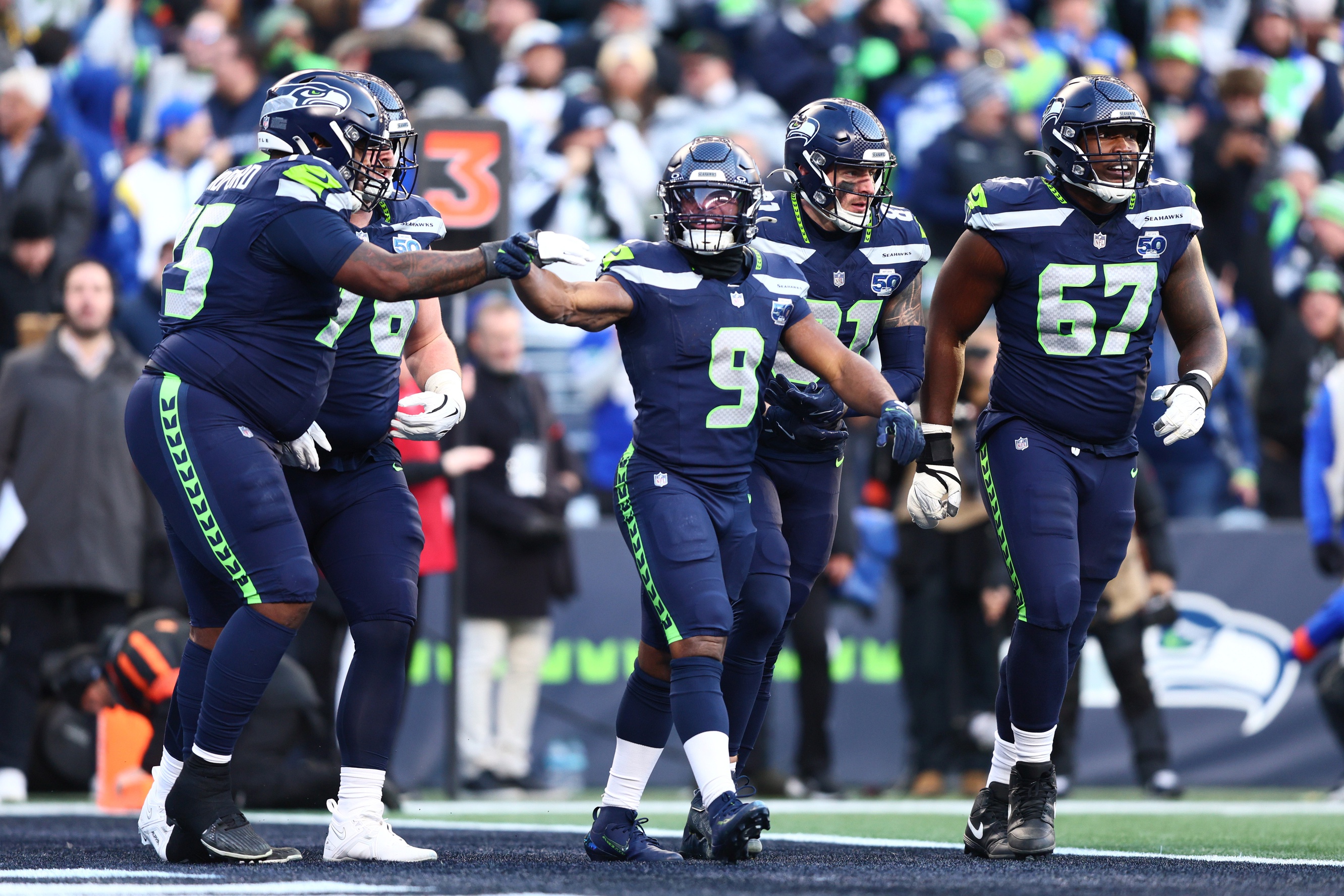
The Seattle Seahawks finished 2025 with a 14-3 record, winners of the NFC West, and the #1 seed in the postseason. They led the league with a +191 point differential, finishing the regular season with 7 straight wins.

Seattle heads into 2026 with $75M of cap space against a projected $303M league threshold. This includes 41 contracts, headlined by QB Sam Darnold ($36.4M), DL Leonard Williams ($29.6M), and ED Uchenna Nwosu ($20.7M).

The Seahawks currently hold just 4 draft picks, their own selections in rounds 1, 2, & 3, plus Cleveland’s 6th-round pick. Seattle’s Future Draft Picks

Early Offseason Questions

  • QB Sam Darnold has 2 years, $63M remaining (year-to-year guarantees). Will he live with the $27.5M payday currently set for 2026, or will he look for a quick turnaround on this contract stemming from the massive success in 2025?
  • Seattle enters 2026 with 9 players north of 30 years old. Experience wins, and the draft capital is minimal, but the Seahawks may need to focus on depth to account for another 20+ week season.
  • Kenneth Walker III is a pending free agent and Zach Charbonnet will spend much of 2026 rehabbing his ACL injury. How will Seattle bolster the run game this March?

Notable Free Agents

(Spotrac Valuation APY)

S Coby Bryant ($14M)
WR Rashid Shaheed ($14M)
ED Boye Mafe ($12M)
CB Josh Jobe ($9M)
RB Kenneth Walker III ($9M)
CB Tariq Woolen ($8M)


VIEW ALL FREE AGENTS

Option Decision

CB Devon Witherspoon

The #5 overall pick out of Illinois has been selected to the Pro Bowl in each of his first 3 seasons, and has instantaneously been deemed one of the best shut-down corners in all of football. Seattle won’t think twice about exercising his projected $20M option for 2027.

WR Jaxon Smith-Njigba

JSN is now extension-eligible, but it stands to reason that Seattle will first exercise his projected $28M 5th-year-option salary before handing him the top of market contract he very clearly deserves.

Extension Candidates

WR Jaxon Smith-Njigba

Better every year, culminating with a 119 catch, 1,793 yard, 10 TD campaign in 2025 that vaulted JSN to the top of the WR list. The math currently calls for an extension at or around $38M per year - the eyetest says $43M-$45M makes more sense.

DL Leonard Williams

Still producing at a very high level despite heading toward his age-32 season, Williams is entering a contract year in 2026, set to earn $16.6M against a $29.6M cap hit. Seattle can tack on a few seasons (currently projecting at an $18M APY), lock in a year of guarantee, and lower his cap hit significantly.

CB Devon Witherspoon

He’s a lock to have his $20M option salary exercised, but the Seahawks may also want to get an early start on his next contract as well. Witherspoon is a classic case of silent but deadly shut-down CB. The standard statistics may never jump off of the page, but there’s a reason he’s almost never targeted. Sauce Gardner’s recent 4 year, $120M+ extension becomes the barometer here.

Bubble Candidates

ED Uchenna Nwosu

Trade/Release Candidate

It’s not often that you’ll find a player with 7 sacks in limited action on a bubble list, but this Seattle defense is deep and talented enough to withstand losing a player or two. Nwosu is entering a contract year, and there’s over $12M to free up with a trade or release.

DL Jarran Reed

Release Candidate

The 33-year-old is a formidable depth player on the D-Line, but may be expendable at this stage of his career. There’s $4.5M to be freed up before a salary guarantee kicks in on February 13th.

WR Cooper Kupp

Release/Retirement Candidate

Kupp was a much-needed safety valve target for Sam Darnold in 2025, but it’s clear his days as a full-time producing wideout are behind him. Seattle can free up $9.5M of cap space by moving on before a $9M salary guarantee locks in on February 13th.

Potential Cap Conversions

QB Sam Darnold’s 2026 compensation becomes secure on February 13th. The Seahawks can free up $20M of space by converting most of it to signing bonus (plus void years).

RELATED LINKS
Seahawks 2026 Salary Cap
2026 Seahawks Free Agents
Spotrac’s Offseason Guides


Michael GinnittiJanuary 25, 2026
© USA Today Sports

The Los Angeles Rams finished 2025 with a 12-5 record, good enough for 2nd place in the NFC West, and a 5 seed in the postseason.

LAR enters 2026 with around $59M of cap space, with 42 contracts currently on the books (though 2 are set to void in mid-Feb). The table is headlined by Matthew Stafford ($48.2M), Davante Adams ($28M), and Alaric Jackson ($25.3M).

The Rams currently boast 11 draft picks, including two 1st-round picks (Atlanta), two 5th-round picks (Tennessee), and two 6th-round picks (Houston). Future Rams Draft Picks

Early Offseason Questions

  • Will Matthew Stafford return in 2026, and if so - will he be comfortable on a $40M salary?
  • The Rams have plenty of mouths to feed this offseason, and no post-Stafford plan (at least from the outside looking in). Will there be reservation in adding too much multi-year guarantee to the roster with change coming at the QB1 position sooner rather than later?

Notable Free Agents

(Spotrac Valuation APY)

RT Rob Havenstein ($10M)
S Kamren Curl ($10M)
CB Roger McCreary ($6.1M)
TE Tyler Higbee ($5.4M)

VIEW ALL FREE AGENTS

Option Decision

CB Emmanuel Forbes

Claimed off waivers from Washington last December, Forbes had his most impactful season to date in 2025, spending the year as LA’s primary RCB. Has he shown enough to warrant an $11M guarantee with a 5th-year option exercise this spring? That seems unlikely at present time.

Extension Candidates

WR Puka Nacua

One of the bigger no-brainers in the league this coming offseason, Nacua is entering a contract year in 2026, set to earn an estimated $5.8M (once a proven performance escalator is finalized). He’s extension-eligible for the first time this winter, currently projecting toward a 4 year, $154M deal in our system. There’s a realistic world where that number looks more like $180M ($45M APY) when it’s all said and done.

ED Byron Young

The former 3rd-round pick out of Tennessee had an official breakout year in 2025 (12 sacks, 82 tackles), but has been a standout player for each of his first 3 NFL campaigns. He projects toward a 4 year, $145M ($36M APY) extension in our system.

DL Kobie Turner

A 3rd-round pick out of Wake Forest, Turner has 24 sacks across 3 seasons, and has developed into one of the better overall interior linemen in the game. The 26-year-old projects toward a 4 year, $100M contract in our system.

G Steve Avila

A 2nd-rounder out of TCU, Avila is the clearcut option at left guard for this Ram’s offense, but has dealt with limited seasons in back to back years due to injury. He enters a contract year in 2026, set to earn an estimated $3.7M (once a proven performance escalator kicks in). The 26-year-old projects toward a 4 year, $70M extension in our system.

Bubble Candidates

CB Darious Williams

Trade/Release Candidate

Saw his snap count drop from 70% in 2024, to 40% in 2025, but is also under contract at a team-friendly $7.5M in 2026. There’s a $500,000 roster bonus due March 15th, so any kind of movement would likely happen prior to.

QB Matthew Stafford

Retirement Candidate?

He certainly doesn’t look like a player ready to hang up the cleats, but Stafford is certainly within his rights to consider his options this coming spring. The nearly 38-year-old is under contract at $40M in 2026, all of which is set to fully guarantee on March 15th. The Rams would be staring at a $41.9M dead cap charge if Stafford moves on here. Processing this in a Post 6/1 manner means $27.5M in 2026, $14.4M in 2027.

DL Ty Hamilton

Release Candidate

A 5th-rounder out of Ohio State, Hamilton hasn’t yet found his sea legs in this Rams’ defense, and is in danger of falling by the wayside before a second offseason.

Potential Cap Conversions

QB Matthew Stafford’s 2026 salary becomes fully guaranteed on March 15th. Converting it to bonus can free up $11.7M of cap space.

WR Davante Adams’s 2026 roster bonus is already fully guaranteed. Processing a simple salary conversion (including this roster bonus and adding void years), can open up over $18M of space.

LT Alaric Jackson’s 2026 salary is already secure. Processing a conversion on it (plus void years) can free up $15.6M of room.

S Quentin Lake’s 2026 compensation will be fully guaranteed by March 13th. Converting most of it to signing bonus first can open up $8.6M of space.

RELATED LINKS
2026 Rams Salary Cap Table
Rams 2026 Free Agents
Spotrac’s Offseason Guides

Top