It’s NBA trade season and that gets us thinking about which players and teams have the best and worst value contracts. We used to think of this in terms of trade value, but trade value has become a very different thing from contract value. The two are still very linked, to be sure. But trade value is very dependent on team needs, the team’s salary cap structure, the player’s production, their age and, of course, the contract itself.
That means rather than presenting this as a straight “Most Tradable” contracts piece, as we’ve done in the past, we’re pivoting a bit. This is now a Best Value list. Inherent in that is trade value, of course. But it’s not just about that, especially when a lot of these guys won’t move via trade. The same will be true of the companion piece that we’ll run for Worst Value contracts.
There are a few rules we abide by on the Best Value list:
-
No maximum contracts allowed. If a player would be a good value at $80 million per year, of course he’d be a good value at $50-$60 million per season. (Note: max deals can, and will, appear on the Worst Value list.)
-
No Rookie Scale contracts. We could make a large chunk of the list out of rookie scale deals. Because they are a fixed cost, no one gets credit for them.
-
No Second Round Pick Exception contracts. Similar to rookie scale deals, the vast majority of second-round picks now sign via this exception, if they don’t take a two-way contract. That’s been a huge boon to teams, but they aren’t finding the contract value, since it’s now priced in.
Lastly, Best and Worst Value is highly subjective. Best Value for a team might not be great value for the player. Worst Value for a team is probably pretty good value for the player. We present this from the lens of the team side, because this is mostly about how these contracts fit within the realm of roster building.
Got all that? Good! Let’s take a look at the 25 Best Value deals in the NBA!
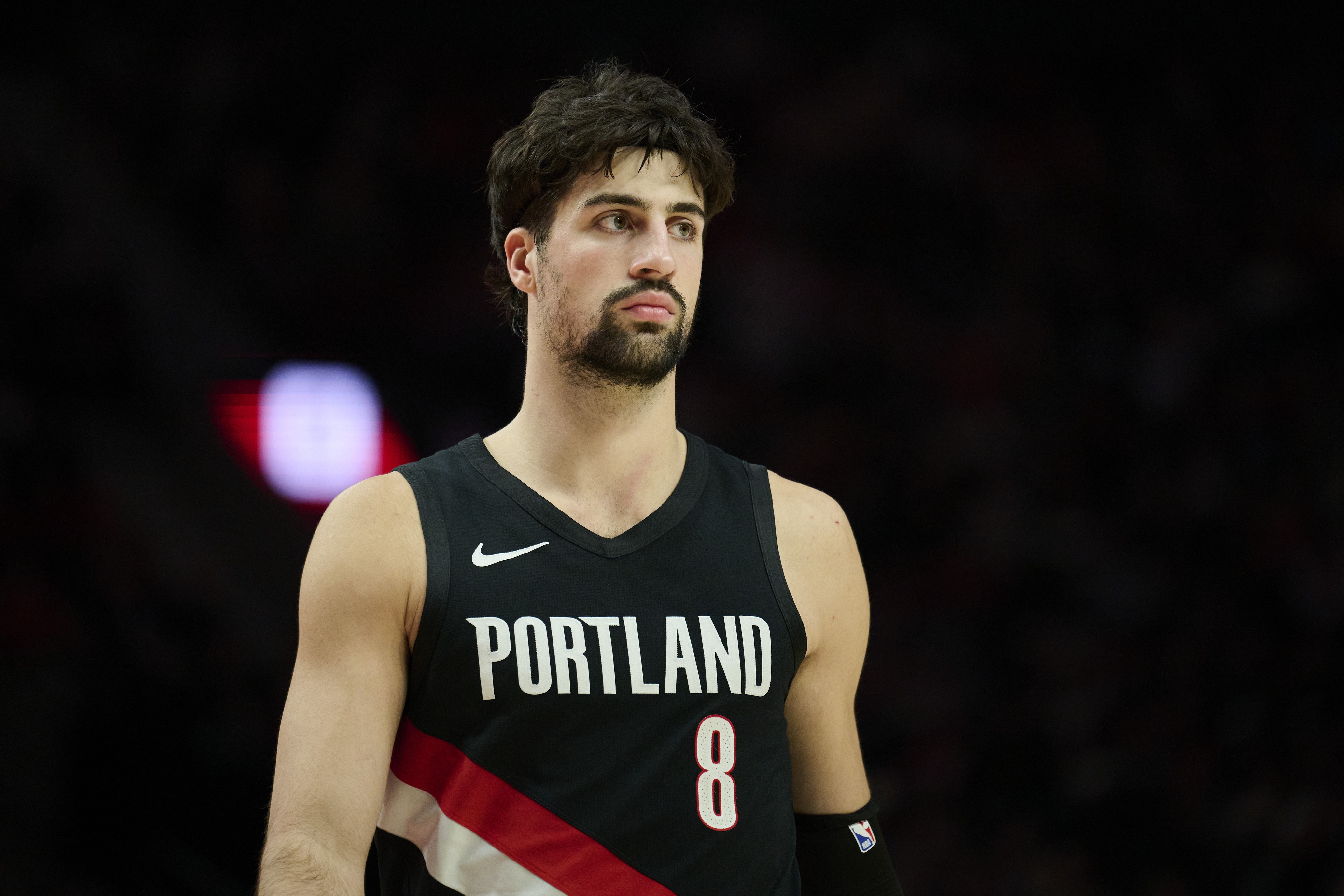
1. Deni Avdija - Portland Trail Blazers
Three years, $39.4 million remaining, $13.1 million AAV (declining structure)
Avdija’s deal looked team-friendly when he extended with the Washington Wizards and it’s only gotten more so since. Avdija should be an All-Star this year. He’s been a terrific all-around player and has held up as the Blazers main offensive engine. All of that production has come for basically the Non-Taxpayer MLE, and even less going forward. One thing to note: Because Avdija’s deal ends at just $11.8 million, there’s little to no chance Portland will be able to extend him off that small of a salary. Keep that in mind when analyzing the Trail Blazers moves over the next couple of years.
Four years, $156.5 million, $39.1 million AAV (player option final season)
If Avdija’s deal wasn’t such an incredible value, Brunson would have easily placed first on this list. He’s giving the Knicks All-NBA First Team production and will appear on plenty of MVP ballots. And he’s doing it for far less than the max. A lot was made of Brunson giving up some money (and we wrote about how it was misleading to say Brunson left $113 million on the table), making this a great value contract for New York. Even if Brunson opts out in a few years, the Knicks will have gotten great value from him over the early years of this extension.
Four years, $125.8 million, $31.5 million AAV (player option final season)
White is just starting this extension with the Celtics and he’s already delivering surplus value for Boston. With Jayson Tatum out to open this season, White has stepped up as Boston’s second-best player behind Jaylen Brown. He’s a tremendous defender, especially with his ability to protect the rim as a guard. White’s shooting has dipped this season, as he’s taking more self-created shots, but he’s proven able to scale up his role. And that’s a big part of where his value lies. When Tatum is back, White will slide back to the third option, which is a role he’s overqualified for. Add it all up and his deal is very valuable as Boston retools their roster after second-apron issues forced changes last summer.
Five years, $150 million, $30 million AAV
Johnson is Atlanta’s post-Trae Young centerpiece. He’s the player the Hawks are building around, and they get to do so on a well-below-max deal. That’s huge for Atlanta’s future flexibility. Johnson’s deal is a flat $30 million per season too, so as the cap goes up, his contract will only become more valuable.
Four years, $107.9 million, $26.9 million AAV
McDaniels is one of the best defensive players in the NBA. His shooting dipped the last couple of seasons, but this year McDaniels has bounced back to 41.5% from behind the arc. He’s improved his off-the-dribble game too. On a Wolves team that is expensive and dancing around the second apron, McDaniels being on such a good contract is a comfort to the front office.
Five years, $185 million, $37 million AAV (player option final season)
The Rockets did incredibly well to get Sengun signed to a below-max extension. He’s a firm All-Star now and going forward. In addition, Sengun has shown the ability to slide between playing at both the five and the four this season. That’s really good lineup flexibility for Houston. Add in how good Sengun is at creating shots for himself and teammates, and you could argue he might be a little low on this list.
Three years, $58.6 million, $19.5 million AAV
There’s a reason everyone was looking at swiping Zubac when the Clippers were struggling. He’s one of the best anchor defenders in the NBA. You can build your entire defensive system around funneling players to Zubac. He’s also a terrific rebounder and a very good finisher around the rim. For under $20 million AAV, that’s tremendous value.
Three years, $144.7 million, $48.2 million AAV (player option final season)
This is mostly about the two-year, $90 million extension that Durant signed. He’s barely lost a step during his age-37 season. There’s no reason to believe that Durant won’t provide great production for two more years after this one. As long as he’s healthy, having Durant for far less than his max salary will be huge for the Rockets team-building efforts.
Five years, $174.9 million, $34.9 million AAV (player option final season)
The length of this deal is a bit much for a player who will be in his mid-30s when it ends. But in exchange for that, the Knicks get Bridges for roughly 20% of the cap over the life of the contract. That’s a good tradeoff. Bridges is still a top-tier defender, and he’s shown his offensive role is extremely scalable too. He’s also a beloved teammate and a fan favorite. It’s not the steal of a deal that Jalen Brunson is on, but Bridges’ contract is plenty valuable too.
Four years, $60.6 million, $15.2 million AAV (player option final season)
It’s rare that a straight-up free agent acquisition will appear on a list like this, especially in Year 1. But that’s how good the Alexander-Walker addition has been for Atlanta. He’s had to start for a lot of the year, and Alexander-Walker has been more than up to the task. He’s maintained his very good defensive impact, while lifting his offensive game to career-high production across the board. On a deal that is just a bit more than the Non-Taxpayer MLE, Atlanta hit a homerun with this signing.
Three years, $45 million, $15 million AAV (team option final season)
Stewart embodies what the Pistons want to be more than any other player on the roster. He’s tough. He’s physical. He’s nasty. And he’s really good! In terms of per-minute impact, Stewart is up there with most starting big men, while giving the Pistons a lift off the bench. This has turned out to be an A+ extension for Detroit.
12. Ajay Mitchell - Oklahoma City Thunder
Three years, $8.7 million, $2.9 million AAV (partially guaranteed next two seasons and team option on final season)
The Thunder are the defending champs and rolling through this season because Shai Gilgeous-Alexander, Jalen Williams and Chet Holmgren are awesome. Just behind that in importance, they’ve also nailed role player acquisitions, along with their own draft-and-develop players. Mitchell is a good example of the latter. He could start for a bunch of teams and he’s making barely above the minimum. In addition, the Thunder have team control over Mitchell over the next couple of years too. Getting it correct with the stars is huge, but hitting on the other moves is why OKC is in such a great place.
Three years, $12 million, $4 million AAV, (player option on final season)
The Bucks are having a miserable season, but Rollins has been a real bright spot. You could see Rollins starting to produce last year, but he’s made a huge leap this season. For a contract that is less than half of the Room Exception, that’s great value. Milwaukee has missed on some additions, but Rollins has been a huge win.
Three years, $23.3 million, $7.7 million AAV
Had he stayed in the sixth man role, Pritchard still would have shown up on this list. Now that he’s starting every game, Pritchard has become even more valuable. He’s become a very good scorer in all phases. He excels at creating his own shots, even in among the trees in the paint. He’s a knockdown outside shooter. And Pritchard has improved his playmaking too. He’s also a very competitive defender, despite a lack of size. When you are as expensive as the Celtics have been, you have to win with some deals. Pritchard is that for Boston and then some.
Three years, $58.6 million, $19.5 million AAV
You can argue that Nembhard should rank higher than Mitchell, Rollins or Pritchard, and we won’t fight you too much. But he does make two to six times more than all of those guys. Despite that, Nembhard is on a great deal for the Pacers. He can play on- or off-ball and, importantly, can do both equally as well. That’s huge for when Indiana welcomes Tyrese Haliburton back to the lineup next season. Nembhard is an ideal backcourt partner for Haliburton for years to come.
16. Tre Jones - Chicago Bulls
Three years, $24 million, $8 million AAV (team option final season)
Jones has been awesome for the Bulls this season. After years as a nice backup, Jones has shown he can produce as a starter too. Jones doesn’t shoot a lot, and when he does, he sticks to shots in and around the paint. Jones is a good playmaker and a solid on-ball defender. For $8 million a year, Chicago has one of the best backup point guards in the league.
Four years, $112 million, $28 million AAV
Murphy has shown he can be a lead creator/scorer now. He was originally seen a good off-ball guy, but his ability to create shots for himself and others continues to improve. He’s not as good defensively as some of the NBA’s best wings, but if he was, Murphy would be on a max deal. As it is, he provides the Pelicans with tremendous value. That helps offset a couple of other less-valuable contracts that New Orleans is carrying.
18. Luke Kornet - San Antonio Spurs
Four years, $40.7 million, $10.2 million AAV (final two seasons partially- and non-guaranteed)
Kornet is another 2025 free agent signing showing up here, and for good reason. Kornet has fit in perfectly with the Spurs. He’s started when Victor Wembanyama has missed time and has also teamed with Wembanyama in the jumbo-sized “French Vanilla” frontcourt. Kornet doesn’t shoot unless he’s right at the rim, but he’s an extremely effective finisher and vertical spacer. He’s become an outstanding rim protector and screener too. For a deal that only includes $24 million in guaranteed money, the Spurs got outstanding value with Kornet.
Two years, $5 million, $2.5 million AAV (final season partially-guaranteed and team option)
Queta has stepped into the Celtics starting center role and the team has hardly missed a beat. Queta has improved in basically every area of the game, and continues to do so. He’s a good rebounder, especially on the offensive glass. His finishing is getting better, while his passing and screening are already top-tier. Queta is also improving as a defender too. Boston better enjoy it now, because Queta won’t be playing for just above the minimum for much longer.
Two years, $5.3 million, $2.6 million AAV (player option final season)
Mamukelashvili slots in behind Kornet and Queta because he doesn’t start, he’s not a great defender, and this is functionally a one-year deal. Mamu will opt out and get a bigger deal this offseason. That will happen because his production has been outstanding this season. Mamukelashvili is a skilled scorer at all levels. He can handle it enough to take other bigs off the bounce. He plays with terrific energy. Next up is his first non-minimum deal.
21. Aaron Wiggins - Oklahoma City Thunder
Four years, $36 million, $9 million AAV (team option final season)
Much like with Ajay Mitchell earlier, Wiggins is another win for the Thunder’s roster. He could play a much bigger role with several other NBA teams, and his production would likely spike. As it is, Wiggins gives the Thunder great wing depth, consistent scoring and shooting and he does it on a declining deal that will be roughly around the Room Exception over the next few years.
22. Toumani Camara - Portland Trail Blazers
Five years, $83.2 million, $16.6 million AAV
This is about Camara’s four-year, $81 million extension. That’s terrific value for a guy who already made one All-Defensive Team in his career, and will probably make more of them over the life of his new deal. Because Portland has had to play a lot of the year without starter-level point guards, Camara’s efficiency has suffered. Despite that, he’s still been productive on both ends of the floor. He’s an ideal plug-and-play wing/forward for roughly $20 million a year on his extension. That’s a win for the Blazers.
23. Herb Jones - New Orleans Pelicans
Five years, $96.4 million, $19.3 million AAV (player option final season)
This season has been hampered by injuries for Jones. If that’s a thing moving forward, he’ll fall off this list. If it’s a one-time blip, Jones still stick around. He’s probably the best wing defender in the NBA. That’s enough to rank him here. If he shot it better, he’d be even higher on the list. Of course, he’d probably be making more money too. As it is, Jones lands here with hopes that the shooting will improve and he’ll get healthy moving forward.
Two years, $18.4 million, $9.2 million AAV
It’s only the short length of Marshall’s deal that keeps him from ranking higher on this list. He’s a versatile defender who can pick up 2-4, while holding his own on switches against point guards and centers. Marshall has become a great finisher around the rim. Like Toumani Camara and Herb Jones, if he shot better, he’d rank higher on the list, but would also be paid more too.
Four years, $163.2 million, $40.8 million AAV
It hasn’t been a perfect transition for Bane to the Magic. Like every player who moves to Orlando, his once ace shooting has fallen off. (That phenomenon has to rank highly on NBA Unsolved Mysteries!) However, Bane has still been very productive. He’s given a very banged-up Magic team consistent scoring and playmaking, along with his typical rugged defense. Bane’s deal is only a hair below the maximum, but it is below the max. For a guy who can provide max-level all-around production, especially if his shooting comes back to form, that’s good value for Orlando.


.png)


 NEWS
NEWS © USA Today Sports
 © USA Today Sports


 © USA Today Sports
 © USA Today Sports
 © USA Today Sports
 © USA Today Sports