The 2026 NBA trade deadline is in our rearview mirror. 27 of the league’s 30 teams made moves. After everything went official, there were 28 total trades that involved 73 players during deadline week. If you go back to the Trae Young trade last month, there were 29 trades made involving 76 players, and over 40 draft picks changing hands.
Feels like a lot to keep track of, right? Never fear, we’ve got you covered! Instead of recapping each individual deal, because the flurry of action became too much for that, we’re doing a bit of a reset for the entire league, starting with the Eastern Conference. Here’s what we’ll look at:
What They Did: What moves did they make during trade season?
Why They Did It: Why did the teams make the moves they made?
Work Left To Do: What’s left to do with the roster, either with further additions via buyout season, two-way conversions, returns from injury or rotation decisions.
Let’s dive in!
What They Did
Atlanta had a busy trade season. They got things started by swapping Trae Young for C.J. McCollum and Corey Kispert. The Hawks then traded Vit Krejci for Duop Reath and two second-round picks. Alanta also sent out Kristaps Porzingis for Jonathan Kuminga and Buddy Hield. Atlanta added Jock Landale in a deal for cash. Finally, the Hawks moved Luke Kennard in a deal to bring back Gabe Vincent and a second-round pick.
As part of their moves, the Hawks also waived Reath N’Faly Dante, who are both out for the season due to injuries.
Why They Did It
Atlanta wanted to move towards a new era with the Young trade. Moving on from Porzingis was mostly about picking up Kuminga as a flyer in exchange for a big man who was rarely able to get on the floor for the Hawks. Adding Landale was a great pickup for only cash to give the team some center depth. The only real puzzling move was trading Krejci, who had been a knockdown shooter. But with Kispert in the fold, the Hawks did well to trade from a position of depth to get a couple of picks.
Work Left To Do
The Hawks did well to rebalance their roster with their moves. This team is still built around the same core of Jalen Johnson, Zaccharie Risacher, Dyson Daniels, Nickeil Alexander-Walker and Onyeka Okongwu. Atlanta probably doesn’t have any more moves to make. The next big question is how they integrate Jonathan Kuminga into the rotation, when the scoring forward is healthy enough to play.
What They Did
Boston made their big move when they traded Anfernee Simons and a second-round pick for Nikola Vucevic and a second-round pick. Then, the Celtics had a flurry of moves to get themselves under the luxury tax, which included salary-clearing deals of Josh Minott, Xavier Tillman Sr. and Chris Boucher. The Celtics also added two-way player Jon Tonje in one of the deals.
After their deadline moves, the Celtics signed two-way player Amari Williams to a two-year standard contract.
Why They Did It
Boston wanted more frontcourt depth. Neemias Queta and Luka Garza have both played better than expected, but Vucevic is a known quantity. The collection moves to get off salary got the team under the luxury tax. Normally, we won’t celebrate simply dodging the tax, as that just helps billionaires save money. In this case, the moves went towards resetting the tax repeater clock, which should help Boston down the line. And none of the players lost were in the rotation, nor did Boston give up much of value to move off their contracts.
Work Left To Do
The Celtics have a hole in their backcourt after trading Anfernee Simons. They’ve temporarily addressed that by moving Payton Pritchard back into the bench role he’s excelled in previously. Maybe the plan for additional ballhandler, scoring, shooting and shot-creation will be handled with a Jayson Tatum return. He’s ramping up, but there’s still no target date for Tatum to play again. For now, the focus will be to bring Pritchard off the bench, while figuring out the center rotation with Vucevic in the mix.
Boston also has three open standard roster spots with just over $800,000 in room under the tax line. After going to great efforts to avoid the tax, the Celtics won’t be going back into it this season. That means a series of 10 Day contracts are coming to dance under the tax line until they can fill the spots late in the season.
What They Did
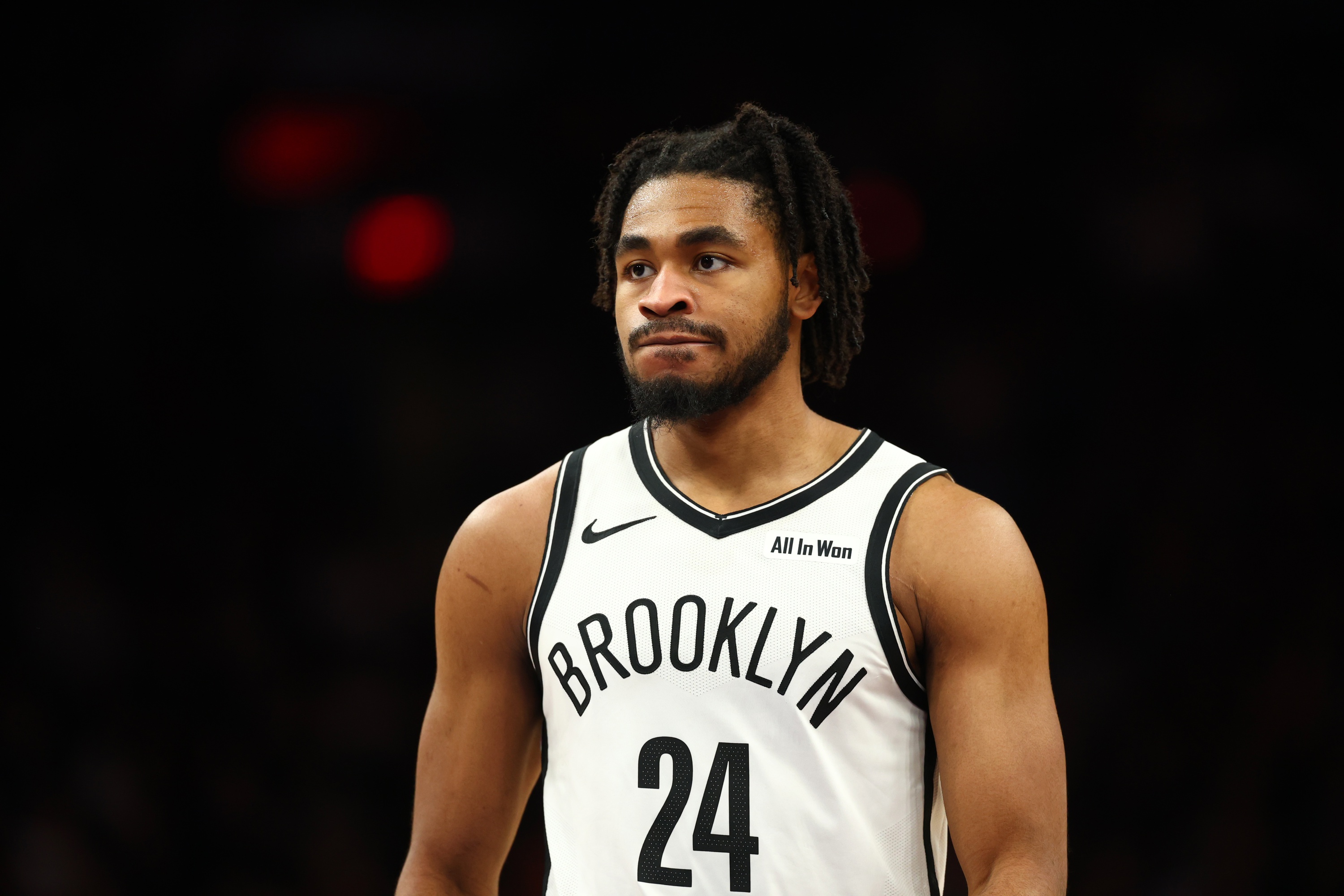
Brooklyn was perhaps less active than many thought they would be. The Nets used about $11 million of their $15 million in cap space to take on some deals, but weren’t involved in any major transactions. Brooklyn picked up Ochai Agbaji and a second-round pick as a part of a three-team salary-clearing move that involved the Toronto Raptors and LA Clippers. Just ahead of the deadline, Brooklyn took on Josh Minott from the Celtics and Hunter Tyson and a trade of second-round picks from the Denver Nuggets.
As part of completing the above moves, the Nets waived Cam Thomas, Tyrese Martin and Tyson.
Why They Did It
Brooklyn was always going to use their cap space to take on unwanted money from other teams. Getting only one additional second-round pick for doing so is a bit disappointing. Having to surrender a pick in the Tyson salary-dump with Denver was a bit weird, but that pick doesn’t look to be a prime asset.
Work Left To Do
Brooklyn can continue to tinker with their roster. They have open standard roster spot. None of the team’s two-way players have stood out enough that they are locks to be converted. Instead, look for the Nets to churn the bottom of their roster with some 10 Day signings to see if they can find a diamond in the rough for next season and beyond. Beyond that, look for the young players, including the five rookies, to get a lot of minutes down the stretch, as the Nets look to solidify their position in the 2026 NBA Draft Lottery.
What They Did
The Hornets started the deadline by swapping Mason Plumlee for Ousmane Dieng and a second-round pick. Charlotte then moved Dieng, Collin Sexton and two second-round picks (one went back to the Hornets in an amendment of the trade) for Coby White and Mike Conley. Charlotte picked up two replacement second-round picks for taking on Tyus Jones’ salary from the Orlando Magic. They then swapped Jones to the Dallas Mavericks for Malaki Branham as part of a three-team trade that also involved the Washington Wizards. Lastly, Charlotte picked up some cash from the Boston Celtics for taking on Xavier Tillman Sr’s contract.
The Hornets ended up waiving Conley and Branham to open up a roster spot.
Why They Did It
Charlotte did a nice job of adding White to their backcourt mix. Sexton had played well for the Hornets, but White gives them a bit better of an off-ball player and he’s got a bit more size than Sexton. Throughout the course of their dealings. The Hornets also ended up plus-one in terms of second-round picks.
Work Left To Do
The Hornets filled their open roster spot by bringing back Pat Connaughton, who was previously waived to facilitate their deadline deals.
On the floor, the team will need to incorporate White, but he should slide into Sexton’s role when healthy. Charlotte has what they need to continue what has been a really fun season so far.
What They Did
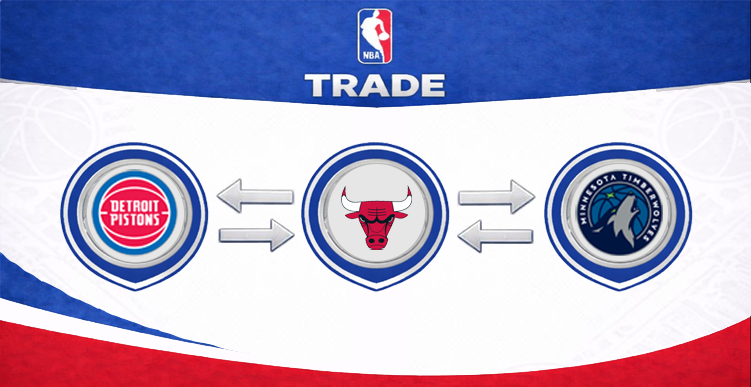
In a departure from years past, the Bulls were very active at the deadline. Chicago got started by jumping into facilitate a three-trade with the Cleveland Cavaliers and Sacramento Kings. The Bulls picked up Dario Saric and two second-round picks in that deal while sending two-way player Emanuel Miller to the Cavs. Then, Chicago swapped Saric and Kevin Huerter for Jaden Ivey and Mike Conley in a three-team deal with the Detroit Pistons and Minnesota Timberwolves. The Bulls turned around sent Conley and Coby White to the Charlotte Hornets for Collin Sexton, Ousmane Dieng and two second-round picks (after returning one second-rounder as an amendment to the deal due to White’s calf injury). Chicago sent Nikola Vucevic and a second-round pick to the Boston Celtics for Anfernee Simons and a second-round pick.
All of the above was followed by sending Dalen Terry to the New York Knicks for Guerschon Yabusele (who declined his 2026-27 player option as part of the trade.) Then, the Bulls went back to the Wolves and traded Ayo Dosunmu and Julian Phillips for Rob Dillingham, Leonard Miller and four second-round picks. And finally, the Bulls acquired Nick Richards from the Phoenix Suns in a three-team trade that sent Dieng to the Milwaukee Bucks.
Chicago also waived Jevon Carter as part of their deadline dealings, while signing Mac McClung to a two-way contract.
Why They Did It
Phew…the Bulls did a lot. It was a long-awaited teardown of the roster, but the returns feel underwhelming. Only Jaden Ivey and Rob Dillingham would seem to have any sort of long-term future in Chicago. They returned a total of eight second-round picks, which are nice to have, but not prime assets. Mostly, Chicago didn’t really take on any long-term salary, minus Dillingham’s rookie deal, which is fine.
Work Left To Do
This is the most confusing and unbalanced roster in the NBA. Chicago has six rotation-level guards and three rotation-level bigs around a handful of semi-decent wings. What’s left is this weird collection of players who really don’t fit together.
But you know what? It doesn’t even really matter. Barring something unexpected, this team should lose a lot the rest of the way. If they do so while featuring Matas Buzelis, Dillingham and maybe Ivey, so much the better. The one downside, the Bulls have already won too much to really insert themselves into the top part of what is going to be an epic tank race to the end of the season. Maybe the Basketball Gods will smile upon them at the lottery.
What They Did
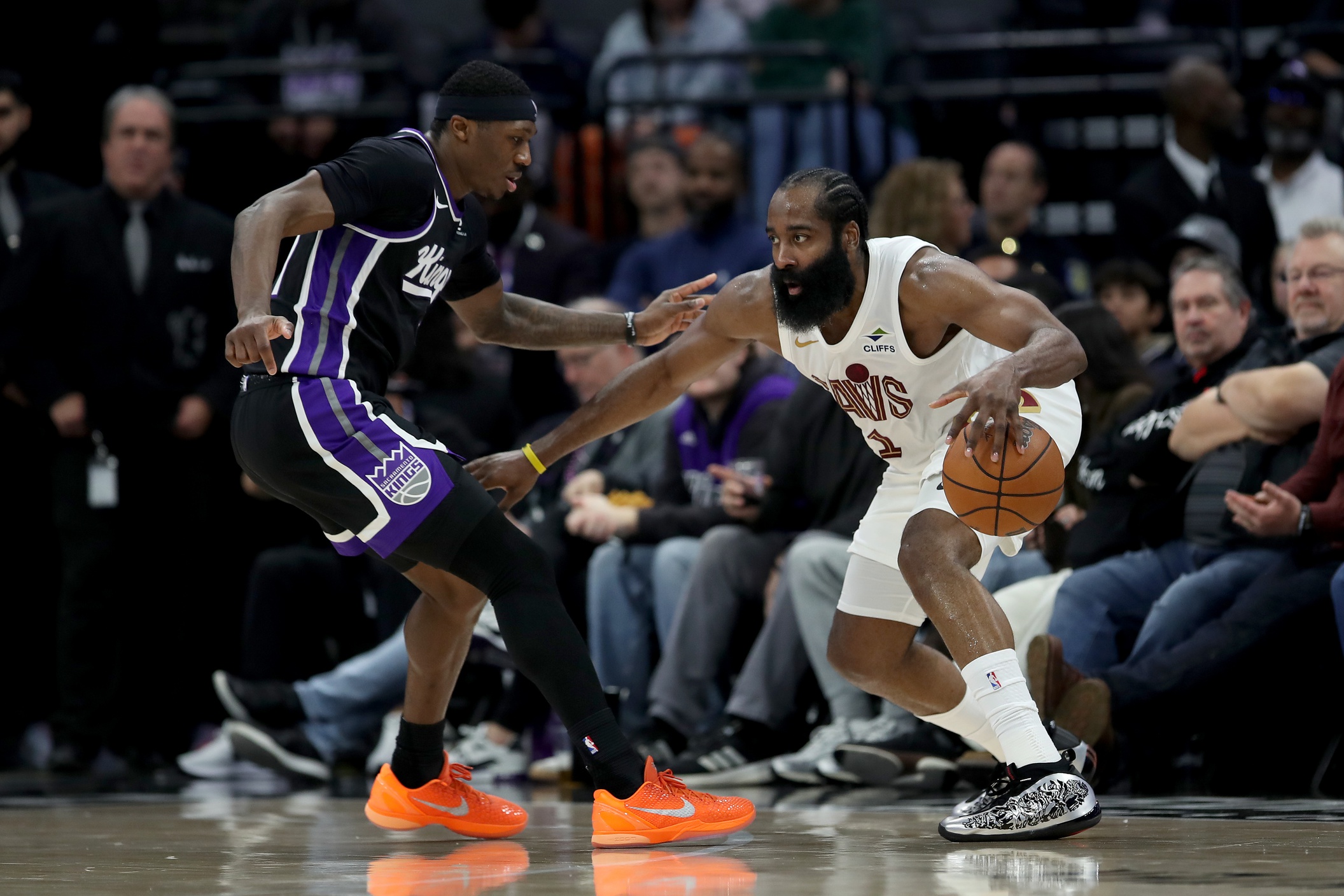
The Cavs started out with a trade to add backcourt depth by sending De’Andre Hunter to the Sacramento Kings for Dennis Schroder and Keon Ellis in a three-team deal that included the Detroit Pistons (Cleveland sent Detroit a second-round pick). Then, Cleveland made one of the blockbuster trades of the deadline by swapping Darius Garland and a second-round pick to the LA Clippers for James Harden. That was followed up by salary-dumping Lonzo Ball, with two second-round picks, onto the Utah Jazz.
Why They Did It
The Cavs added backcourt depth and reliability with their moves. Harden, for all of his other foibles, doesn’t miss many games. He’s also been good in the playoffs, outside of elimination games. Garland is currently not healthy, and has missed a ton of time over the past couple of years. Schroder and Ellis give the team better guard depth than they had with Ball, who looks like his career is just about done. Moving off Ball didn’t get the Cavaliers under the second apron, but this entire series of moves saved the team millions of dollars off their tax bill.
Work Left To Do
Cleveland has one open roster spot. That will eventually go to Nae’Qwan Tomlin after he exhausts his NBA eligibility on his two-way contract. That’ll be it for roster moves for the Cavs, who have a good, deep roster to make what they hope will be a very deep playoff run.
What They Did
The Pistons picked up Kevin Huerter, Dario Saric and the right to swap 2026 first-round picks in a three-team trade that included the Chicago Bulls and Minnesota Timberwolves. As part of this move, Detroit waived Isaac Jones.
Why They Did It
Detroit wanted to add more shooting, and did so in theory with Kevin Huerter. Why “in theory”? Huerter hasn’t shot it well for the last two seasons, after being pretty good for most of his career. If the Pistons can get him on track, he’ll be a helpful player.
Picking up the ability to swap picks with the Wolves in this year’s draft should see the Pistons move up a handful of picks in the backend of the first round. That’s not nothing.
Work Left To Do
Detroit is waiving Dario Saric to create a roster spot to sign guard Daniss Jenkins from his two-way deal. This is a well-earned promotion for Jenkins, who has been a key rotation player for the Pistons. That should round out Detroit’s roster for the playoffs.
What They Did
The Pacers were pretty quiet until making a huge splash right before the deadline. Indiana picked up center Ivica Zubac from the LA Clippers for Bennedict Mathurin, Isaiah Jackson, two first-round picks and second-round pick. The earlier of the two first-rounders is very creatively protected with the Pacers getting it if it falls 1-4 or 10-30 in 2026. The Clippers will get the pick if it falls 5-9, otherwise they get an unprotected first in 2029.
Why They Did It
This move was about next season and beyond for the Pacers. Zubac is working his way back from an ankle injury, and it’s unclear when/if he’ll suit up for Indiana this season. Next season however, the Pacers will roll out Zubac alongside Pascal Siakam, Aaron Nesmith, Andrew Nembhard and a returning Tyrese Haliburton. That’s what this trade was all about adding a long-term center to a team that intends on contending starting with next season. Mathurin wasn’t likely to be re-signed, as the Pacers have a lot of backcourt depth, and money tied up in that depth. Jackson was a depth big, who won’t be needed with Zubac in the fold.
Protecting the pick the way they did was smart by Indiana too. They get the pick if it’s a prime asset in this year’s draft. In what was a tough negotiation, the Pacers did well to keep the blue-chip part of this year’s selection.
Work Left To Do
Indiana has an open roster spot. They could look at converting one of their two-way players, as all three of Quenton Jackson, Taelon Peter and Ethan Thompson have had moments. Beyond that, expect more of what we’ve already seen from the Pacers this season: fairly competitive games that end in a loss. Kind of the ideal outcome in a gap year.
What They Did
Nothing. Nada. Zip. Zilch. The Heat sat out trade season entirely, as the only Eastern Conference team to do so.
Why They Did It
Whether Miami was conserving assets for an eventual run at Giannis Antetokounmpo, or simply unable to get any kind of deal done, the old adage applies here: No trade is better than a bad trade. The Heat are kind of treading water right now. They’re competitive, but not a threat to do much in the playoffs. They need some salaries and picks to resolve themselves before flexibility frees up. That means just riding things out for the time being.
Work Left To Do
The Heat have an open roster and enough room under the luxury tax to fill it whenever they want. That spot could go to Myron Gardner, who has played well on his two-way deal. It could also go to a buyout player, as Miami has no restrictions on adding anyone through the buyout market. Just don’t expect anything overly impactful.
What They Did
The Bucks made a trade, but not the one everyone was waiting for. Milwaukee sent Cole Anthony and Amir Coffey to the Phoenix Suns for Nigel Hayes-Davis, in a three-team deal where they acquired Ousmane Dieng from the Chicago Bulls.
The Bucks also signed Cam Thomas, after he cleared waivers on Sunday. Milwaukee created that roster spot by waiving Hayes-Davis.
Why They Did It
The Bucks made it pretty clear that they didn’t intend to trade Giannis Antetokounmpo. They held firm in that resolve, despite several teams making runs at acquiring the Bucks superstar forward. Now, we see where things go long-term with Antetokounmpo and Milwaukee, as he’s eligible for a contract extension in October.
Adding Thomas will give the team some additional scoring punch. The fit isn’t really clear, as Kevin Porter Jr. plays a similar role to what Thomas has traditionally done, but the Bucks intend on making a push for the postseason. Thomas’ scoring ability could aid in that.
Work Left To Do
The Bucks probably are what they are for the rest of this season. If Antetokounmpo can get back on the floor and stay healthy, Milwaukee will compete for a spot in the Play-In Tournament. But there’s no long postseason run coming for this group. And we’re merely a few months away from another round of speculation involving Antetokounmpo’s future in Milwaukee.
What They Did
The Knicks created needed wiggle room under their second-apron hard cap by trading Guerschon Yabusele to the Chicago Bulls for Dalen Terry. New York then sent Terry to the New Orleans Pelicans with two second-round picks for Jose Alvarado.
Why They Did It
Yabusele wasn’t working out in New York and both sides wanted a divorce. Ending up with Alvarado for Yabusele is a win for the Knicks. They need another ballhandler with Miles McBride sidelined long-term after a hernia surgery. Alvarado is a New York native and his all-out style will be adored by Knicks fans. In addition, the New York created enough space under their second-apron hard cap to make a rest-of-season signing whenever they want versus having to wait until the waning days of the regular season.
Work Left To Do
Filling that last roster spot would seem to be next up for the Knicks. None of the team’s three two-way players screams that they are a must-convert. That means we could see an outside addition, perhaps another big to give the team a bit more size on the roster.
What They Did
It was a pretty quiet deadline for the Magic. They were always likely to get out of the luxury tax and they did so by sending Tyus Jones to the Charlotte Hornets, along with two second-round picks. That got Orlando far enough under the tax that they signed Jevon Carter to replace Jones. The Magic have enough space to fit in one more rest-of-season signing, provided they time it out.
Why They Did It
Orlando hasn’t been good enough to justify going into the tax this year, and Jones had seen his role in the rotation reduced greatly in recent weeks. Even if the Magic were going great, they’d still have wanted to avoid the tax, as the roster looks to be very expensive for the next few seasons. No reason to start that tax repeater clock before it’s necessary.
Work Left To Do
After signing Carter, the Magic have one open roster spot. That could go to two-way player Jamal Cain, who has shown flashes this season. Just don’t expect anything soon. It’ll be mid-March before Orlando has enough clearance to make a rest-of-season signing.
What They Did
Philadelphia started their tax-avoidance moves by sending Jared McCain to the Oklahoma City Thunder for a first-round pick and three second-round picks. The team then sent Eric Gordon and second-round swap rights in 2032 to the Memphis Grizzlies for the draft rights to Justinian Jessup to get under the tax line.
Following the deadline, Sixers signed Dominick Barlow to a standard contract. They also added a couple of players on 10 Day contracts to make sure they could meet roster minimums.
Why They Did It
The Sixers were always likely to pursue getting under the luxury tax. They didn’t need to, as they aren’t hard-capped, but saving against the tax has become their M.O. at the deadline in recent years. Getting back a first and three seconds for McCain isn’t a bad return, but it feels underwhelming, considering the potential McCain showed as a rookie. Gordon wasn’t playing a rotation role, so there’s no production lost there.
Signing Barlow to a team-friendly two-year deal was good value. He’s been a great find for Philadelphia, and he’s become a solid starter at the four.
Work Left To Do
Expect the 76ers to eventually sign a pair of rest-of-season deals to fill out the roster. They could probably use another guard and maybe one more wing, given they traded McCain and Paul George is going to miss several more games while suspended. Two-Way player Jabari Walker was active for just about every game before running out of NBA eligibility, so converting him is something to keep an eye on.
What They Did
The Raptors added Chris Paul from the LA Clippers, while salary-dumping Ochai Agbaji onto the Brooklyn Nets, along with a second-round pick, in a three-team deal. Toronto used their open roster spot to pick up Trayce Jackson-Davis from the Golden State Warriors for a second-round pick.
Why They Did It
Toronto wasn’t going to pay the tax for a team that is good, but not a title contender. They looked at bigger trades, but felt the value wasn’t quite there to pull off a blockbuster yet. Adding Jackson-Davis gives the team some additional frontcourt depth, in case Jakob Poeltl’s back continues to be an issue for the rest of the season.
Work Left To Do
The Raptors will eventually waive Chris Paul, as the veteran point guard isn’t even being asked to report to Toronto. That open roster spot could go to either A.J. Lawson or Alijah Martin from the two-way ranks.
What They Did
The Wizards started the deadline by acquiring Trae Young for C.J. McCollum and Corey Kispert. Washington then pulled off another blockbuster by getting Anthony Davis, Jaden Hardey, D’Angelo Russell and Dante Exum from the Dallas Mavericks for Khris Middleton, A.J. Johnson, Marvin Bagley III, Malaki Branham, two first-round picks and three second-round picks.
Why They Did It
This is the last year that the Wizards are going to be intentionally near the bottom of the standings. Adding Young and Davis are moves to start to push the team up in the Eastern Conference. It’s unclear how much either will play for Washington this season, if at all. This move was about next season, when the two vets will team with the Wizards young core to make a run at the playoffs.
Work Left To Do
The Wizards waived Dante Exum over the weekend. They’re working on a buyout with D’Angelo Russell, who isn’t being asked to report to the team. That’ll leave the team with three open roster spots (one is currently filled by Keshon Gilbert on a 10 Day contract). Expect two of those openings to be filled by two-way players Tristan Vukcevic and Jamir Watkins, like via the remaining Non-Taxpayer MLE to give each player a long-term deal.


.png)


 NEWS
NEWS © USA Today Sports


 © USA Today Sports
 © USA Today Sports
 © USA Today Sports
 © USA Today Sports
 © USA Today Sports
 © USA Today Sports
 © USA Today Sports