Taylor VincentJune 20, 2025
© USA Today Sports

Just short of halfway through the regular season and on the eve of the 2025 summer break, it’s a good time to look into the individual performance awards and who my front-runners are at the moment. 

There are five individual awards: Most Valuable Player, Golden Boot, Defender of the Year, Goalkeeper of the Year, and Rookie of the Year. Additionally, there are Best XI First and Second team honors up for grabs. As per the current NWSL collective bargaining agreement (CBA), each of the previous awards comes with a $5,000 bonus and starting in 2027 those bonuses will increase.

Reference previous award winners: here

Golden Boot

The Golden Boot award goes to the player with the most goals in the NWSL regular season and is the only award that is not voted on. In case of a tie, the tiebreaker goes down to assists. In the 2023 regular season, Sophia Smith took home the trophy with 11 goals, and in 2024 Temwa Chawinga broke the NWSL season-high of 18 goals set by Sam Kerr back in 2019 by scoring 21 goals in the regular season.

Most Valuable Player

Looking at the award historically, forwards have received the award the last three seasons, seven of the 11 years the award has been given out—the other four have been given to midfielders—and seven out of 11 years the winner has also been the Golden Boot winner. 

While the top three in the golden boot race are easily candidates for MVP if they keep up their current form, San Diego’s Delphine Cascarino should also be in the conversation. Cascarino leads the NWSL in assists (5), big changes created (7), goal creating actions (8). Additionally she is second in progressive carries (43), progressive passes (89), and third in successful take-ons (19). Cascarino has also scored three goals this season. 

Goalkeeper of the Year

Only two goalkeepers with at least five games have conceded less than one goal per 90, with Orlando’s Anna Moorhouse (0.75) and Kansas City’s Lorena (0.83). Moorhouse also leads the league’s goalkeepers in save percentage (82.2%), while Lorena sits at third at 75%. Seattle’s Claudia Dickey is fourth in save percentage with 72.4% but leads the other two (and the rest of the league) in her expected goals on target minus goals conceded. 

Defender of the Year

After joining the Wave late in the secondary window last season, Perle Morroni is definitely one of the early frontrunners for defender of the year. Almost halfway through the season amongst defenders, Morroni is second in tackles won, possessions won, and sixth in interceptions. Additionally she has three assists and one goal among her five goal creating actions. 

North Carolina defender Kaleigh Kurtz has not only been dubbed “the backbone of the Courage” by teammates, she also is third in clearances amongst defenders, has an impressive 91% passing accuracy, and has scored a goal for the Courage this year. Kurtz also had her 100th consecutive start for the Courage last weekend, and is once again on track for another ironwoman season. 

In a Washington Spirit team that is unfortunately leading the league in player injuries/games missed, Tara McKeown has been a stalwart defender bringing stability to the backline. She is fourth in the league in blocks (22) and interceptions (23), and sixth amongst defenders in possessions won. Additionally the centerback has assisted in two goals – both of which received assist of the week.

Midfielder of the Year

In less than half of the 2025 season, 20-year-old Manaka Matsukubo has already doubled her 2025 regular season goals and tripled her assists. The Japanese international is sixth in non-penalty xG (4.4), and has had 40 shot creating actions and six goal creating actions. She recently became the fourth player in NWSL history to score in three straight regular-season matches before turning 21. 

Even with missing the last three matches for the Current due to a knee injury in May, Debinha has already scored five goals and earned one assist this season. She’s tied for second in chances created and has had 39 shot creating actions and five goal creating actions. If she can come back from the summer break fully healthy and continuing her form from the front-half of the season, she’s sure to be a finalist. 

Sam Coffey continues to be one of the best defensive midfielders in the league and a leader on the pitch for the Thorns (she’s wearing the Captain’s armband this year). With a penalty kick goal and two assists, Coffey is also tied for second in the league in chances created and third in both progressive passes and key passes. Additionally, she has had 42 shot creating actions and five goal creating actions. 

Rookie of the Year

Rookie of the Year is perhaps one of the harder awards to choose mid-year frontrunners from because the rookies are largely still getting settled and it covers all of the positions. That being said, Angel City’s forward Riley Tiernan has been making a good case for herself with seven goals (leading the team) and one assist. Defenders Trinity Armstrong (San Diego), Lilly Reale (Gotham), and Jayden Perry (Portland) also have good cases with their impressive defensive efforts and simultaneous goal-scoring (and assisting). 

Award Financials

Future End of Season Award info from the recently released CBA:


Keith SmithJune 19, 2025
© USA Today Sports

Offseason Approach

Adding depth to make another Finals push

Actual Cap Space

-$60.3 million

Practical Cap Space

-$59.4 million

Projected Luxury Tax Space

-$8.1 million

Under Contract (11)

Christian Braun
Aaron Gordon
DaRon Holmes II
Nikola Jokic
Jamal Murray
Zeke Nnaji
Jalen Pickett
Michael Porter Jr.
Julian Strawther
Hunter Tyson
Peyton Watson

View Roster

Potential Free Agents (7)

Trey Alexander (restricted – two-way)
Vlatko Cancar (unrestricted)
P.J. Hall (restricted – two-way)
Spencer Jones (restricted – two-way)
DeAndre Jordan (unrestricted)
Dario Saric (unrestricted – player option)
Russell Westbrook (unrestricted)

View Free Agents

Dead Cap (0)

None

Projected Signing Exceptions

Taxpayer MLE ($5.7 million)

Notable Trade Exceptions

Reggie Jackson ($5.3 million)

First Round Draft Pick

None

Notable Extension Candidates

Christian Braun (rookie scale extension)
Nikola Jokic (veteran extension)
Michael Porter Jr. (veteran extension)
Peyton Watson (rookie scale extension)

Analysis

Despite falling to the Oklahoma City Thunder in seven games in the second round of the playoffs, the Denver Nuggets are still title contenders. Had the Western Conference bracket broken differently, the Nuggets could have easily been in the conference finals. However, it was a second season of disappointment for Denver. Now, they’ve got some roster work to do, and with limited resources to do so.

The starting lineup is in place for the Nuggets. Nikola Jokic, Jamal Murray, Aaron Gordon, Michael Porter Jr. and Christian Braun are all likely to be back. If Denver was to make a major roster change, it would have to involve trading someone from that group. That doesn’t seem overly likely. Jokic isn’t available. Gordon probably isn’t available. Same with Braun. Murray? Maybe, but it would have to be a big offer. Porter? He’s the most available, but his injury history, contract and inconsistency will likely keep him in Denver.

So where do the Nuggets turn to improve their roster? A lot of it will come internally. Braun will continue to get better. Julian Strawther and Peyton Watson have both improved a lot, but still have plenty of room to grow. Jalen Pickett also showed signs of figuring things out. He shot well and showed some playmaking ability as a backup ballhandler.

Denver will also get DaRon Holmes II on the floor next season. He missed his entire rookie season after tearing his Achilles last summer. The Nuggets were excited about Holmes potential as a backup for both Jokic and Gordon before he got hurt. Now that he’s healthy again if Holmes can fit in a three-man rotation up front, Denver will be able to prioritize their limited resources elsewhere.

Those limited resources will more or less guide how the Nuggets approach the offseason. It’s also important to remember that as of this writing, Ben Tenzer is still operating as the team’s interim GM. It’s unknown how that will impact things, but if there’s limited movement with the Nuggets this summer, that could be one of the factors.

Of their own free agents, Dario Saric is very likely to pick up his $5.4 million player option. He won’t see anything close to that as a free agent. The Nuggets bad habit of giving out second-year player options on Taxpayer MLE signings will come back to bite them again, after it did so with Reggie Jackson a year ago.

Russell Westbrook opted out already, making him a free agent. He seemed to be a solid fit with the Nuggets, so don’t rule out a return. If Westbrook is content to play for the minimum again, he could return for basically the same salary he opted out of.

Vlatko Cancar looked like he was ticketed for a backup forward role a couple of seasons ago, before he tore his ACL in the summer of 2023. If the Nuggets think Cancar can be healthy and productive, he could be back for another season, especially considering he’s very close with Jokic.

At this point, we’ll assume that DeAndre Jordan will return if he wants. The Nuggets love him as a locker room leader. Jordan has done quite well in a stay-ready role. If he wants to play again, he’ll be back.

By now, you might be getting a sense that we don’t project a lot of change for Denver this summer. The Nuggets are the only team without a single pick in the 2025 NBA Draft, as things stand today. Denver also still owes two future first-round picks to the Oklahoma City Thunder from previous trades.

Without draft capital to put into trade, and without any sparkling tradable players on the roster, Denver is a little stuck. If they do clear a spot, or one of the free agents doesn’t return, the Nuggets should have enough room to again use the $5.7 million Taxpayer MLE this offseason. That should give them some spending power this offseason, given the dearth of available money around the NBA.

Free agent priorities with the Taxpayer MLE could include an upgrade at backup point guard, if Westbrook leaves. If that’s the case, Tyus Jones, Tre Jones, Malcolm Brogdon or D’Angelo Russell would be good fits in Denver.

If Westbrook stays, but there’s a frontcourt opening, then getting an experience big man would be good. That would take some of the pressure off Holmes to play right away. Players who would be affordable fits are Trey Lyles, Guerschon Yabusele, Larry Nance Jr. or Jaylin Williams.

Wild-card options for Denver could include someone like Ben Simmons, who could be unlocked like Westbrook was by playing with Jokic. Gary Trent Jr., Taurean Prince, Amir Coffey and a potential return for Bruce Brown would also work nicely for the Nuggets too.

It’s not likely to be a blockbuster summer for the Denver Nuggets. Unless they want to break up a pretty solid starting group, there just isn’t a lot to trade. Making a value signing with the Taxpayer MLE is about the best they can hope for. Just be careful about giving out a second-year player option! From there, it’s smaller deals by aggregating together a few salaries to bring in outside help. Whether it’s Ben Tenzer or a new GM, they’ve got their work cut out for them to add players to lift the Nuggets back to the top of the Western Conference.


Keith SmithJune 19, 2025
© USA Today Sports

Spotrac’s Free Agent by Position Series

Point Guards   |   Shooting Guards   |   Small Forwards   |   Power Forwards   |   Centers

2025 NBA free agency is right around the corner. This year’s class is considered a fairly weak one in terms of top-end talent. However, there are still several impact players available. In these rankings, we took a similar approach to the one many teams use when it comes to ranking available players. Each position was broken down into tiers. The tiers are:

  • All-Star: These aren’t all necessarily All-Stars, but they have the ability to be an All-Star
  • Starters: These players are either starters or they produce at a starter-level of impact
  • Rotation: These are solid players that should be in a team’s regular season rotation
  • Fringe: These are players at the end of the bench or Two-Way players playing mostly in the G League

Players were then ranked within their tiers. All potential free agents have been ranked, including those with pending options.

ALL-STAR TIER

  1. LeBron James – Los Angeles Lakers (UFA – PLAYER OPTION)
    James remains a dominant force, even at his advanced age. We’re seeing him do things no one else has ever come close to at even a similar point in their career. While self-admitting that the end is closing in, James still has at least one more season left in him. He’ll be back with the Lakers, either by picking up his option or on another 1+1 deal.

  1. Kyrie Irving – Dallas Mavericks (UFA – PLAYER OPTION)
    Even with his injury, Irving is the best available free agent point guard. But here’s the thing: He’s not really available. Most everyone expects him to re-sign with Dallas on a new deal. How big and long of a deal is the real question here, but expect Irving to do well for at least a few years in his next contract.

  1. Julius Randle – Minnesota Timberwolves (UFA – PLAYER OPTION)
    It took Randle a little bit to find his footing in Minnesota. Once he did, Randle played like an All-Star. His play went up a level in the playoffs too. He’s far from a perfect player, but Randle is still a really good on-ball, playmaking four. The big question: Will he opt in? Or will Randle opt out and sign a long-term deal that brings his salary number down some for the upcoming season?

  1. James Harden – LA Clippers (UFA – PLAYER OPTION)
    Harden is expected to return to the Clippers. He’ll either opt in, or he’ll opt out and sign another 1+1 contract. Either way, Harden is still a productive All-Star-level player, even if the end is starting to close in.

STARTER TIER

  1. Myles Turner – Indiana Pacers (UFA)
    Turner is expected to re-sign with the only NBA team he’s ever known. That’s quite the turn after nearly a decade of trade rumors, but it speaks to Turner’s value for the Pacers. A few other teams could make a run, but it’s unlikely they’ll be able to entice Turner away from Indiana.

  1. Khris Middleton – Washington Wizards (UFA – PLAYER OPTION)
    Convention wisdom is that Middleton will opt in for next season at about $33 million. There is a world where Middleton opts out and re-signs with the Wizards at a lower salary, which would make him a lot more tradable. Expect Middleton to opt in and for Washington to shop him to teams that need veteran wing help.

  1. Naz Reid – Minnesota Timberwolves (UFA – PLAYER OPTION)
    There are a lot of options for Reid. He could pick up his option for $15 million. From there, the options are to play out the year and hit free agency in 2026, when more teams are expected to have cap space. Or Reid could extend off that figure at a pretty fair value. He could also opt out and sign a new deal with Minnesota. Or sign-and-trades are very possible too. It’s all on the table for Reid, because of how good he's become, his option and how expensive the Wolves are.

  1. John Collins – Utah Jazz (UFA – PLAYER OPTION)
    In a couple of messy years for the Jazz, Collins bounced back in a big way. He found his jumper again over the last couple of seasons. Collins remains a strong finisher in the paint, even if more shots are coming from floater range vs right at the rim. He’s also a good rebounder too. Collins will likely opt in, but then he’ll become a trade target for teams that need frontcourt help.

  1. Fred VanVleet – Houston Rockets (UFA – TEAM OPTION)
    The Rockets and VanVleet agreed to push back this option decision. That means that there’s at least some thought from the Rockets about declining the option. The best path forward for both sides is Houston declines the option, but re-signs VanVleet to a long-term deal. If the option is picked up, keep an eye on VanVleet being used as a large chunk of salary-matching in a trade.

  1. Malik Beasley – Detroit Pistons (UFA)
    Beasley is coming off one of his best seasons. He proved to be a perfect fit with the Pistons. The challenge for Detroit? They only have Non-Bird rights to re-sign Beasley with. That means creating cap space or using the MLE to match or beat offers from other teams.

  1. Josh Giddey – Chicago Bulls (RFA)
    Giddey isn’t a threat to leave, as only the Brooklyn Nets have enough cap space to sign him to a large enough offer sheet to make the Bulls blink. That’s not going to happen. Expect Chicago to try to squeeze Giddey some, but ultimately, he’ll be back with the Bulls on a long-term contract.

  1. Brook Lopez – Milwaukee Bucks (UFA)
    Lopez can still play. He’s lost a step defensively, but remains a good rim protector in a drop style of scheme. Lopez also remains a good shooting big man too. That has value. Whether he returns to Milwaukee is probably tied to Giannis Antetokounmpo. If the Bucks star returns, Lopez is a decent bet to re-sign. If Antetokounmpo moves on, Lopez probably will too.

  1. Jonathan Kuminga – Golden State Warriors (RFA)
    Kuminga’s restricted free agency is kind of hard to figure out, much like where he’s at in his career. Unless the Brooklyn Nets want to get frisky with an offer sheet, Kuminga will have to work out a new deal with the Warriors or a sign-and-trade to a new team. He can really score, but the rest of Kuminga’s game hasn’t developed much. Scoring still has value though, so expect there to be sign-and-trade interest for the 22-year-old combo forward.

  1. Quentin Grimes – Philadelphia 76ers (RFA)
    Grimes broke out after his midseason trade to the Sixers. He’s still a quality defender and good shooter, but Grimes showed he can do more on-ball in his 28-game run with Philadelphia. Would the Nets throw a big offer sheet his way and see if they can get the 76ers to blink? Or will Philly not even mess around and get Grimes to ink a deal early in free agency?

  1. Dennis Schroder – Detroit Pistons (UFA)
    Schroder is the first player on this list that is a threat to leave for a new team. The Pistons would love to re-sign him, but Detroit’s first priority is going to be re-signing Malik Beasley. Pending the path that takes, Schroder could get squeezed out. Even as he moves towards his mid-30s, Schroder remains a terrific backup and solid spot starter. That should put him range for Non-Taxpayer MLE deals.

  1. Nickeil Alexander-Walker – Minnesota Timberwolves (UFA)
    Alexander-Walker has graduated to 3&D-plus status. He can capably defend anyone 1-3, while also adding a bit of playmaking into the mix. The shooting has stabilized in a great place over the last three years. The real question: Will Alexander-Walker get priced out on an increasingly expensive Wolves roster?

  1. Dorian Finney-Smith – Los Angeles Lakers (UFA – PLAYER OPTION)
    Finney-Smith will likely stick with the Lakers. There are two paths here. First is simple, by picking up his $15.4 million player option. That would keep Finney-Smith’s options open moving forward. He could also opt out and sign a long-term deal with Los Angeles. In that case, expect the Lakers to try to bring Finney-Smith’s salary down a bit for the upcoming season. That would increase their flexibility under the tax aprons.

  2. Bobby Portis – Milwaukee Bucks (UFA – PLAYER OPTION)
    If Giannis Antetokounmpo is back in Milwaukee, Portis will either opt in (and then possible extend) or opt out and sign a new long-term deal with the Bucks. If Antetokounmpo is leaving town, Portis could follow. Deals for the full non-taxpayer MLE might be on the table for Portis from a team that needs frontcourt depth.

  1. Santi Aldama – Memphis Grizzlies (RFA)
    Aldama is likely to return to Memphis, simply because of his restricted status. If he was an unrestricted free agent, opposing teams would line up offers worth at least the Non-Taxpayer MLE. As it is, that’s probably where his value lies. The big question is: Just how many years will Aldama sign for?

  1. Bruce Brown – New Orleans Pelicans (UFA)
    Brown had a weird season. He was injured for most of the first half of the year, then the Raptors weren’t exactly trying to win when he came back. With the Pelicans, Brown was up and down. He shot ok from deep, but struggled to finish inside. Stil, he’s a good defender, solid playmaker and can fill a number of roles. That’s good for contenders who need perimeter help off their bench.

  2. Cameron Thomas – Brooklyn Nets (RFA)
    Thomas would rank higher on this list, but he couldn’t stay healthy last season. At this point we can say he’s one of the better scorers in the league. Thomas is always ready to let it fly. The playmaking for others took a jump last season too. The Nets are lucky that Thomas is a restricted free agent and that they are the only ones with cap space. That should allow them to make things work towards bringing him back to Brooklyn.

  1. Kelly Oubre Jr. – Philadelphia 76ers (UFA – PLAYER OPTION)
    Oubre should be 50-50 on opting out. He might find another team willing to give him $8.4 million without much worry. But Oubre could also get squeezed fairly quickly. We’re projecting he opts in and gives Philadelphia a pretty solid wing scorer for another year.

  1. Keon Ellis – Sacramento Kings (RFA – TEAM OPTION)
    Ellis proved he can be a starter in the NBA. He’s an excellent defender and his shooting held up over the course of the entire season. Ellis is also a better-than-you-think playmaker too. Being a restricted free agent works against Ellis, while working in the Kings favor. Look for Sacramento to decline their team option, then to work out a long-term deal to keep Ellis around.

  1. Al Horford – Boston Celtics (UFA)
    Horford is still going strong. He’s not going to play 30-plus minutes per game or 70-plus games. But Boston spotted him well over the last couple of years, which allowed Horford to remain very effective. He’s still a terrific defender and good floor-spacer from deep. Horford says he still wants to play. With the Celtics resetting a bit this offseason, Horford’s free agency will be interesting to monitor.

  1. Caris LeVert – Atlanta Hawks (UFA)
    LeVert is a solid bench scorer at this point in his career. He can hold up as a spot starter, but as a regular starter his lack of a consistent jumper and his defense start to work against him. Still, LeVert’s size and playmaking allow him to play 1-3 and that sort of versatility has value.

  1. Chris Paul – San Antonio Spurs (UFA)
    Paul is still getting it done, but a lessened role. He was very productive for San Antonio, who was able to keep his minutes in a manageable range. That can continue for anyone who needs a veteran point guard. The big question: Where does Paul want to play? He talked about how hard it was being away from his California-based family last season. That could mean he has a self-limited market.

  1. Clint Capela – Atlanta Hawks (UFA)
    Capela moved to the bench midway through the season this year, but he’s still a starting level center. He’s not the beast around the rim that he once was, but Capela is still effective in the paint. He remains a good rebounder, solid defender and finisher on offense. That will have value to a team that needs a starting center.

  1. Malcolm Brogdon – Washington Wizards (UFA)
    Brogdon’s season was kind of a mess. He was hurt a lot, and the Wizards weren’t focused on playing their vets too many minutes. Still, Brogdon can be a solid contributor as a sixth man or as a lower-usage starter. The veteran’s ability to play either guard spot and on- or off-ball will appeal to playoff contenders.

  2. Russell Westbrook – Denver Nuggets (UFA)
    We’re at the point where signing Westbrook is very much agreeing to take the good with the bad. He can’t shoot. He’s wildly inconsistent. He hasn’t been able to fully tone down his role. But Westbrook is a jolt of energy when he hits the floor. He’s still pretty good at getting downhill to make plays. He’s a willing passer. There’s a good chance Westbrook picks up his option and returns to the Nuggets vs looking for a new spot in free agency.

  1. Guerschon Yabusele – Philadelphia 76ers (UFA)
    Yabusele’s return to the NBA went better than anyone could have expected. He was really good in a season where almost everything else went wrong for the Sixers. The challenge for Philadelphia is that Yabusele is coming off a veteran minimum deal and the team only has Non-Bird rights for him. That’s going to make giving him any kind of bump in a pay a potential challenge. That could open the door for another team to snag Yabusele in free agency.

  1. Justin Edwards – Philadelphia 76ers (RFA – TEAM OPTION)
    If finances are a concern, the Sixers could pick up this option and then have Edwards as a restricted free agent in 2026. If they want to lock up Edwards early, they could decline the option and re-sign the young wing now. Either way, Philadelphia should keep Edwards in the fold for next season. He’s better than most people realize.

  2. Taurean Prince – Milwaukee Bucks (UFA)
    Prince has become one of the more consistent shooting forwards in the league over the last several seasons. He’s a good bet to hit a bunch of threes and he can hold his own defending either forward spot, plus some bigger shooting guards. There just isn’t a lot else here. Still, a team could do a lot worse.

  1. Duncan Robinson – Miami Heat (UFA – EARLY TERMINATION OPTION)
    Robinson remains one of the best shooters in the NBA. He’s also got terrific size as a shooter, which allows him to fit in a lot of different lineup constructions. If he opts out, which is no guarantee, Robinson will have several offers coming out of the Non-Taxpayer MLE from shooting-needy teams.

  1. D’Angelo Russell – Brooklyn Nets (UFA)
    Russell is good as a low-end starting point guard. He can do enough on-ball, while being ok off-ball, that you can get by with him in your starting lineup. Russell might look for an opportunity with a contender, but that means taking the Non-Taxpayer MLE. There’s a chance the Nets could give him a slightly bigger one-year deal (or two years with team control on Year 2), as a way to hit the salary floor, while retaining Russell as a potential trade asset.

  1. Gary Trent Jr. – Milwaukee Bucks (UFA)
    Trent outplayed the veteran minimum contract he signed with Milwaukee last year. The issue is if anything more will be waiting for him this summer. Trent can shoot and he’s still an above-average defender. But 3&D guys who can’t do much on-ball are starting to get pigeon-holed in as vet minimum players now.

  1. Tyus Jones – Phoenix Suns (UFA)
    Last season didn’t go the way Jones hoped it would. He took a veteran minimum deal, but hoped with a strong year as a starter on a playoff team, that more money might be available this year. Instead, Jones found himself coming off the bench for a bad Suns team. He’s still among the best backup point guards in the league, and a capable fill-in starter. That should garner Jones some offers this summer.

ROTATION TIER

  1. Ty Jerome – Cleveland Cavaliers (UFA)
    Jerome stayed healthy and put together a career-year. He’d like to stay with the Cavs, who would love to have him back. The challenge? Cleveland only has Early Bird rights for Jerome. That could limit their offer to him, which makes him available for teams looking for a very good bench guard.

  2. Luke Kornet – Boston Celtics (UFA)
    Kornet is on the verge of joining the above group. Is his good play a product of the Celtics system and all the talent in Boston? Maybe. But Kornet has become a good interior player. He’s got great timing as a shot blocker, and Kornet finishes really well at the rim. Kornet has earned an upgrade from the minimum deals he’s played on for several years.

  3. Jake LaRavia – Sacramento Kings (UFA)
    The Grizzlies blew it by declining the fourth-year rookie scale option for LaRavia. That issue has now been passed onto the Kings, who can only sign LaRavia to a deal that starts at $5.2 million. That could see LaRavia move elsewhere. He’s a good shooter, has some on-ball creation ability, and LaRavia rebounds better than most realize. He’s a sneaky candidate to get a chunk of the MLE from a smart team looking for a combo forward.

  4. Luke Kennard – Memphis Grizzlies (UFA)
    Even after somewhat of a down season, Kennard remains one of the best shooters in the NBA. He’s also a solid ball-mover. The defense is an issue, but for a bench guard, you can do a lot worse than Kennard.

  5. Tim Hardaway Jr. – Detroit Pistons (UFA)
    Hardaway remains a good scorer, if streaky shooter. He also started in 77 games for a pretty good Pistons team. Detroit would like to have him back, if the price is right. But Hardaway could be had for a team looking for rotation help on the wing, especially if the Pistons have to use resources to re-sign other players.

  6. Tre Jones – Chicago Bulls (UFA)
    Much like his brother, Jones is really good as a backup point guard and a bit stretched as a full-time starter. That still leaves him as a really valuable player for a lot of teams. That just might not be in Chicago, due to the number of other on-ball playmakers the Bulls already have.

  7. Davion Mitchell – Miami Heat (RFA)
    Miami can control the process for Mitchell in restricted free agency. That should leave the Heat in a place to get him back on a relatively team-friendly deal. Mitchell was really good for Miami after landing there at the trade deadline. Look for him to return to the Heat.

  8. Moritz Wagner – Orlando Magic (UFA – TEAM OPTION)
    Wagner was on his way towards pushing for Sixth Man of the Year before a torn ACL. He’s expected to be ready around the start of next season. The Magic love his energy and overall feistiness off the bench. He won’t be back for the $11 million his option calls for, but expect Orlando to re-sign Wagner to a new deal this offseason.

  9. Day’Ron Sharpe – Brooklyn Nets (RFA)
    Sharpe is coming along nicely for the Nets. He’s a good rebounder and an improved defender. He’s also got nice touch on his shot, and really went up several levels as a passer. His restricted status means Brooklyn should be able to get him back on a relatively team-friendly contract.

  10. Ben Simmons – LA Clippers (UFA)
    Simmons isn’t really a point guard anymore, but most of the play-time trackers have most of his minutes coming at point guard last year. He found himself a bit in LA, which was good to see. A big deal isn’t coming for Simmons, but fit is what matters most for him at this point. Don’t rule out a return to the Clippers.

  11. Nicolas Batum – LA Clippers (UFA – PLAYER OPTION)
    Batum is very likely to opt in. He’s in year-to-year mode, but was still really productive for the Clippers as a backup big man. Expect at least one more year of giving LA solid minutes off the bench.

  12. Matisse Thybulle – Portland Trail Blazers (UFA – PLAYER OPTION)
    Thybulle missed most of last season, but when he returned, he looked like himself. He’ll pick up his $11.55 million option. From there, Portland might be able to net a decent return in a trade for an improved-shooting, excellent-defending wing.

  13. Chris Boucher – Toronto Raptors (UFA)
    Boucher was shut down late in the season by the Raptors, which actually seems to indicate that he’ll be back in Toronto. They like his combination of energy and shooting off the bench. Unless a rival team offers the full Non-Taxpayer MLE, expect Boucher to return to the Raptors.

  14. Amir Coffey – LA Clippers (UFA)
    Coffey put together his best all-around regular season. His shooting has stabilized after a down season a couple of years ago. But after a late-season knee injury, he struggled to find his form again. Still, Coffey should be a sneaky target for a team that needs a rotation wing.

Keith SmithJune 19, 2025
© USA Today Sports

A couple of players and teams got a jump on “option season” already. Russell Westbrook of the Denver Nuggets declined his player option to become an unrestricted free agent. The Orlando Magic declined the team options for Gary Harris and Cory Joseph in order to complete the Desmond Bane trade.

As a point of order, a player or team option doesn’t have to be actually declined. It’s often simply not exercised. A player must exercise, or opt in, to his option year, while a team must take the same action when they have control. The lone exception here is an Early Termination Option. For an ETO, a player must decline or opt out. No action would result in that player staying under contract. Of course, as we saw with Westbrook, Harris and Joseph, a player or team can take early action and let it be known they aren’t picking up an option.

With three decisions already made, we’re going to take a shot at predicting what happens with the remaining 51 player and team options.

(Note: This article does not include players on partial or non-guaranteed contracts. Although those are often referred to as options, they are a different thing. We’ll cover those in an upcoming article.)

Atlanta Hawks

Dominick Barlow - $2.3M team option

Barlow just turned 22 years old despite having three NBA years under his belt. He showed some flashes for the Hawks this past year. There’s untapped potential for Barlow, so the Hawks should pick up this option.

Boston Celtics

J.D. Davison - $2.3M team option

Davison is a good third point guard for Boston as they reset the roster a bit. He’s athletic, a solid defender and a good playmaker. Davison’s contract is also helpful for Boston, as it comes in slightly under a veteran minimum deal. That’s important for a team looking for savings.

Brooklyn Nets

Keon Johnson - $2.4M team option

Johnson got his career on track with the Nets over the last two seasons. If he shot better, picking up this option would be a no-brainer for Brooklyn. The team has significant cap space goals this offseason, so they’ll likely decline this option. Don’t be surprised if Johnson is re-signed later in the summer though, as the Nets like him quite a bit.


Tyrese Martin - $2.2M team option

Martin developed into a reliable rotation guy for Jordi Fernandez this season. His combination of size and skill for a wing means that picking up his option is worthwhile for Brooklyn. Martin will make less than a veteran minimum, so it’s a minimal use of potential cap space.

Drew Timme - $1.9M team option

Timme had a nice late-season run with the Nets. There’s a good chance that he’s back with Brooklyn next season. However, because of his short track record of NBA success, the Nets will likely decline this option in favor of cap space.

Jalen Wilson - $2.2M team option

Wilson’s deal will have a very light guarantee if Brooklyn picks up this option. Expect that to happen, as Wilson developed into a rotation player this season. If the Nets end up needing a bit more cap space, they can always waive Wilson after picking up his option.

Charlotte Hornets

No pending options

Chicago Bulls

Jevon Carter - $6.8M player option

Carter won’t see this kind of money in free agency. At least, not in any single season. He’ll pick up his option, then the Bulls will have his salary to use in a trade as they begin clearing out a very crowded guard group on their roster.

Cleveland Cavaliers

Chuma Okeke - $2.5M team option

The Cavs are well over the second apron, and they have some free agents they’d like to re-sign. Okeke’s deal will become non-guaranteed if his option is picked up. Because of that, Cleveland will likely initially pick up this option and delay the decision for a later date.

Dallas Mavericks

Kyrie Irving - $42.9M player option

Irving is going to opt out of his deal to sign a new, long-term deal with the Mavericks. He might even lower his salary by a bit for next season in that new deal. That would be a win for Dallas, as they are working up against some tight margins with the aprons.

Dwight Powell - $4.0M player option

Powell will opt in, because he won’t see anything beyond a veteran minimum deal if he opts out. It’s really that simple.

Denver Nuggets

Dario Saric - $5.4M player option

The Nuggets history of giving out questionable second-year player options continued with Saric, after Reggie Jackson got the initial one. Like Jackson, Saric will opt in because there’s no chance that he’d get more than a minimum deal in free agency.

Detroit Pistons

No pending options

Golden State Warriors

Quinten Post - $1.9M team option

The Warriors will pick up this option for Post. He’s worth far more than this, which makes it a very team-friendly figure for Golden State. In addition, the Warriors will still have the ability to make Post a restricted free agent next summer.

Gui Santos - $2.2M team option

Santos is in the same boat as Post, just for slightly more money. Everything else is exactly the same, so he’ll be back with the Warriors next season too.

Houston Rockets

Aaron Holiday - $4.9M team option

The Rockets are probably going to decline this option for Holiday, if only to give themselves some additional flexibility around the tax and the aprons. He could be back on a smaller deal, as Houston values what he brings to the backcourt with his off-ball ability.

Fred VanVleet - $44.9M team option

This one is kind of tricky. If Houston picks up this option for VanVleet, they’ll be in second-apron territory. But it’s likely they’d be doing so to send VanVleet elsewhere as part of a trade. If the Rockets decline this option, it’s likely because they’re going to re-sign VanVleet for a lower number for next season, with some addition years tacked on. Bet on the latter approach, unless a trade develops very quickly in the next week or so.

Indiana Pacers

Tony Bradley - $2.9M team option

Indiana will probably pick up this option for Bradley. He’s given them solid minutes behind Myles Turner throughout the team’s run to the NBA Finals. Unless the Pacers know they can replace Bradley with a true minimum signing, which would come with helpful tax savings, bank on him being back.

LA Clippers

Nic Batum - $4.9M player option

Batum is likely to opt in. He’s been a bit cagey about retirement, but Batum has another year left in him.

James Harden - $36.3M player option

Expect Harden to opt out, but with eyes on signing a new deal with the Clippers. Another two-year pact would align him with Kawhi Leonard’s contract length. Harden also earned a bump in salary with his play last season. A bit more money for two years makes sense for both sides.

Los Angeles Lakers

Dorian Finney-Smith - $15.4M player option

Finney-Smith is probably going to opt out, but then re-sign on a long-term deal. That will give him the security he’s looking for. He might even lower his salary a bit for next season, which could help the Lakers create a little flexibility around the tax aprons.

Jordan Goodwin - $2.3M team option

Los Angeles is likely to pick up this option for Goodwin. It’s right in the range of what he’d make on a minimum deal. The Lakers like what he’s done as a depth guard too.

LeBron James - $52.6M player option

Here we are again, but this time things feel a bit less certain. There’s some sense James could opt in for next season and make it his swan song. There’s also a very good chance that he’ll opt out and sign another 1+1 deal with the Lakers. That’s probably how it will go, but this time around, don’t expect James to give Los Angeles any sort of discounts.

Memphis Grizzlies

No pending options

Miami Heat

Keshad Johnson - $1.9M team option

The Heat like Johnson as the type of developmental prospect they’ve had a lot of success with. Given that they can make him a restricted free agent next summer, and this is below a veteran minimum salary, expect Johnson to be back in Miami.

Duncan Robinson - $19.8M early termination option

Robinson has the rare ETO. He’s not going to exercise it though! From there, Robinson’s deal will convert to being $9.8 million guaranteed. Unless he’s part of a trade package for star, expect that deal to become fully guaranteed and for Robinson to be back with the Heat.

Milwaukee Bucks

Pat Connaughton - $9.4M player option

Connaughton has already given indications that he’ll pick up his option. That’s smart, because he wouldn’t see close to that amount in free agency. It’s fair to also expect the Bucks to see what adding Connaughton in a trade as salary-matching could get them.

Kevin Porter Jr. - $2.5M player option

Porter is going to opt out. He’s played well enough to get quite a bit more than a minimum deal this summer. The big question: Who gives it to him? Porter can score, but remains a wild-card on and off the court.

Bobby Portis - $13.4M player option

It looks like Portis will opt out. He says he wants to stay in Milwaukee, but that he won’t give the Bucks any kind of hometown discount this time around. Expect there to be plenty of interest in Portis from teams who need frontcourt scoring.

Minnesota Timberwolves

Luka Garza - $2.3M team option

The Wolves are likely to pick up this option and to bring Garza back. They like him for deep frontcourt depth.

Josh Minott - $2.2M team option

If Minnesota is worried about losing Minott next summer in unrestricted free agency, they’ll decline this option and make Minott a restricted free agent this summer. However, they shouldn’t have too many worries about the summer of 2026 and Minott. Keeping this year’s finances in line is more important, so the Timberwolves should pick up this option.

Julius Randle - $30.9M player option

No pun intended, but Randle has options here. If he opts out, it’s likely to sign a new long-term deal with Minnesota. No one else can reasonably offer him $30 million this offseason. If Randle opts in, he could sign a long-term extension with Minnesota, similar to Rudy Gobert a couple of years ago. He could also be a part of a trade package for a star. Expect Randle to opt in, which gives him a few more options than opting out would.

Naz Reid - $15.0M player option

Reid is likely to opt out and to get a new, bigger deal. There’s a possibility that he could opt in and then extend too. However, Reid has earned a new, immediate payday. That’s why opting out makes the most sense, even if he re-signs with the Wolves.

New Orleans Pelicans

Brandon Boston - $2.3M team option

The Pelicans will likely decline their option for Boston, but then look to sign him to a longer deal. He played well enough to lock in a couple of additional years, maybe even with a slight bump in salary.

Elfrid Payton - $3.1M team option

New Orleans will decline Payton’s option. If they want him back, they’ll re-sign him on a minimum deal and save almost $1 million towards the tax and aprons.

New York Knicks

Ariel Hukporti - $1.9M team option

Hukporti played well in spurts for the Knicks. There’s a ton of potential here. Because New York can make him a restricted free agent in 2026, and they are working around the aprons this season, they’ll pick this option up.

P.J. Tucker - $3.5M team option

If the Knicks pick up Tucker’s option, it’s because his deal will become non-guaranteed. From there, New York can look to use the veteran forward as matching salary in trades, because they can guarantee his contract all the way up to the full $3.5 million amount if they need to.

Oklahoma City Thunder

Ajay Mitchell - $3.0M team option

There are two ways to look at this one. The Thunder could decline this option, then re-sign Mitchell on a long-term deal. The other option would be to pick up this option, then make Mitchell a restricted free agent in 2026. Either way, Mitchell isn’t going anywhere. The latter path makes sense, as OKC isn’t dealing with tax or apron issues yet.

Jaylin Williams - $2.2M team option

Williams is in a different spot from Mitchell. If the Thunder pick up his option, he’ll be an unrestricted free agent next summer. If they decline it, they can make Williams a restricted free agent this summer. Expect OKC to decline this option to control the free agency process a bit. Also, roster spots are once again an issue for the Thunder. That could ultimately squeeze Williams out of town, despite the fact that the team likes him a lot.

Orlando Magic

Caleb Houstan - $2.2M team option

Houstan had moments for Orlando this season. They trust him more as a wing shooter than former first-round pick Jett Howard. Expect the Magic to pick up this option.

Moritz Wagner - $11.0M team option

Wagner is coming off a torn ACL, and $11 million is a bit rich for his role. However, the Magic love Wagner, who has been one of the best backups bigs in the NBA for two years running. Expect him to be back for less money, but with an additional year or two tacked onto the deal.

Philadelphia 76ers

Jared Butler - $2.3M team option

Butler is worth picking up this option for. He can play and gives Philly some affordable down-roster guard depth. The only way reason for the Sixers to decline this option would be if they felt the guard group was already overstuffed.

Andre Drummond - $5.0M player option

Drummond is still a quality backup center. That’s important for the 76ers, given Joel Embiid’s health issues. Expect Drummond to pick up this option, as he’s found a good fit for quality money for himself in Philadelphia.

Justin Edwards - $1.9M team option

This is another situation where the team can make the player a restricted free agent in 2026 after picking up the option. Edwards proved he’s an NBA rotation player last season. Philadelphia will pick this option up to have him on a team-friendly deal for at least one more season.

Eric Gordon - $3.5M player option

Gordon could probably get another veteran minimum deal from a number of teams this offseason. However, he’s comfortable in Philadelphia and played a real role when he was healthy. He’ll be back for another year.

Kelly Oubre Jr. - $8.4M player option

Oubre will likely pick this option up. He could possibly get more in free agency via a team’s MLE this summer, but that’s a risky bet. Bet on Oubre returning to Philadelphia.

Lonnie Walker IV - $2.9M team option

This is a true 50-50 decision. The guard group for the Sixers is pretty deep, and the draft could bring another guard. If that’s where the Sixers are leaning, they might decline this option. If they think Walker is a good value at $2.9 million, they can bring him back for additional guard depth. We’re betting that it’s the latter, especially given that Walker would be a nice piece of salary-matching in a trade too.

Phoenix Suns

Vasilije Micic - $8.1M team option

There’s a world where the Suns could pick up Micic’s option to have him as $8 million matching salary in a trade. However, Phoenix is already dealing with a monster tax bill and other roster issues. Combine that with the fact that Micic seems ready to go back overseas, and the Suns will decline this option.

Portland Trail Blazers

Rayan Rupert - $2.2M team option

Rupert hasn’t done enough in the NBA to bother with playing around with declining his option to re-sign him early. If he pops this year, the Blazers can make him a restricted free agent next summer. He’ll be back for at least one more year in Portland.

Matisse Thybulle - $11.5 million player option

Thybulle will pick up this option, because he wouldn’t get this much in free agency. Then it’s about what the Trail Blazers do on the trade market. Thybulle has shot fairly well in Portland and he’s still an outstanding defender. That gives him real value to playoff contender, perhaps even with the Blazers.

Sacramento Kings

Keon Ellis - $2.3M team option

If they’re smart, the Kings will decline this option, make Ellis a restricted free agent and work out a long-term deal with the talented guard. There’s no reason to mess around here. Ellis is too good to risk losing next summer by being cheap this summer.

Isaac Jones - $1.9M team option

Another member of the 2026 restricted free agent club, Jones should have his option picked up. He’s got a ton of untapped potential. That’s worth working with for another year on a less-than-the-minimum deal.

San Antonio Spurs

No pending options

Toronto Raptors

No pending options

Utah Jazz

John Collins - $26.6 player option

Collins is going to pick this option up. He wouldn’t get nearly this much in free agency. However, Collins has bounced back and put together a couple of solid seasons in Utah. That makes the real question: Will the Jazz find a trade for the talented veteran big man?

Washington Wizards

Khris Middleton - $33.3M player option

The Wizards and Middleton could get creative here. That would see the veteran wing opting out, but re-signing at a lower, and crucially, more tradable number. But that probably isn’t the way this will go. Middleton will likely pick up his option and then the Wizards will play him for a while with their young core, while he rebuilds his value and Washington looks for a trade.


Keith SmithJune 18, 2025

Mark Walter is entering an agreement to buy the NBA's Los Angeles Lakers from the Buss family at a valuation of $10 billion dollars. Walter already owns a 20% stake in the Lakers from a previous transaction in 2021, which included the right of first refusal if the Buss family ever chose to sell the team.

The $10 billion valuation is the largest ever for a United States sports team. The figure tops the just over $6 billion valuation for the Boston Celtics when they were recently sold.

Dr. Jerry Buss purchased the Lakers in 1979 for $67.5 million. Jeanie Buss will reportedly continue as the team's governor after the sale goes through.

Walter also owns MLB's Los Angeles Dodgers. He owns interests in other sports franchises, as well. That includes the WNBA's LA Sparks, Chelsea of the English Premier League and North America's primary women's hockey league, the PWHL. In addition, Walter owns several auto racing groups, including the new Cadillac Formula 1 Team that will begin racing in F1 in 2026.

Keith SmithJune 18, 2025
© USA Today Sports

Offseason Approach

Resetting the roster while moving under the second apron

Actual Cap Space

-$105.4 million

Practical Cap Space

-$105.2 million

Projected Luxury Tax Space

-$42.6 million

Under Contract (12)

Jaylen Brown
Sam Hauser
Jrue Holiday
Miles Norris (two-way)
Kristaps Porzingis
Payton Pritchard
Neemias Queta ($1.2 million guaranteed)
Baylor Scheierman
Jayson Tatum
Xavier Tillman Sr.
Jordan Walsh ($200,000 guaranteed)
Derrick White

View Roster

Potential Free Agents (5)

Torrey Craig (unrestricted)
J.D. Davison (restricted – team option)
Al Horford (unrestricted)
Luke Kornet (unrestricted)
Drew Peterson (restricted – two-way)

View Free Agents

Dead Cap (0)

None

Projected Signing Exceptions

None (projected to be unusable due to being over the second apron)

Notable Trade Exceptions

Jaden Springer ($4.0 million – unusable due to being over the second apron)

First Round Draft Pick

#28

Notable Extension Candidates

Al Horford (veteran extension – through June 30)
Kristaps Porzingis (veteran extension)
Jordan Walsh (veteran extension)

Analysis

The Boston Celtics were always expected to have to make some difficult roster decisions in the NBA’s Apron Era. Most didn’t expect that time to come quite so quickly and harshly as it has.

The Celtics roster is extremely expensive. If they were to run it back mostly as is, Boston would be facing a combined salary and tax bill of nearly $500 million for next season. If they were coming off back-to-back titles, you could pretty easily talk yourself into writing the check and chasing a third straight title.

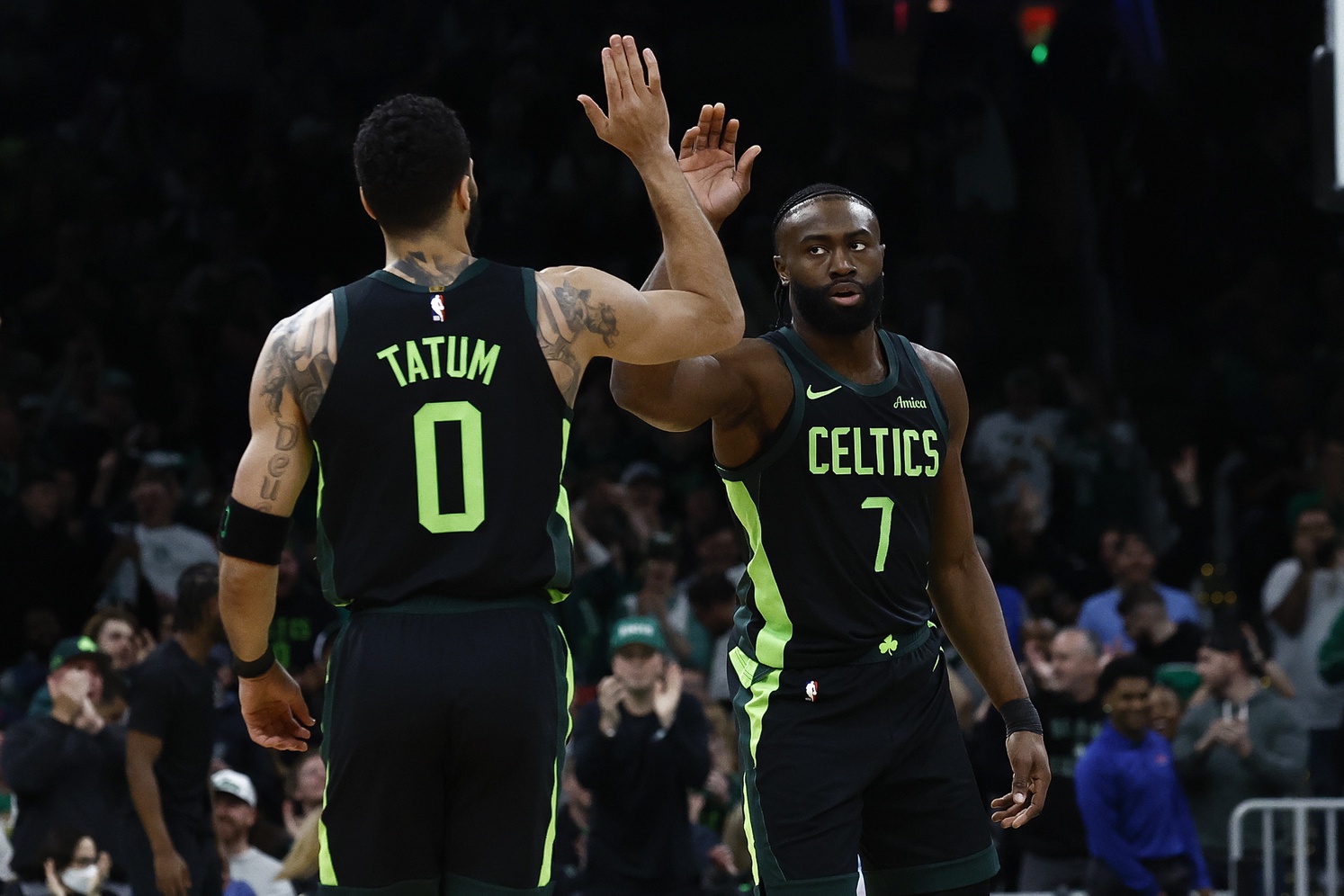
But with Jayson Tatum rehabbing from a torn Achilles that will likely cost him next season, and the team having exited the playoffs in the second round, changes are coming in Boston.

The “easy” place to look for change is with Jrue Holiday and Kristaps Porzingis. Holiday is still good, but he’s aging and he’s owed $104.4 million through 2027-28, starting with $32.4 million this season. Porzingis had a strong first season in Boston, but the Celtics won the 2024 title with him missing most of the playoffs. His second season involved a mysterious illness that basically tanked the back half of his season. He’s on an expiring $30.7 million deal, so moving him could save quite a bit too.

That’s all far easier said than done, however. The Celtics have been pretty adamant that they have no intentions of paying teams to eat Holiday’s and/or Porzingis’ contract. That means finding a suitor where Holiday fits, who can also deliver Boston some savings. The same is true of Porzingis, even if his situation is a bit easier, because he’s on an expiring contract.

The other reasonable trade option for Boston to save a chunk of money is moving off Sam Hauser. He’s set to start a four-year, $45 million extension with a first-year salary of $10 million next season. As one of the more consistent shooters in the league, and one with good size, Hauser is absolutely worth an AAV of just over $11 million per season.

For the Celtics, who aren’t likely to be title contenders, a bench shooter is kind of a luxury. It’s like having a good closer on a bad baseball team: It’s nice, but probably not changing the end destination of your season as a non-contender.

The good things for Boston with trading Hauser are three-fold. He fills a need that almost every contender has, as you can never have enough shooting. His contract is very easily acquirable for almost every team in the league, minus those with apron issues. And, last but not least, the Celtics have an in-house replacement to give minutes to in Baylor Scheierman.

On the downside, the Celtics project to start the summer about $25 million over the second apron (factoring in their draft pick and getting to the required 14-player minimum on standard contracts). That means that trading Hauser (who is the mostly likely player on the roster to be traded without bringing back any salary in return due to his modest salary), chips away at that figure, but it doesn’t get Boston under the second apron.

To pull that off, Brad Stevens is going to have to trade Holiday and/or Porzingis, while taking back less salary. That’s certainly possible. You could even say it’s likely. But it’s probably not going to be by $15 to $20 million in a straight up deal.

That’s where a third team could come into play. This is where Boston could get creative with some future picks (the Celtics hold the rights to most of their future first-round picks, as well as some additional second-rounders) with moving off a salary.

Let’s say Porzingis was traded for two players making $15 million apiece. The Celtics could flip one of those players to another team with cap space (the Nets most likely) or an exception, and that would net the team roughly $15 million in savings. You combine that with the savings from a potential Hauser trade, and all of a sudden, the team is under or in range of dipping under the second apron.

Unless… Boston re-signs Al Horford and/or Luke Kornet.

The two big men are the key free agents for the Celtics this summer. Both have said they would like to return to Boston. The difficulty comes with paying them fairly, while battling these second apron challenges. Horford might take a further discount from the $9.5 million he made last year. Let’s say he takes $6 million. And maybe Kornet would be happy with a deal starting around $6 million too.

If Boston did that, because there’s nothing counting for either Horford nor Kornet towards the apron calculation right now, that’d add an additional $12 million to the apron. Then, we’re back to figuring out additional moves to dodge the second apron.

Let’s pause there and ask: Why is it so important to dodge the second apron? Is it just saving the incoming ownership group money?

It’s not just about the money, although that is a big part of it. Boston likely doesn’t want to be setting any kind of records for total salary plus taxes outlay. At least not for a team that isn’t a title contender while Tatum is out.

But there are basketball reasons for getting out from under the second apron too. As a result of being over the second apron last season, the Celtics 2032 draft pick is now frozen. That pick cannot be traded, and it’s currently set to be dropped to the end of the first round in that year. If Boston can get under the second apron, they’d begin the process of “thawing” that pick. If they can go three of four years without going back over the second apron, that pick would unfreeze.

In addition, being over the second apron means you have limited trade options (can only take back less salary, can’t aggregate salaries, can’t use TPEs) and you can’t sign free agents to anything but a minimum contract. Essentially, you can re-sign your own free agents, sign your draft picks and you can sign minimum contracts. Remember how the Phoenix Suns spent the last two seasons searching for depth via minimum deals? That’s life as a second apron team.

For the Celtics and the second apron, it may take few transaction cycles to get under that restrictive line. Make a trade or two this summer, then another one or two around the trade deadline, and then they might be there. It could happen by the end of the offseason, but if it doesn’t, it’s not time to panic. There’s still time.

We touched on the challenges of re-signing Horford and Kornet above, but there is a good chance that at least one of the two is back. Both are key players for the Celtics. With the uncertainty around Porzingis (whether he’s on the roster or not), Boston needs quality backup big men. It might cause further second apron issues, but don’t be surprised if the Celtics re-sign one of the two free agent big men.

The team’s other free agents are less certain. There probably isn’t a place for Torrey Craig on a non-contender. J.D. Davison’s contract is set up for him to be back on a team-friendly number. And Drew Peterson could be brought back on another two-way deal, as he was really good in the G League and flashed at times in the NBA.

The draft is an opportunity to add some cost-controlled help. The Celtics have the 28th and 32nd picks. That’s two pretty good spots to take swings at. Don’t be surprised if one of those picks goes towards a center to help shore things up long-term in the frontcourt.

Pending what happens on the trade market, this will be a really interesting offseason for the Boston Celtics. They were also going to start the process of getting less expensive. Jayson Tatum’s injury now gives the team the “cover” of getting a lot less expensive a lot more quickly than they might have originally planned.

The Celtics just have to be careful to not go too far. This team isn’t devoid of talent without Tatum. There’s still plenty in the fold to be a playoff team this season, then more than pretty quickly after Tatum returns. That’s why trading players like Jaylen Brown or Derrick White doesn’t make sense, unless Boston is completely blown away with a trade offer. Think of this year as a step back and an opportunity to reset. Then, when Tatum is back in full in 2026-27, the Celtics can gear up and go for it again, ideally using the assets they gain from deals over the next year or so.


Keith SmithJune 17, 2025
© USA Today Sports

Offseason Approach

Adding depth around good, but aging core

Actual Cap Space

-$108.2 million

Practical Cap Space

-$105.3 million

Projected Luxury Tax Space

$17.4 million

Under Contract (8)

Jimmy Butler III
Stephen Curry
Draymond Green
Buddy Hield
Trayce Jackson-Davis (non-guaranteed)
Moses Moody
Brandin Podziemski
Jackson Rowe (two-way)

View Roster

Potential Free Agents (9)

Taran Armstrong (restricted – two-way)
Braxton Key (unrestricted)
Kevin Knox II (unrestricted)
Jonathan Kuminga (restricted)
Kevon Looney (unrestricted)
Gary Payton II (unrestricted)
Quinten Post (restricted – team option)
Gui Santos (restricted – team option)
Pat Spencer (restricted)

View Free Agents

Dead Cap (0)

None

Projected Signing Exceptions

Non-Taxpayer MLE ($14.1 million)
Bi-Annual Exception ($5.1 million)

Notable Trade Exceptions

Kyle Anderson ($8.8 million)

First Round Draft Pick

None

Notable Extension Candidates

Draymond Green (veteran extension)
Trayce Jackson-Davis (veteran extension)
Kevon Looney (veteran extension – through June 30)
Gary Payton II (veteran extension – through June 30)

Analysis

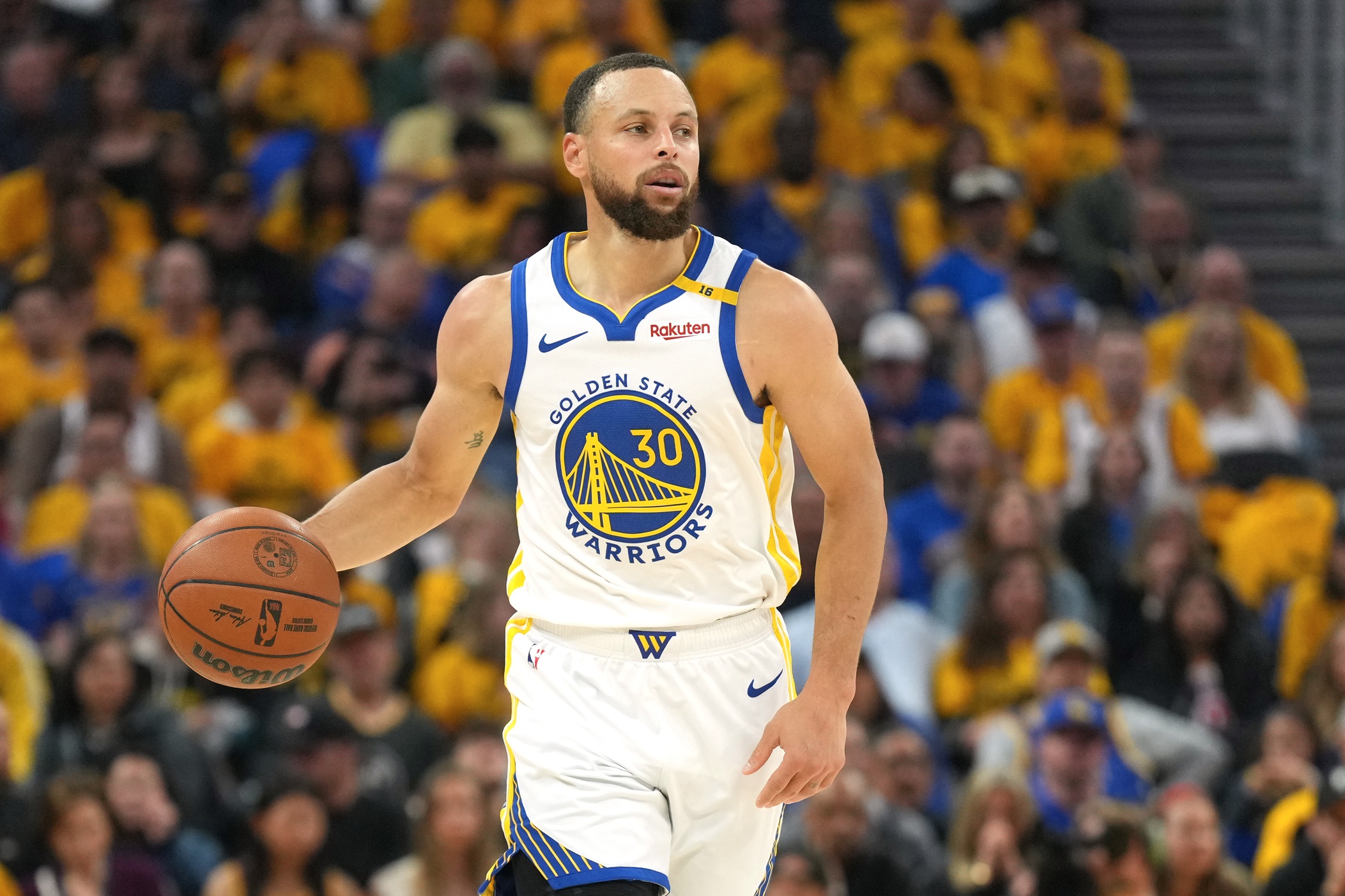
The Golden State Warriors continue to lengthen their window of contention beyond what anyone could have reasonably expected. This time around, the acquisition of Jimmy Butler pushed Golden State back to the contender level. Now, they’ll have a full offseason to incorporate Butler, while fleshing out the roster.

The main pieces are in place for the Warriors, with Butler extended last season to join Stephen Curry and Draymond Green. Buddy Hield will be back to provide shooting and scoring off the bench. Golden State also completed an extension with Moses Moody last year, while Brandin Podziemski has two years left on his rookie scale deal. Trayce Jackson-Davis will also be back as part of the frontcourt mix.

First up this summer is figuring out what to do with Jonathan Kuminga. This past season was a step back for Kuminga. He wasn’t as efficient, missed time with injuries and ultimately lost his rotation spot. Not exactly how you want to approach a contract year.

The $30 million-plus that Kuminga wanted last summer won’t be there this offseason. Unless the Brooklyn Nets get frisky with an offer sheet (and don’t count out Sean Marks when it comes to offer sheets!), Kuminga being a restricted free agent will make it tough for him to garner offers.

The realistic path away from Golden State for Kuminga could be a via a sign-and-trade. There are teams who like the young forward and think he still has potential to become a primary scorer. If the Warriors could find a deal that makes sense, they could recoup some value for Kuminga while building out their bench.

Of course, Golden State and Kuminga could put the past behind them and work out a long-term deal themselves. At this point, something in the $20 to $25 million AAV range is probably the high-end for Kuminga. The other option is for him to sign his $7.9 million qualifying offer, play out the season (with a full no-trade clause for the year) and then to hit unrestricted free agency in 2026.

If the Warriors and Kuminga are truly finished with each other, then a sign-and-trade is the best path forward. That would allow Golden State to acquire depth, which this team desperately needs.

Expect Golden State to pick up the team options for Quinten Post and Gui Santos. That will give them two frontcourt players. Post played really well in the regular season for the Warriors, but struggled some in his first playoffs. Things played out fairly similarly for Santos, who was a bit better in the postseason than Post was, albeit in a lesser role.

Because the Warriors can make both Post and Santos restricted free agents in the summer of 2026, they’re best off to pick up their very inexpensive options for this season. The young frontcourt players will provide more value than the roughly $4.2 million they make combined.

Kevon Looney and Gary Payton II could both be back too. Looney has seen his role reduced, so he’d likely have to take a pay cut to return. But Steve Kerr has a comfort level with Looney. That’s worth at least $5 million for next season.

Payton played a bigger role, when healthy. Kerr trusts him more than any other guard on the roster on the defensive end. Like Looney, Payton will probably have to take a slight pay reduction, but returning for around $5 to $6 million would make sense for both sides.

Pat Spencer could be back for deeper guard depth. Taran Armstrong is worth signing to another two-way deal to continue to work with him in the G League. Kevin Knox II and Braxton Key are end of bench guys. Either could catch a camp deal, but don’t be surprised if they’re back in the G League to start next season.

As far as outside targets go, the Warriors could use a bit of everything. Using the full Non-Taxpayer MLE is probably out of range, because Golden State likely won’t have enough room under the first-apron hard cap that would trigger. But using some of the MLE, up to the Taxpayer MLE amount, could be in play. The Warriors should have enough wiggle room to make that work.

The team could use an established backup ballhandler. More frontcourt depth would be nice. If Kuminga is moving on, a wing with some size would make sense too.

Backup ballhandlers target in the Warriors price range should include Tyus Jones, Tre Jones, Jared Butler, Monte Morris and Cameron Payne. Frontcourt free agents who make sense are Trey Lyles, Guerschon Yabusele, Larry Nance Jr. and Bobby Portis, if the latter leaves the Milwaukee Bucks.

The big wing market is a bit light this summer. Amir Coffey, Taurean Prince or Ziaire Williams would all be nice fits, as all bring size and varied skillsets.

The Warriors extension options this offseason are fairly straight forward. Looney or Payton could both be extended before actually becoming free agents. It’s not likely to change much for Looney or Payton either way, as their values are the same on extensions or as free agents.

Trayce Jackson-Davis looked at one point like he’d be a shoe-in for an extension. Last year, he fell out of the rotation and didn’t have the same impact. That one will probably carry into the season. If Jackson-Davis bounces back, the Warriors will probably look to lock him up long-term before next season ends.

Draymond Green is also extension-eligible. It’s unclear how much longer Green wants to play. He has a player option for the 2026-27 season that he’s very likely to pick up. That deal aligns with both Curry’s and Butler’s for the next two seasons. Don’t expect an extension for Green this offseason, if only to give everyone flexibility moving forward.

In some ways, the Golden State Warriors already made their big swing by acquiring Jimmy Butler at last season’s trade deadline. Butler proved to be a perfect fit in the Bay Area. Now, Mike Dunleavey Jr. needs to find enough depth to prop up his veteran-led group. If he can, there’s no reason Golden State can’t contend again in the Western Conference. The key will be getting to the playoffs healthy and as rested as possible, almost without regard to seed.

Keith SmithJune 17, 2025
© USA Today Sports

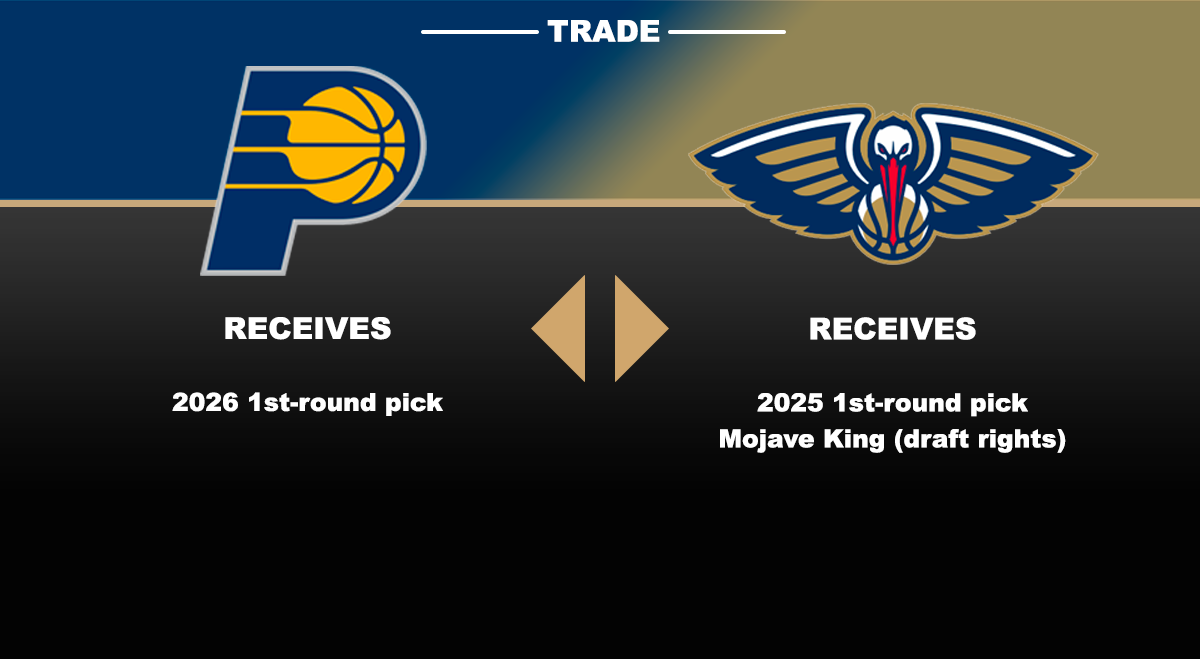
The New Orleans Pelicans used an extra future first-round pick to get an additional selection in this year’s draft. The Indiana Pacers created some salary flexibility for the upcoming season, while re-acquiring their own first-rounder in 2026.

Here are the particulars:

New Orleans Pelicans acquire: 2025 23rd overall pick, draft rights to Mojave King

Indiana Pacers acquire: their own 2026 first-round pick

Note: This trade was allowed to be completed now, despite the Indiana Pacers currently playing in the NBA Finals, because it did not include any active players.

Let’s dive in!

New Orleans Pelicans

Incoming salary: $0.0 million in 2024-25

  • None

Outgoing salary: $0.0 million in 2024-25

  • None

The New Orleans Pelicans have reportedly been aggressive about trying to move up in the 2025 NBA Draft. New Orleans already held the seventh overall pick and now add an additional first-round with the 23rd pick. That could give New Orleans the capital needed to move up by a few picks.

The Pelicans are reportedly fans of Ace Bailey. Recent buzz has Bailey dropping some in the draft. New Orleans could be looking to move up in the draft by a few selections to select Bailey. If that’s what drove this trade, then hats off to the Pelicans. The pick they traded is unlikely to be any better than the one they got in this deal. If that’s enough to get them the player they want in the draft, that’s solid work.

If New Orleans keeps both of their first-round picks, they’ll be able to add two cost-controlled players. The cap sheet cleans up considerably starting in 2026. Having two young players on rookie scale deals would only help things even further.

Getting Mojave King’s draft rights gives the Pelicans something to put in a future deal, should they need to be in position to send out something to make a trade legal. It’s unlikely King will ever play in the NBA, as he struggled throughout two G League seasons. Last year, King played a bit better in Australia and New Zealand, but he has a long way to go before he’d be NBA-ready.

Indiana Pacers

Incoming salary: $0.0 million in 2024-25

  • None

Outgoing salary: $0.0 million in 2024-25

  • None

This was a really smart piece of “kicking the can down the road” by the Pacers. Indiana is committed to going into the luxury tax to re-sign Myles Turner this summer. Now, they’ll have a bit more flexibility with the tax then they did before this trade.

The 23rd pick holds a rookie scale value of just over $3.2 million. That’s now $3.2 million the Pacers don’t have to put on their books next season. That won’t be the difference between re-signing Turner or not. Indiana knows they’ll have to go into the tax to get that done.

But that could be the difference between re-signing Turner and filling out the roster to 15 players. If the Pacers can create a bit more wiggle room, it could even be the difference with using the Taxpayer MLE. It’s unlikely Indiana will get to a point where they can use the full Non-Taxpayer MLE, but the Taxpayer MLE should have decent spending power this summer. That’s especially true if the team targets a better backup center than the ones they had behind Turner this year. Also, if Indiana wants to re-sign Isaiah Jackson to fill the backup five role, this may have created the savings to do so.

In addition, by re-acquiring their own pick in 2026, the Pacers freed up some draft capital for future trades. Because that pick was previously top-four protected, it tied up Indiana’s picks in 2026, 2027 and 2028. Now, the Pacers will be free and clear to trade any of their first-round picks from 2026 and forward.

This deal won’t make waves, but these are the sort of small, but smart moves that teams need to make to keep their core together for as long as possible. Being a small market team, Indiana’s willingness to pay the tax to keep their NBA Finals group together is admirable. But there are limits to just how much tax they will pay. This deal lessened that pressure by a decent amount, while not really changing their draft pick situation all that much.


Keith SmithJune 16, 2025
© USA Today Sports

Offseason Approach

Patience while retaining key free agents and adding frontcourt depth

Actual Cap Space

-$83.8 million

Practical Cap Space

-$84.1 million

Projected Luxury Tax Space

-$29.9 million

Under Contract (11)

Jarrett Allen
Darius Garland
De’Andre Hunter
Donovan Mitchell
Evan Mobley
Isaac Okoro
Craig Porter Jr. (non-guaranteed)
Max Strus
Nae’Qwan Tomlin (two-way)
Jaylon Tyson
Dean Wade ($4.6 million guaranteed)

View Roster

Potential Free Agents (7)

Emoni Bates (restricted – two-way)
Javonte Green (unrestricted)
Ty Jerome (unrestricted)
Sam Merrill (unrestricted)
Chuma Okeke (unrestricted – team option)
Tristan Thompson (unrestricted)
Luke Travers (restricted – two-way)

View Free Agents

Dead Cap (1)

Ricky Rubio ($424,672)

Projected Signing Exceptions

None (projected to be unusable due to being over the second apron)

Notable Trade Exceptions

Georges Niang ($8.3 million – unusable due to being over the second apron)

First Round Draft Pick

None

Notable Extension Candidates

Darius Garland (veteran extension)
De’Andre Hunter (veteran extension – as of October 1)
Sam Merrill (veteran extension – through June 30)
Max Strus (veteran extension)
Dean Wade (veteran extension)

Analysis

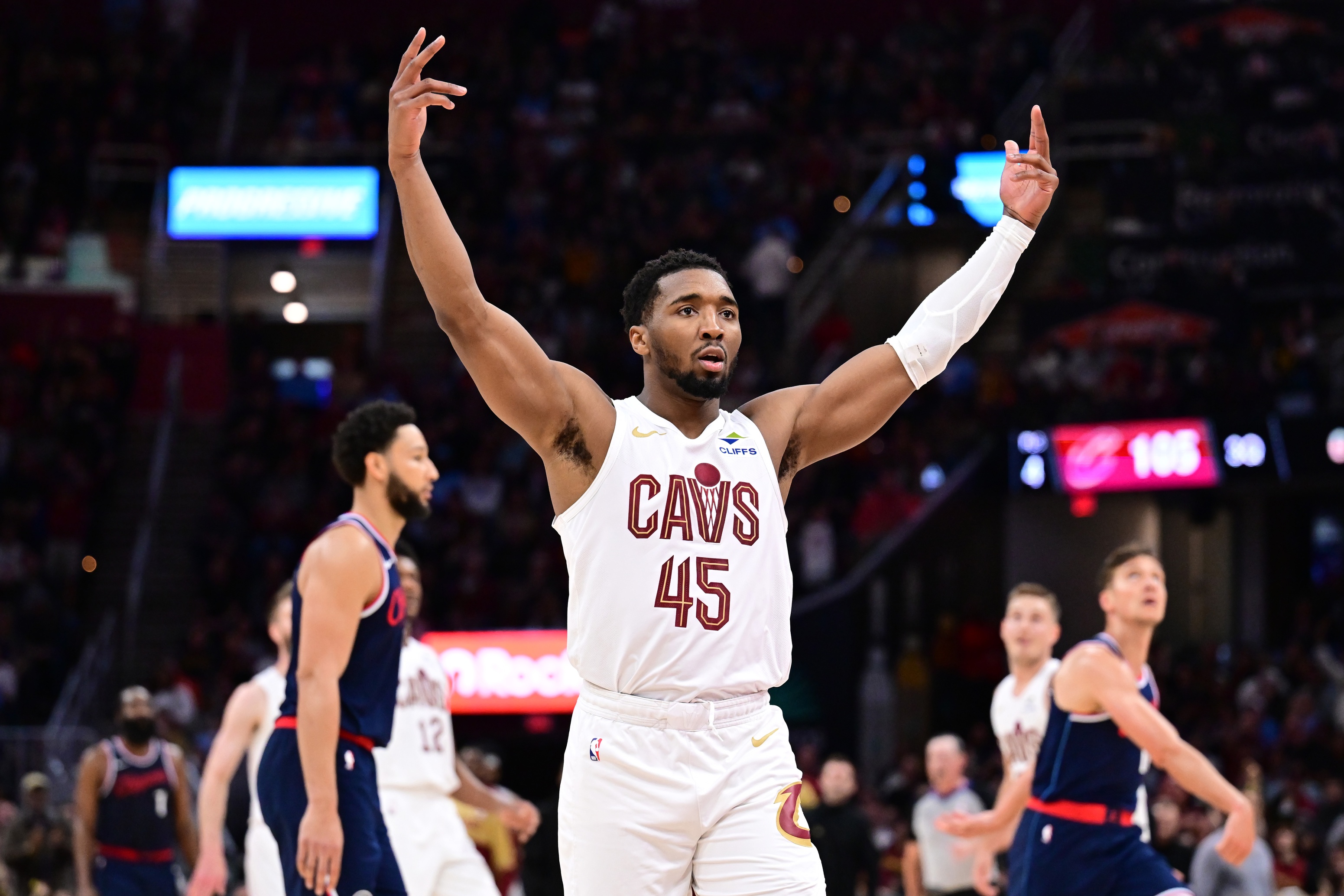
The Cleveland Cavaliers season finished in disappointment for a second consecutive year. The banged-up Cavs fell in the second round of the playoffs again, this time to the Indiana Pacers. Now, Cleveland is left looking at a roster that had an excellent regular season but hasn’t found postseason success.

Some have pushed that the Cavaliers should be looking to break up the core foursome of Donovan Mitchell, Evan Mobley, Darius Garland and Jarrett Allen. Is that really the way to move forward? Or is giving this group another year to figure things out the more prudent path?

Cleveland should listen to offers for Allen, and slightly less enthusiastically for Garland. Allen is a good, but limited offensive player. He’s also a good, but not game-changing, defensive player. Garland is a terrific point guard, but his skills are somewhat duplicative with Mitchell’s. In addition, Garland has been injury prone throughout his career, and he doesn’t offer much on the defensive end of the floor.

All of that said, it should have to take a really good offer to draw Allen away from the Cavs in a trade. And Cleveland would need to be blown away in a deal for Garland. You don’t give away good players, who are just hitting their prime years, unless the offers are ones you can’t refuse.

That’s just one of the reasons the Cavaliers should mostly run it back next season. The other reason is that the Eastern Conference is there for the taking. The Pacers are very good, but they aren’t going to enter next season as overwhelming favorites. Same for the New York Knicks or Orlando Magic. The Boston Celtics are likely to take a step back, as are the Milwaukee Bucks. So, why not Cleveland? Let’s not forget that this was a pretty dominant regular season team that ran into injuries in the playoffs.

Part of Cleveland’s formula for success last season was their depth. They’re going to have to either pay up or do some roster work to keep that depth for next season.

Without re-signing any of their own free agents, the Cavs are about $14 million over the second apron to begin the offseason. That’s…well…that’s a big number. With key free agents in Ty Jerome and Sam Merrill hitting the market, Cleveland has some work do to.

The Cavaliers have shopped Isaac Okoro, but found no takers willing to eat his $11 million salary (and $22.8 million total salary). At least, Koby Altman hasn’t found anyone willing to take on Okoro without the Cavs also giving up draft assets. And draft assets are precious and few for Cleveland, because they gave up so many to acquire Mitchell.

Altman has also reportedly looked at moving Dean Wade and his $6.6 million contract too. The challenge there is that doesn’t offer as much salary relief, and it could cause depth issues for Cleveland up front. Trading Max Strus would also offer salary relief, but that would create a hole in the starting lineup and remove a needed shooter from the roster.

Most expect Jerome to have contract offers in the range of the full Non-Taxpayer MLE for next season. He’s a good combo guard, who provides bench offense. That puts him around a value of the $14.1 million MLE amount. Because the Cavs have Early Bird rights for Jerome, they could effectively match that amount, but that would only push the tax bill higher, while going even further past the second apron.

Merrill isn’t going to get paid as much as Jerome, but a salary starting in the range of $5 million feels about right. That comes with all the same complications as re-signing Jerome does, as far as the tax and second apron go.

The team’s other free agents of note are veterans Tristan Thompson and Javonte Green. Tax issues and lack of roster spots could see either player let go. If Thompson wants to continue to play, he could be brought back. The Cavaliers like Thompson in the locker room and the way he pushes Allen and Mobley in practice. Green is less likely to return, pending what happens with the rest of the roster.

Emoni Bates should be brought back for one more year on a two-way deal. Luke Travers gave the NBA a run, but he’s more of a 50-50 proposition to return to Australia or to do another two-way deal.

Cleveland could waive Chuma Okeke (or not pick up their team option) or Craig Porter Jr. to free up about $4.7 million in flexibility. However, both Okeke and Porter would need to be replaced by players on minimum contracts, and their current deals aren’t much more than the minimum themselves. There’s a good chance Okeke is let go, but Porter will likely be back.

At the draft, Cleveland has two late second-round picks. That’s generally the range where a team drafts a player for a two-way contract. For the Cavs, they might be better served looking for a player or two who can fill a standard roster spot. That would allow Cleveland to bring them in on a rookie minimum salary, which is roughly $1 million less than a veteran minimum deal.

The Cavs have a handful of veterans who are extension-eligible, but most of them have at least two years left on their current deals. Cleveland is better pushing those talks off until a later date. Dean Wade is interesting and signed a team-friendly extension last time around. It’s worth looking at something similar, with a slight bump for inflation, again. That’ll cause further tax issues down the line, but Wade is a good player who fills a real role.

Ultimately, the Cavaliers roster is likely to look pretty similar next season, barring a major trade involving one of the four core players. Cleveland simply doesn’t have the flexibility to do much else, as they begin life as a second-apron team.

In the end, the Cavs are probably best off to use draft capital to shed Okoro’s salary. As long as it doesn’t get silly, and it shouldn’t need to, that move could put Cleveland within the range of re-signing Jerome. If the team let’s go of Okeke too, they can probably re-sign Merrill too. From there, they have to fill out the bench as economically as possible, as the tax bill will still be quite high.

Almost any way you spin it, unless it’s a blockbuster deal that somehow also sheds salary, the Cleveland Cavaliers will be among the NBA’s most expensive teams next season. But that’s not a bad thing. Despite the aberration that this NBA Finals has been, most Finals teams pay the tax to get there. It’s Cleveland’s turn again.

The Cavs should be willing to eat the tax bill. This team is right there, if they have better health in the playoffs. It’s not time to break up this group. Not yet, at least. If they fall short again next year, then we can start the conversation. For now, gear up, write the checks and get ready to make a Finals run.


Scott AllenJune 16, 2025

J.J. Spaun wins the U.S. Open. Spaun earns $4.3 million bringing his 2025 on-course earnings to $5.2 million and his career earnings to $22.4 million.

U.S. Open Top 10 Payouts

Top