Taylor VincentJuly 01, 2025

Spotrac audited the NWSL’s 2026 free agency list that was published today against the publicly announced contracts/options and there are two buckets of players— players which are not on there (and should be), and the players with 2026 options who are there. 

Players not present with either options of expiring contracts:

  • Emmie Allen - Bay FC
    • Last contract: Through 2025
  • Joelle Anderson - Bay FC
    • Last contract: Through 2025
  • Tess Boade - Bay FC
    • Last contract: Through 2025
  • Maddie Moreau - Bay FC
    • Last contract: Through 2025
  • Jamie Sheperd - Bay FC
    • Last contract: Through 2025, 2026 option
  • Riley Jackson - North Carolina Courage
    • Last contract: Through 2025, 2026 option
  • Sofia Cedeno - Seattle Reign
    • Last contract: Through 2025, loaned to USL Super League side Brooklyn FC through June 2025
  • Brecken Mozingo - Utah Royals
    • Last contract: Through 2025
  • Anna Moorhouse - Orlando Pride
    • Last contract: Through 2025


Players with options but not marked as options in the league’s list:

  • Alanna Kennedy - Angel City
    • Last contract: Mutual option for 2026
  • Miyabi Moriya - Angel City 
    • Last contract: Club option for 2026
  • Princess Marfo - Bay FC
    • Last contract: Club option for 2026
  • Jordan Brewster - Bay FC
    • Last contract: Club option for 2026
  • Ally Schlegel - Chicago Stars 
    • Last contract: Club option for 2026
  • Kristen Hamilton - Kansas City Current
    • Last contract: Mutual option for 2026
  • Jereko - Kansas City Current
    • Last contract: Club option for 2026
  • Victoria Pickett - North Carolina Courage 
    • Last contract: Mutual option for 2026
  • Tyler Lussi - North Carolina Courage 
    • Last contract: Mutual option for 2026
  • Morgan Gautrat - Orlando Pride
    • Last contract: Mutual option for 2026
  • Claudia Zornoza - Utah Royals
    • Last contract: Club option for 2026

Scott AllenJuly 01, 2025

The Oklahoma City Thunder and Shai Gilgeous-Alexander agree to a 4 year, $285 million super-max extension, the highest annual valued contract in NBA history.

The contract salary estimates are based on a league cap maximum of $182,019,000.

2027-28: $63,706,650

2028-29: $68,803,182

2029-30: $73,899,714

2030-31: $78,996,246

Total: $285,405,792

Scott AllenJune 30, 2025

The WNBA announced that it will be expanding to 18 teams with addition of three new franchises in Cleveland, Detroit and Philadelphia. Each team will pay a reported league record $250 million fee. Previously, Golden State (begin play in 2025) and Toronto (will begin play in 2026) paid $50 million and Portland (will play in 2026) paid $75 million.

Cleveland will begin play in 2028, Detroit will begin play in 2029, and Philadelphia will begin play in 2030.  


Recent WNBA Valuations via Sportico:

  1. Golden State, $500 million
  2. New York Liberty, $420 million
  3. Indiana Fever $335 million
  4. Las Vegas Aces, $290 million
  5. Seattle Storm, $285 million
  6. Phoenix Mercury, $250 million
  7. Minnesota Lynx, $240 million
  8. Los Angeles Sparks, $225 million
  9. Chicago Sky, $210 million
  10. Washington Mystics, $200 million
  11. Dallas Wings, $195 million
  12. Connecticut Sun, $180 million
  13. Atlanta Dream, $165 million


Scott AllenJune 30, 2025

Aldrich Potgieter wins the Rocket Classic. Potgieter earns $1.73 million bringing his 2025 on-course earnings to $2.9 million and his career earnings to $2.9 million.

Rocket Classic Top 10 Payouts

Scott AllenJune 30, 2025

Patrick Reed wins the ninth LIV Golf event of 2025 at Dallas and earns $4.375 million. 

Virginia Top 10

Keith SmithJune 28, 2025
© USA Today Sports

The 2022 NBA Draft class is eligible to sign Rookie Scale contract extensions this offseason. Each player has until late-October (right before the start of the 2025-26 regular season) to agree to an extension. If no agreement is reached, the player will be eligible for restricted free agency in the summer of 2026. A handful of players are ineligible to sign an extension, because they had team options declined or were waived at some point during their rookie scale contract.

By pick from that 2022 Draft, here’s where things stand for each player. We’ll also make a prediction on what happens before the late-October extension deadline.

For reference: The standard maximum extension (25% of the cap) these players can sign projects to be $246,662,400 over five years. The Designated Rookie Extension amount (30% of the cap) projects to be $295,994,880 over five years. We’re projecting this off a salary cap of $170.1 million for the 2026-27 season.

In order to qualify for the Designated Rookie Extension, a player must make All-NBA this coming season, or they can also qualify by winning MVP or Defensive Player of the Year this coming season. Cade Cunningham (All-NBA) and Evan Mobley (Defensive Player of the Year) qualified to jump to 30% of the cap max deals this past season.

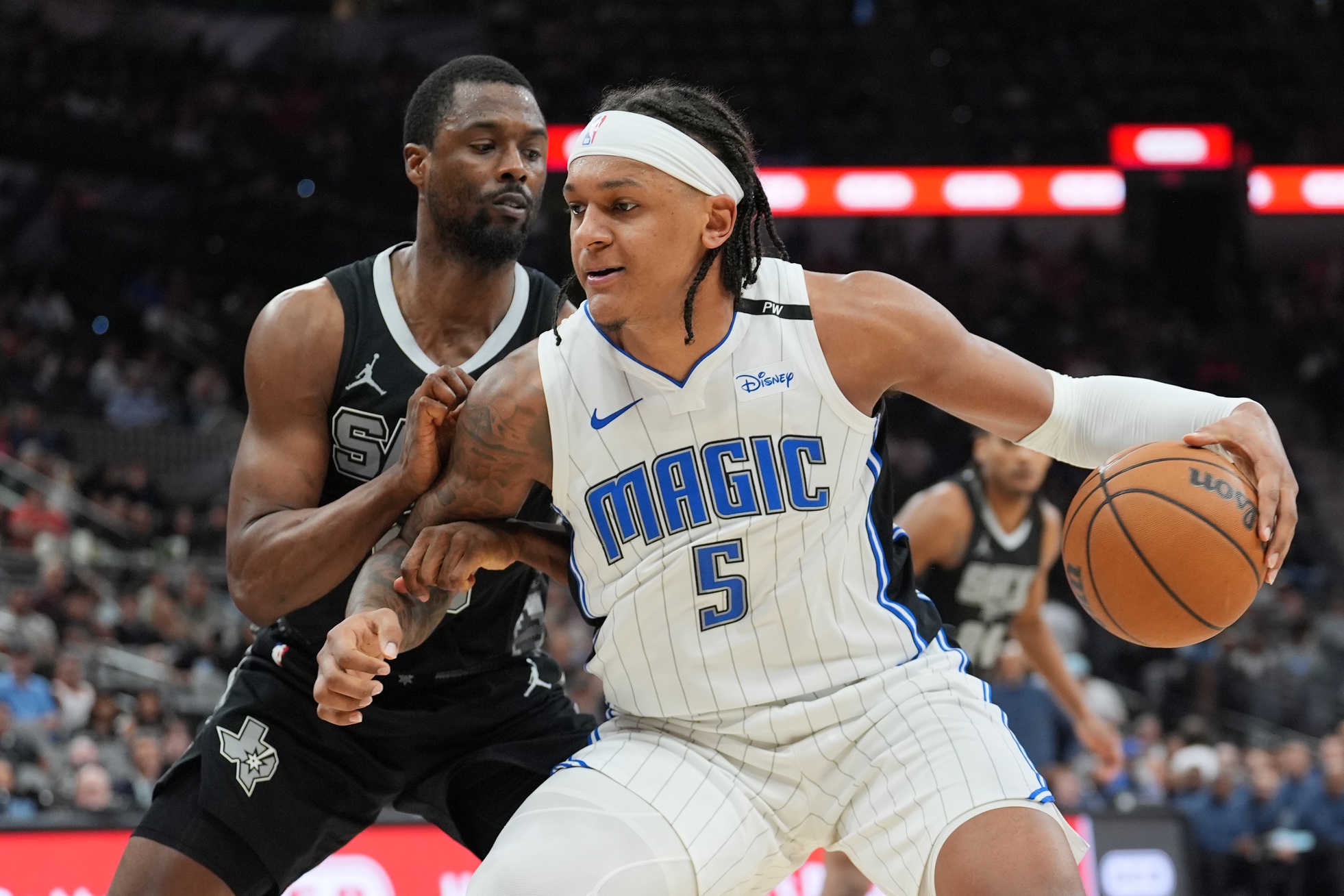
#1 Paolo Banchero – Orlando Magic

This one is really simple. Paolo Banchero is Orlando’s franchise player. Franchise players get the max, and they get it with the Designated Rookie language too. Yes, the Magic are starting to get really expensive, but they’ve done everything knowing that Banchero would get a max deal when it was time. That time is now.

Projection: Five years, $246,662,400 (25% of the cap), no options; Designated Rookie language to bump the extension to five years, $295,994,880, no options.

#2 Chet Holmgren – Oklahoma City Thunder

There’s a bit more volatility here, only because Holmgren has missed considerable time in his first three NBA seasons. But the talent is undeniable, as is his fit with and importance to the Thunder. Because Oklahoma City is set up to handle three guys on max deals, they’ll likely give Holmgren the max. Bet on this one being a standard max contract though, without any Designated Rookie language.

Projection: Five years, $246,662,400 (25% of the cap), no options.

#3 Jabari Smith Jr. – Houston Rockets

Smith still feels like he’s full of untapped potential. His fit has become in question with the Rockets though. Smith lost his starting spot last season, and now Houston has acquired Kevin Durant. With some other long-term money on the books too, it’s uncertain what will happen with Smith. For Houston, this will have to be somewhat creative and team-friendly to get done, similar to the deal Jalen Green signed last season. For Smith, he might be better off betting on himself, whether that’s with the Rockets or elsewhere, if he were to be traded.

Projection: No extension.

#4 Keegan Murray – Sacramento Kings

Things have been a little weird for Murray to this point. He had a really good rookie season, then took real steps forward in Year 2. Last season, Murray backslid quite a bit. He was mostly in an off-ball role, saw less shots and overall touches, and never really seemed to find an offensive rhythm. Still, Murray is Sacramento’s best wing/forward defender, and his offensive potential remains high. If the Kings make some expected roster tweaks this offseason, Murray could jump right back to where he was a year ago. That’s a guy you extend to have around long-term.

Projection: Five years, $140 million, no options.

#5 Jaden Ivey – Detroit Pistons

Ivey lost two-thirds of his season due to a broken leg. Before that, he was playing his best basketball since joining the NBA. On a Pistons roster that finally made sense, Ivey was making on-ball plays, and had the space to work as an off-ball shooter and cutter. He’s a perfect fit next to Cade Cunningham, as they complement each other very well.

Projection: Five years, $135 million, no options.

#6 Bennedict Mathurin – Indiana Pacers

With Tyrese Haliburton likely to miss all of next season, Mathurin could explode in production and, thus, contract value. He’s already a good scorer, able to get downhill for baskets or fouls, as well as being an improving jump-shooter. That has value. Indiana is getting more and more expensive by the year though, so they have to be cautious about how much money they put on the books long-term. But not getting something done with Mathurin now could come back to bite them. They should offer $25 million AAV, but Mathurin may want to bet on himself and see if he can get even more next summer.

Projection: Five years, $125 million, no options.

#7 Shaedon Sharpe – Portland Trail Blazers

Sharpe is like Mathurin, only a little less proven. He’s a good scorer and developing playmaker, but Sharpe is an inconsistent shooter and his defense is still subpar. That makes extending him a bigger risk. The middle ground here could be a healthy contract size, but only a four-year length. That protects the Blazers a bit in case thing go sideways.

Projection: Four years, $112 million, no options.

#8 Dyson Daniels – Atlanta Hawks

Atlanta did a great job locking up Jalen Johnson on a five-year, $150 million deal that is a flat $30 million per season. They should look to do the same with Daniels, but for a bit less per season. A compromise could be a four-year deal for $25 million AAV, but the Hawks should push for five years to get their core locked in.

Projection: Five years, $125 million, no options.

#9 Jeremy Sochan – San Antonio Spurs

Sochan is still very much a work in progress. After experimenting with him as a big point guard, San Antonio went back to using him as a do-everything forward. That’s the best role for Sochan, who is an important player for the Spurs. Expect this to be a creative deal, likely with team control on the end of the contract.

Projection: Four years, $80 million, team option final season.

#10 Johnny Davis – Out of the NBA

Davis was waived by the Memphis Grizzlies after being traded there from the Washington Wizards. A questionable pick when drafted, things never really came together for Davis. He’s trying to get his career going in the G League.

#11 Ousmane Dieng – Oklahoma City Thunder

Dieng hasn’t come along like fellow draftees Chet Holmgren and Jalen Williams. Maybe he’s a late-bloomer, but given how expensive the roster is trending, combined with an ever-present lack of roster spots, the Thunder can’t extend Dieng now.

Projection: No extension.

#12 Jalen Williams – Oklahoma City Thunder

Williams has been awesome for the Thunder since Day 1. He’s a complete star. Given that Williams has already made an All-NBA team, Oklahoma City is going to go with a full max, with Designated Rookie language to get him in the fold long-term.

Projection: Five years, $246,662,400 (25% of the cap), no options; Designated Rookie language to bump the extension to five years, $295,994,880, no options.

#13 Jalen Duren – Detroit Pistons

Duren is rapidly improving. He’s gotten better defensively and his offensive game is rounding out nicely. Detroit is still looking for frontcourt upgrades, but they seem to be to work with Duren, not to replace him. He’s not anywhere near a max deal, but bigs still get paid in the NBA. Look for Duren to get something similar, if not the same, as Jaden Ivey.

Projection: Five years, $135 million, no options.

#14 Ochai Agbaji – Toronto Raptors

The Raptors like Agbaji, and he’s played well since getting to Toronto. The challenge for Agbaji when it comes to an extension is that he’s still somewhat unproven. The bigger challenge is that Toronto has a whole bunch of wings to sort through.

Projection: No extension.

#15 Mark Williams – Phoenix Suns (trade pending from Charlotte Hornets)

It’s been quite a few months for Williams. He got healthy, got traded to the Los Angeles Lakers, saw the trade rescinded due to long-term health concerns. Then he awkwardly returned to the Charlotte Hornets, before getting traded to the Suns at the 2025 NBA Draft. A fresh start is needed for Williams, but given the uncertainty with his health and the fact the Phoenix just got him, they should both bypass an extension. If he works out, they can hammer out a new deal in restricted free agency next offseason.

Projection: No extension.

#16 A.J. Griffin – Out of the NBA

After playing for two seasons, Griffin retired from professional basketball to dedicate himself to his ministry.

#17 Tari Eason – Houston Rockets

Eason has established himself as an awesome backup forward for the Rockets. He plays with great energy, defends like crazy and gets on the glass. The offensive game is still a work in progress, but Eason is the kind of guy all good teams have. $20 million might seem like a lot for a reserve forward, but there’s a lot of untapped potential still with Eason. Houston should lock him up on a long-term deal.

Projection: Five years, $100 million, no options.

#18 Dalen Terry – Chicago Bulls

Terry started putting things together consistently this past season. However, he’s still unproven. And Terry is still caught up in a mix of a bunch of guards, and he’s not great playing up as a forward. There’s just not enough here to justify an extension.

Projection: No extension.

#19 Jake LaRavia – Sacramento Kings

Because the Memphis Grizzlies declined LaRavia’s fourth-year rookie scale team option, he’s not extension-eligible. The Kings are limited to signing LaRavia to a contract starting at the amount of the declined option at $5.2 million. That could put LaRavia in play for other teams in free agency.

#20 Malaki Branham – San Antonio Spurs

Branham hasn’t been able to crack the Spurs rotation for consistent minutes. San Antonio’s guard group has gotten deeper since Branham was drafted too. There won’t be an extension here.

Projection: No extension.

#21 Christian Braun – Denver Nuggets

Braun has grown from good reserve to good starter for the Nuggets. He’s a key part of the team. Denver is already carrying a lot of long-term salary, but they aren’t going to want to mess around and risk Braun getting a big offer sheet as a restricted free agent next summer. The Nuggets have also been aggressive about extending their own players. It’ll put more money on the books, but Denver has to do what it takes to get Braun locked in.

Projection: Four years, $120 million, no options.

#22 Walker Kessler – Utah Jazz

It’s been kind of a weird journey for Kessler so far. He was a very pleasant surprise as a rookie. Seemed to lose some favor as a sophomore, then got back in the good graces last season. He’s an excellent defender and rebounder, and his offensive game is coming along nicely. Kessler should be a part of what the Jazz are building, both now and moving forward, yet trade rumors persist. Utah could shut all that down by extending the young center.

Projection: Four years, $120 million, no options.

#23 David Roddy – Houston Rockets

Roddy is on a two-way deal with the Rockets after bouncing around the NBA during his first three seasons. He’s no longer extension-eligible.

#24 MarJon Beauchamp – New York Knicks

Beauchamp is a free agent after finishing last season on a two-way contract with the Knicks. He’s no longer extension-eligible.

#25 Blake Wesley – San Antonio Spurs

Like backcourt mate and fellow 2022 draftee Malaki Branham, Wesley hasn’t cracked the Spurs guard rotation. Several other players are in front of him in the backcourt pecking order now too. No extension is coming here.

Projection: No extension.

#26 Wendell Moore Jr. – Charlotte Hornets

Moore finished last season on a two-way deal with the Hornets and is now a free agent. He’s no longer extension-eligible.

#27 Nikola Jovic – Miami Heat

Miami has to be careful here. Jovic is brimming with potential, but he’s been injury prone over his first few NBA years. Going more than $15 million AAV is putting a lot of risk on the Heat’s side. For Jovic, that’s probably too team-friendly to sign. This one will probably play out to restricted free agency in 2026.

Projection: No extension.

#28 Patrick Baldwin Jr. – LA Clippers

Baldwin is with the LA Clippers on a two-way deal after bouncing around some for a few years. He’s no longer extension-eligible.

#29 TyTy Washington Jr. – Phoenix Suns

Washington is a free after playing last year on a two-way deal with the Suns. He’s no longer extension-eligible.

#30 Peyton Watson – Denver Nuggets

This one is tough. The Nuggets love Watson. He’s a terrific defensive player. He’s shown real improvement as a shooter too. But there’s no path to a regular starting role for him in Denver. Given that the Nuggets are carrying a ton of long-term money, and have to get a deal done with Christian Braun, it’s hard to see them going too big to keep Watson. This one will probably play out for a year, then will get re-addressed in restricted free agency next summer.

Projection: No extension.

Keith SmithJune 28, 2025
© USA Today Sports

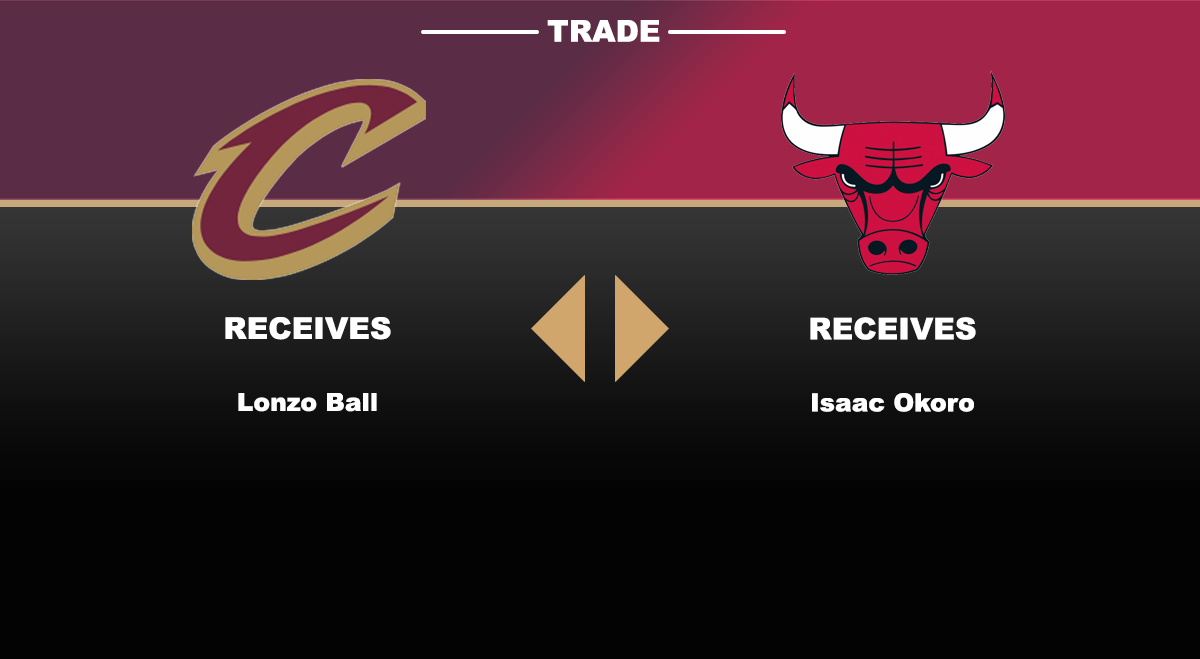
The Chicago Bulls cleared up some of their guard logjam in a rebalancing trade. The Cleveland Cavaliers added some guard-depth insurance, while saving a little money.

Here are the particulars:

Cleveland Cavaliers acquire: Lonzo Ball

Chicago Bulls acquire: Isaac Okoro

Let’s dive in!

(Note: We’re running our analysis of this trade starting with the 2025-26 season. If the terms of the deal change, we’ll adjust the analysis.)

Cleveland Cavaliers

Incoming salary: $10.0 million in 2025-26

  • Lonzo Ball (PG/SG, two years, $20.0 million (team option for final season))

Outgoing salary: $11.0 million in 2025-26

  • Isaac Okoro (SF/SG, two years, $22.8 million)

The Cleveland Cavaliers are living in the apron world now. Specifically, the Cavs are living as a second-apron team. That makes roster moves difficult for them. Knowing those restrictions, this is a solid move to add depth, and to protect against losing a key player in free agency.

Lonzo Ball deserves all the accolades in the world for making it back to the NBA after what was essentially a three-year absence. When he did make it back last year, Ball looked predictably rusty. But he also looked good physically and moved well. That was all we wanted to see in his court time a year ago. The rest will come, and he’s still a great passer and floor general.

Before this trade, the Cavs were nearly $10 million over the second apron. That’s with four open roster spots, one of them crucially belonging to unrestricted free agent Ty Jerome. Now, Cleveland is protected if Jerome leaves in free agency.

Because they hold Early Bird rights for Jerome, Cleveland was roughly limited to paying him the equivalent of a Non-Taxpayer MLE contract. That’s something that other teams can do for Jerome also, giving the Cavs competition to keep Jerome. In addition, whatever re-signing Jerome would cost would push Cleveland even further over the second apron.

After acquiring Ball, the Cavs save $1 million towards the tax and the aprons, while shoring up their guard depth behind Donovan Mitchell and Darius Garland. In addition, if Ball doesn’t work out, Cleveland can decline the $10 million team option for him for next season. That’s a savings of $1 million now and potentially $11.8 million next season, because Isaac Okoro’s deal was fully guaranteed for 2026-27.

Trading Okoro shouldn’t damage Cleveland’s wing rotation much, if at all. Max Strus took over as the starter when he arrived in Cleveland. When De’Andre Hunter was added at the trade deadline, he took the primary backup wing minutes. The Cavaliers also have second-year wing Jaylon Tyson, who they are very high on.

This is a really solid deal for Cleveland. They used depth at one spot to fill a need at another spot. And they saved a little money in doing so. That’s good work by Koby Altman and crew.

Chicago Bulls

Incoming salary: $11.0 million in 2025-26

  • Isaac Okoro (SF/SG, two years, $22.8 million)

Outgoing salary: $10.0 million in 2025-26

  • Lonzo Ball (PG/SG, two years, $20.0 million (team option for final season))

The Chicago Bulls had a glut of guards. Coby White, Josh Giddey, Ayo Dosunmu, Jevon Carter and Lonzo Ball. By moving on from Ball, the Cavs added some depth on the wing, while clearing up that logjam in the backcourt.

Isaac Okoro can play. He was squeezed out of the rotation in Cleveland, but there’s talent here. Okoro has shot it well from behind the arc for three seasons in a row, and he can guard both small forwards and shooting guards. There’s not a lot of on-ball juice with Okoro, but as shown above, the Bulls have a lot of playmakers. Okoro should give them a 3&D presence that they don’t really have.

It’s clear the Chicago roster is in transition. They still feel like a major work in progress. It’s hard to know which veterans will stick around long-term, but bringing Okoro into that mix is fine. He’s experienced enough to help now, but still young enough to fit if the team pivots towards youth.

The Bulls took on a little money in this deal, but they have plenty of room to do so. Chicago is over $46 million under the luxury tax. They do have to re-sign Josh Giddey, but they only have one open roster spot after doing so. That’s more than enough room to re-sign Giddey, fill out the roster and still have plenty of wiggle room for whatever else come next.

It’s become fashionable to dump on Chicago over the years. Every move they make seems designed to keep them squarely in the 7-10 range in the Eastern Conference. So, they’ve certainly earned some of that criticism. But that doesn’t mean that those are all bad moves. Okoro for Ball solves for an overcrowding issue in the backcourt, while adding wing depth. And the team has the flexibility to take on some money by acquiring Okoro. Not bad, considering Ball was no longer a part of the long-term plan for the Bulls.


Keith SmithJune 27, 2025
© USA Today Sports

The 2025 NBA Draft is now behind us. Normally, the draft features a lot of movement with players already on NBA contracts. This year, we saw only one trade that involved players already signed to NBA deals. While there were several trades made during the two-day draft, most of them involved shuffling around draft capital.

Of course, that was likely influenced by the fact that we already saw five blockbuster trades made or agreed to before the draft started. Those moves have changed cap space and spending power projections significantly as we approach free agency.

The 2025 NBA offseason looks like a weird one. The new media rights money will start hitting, but the NBA and NBPA agreed to cap the cap growth at no more than 10% from one year to the next. That means the cap is projected to go from $140.6 million this season to just over $154.6 million for next season. That $14 million jump is a big one, but it’s not going to result in a whole of cap space around the NBA.

The reason for that is teams have gotten really aggressive in recent years with extensions. More and more players are forgoing free agency and taking the certainty of extensions. In the 2024 offseason, the only big-name All-Star to change teams via direct free agency was Paul George. A few others moved via sign-and-trades and standard trades, but free agency itself wasn’t how stars moved.

That’s likely to continue in the summer of 2025. As you’ll see, there’s barely any cap space projected to be out there this summer. Also, the free agent class projects to be devoid of stars. Most of the All-Star level guys are good bets to re-sign with their current teams, or to extend before free agency opens.

However, that doesn’t mean having spending power is completely useless. With the Apron Era fully upon us, NBA teams are embracing exceptions in different ways. This summer, there will be some value signings available, simply because the means to overpay those players as free agents aren’t available. That should make for an active summer of role player movement.

In addition, it’s going to continue to be a big-time trade summer. If you want to acquire a star, a trade will be the way to do it. And there are still some stars reportedly on the market. Also, sign-and-trades may come back into a play for free agents in ways we haven’t seen over the past few years.

With all that said, here’s how things look today for 2025 offseason spending power around the NBA. For reference: The Non-Taxpayer MLE projects to be $14.1 million for 2025-26. The Taxpayer MLE projects to be $5.1 million.

(Note: These projections are made using the noted cap and tax figures above, draft pick cap holds based on projected standings and a projection on all option and guarantee decisions by players and teams. We have also factored in any reported trades and signings, as they have been reported. No other trades or extensions have been projected. We will call out where those types of situations could impact a team projection.)

Cap Space Team – 1 Teams

  1. Brooklyn Nets: $37.7 million in cap space

The Brooklyn Nets currently project to be the only team we can say with certainty will hit the summer with cap space. The Nets ate into some of that space by acquiring Terance Mann in a reported three-team trade with the Boston Celtics and Atlanta Hawks. Expect more of that type of thing to happen as free agency opens. Brooklyn also kept additional money on their books by making five selections in the first round of the draft.

What could swing this projection even higher is the status of pending restricted free agent Cam Thomas and Day’Ron Sharpe. If the Nets were to let Thomas and Sharpe leave town, they could create up to $76.3 million in cap space.

Here’s the thing though: Why let Thomas and Sharpe leave for nothing? Brooklyn isn’t ready to spend all that much, as they are in the early stages of their rebuild. Thomas and Sharpe are good players. With no other cap space teams out there, the Nets might be able to get both back on team-friendly deals.

And, of course, keep an eye on Sean Marks with restricted free agents from other teams too. When Brooklyn previously had copious amounts of cap space, Marks tossed around several offer sheets. In the end, no matter what direction they take, the Nets are in a great place to be active players this offseason.

Swing Cap Space and Non-Taxpayer Mid-Level Exception Teams – 2 Teams

  1. Detroit Pistons: up to $16.9 million in cap space
  2. Memphis Grizzlies: up to $3.2 million in cap space

The Pistons could be a cap space team this summer, creating up to $16.9 million to spend. That could aid in bringing back Malik Beasley, if he’s looking at more than the Non-Taxpayer MLE (NTMLE). If Detroit can get Beasley to come back for the NTMLE, they’re better off staying over the cap and using various Bird Rights to re-sign players like Dennis Schroder and Tim Hardaway Jr.

Memphis is in a super interesting situation. The Grizzlies can’t create any kind of meaningful cap space. The most they can get to is about $3.2 million (this went down a bit after making the trade with the Orlando Magic), while retaining restricted free agent rights for Santi Aldama. That’s not normally enough cap space for a team to bother with, and they’ll just stay over and use the NTMLE.

However, in this specific situation, that could be enough to bump up Jaren Jackson Jr.’s salary to nearly $30 million in a renegotiation-and-extension. That’s an interesting way to use cap space, given the Grizzlies wouldn’t have to give up on Aldama to get it done. Keep an eye on Memphis shedding another salary or two, which would allow them to up how much they can offer Jackson. The goal is to get him to over $30 million for the renegotiation-and-extension.

Non-Taxpayer Mid-Level Exception Teams – 9 Teams

  1. Atlanta Hawks
  2. Charlotte Hornets
  3. Chicago Bulls
  4. Houston Rockets
  5. LA Clippers
  6. Oklahoma City Thunder
  7. San Antonio Spurs
  8. Utah Jazz
  9. Washington Wizards

This is an interesting group of teams. The champs, a few playoff teams, some up-and-coming teams and a few rebuilding teams.

Atlanta is still in good shape to be able to use the NTMLE, even after acquiring Kristaps Porzingis. The Hawks should have enough space to re-sign Caris LeVert, add someone via the NTMLE and fill out their roster without tripping over the luxury tax line.

Charlotte took themselves out of the running for cap space when they took on Jusuf Nurkic’s contract at the trade deadline. That’s fine though, since the Hornets got paid a first-round pick to do so. They’re fine being an NTMLE team for another season, as the rebuild continues.

Chicago moved Zach LaVine at the trade deadline, but kept everyone else. The Bulls will have enough room to use the NTMLE, as long as things don’t get silly with Josh Giddey’s new contract.

Houston is firmly in NTMLE range after acquiring Kevin Durant. They have Fred VanVleet to thank for the ability to use the bigger signing exception. VanVleet and the Rockets agreed to a new deal which lowers his salary significantly. That will give the Houston some nice spending power to fill out their bench.

The Clippers have done such a good job managing their roster and cap sheet. LA will be able to bolster an already-strong roster by adding an NTMLE signing to the mix next season.

Oklahoma City is in a great, but kind of weird spot. Of course, they’re the champs. So, that’s an awesome starting point. They also have a very full roster. They have the room to use the NTMLE, but the Thunder don’t really have a roster spot to do so, nor the need. And given they’ll likely be a tax team a year from now, there’s no need to start the tax clock this season.

It feels like the Spurs shouldn’t have much money on the books, but after bringing in De’Aaron Fox and then moving up to the second overall pick, they’ll be over the cap. And that’s fine. They’ve got a strong, developing roster and they’ll be able to add to it with a NTMLE player.

With John Collins picking up his $26.6 million player option, the Jazz will be over the cap for sure. That’s not the end of the world. This roster is really in flux. Keep an eye on trades as how Utah will get things done. If that frees up roster spots, then the Jazz might use the NTMLE for an opportunistic value signing.

Washington went the pre-agency route and took on salary for next season early by trading for Khris Middleton and Marcus Smart at the trade deadline. They then took on a bit more salary when acquiring C.J. McCollum and Kelly Olynyk. That will keep the Wizards over the cap. Don’t rule out a value NTMLE signing, as they did a nice job in the Jonas Valanciunas sign-and-trade a year ago, provided they stay under the tax line. But Washington’s real work will get done via the trade market, as they’re still in asset-collection mode.

Swing Non-Taxpayer Mid-Level Exception Teams and Taxpayer Mid-Level Exception Teams – 5 teams

  1. Milwaukee Bucks
  2. New Orleans Pelicans
  3. Philadelphia 76ers
  4. Portland Trail Blazers
  5. Sacramento Kings

Another mix of teams that are would-be contenders, plus teams just trying to find their footing as they reset their rosters.

Milwaukee did a good job getting off money at the deadline. That will put the Bucks in position to possibly use the NTMLE. Yes, the Giannis Antetokounmpo situation is still looming, but the Bucks could make an impact addition while re-signing a few key free agents, including Brook Lopez and Bobby Portis.

The Pelicans are in transition. Brandon Ingram is gone, but New Orleans still has a lot of money on their books for next season and beyond. They added Jordan Poole and Saddiq Bey, which took on money for next year, while freeing up a bit more flexibility this season. They also moved up in the draft to select Derik Queen. A full NTMLE signing would take them over the tax, which is a no-go. But the Pelicans roster shuffling doesn’t feel complete yet.

Things haven’t gone as planned for the Sixers, as Joel Embiid and Paul George have been unable to stay healthy. With those two on the books, the team is very, very expensive. But Philadelphia might be able to squeeze in a NTMLE signing, if they make another move or two around the core group. Otherwise, a Taxpayer MLE signing could add some roster depth behind the injury-prone stars.

Portland is fairly expensive for a team coming off a tough season. That was added to when the Blazers acquired Jrue Holiday. But here’s the thing: Portland is trying to push forward this year. This roster remains flush with a confusing mix of veterans and young players trying to find their way in the NBA. More trade movement could come too. The roster is also relatively full, meaning that any kind of MLE signing might not be in the cards.

The Kings took on some long-term money by adding Zach LaVine and Jonas Valanciunas at the trade deadline, but they also got off some money too. Sacramento will be straddling the line of NTMLE vs Tax MLE. Hard-capping themselves at the first apron might not be worth it for using the NTMLE. A lot will depend on trades, plus what happens with Keon Ellis in free agency.

Taxpayer Mid-Level Exception Teams – 4 teams

  1. Denver Nuggets
  2. Indiana Pacers
  3. Miami Heat
  4. Toronto Raptors

This group is a bit larger than usual. The Nuggets and are still title contenders. The Pacers are coming off an NBA Finals run. Miami is resetting, while the Raptors are starting to push their rebuild forward.

Denver should have just enough room to fit in a Taxpayer MLE signing. However, that would mean another hard cap at the second apron. The Nuggets might want to avoid that complication for a third consecutive season.

Indiana has said that they’ll go into the tax to re-sign Myles Turner. That’s going to be a somewhat pricey deal. That means Indiana likely won’t add, and maybe won’t even be able to add, a NTMLE signing on top. That leaves the Taxpayer MLE, which the Pacers might avoid using, simply to avoid increasing the tax bill even further.

The Heat moved off Jimmy Butler at the trade deadline, but they took on some other long-term money in that deal. Their roster is also mostly full. If the right guy is there to use the Taxpayer MLE on, Miami will do it, but don’t lock that in.

When Toronto extended Brandon Ingram, they pushed right up to the tax line. They have enough room to fit in a Taxpayer MLE signing, but will they want to? It’d have to be someone who can really lift the Raptors. Otherwise, this group will likely focus on bringing back Chris Boucher and maybe some smaller moves around the edges of the rotation.

Swing Taxpayer Mid-Level Exception Teams and Second Apron Teams – 6 teams

  1. Boston Celtics
  2. Dallas Mavericks
  3. Golden State Warriors
  4. Los Angeles Lakers
  5. Minnesota Timberwolves
  6. Orlando Magic

Six teams that all have playoff aspirations for this upcoming season.

Boston has shed enough salary to get themselves under the second apron and in position to use the Taxpayer MLE. They might not be done yet, as the Celtics could get to NTMLE space. The challenge is that they aren’t going to duck those margins just to go right back up against them.

Kyrie Irving taking a bit less in the first year of his new deal should leave the Mavericks with enough room to use the Taxpayer MLE. That will be the Mavs prime asset as they look for a get-by point guard while Irving recovers from ACL surgery.

Golden State locked into being a tax team when they extended Jimmy Butler. The big question: Can they fit in a Taxpayer MLE signing before hitting what would be a second-apron hard cap?

The Lakers situation will be determined by LeBron James and, to a lesser extent, Dorian Finney-Smith. Both are very likely to be back with the Lakers. On what kinds of contracts will determine how much Los Angeles has to spend this summer.

If Minnesota re-signs Julius Randle, Naz Reid and Nickeil Alexander-Walker, they’ll be a second apron team. If they lose Reid or Alexander-Walker (or less likely Randle), the Taxpayer MLE comes into play. It’s really that simple for the Wolves.

Orlando might be a surprise here, but they’ve got a max extension kicking in for Franz Wagner and a near-max first-year salary coming online for Jalen Suggs. The Magic also acquired Desmond Bane, which didn’t really add any salary to the books, but rounded out the roster. Adding to everything there, the Magic have aggressively re-signed their own players, and this team is carrying a lot more salary than most realize. They’ve got a little flexibility to get under the tax line, but things are tighter in Orlando than they have been in years. The good news? The Magic don’t really have open roster spots anyway.

Second Apron Teams (no signing exceptions) – 3 Teams

  1. Cleveland Cavaliers
  2. New York Knicks
  3. Phoenix Suns

This group is in flux. Boston got themselves under the second apron. Milwaukee got themselves way under the second apron. Minnesota is harder to figure out until some of their own free agent situations are resolved, but might get under the second apron too.

Cleveland will join this group by virtue of acquiring De’Andre Hunter at the trade deadline, along with extensions kicking in for Donovan Mitchell and Evan Mobley, with a bump up to the 30% max salary for the latter. The Cavs have never shied away from paying for a contender, so they’ll likely end up even deeper into the tax after re-signing a couple of key free agents too.

When New York landed Karl-Anthony Towns before last season, they basically locked in second-apron status. Yes, Jalen Brunson took less to give the Knicks some flexibility, but this team is still carrying a ton of guaranteed salary. That’s not the worst thing, given New York is a contender. But it’s going to be hard for them to do much, beyond minor moves around the edges of the rotation.

The Suns were getting close to out of the second apron tunnel. You could see the light starting to appear. Then they took on salary by acquiring Mark Williams. Now, Phoenix is dealing with all the same second-apron issued they battled last year. The roster is very imbalanced, so there is work to be done. Maybe those moves will finally see the Suns drop below the second apron, but don’t bank on it.


Taylor VincentJune 27, 2025
© USA Today Sports

Halfway through the 2025 NWSL Regular Season, here’s a look at how different teams evolved through the offseason and how it impacted the first half of the season:

On average, teams had 80% of their 2024 playing minutes returning to the squad in 2025, and so far an average of 73% of minutes per team are coming from players who were with their teams in 2024. 

At the top of the scale, San Diego had 90% of their playing minutes returning for 2025 but they only account for roughly 71% of the minutes played this year. The Wave also had a T-1st 13 new additions to their roster, and have made the biggest swing in terms of performance, going from 10th at the end of 2024 to currently sitting third. 

The Houston Dash finished the 2024 season at the bottom of the table, had 90% of their playing minutes returning but the eight new additions have actually accounted for more than half of the playing minutes. Unfortunately, even with the talent coming in, the Dash have only moved up two spots—sitting in 12th at the midseason break. 

The 2024 NWSL Championship and Shield winning Orlando Pride had 20 players returning in 2025—only accounting for roughly 75% of their 2024 playing minutes—however, those 20 players now account for an NWSL high 92% of their 2025 playing minutes. The Pride are currently in second place in the NWSL table, eight points behind leader Kansas City.  

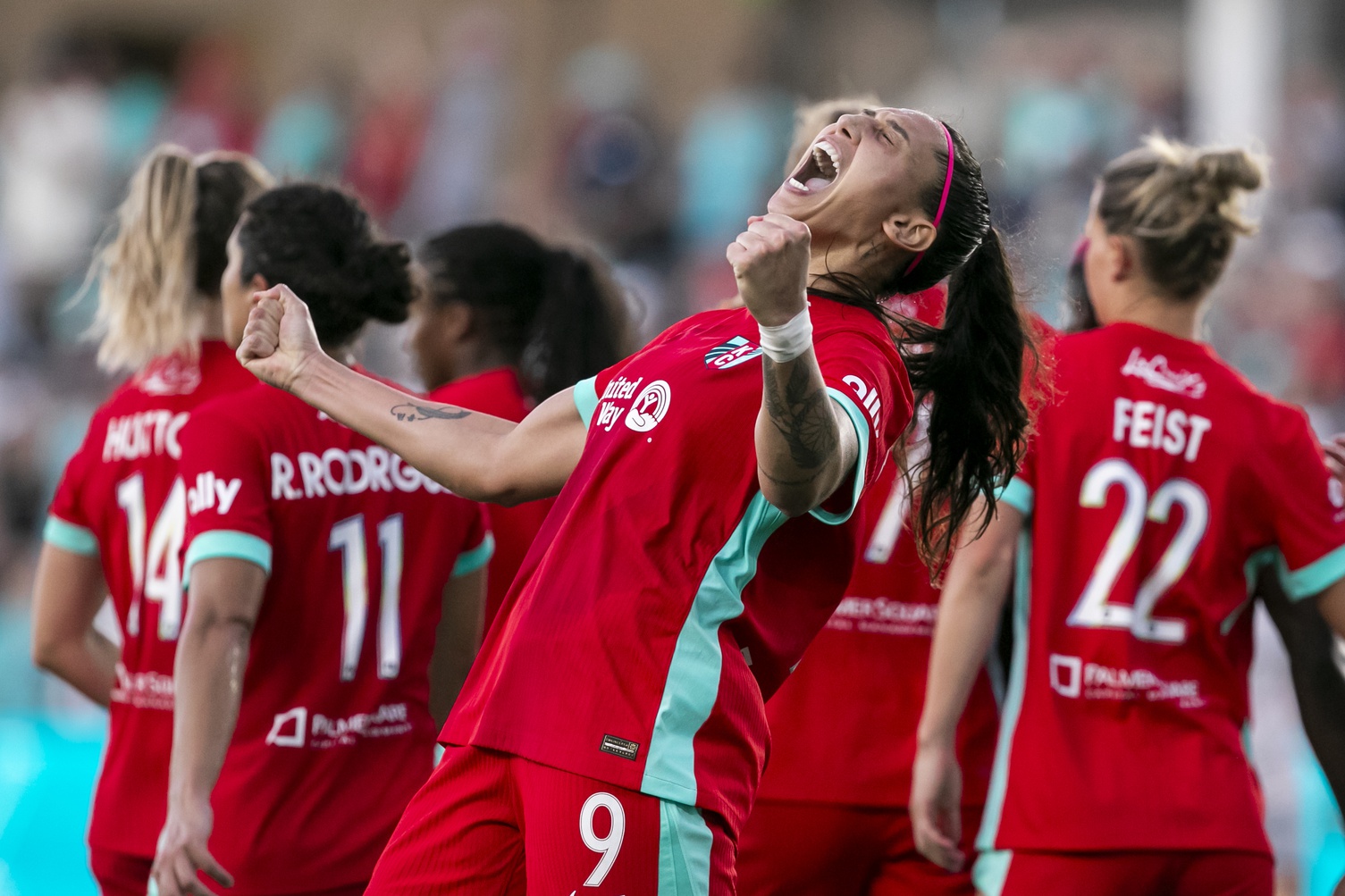
Kansas City’s 17 returning players was the average of returners across the league, but in combination with the eight additions, have started to separate themselves at the top of the table. The Current had 77% of their 2024 minutes returned this season, with those players accounting for 84% of their playing minutes. Of the 16% of minutes by newcomers, 9% of that is the fact that newly signed Brazilian goalkeeper Lorena has played every minute for Kansas City this year. 

The Portland Thorns had the fewest number of returning players (along with Gotham), and even with those players accounting for 71% of their playing minutes, a number of pre-season injuries and maternity leaves meant that only 51% of the 2024 playing minutes would even be available for the 2025 season. That being said, the Thorns have been able to lean on their returners and their young additions—three of five of their top goal scorers are rookies— and maintain fifth place going into the summer break. 

With the smallest percentage of 2024 playing minutes returning in 2025, in addition to a below the average number of new additions, the Reign have been able to find their groove in the first half of the season and went from second to last at the end of 2024 to currently above the playoff line and sitting in sixth. 

Scott AllenJune 26, 2025

The MLSPA recently release the 2025 MLS player salaries

Full rankings: https://www.spotrac.com/mls/rankings/player/_/year/2025/sort/cash_total

Here are the Top 10 highest paid MLS players:

Top