Michael GinnittiSeptember 30, 2025
© USA Today Sports

While the winters of Judge, Ohtani, & Soto are behind us, the upcoming MLB free agent class has plenty to offer both at the plate and on the mound. Spotrac details 10 pending/potential free agents to watch as the MLB Postseason gets underway.

Related: Spotrac’s Top MLB Free Agent Analysis

Kyle Tucker (Cubs, RF)

Age: 28
2026 Status:
UFA
2025 Salary: $16,500,000
Contract Valuation: 10 years, $402M
Despite a sluggish summer-stretch and a hand injury to boot, Tucker remains the most well-rounded pending free agent position player this winter. He secured $33.5M across a 3-year arbitration stretch, and has been carrying a $40M+ valuation in our system for years now. If a bidding-war ensues, look for this contract to push well past $400M.

Cody Bellinger (Yankees, OF)

Age: 30
2026 Status: $25M Player Option
2025 Salary: $27.5M
Contract Valuation: 6 years, $183M
Bellinger’s resurgence continued in 2025, as the 30-year-old pumped out his highest WAR rating since his MVP 2019 campaign. He’s a plus defender at multiple positions with power and speed on the base paths. Assuming he opts out (1 year, $25M), teams will need to pony up to lock him in this time around.

Pete Alonso (Mets, 1B)

Age: 30
2026 Status: UFA
2025 Salary: $30M
Contract Valuation: 6 years, $176M
Alonso opted--out of the 1 year, $24M remaining on his contract, electing to give free agency another crack - this time without the qualifying offer attached to him. He’s done plenty to maintain/improve his standing this time around, and should be in line for a healthy long-term guarantee. But where?

Ranger Suarez (Phillies, SP)

Age: 30
2026 Status: UFA
2025 Salary: $8.8M
Contract Valuation: 6 years, $161M
Suarez put together the best overall season of his career in a walk year, remaining in legitimate Cy Young conversation throughout the 2025 campaign. The Phillies have a bounty of money already tied to their staff, and could easily be priced out of keeping the 30-year-old going forward.

Dylan Cease (Padres, SP)

Age: 29
2026 Status: UFA
2025 Salary: $13.75M
Contract Valuation: 6 years, $159M
It hasn’t been the year Cease was hoping for on the heels of free agency, but his resume has enough substance to warrant a serious long-term deal this winter - especially as it pertains to durability. The near 30-year-old was on pace for $23M per year based on arbitration compensation, but a desperate market should elevate that.

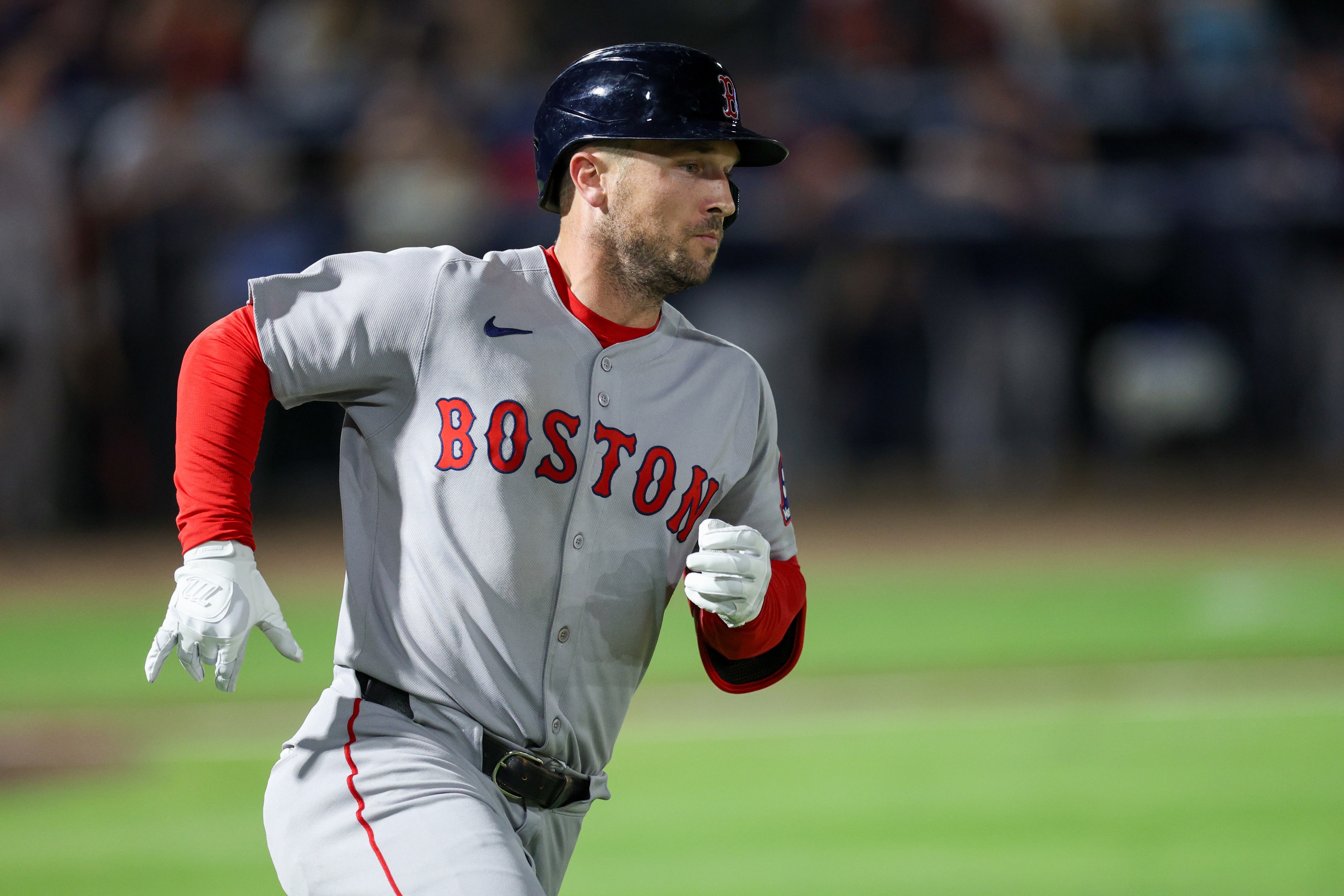
Alex Bregman (Red Sox, 3B)

Age: 31
2026 Status: $25M player option
2025 Salary: $25M
Contract Valuation: 4 years, $100M
Bregman is producing at a strong rate despite missing nearly two months with a quad injury. He also remains a plus defender (+4.5 DEF) despite heading toward his age-32 campaign. Financially speaking he values almost identically to the 2 year, $50M he can opt-out of this coming Fall. Is there a longer-term deal on the table for him?

Kyle Schwarber (Phillies, DH)

Age: 32
2026 Status: UFA
2025 Salary: $20M
Contract Valuation: 4 years, $100M
Despite heading toward his age-33 season, Schwarber is as valuable as ever at the plate, operating both as a leadoff hitter, and of course a power bat across his 11-year career to date. He’s finishing out a 4 year, $79M contract in Philly, and a career-year has vaulted his value north of $25M.

Bo Bichette (Blue Jays, SS)

Age: 27
2026 Status: UFA
2025 Salary: $16.5M
Contract Valuation: 8 years, $187M
A miserable & injury-riddled 2024 quieted the buzz surrounding Bichette a bit, but he’s picked up plenty of steam in 2025, and should hit the open market as the far-and-away top available shortstop. One potential red flag this winter? Bichette carries a -5.9 DEF Rating, 22nd among 2025 shortstops.

Michael King (Padres, SP)

Age: 30
2026 Status: $15M mutual option ($3.75M buyout)
2025 Salary: $4M
Contract Valuation: 4 years, $92M
Multiple injuries (nerve/knee) have limited King’s workload in 2025, but the 30-year-old has been a sub-3 ERA pitcher for the better part of 2 full seasons now. A healthy, productive postseason could really inflate the price tag this winter.

Robert Suarez (Padres, RP)

Age: 34
2026 Status: 2 yr, $16M player option
2025 Salary: $13M
Contract Valuation: 4 years, $67M
Arguably the best closer in all of baseball the past two seasons, Suarez is largely expected to opt-out of the 2 years, $16M remaining on his current contract and test the open market. Spoiler: He’s worth at least double that per year.

Full 2026 MLB Free Agent Tracker

Taylor VincentSeptember 26, 2025
© USA Today Sports

The NWSL currently only has six end of season individual awards that a player can win: Most Valuable Player, Defender of the Year, Rookie of the Year, Goalkeeper of the Year, Midfielder of the Year and non-voting based Golden Boot.

There has been an increase in young players joining the league each year, and a shift over the last few years culminating with almost 10% of all minutes being played by those under 22 years of age so far in the 2025 regular season. The MLS has a Best Young Player award for players under the age of 22, here’s my list on who would be up for the award in the 2025 regular season if it existed.

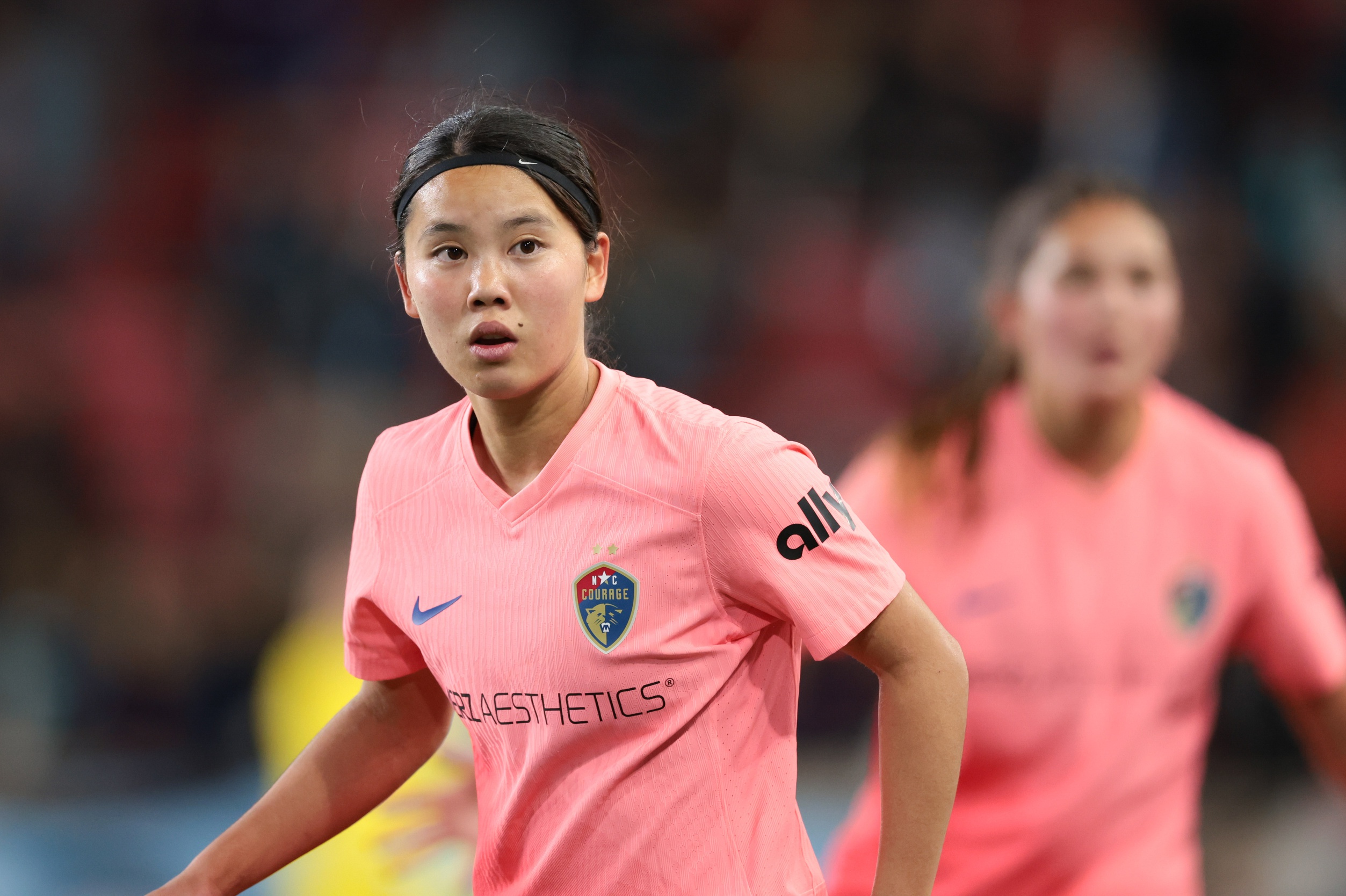
1. Manaka Matsukubo, 21, North Carolina Courage

Contract Remaining: 1 year thru 2026

Position: Midfielder

Minutes Played: 1681

Games Started/Played: 19/21

Manaka signed a two year contract extension with the Courage this January. On the field for the Courage she has scored six goals, assisted an additional four, and leads the NWSL in goal-creating actions with 11. She additionally made the Best XI for May and June as she went (and continues to be) on an amazing run of form. 

2. Trinity Armstrong, 18, San Diego Wave

Contract Remaining: 2 years thru 2027

Position: Defender

Minutes Played: 1458

Games Started/Played: 16/20

In January, the Wave signed a then-17 year old Armstrong to a three year contract via the U18 Mechanism and she’s been able to make an impact for the Wave since the start of the season. The defender earned a spot on the Best XI of the Month for May and scored a goal and earned two assists on the way. She currently is 2nd in the NWSL for successful take-on percentage (81.8%), 9th in the league in passing accuracy (88.4%), and sixth in progressive carrying distance. 

3. Claire Hutton, 19, Kansas City Current

Contract Remaining: 1 year thru 2026 

Position: Midfielder

Minutes Played: 1479

Games Started/Played: 18/21

Hutton is on year two of a three year U18 contract with Kansas City. Coming off an impressive rookie season, she has shown how instrumental she is to the Current’s very-stacked midfield. She boasts a 78.5% passing accuracy, 27 interceptions, 30 clearances, and 37 tackles won for the NWSL Shield winning side. 

4. Jordyn Bugg, 19, Seattle Reign

Contract Remaining: 1 year thru 2026, with a 2027 club option

Position: Defender

Minutes Played: 1701

Games Started/Played: 19/20

After joining the Reign midway through the 2024 regular season, Bugg has truly excelled in the backline for Seattle this year, and even scored a few goals in the process (one was a banger from way outside the box that won her goal of the week). She also is 8th in the league in clearances with 106, has 40 interceptions, and an additional 28 blocks. Additionally, Bugg made Best XI for the month of June

5. Olivia Moultrie, 20, Portland Thorns

Contract Remaining: 1 year thru 2026

Position: Midfielder

Minutes Played: 1713

Games Started/Played: 19/21

Moultrie is on year two of a three year extension that was signed in 2024. This year for the Thorns she has found the net four times with an additional assist. In September, she also broke the record previously set by Jaedyn Shaw for the most regular goals by a teenager, when she scored her 14th just three days before her 20th birthday. She additionally holds regular season records for teenagers with the most games played, games started, minutes played, goal contributions, and assists. Moultrie is additionally leading the league in key passes for the 2025 season.

6. Emeri Adames, 19, Seattle Reign

Contract Remaining: 2 years thu 2027

Position: Forward

Minutes Played: 829

Games Started/Played:9/17

Adames is in year two of a four year contract after joining the Wave via the U18 mechanism ahead of the 2024 season, and this season has been playing a super-sub role for the Reign, often coming on in the second half for a jolt of energy. She’s scored six goals this season and is 3rd in the league in Goals per 90 (0.65). Her contributions in the attack led to her earning a spot on the Best XI for the month of June. 

7. Gisele Thompson, 19, Angel City

Contract Remaining: 4 years thru 2029

Position: Defender

Minutes Played: 1242

Games Started/Played:16/18

In January signed a two year contract extension through 2028, and then earlier this month signed another four year extension through 2029, including re-tooling 2026-29. So far this season the defender has scored one goal and earned five assists. Thompson is tied for 1st in the league in assists with five, is 1st in % of dribblers tackled (92.4%), and 2nd in assists/90 (0.36). She also made the Best XI of the Month for May. 

8. Kennedy Fuller, 18, Angel City

Contract Remaining: 1 year thru 2026, with a 2027 club option

Position: Midfielder 

Minutes Played: 1615

Games Started/Played: 19/21

Fuller is currently on year two of a three year contract with the LA-based club, and throughout all of the player movement has been that consistent presence in the Angel City midfield. In the 2025 season she has scored three goals and assisted an additional three, and is 9th in the league for Goals/Shot on Target with 0.60. 

9. Riley Jackson, 19, North Carolina Courage

Contract Remaining: 1 year thru 2026

Position: Midfielder

Minutes Played: 1520

Games Started/Played: 18/20

Jackson’s 2026 club option was exercised to keep her at the Courage for one more year, but this season she has become pivotal in the Courage midfield—compared to 2024 where she was 2nd in substitute appearances with 15—and has the added responsibility of taking corner kicks. She’s scored two goals thus far (includes a penalty kick), and is currently third in the league in successful take-on’s. 

10. Ally Sentnor, 21, Kansas City Current

Contract Remaining: 1 year thru 2026

Position: Forward

Minutes Played: 1544

Games Started/Played: 17/20

Sentnor started off the year in Utah, but August 1st, traded to Kansas City for $300,000 in 2025 intra-league transfer funds, $200,000 in 2026 intra-league transfer funds, $100,000 in 2027 intra-league transfer funds, and an additional $100,000 in conditional intra-league transfer funds. The Royals were struggling in the front half of the season, but Sentnor scored one and assisted another before the trade. Since joining a very-talented Current side, she has been finding her footing, but we know her potential as she has scored four with the USWNT this year. 

11. Maddie Dahlien, 21, Seattle Reign

Contract Remaining: 2 years thru 2027

Position: Forward

Minutes Played: 1473

Games Started/Played: 17/21

This January Dahlien signed a three year contract with Seattle, and thus far this season has scored three goals and earned three assists. The forward is 3rd in the league in carries into the penalty area (38), 7th in progressive passes (119), and 7th in shots on target (19)

12. Kimmi Ascanio, 17, San Diego Wave

Contract Remaining: 1 year thru 2026

Position: Midfielder

Minutes Played: 1167

Games Started/Played: 13/21

Ascanio is in year two of a three year contract and has seen a dramatic increase in her playing time year-over-year. Over the course of the season Ascanio has scored four goals and assisted in an additional. On top of boasting a 82.1% passing accuracy, the midfielder is also 2nd in the league in Goals/Shot with 0.29, 3rd in Shot on Target percentage with 57.1%, and 6th in Goals-xG with 1.8

13. Jaedyn Shaw, 20, Gotham FC

Contract Remaining: 1 year thru 2026

Position: Forward

Minutes Played: 1111

Games Started/Played: 11/21

In January was traded from San Diego to North Carolina for $300,000 in allocation money, $150,000 in 2025 intra-league transfer funds, and 2025/2026 international slots. During her time with the Courage she scored three goals and assisted in one. September 11th, Shaw was traded to Gotham FC from North Carolina for $1.25 million in intra-league transfer funds over multiple years. In her first game for Gotham, Shaw scored a goal against the Wave.

14. Pietra Tordin, 21, Portland Thorns

Contract Remaining: 1 year thru 2026, with a 2027 player option

Position: Forward

Minutes Played: 750

Games Started/Played: 7/20

Tordin signed a two year contract with the Thorns in January of this year, and due to Portland’s unfortunately impressive list of season-ending injuries (and maternity leaves) has had the opportunity to really take a central role in the attack. Tordin has scored four goals this season and is 2nd in the league in Shots/90 (4.20), 4th in xG/90 (0.57), and 9th in Goals/90 (0.48)

15. Shinomi Koyama, 20, North Carolina Courage

Contract Remaining: 2 years thru 2027

Position: Midfielder

Minutes Played: 1001

Games Started/Played:11/20

Shinomi was acquired by North Carolina in January from Swedish club Djurgårdens IF and signed to a three year contract. She has scored one goal and assisted in another and the defensive midfielder has had a 80.5% passing accuracy. 

Honorable Mentions - What Could’ve Been

Caiya Hanks, 21, Portland Thorns 

Contract Remaining: 3 years thru 2028 with a 2029 club option

Position: Forward

Minutes Played: 639

Games Started/Played: 7/11

Signed a four year contract with the Thorns only two weeks before the regular season kicked off. Scored two goals and had one assist over that time with 10 chances created before injuring her ACL on June 15th and spending the rest of the season on the season-ending injury list. 

Savy King, 20, Angel City FC

Contract Remaining: 3 years thru 2028

Position: Defender

Minutes Played: 709

Games Started/Played: 8/8

Was traded to Angel City from Bay FC, where she spent her rookie season, in return for $200,000 in 2025 intra-league transfer funds and $100,000 in 2026 intra-league transfer funds in early February. Signed a two year contract extension through 2028 in early March. Started all eight of Angel City’s regular season matches and was really finding her groove there before an incident in May led her to be on medical leave for the remainder of the season.


Michael GinnittiSeptember 25, 2025
© USA Today Sports

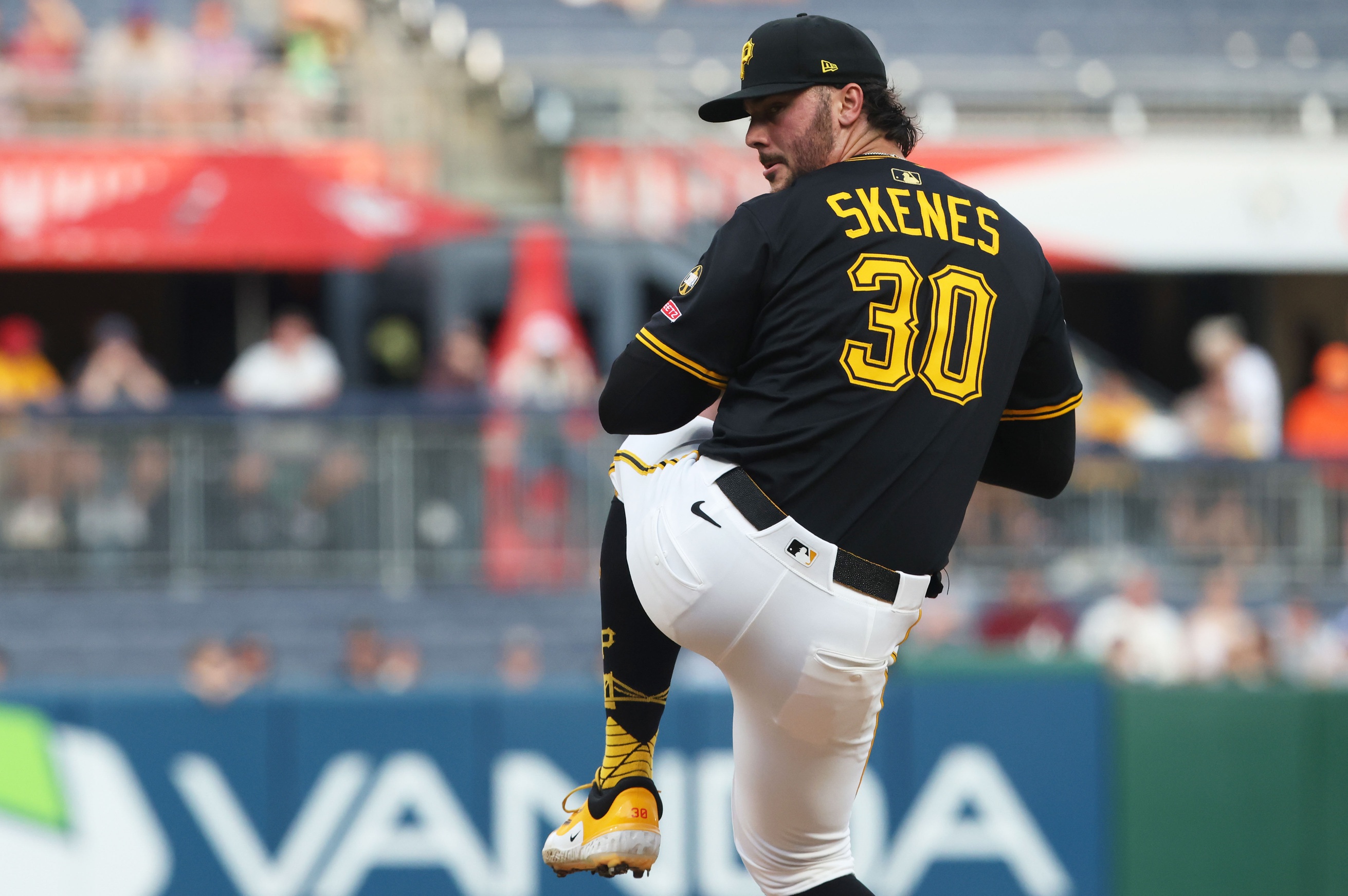
Paul Skenes’ 2025 campaign is now in the books, and in case you’ve been living under a rock - it proved to be another gem of a season. The 23-year-old clocked a 1.97 ERA, 0.948 WHIP, and 216 strikeouts across 187 innings through 32 starts for the Pirates. The numbers reflect an almost identical outlook to his 2024 rookie campaign (1.96 ERA, 0.947 WHIP).

As we head toward the offseason, with 4 years of team-control remaining for Skenes in Pittsburgh, much attention will be given to both his outlook with the last-place organization, and potential landing spots/subsequent contract extension numbers in the future.

We’ll address the latter here, with a much-too-early (but still relevant) look at the market valuation and potential contract extension breakdown for starting pitcher Paul Skenes.

Remaining Pre-Arbitration (2026)

Skenes hits the 2025 winter as the odds-on favorite to secure his first NL Cy Young, despite the fact that the Pirates will finish the season with a worse overall record than they did in 2024. So much for getting behind your star young ace and attempting to quickly build a contender. Skenes earned $875,000 in base salary this season, a figure that will soon be escalated thanks to the Pre-Arbitration Bonus pool (which paid him an additional $2.15M last season). As the likely Cy Young winner this season, Skenes will add a $2.5M bonus to his 2025 compensation. There’s likely another $1M or so available from the standard bonus pool allocation, raising Skenes’ likely 2025 output up to $4.3M (exactly double what he earned in 2024).

With that said, it’s hard to imagine a more lucrative pre-arbitation season than the one Skenes is about to see out, so keeping him at or around the $4M mark for 2026 seems judicious.

Spotrac Predicts
2026 (age 24): $1M salary, $4M signing bonus

Upcoming Arbitration (2027-2029)

From here we begin to evaluate Skenes as a looming free agent, running him through our true market value algorithm, with specific percentage points built in to allocate the various years of arbitration. Skenes is slated for Arbitration 1 in 2027, and based on our math, should be in line to double his final year of pre-arbitration (estimated $4M). Prime performance should dictate an Arbitration 2 salary that doubles the previous one, while the 3rd and final go-around generally comes with a little more back and forth. The last time a starting pitcher earned $20M+ in arbitration was never - so we’re walking into uncharted territory here, but rightfully so thus far.

The following arbitration projection for Paul Skenes stands to pay him out over $46M across the 3-year span. When combining this figure with the previous $4M allocation for 2026, we’re projecting a $50M payout for Skenes over the next 4 seasons.

Spotrac Predicts
2027 (age 25): $7.8M
2028 (age 26): $15.6M
2029 (age 27): $23.1M

Free Agent Years (2030-2032)

Skenes is eligible for free agency in the Winter of 2029, just prior to his age-28 season, and as of today, projects toward an average salary of $39M. This figure ranks him 2nd only to Zach Wheeler’s small extension in Philadelphia in terms of overall starters, but it blows away the rest of the young pitchers who have given up free agent seasons in exchange for an early pre-arbitration extension.

Spencer Strider (ATL): 2 yrs @ $22M per year
Hunter Greene (CIN): 2 yrs @ $18.5M per year
Brayan Bello (BOS) 2 yrs @ $17.5M per year
Cristopher Sanchez (PHI): 2 yrs @ $17M per year

Spotrac Predicts
2030 (age 28): $40M
2031 (age 29): $40M
2032 (age 30): $40M

Is Paul Skenes really worth double these players on the open market? For measure, I ran a market value comparison between Skenes and these 4 recently extended players. The percent difference in production? 40%. This gets us to at least $30M per year without trying very hard.

But here’s the real reason overpaying for Skenes through his late-20s makes some semblance of sense. All of the numbers we’ve projected before this are simply the “going-rate” or “fair market value”. We haven’t inflated the numbers in any way shape or form, essentially laying out a floor plan that guarantees him the money he is already on pace to be making throughout the final 4 years of his team control.

If he does in fact stay healthy, and remains an at or below 2 ERA pitcher through the 2029 season, there will be little room for argument that a near $40M per year APY going forward is not just warranted - but potentially containing value.

Final Thoughts

Is this a timely conversation? For a few reasons - absolutely not.

First off, Paul Skenes is wasting historic young seasons on one of the worst teams in MLB. This just also happens to be one of the lowest annual payrolled teams in the league. Pittsburgh’s all-time largest contract was given to OF Bryan Reynolds (8 years, $106.75M in 2023.) The largest pitching contract in team history belongs to Mitch Keller (5 years, $77M in 2024). The likelihood that both the Pirates would be willing to go this big on a contract AND that Paul Skenes and his representation would agree to it seems unfathomable.

Secondly, the league is heading toward a potentially messing CBA negotiation, that many believe could lead to a lockout from the player’s association. Changes to the luxury tax system, spending limits/requirements, and the notion of a salary cap have all been floated by the people in power. Some of these entities could eventually reduce player contract values, while others (such as a spending floor) could lead to more extensions across the league.

There’s an argument to be made that players should be looking to lock in contract extensions before the expiration of the CBA, to protect themselves from potential losses or season(s) missed. But Skenes has likely produced himself out of concern here, and more into a “unicorn” status when it comes to an eventual payday.

But despite the poor timing, it feels right to give Paul Skenes his valuation due after two sensational seasons.

Spotrac Predicts
7 years, $171.5M ($24.5M APY)

2026: $5M ($4M bonus)
2027: $7.8M
2028: $15.6M
2029: $23.1M
2030: $40M
2031: $40M
2032: $40M

Michael GinnittiSeptember 23, 2025

With offseason contracts now a thing of the past, Spotrac takes a snapshot look at the average salaries by position for the 2025 NFL season, broken down in two groupings. The numbers in parenthesis next to the position represents the number of players used for the Total Average portion of this dataset.

All Signed Contracts

This "Total Average" column includes all contracts currently on the books (active or reserve list) for a particular position group. As you might imagine, Quarterbacks, Offensive Tackles, & Edge Defenders lead the way, with the total lot of Running Backs now dipping below the Kickers in the league (with a much larger dataset of course).

Week 1 Starters

When filtering this data by "starters" only, things change quite a bit. Running Backs have jumped up to the 9th spot, attached closely to the Tight End position, where they've been for quite a few years now. Quarterbacks of course jump way ahead of the pack, and now find themselves 76% higher than the next position (Edge Defenders). Despite recent surges in top interior offensive linemen pay, both the Guard and Center positions stand well below their opposite Interior DL counterparts at this time.

Top Average Salary by Position (Year Signed)

QB: Dak Prescott, $60M (2024)
RB: Saquon Barkley, $20.6M (2025)
FB: C.J. Ham, $4.3M (2023)
WR: Ja'Marr Chase, $40.25M (2025)
TE: George Kittle, $19.1M (2025)
OT: Rashawn Slater, $28.5M (2025)
G: Tyler Smith, $24M (2025)
C: Creed Humphrey, $18M (2024)
IDL: Chris Jones, $31.75M (2024)
ED: Micah Parsons, $46.5M (2025)
LB: Fred Warner, $21M (2025)
CB: Ahmad Gardner, $30.1M (2025)
S: Kyle Hamilton, $25.1M (2025)
K: Harrison Butker, $6.4M (2024)
P: Michael Dickson, $4.05M (2025)
LS: James Winchester, $1.65M (2025)

Dan SoemannSeptember 22, 2025

The final week of the 2025 MLB season is here, and Spotrac is tracking all of the various player performance incentives being earned as we approach the finish:

Earned:
Matt Strahm (RP, Phillies)
Strahm had a $4.5M conditional club option for 2026, which escalated to $7.5M and vested after he reached 60 Innings Pitched.

Austin Hays (OF, Reds)
Hays earned $100k for reaching 400 Plate Appearances.

Tyler Kinley (RP, Braves)
Kinley reached 20 Games Finished which added $500k to his $5M club option in 2026.

Jose Quintana (SP, Brewers)
Quintana added a combined $1.1M for reaching 24 Games Started and 130 Innings Pitched.
Total Earned Incentives: $3.3M

Michael A. Taylor (OF, White Sox)
Taylor earned $50k for reaching 125 Games and has added a combined $275k of incentives.
Total Earned Incentives: $275k

Byron Buxton (OF, Twins)
Buxton earned $500k for reaching 502 Plate Appearances.

Lucas Giolito (SP, Red Sox)
Giolito reached 140 Innings Pitched which converted his $14M club option to a $19M mutual option.

Brooks Raley (RP, Mets)
Raley earned $125k for reaching 20 Pitching Appearances.
Total Earned Incentives: $375k

Chris Paddack (SP, Tigers)
Paddack earned $1M total for reaching 150 Innings Pitched.
Total Earned Incentives: $1M

Michael Lorenzen (SP, Royals)
Lorenzen added $250k for reaching 25 Pitching Appearances.
Total Earned Incentives: $1M

Harrison Bader (OF, Phillies)
Bader earned $450k for reaching 475 Plate Appearances.
Total Earned Incentives: $1.05M

Luke Weaver (RP, Yankees)
Weaver earned another $50k by reaching 60 Relief Appearances.
Total Earned Incentives: $250k

Andres Munoz (RP, Mariners)
Munoz has a $6M club option for 2026 which escalated to $7M because he reached 45 Games Finished.

Probable:
Robert Suarez (RP, Padres)
$500k for 55 Games Finished (54 GF)

Pete Fairbanks (RP, Rays)
$1M option escalator (2026) for 60 Pitching Appearances (59 G)

Justin Wilson (RP, Red Sox)
$150k for 60 Pitching Appearances (59 G)

Paul DeJong (3B, Nationals)
$100k for 200 Plate Appearances (198 PA)

Byron Buxton (OF, Twins)
$500k for 533 Plate Appearances (520 PA)

Ketel Marte (2B, Diamondbacks)
$500k salary escalator (2026) for 550 Plate Appearances (535 PA)

Victor Caratini (C, Astros)
$50k for 375 Plate Appearances (370 PA)

Possible:
Harrison Bader (OF, Phillies)
$450k for 500 Plate Appearances (479 PA)

Ryne Stanek (RP, Mets)
$100k for 65 Pitching Appearances (62 G)

Danny Coulombe (RP, Rangers)
$50k for 55 Pitching Appearances (53 G)

Andrew Kittredge (RP, Cubs)
$50k for 55 Pitching Appearances (52 G)

Michael GinnittiSeptember 21, 2025
© Sam Greene/The Enquirer / USA TODAY NETWORK

Detailing the financial stability of each NFL starting QB after the 2025 season, including guarantee structure, potential out patterns, and plenty more.

Kyler Murray

Future Contract: 3 yrs, $125M

$40M of 2026 compensation became fully guaranteed this past offseason. $19.5M of 2027 salary locks in next March, representing the final early vesting trigger on the contract. It remains likely that Murray sees the next 2 years, $79M through 2027.

Michael Penix Jr.

Future Contract: 2 yrs, $6.8M + option

All $6.8M remaining on the rookie contract is fully guaranteed. The 25-year-old doesn’t become extension-eligible until after the 2026 season. Sidenote: Kirk Cousins is owed a $10M guaranteed roster bonus next season.

Lamar Jackson

Future Contract: 2 yrs, $104M

$29M of 2026 salary is already fully guaranteed, representing the final early vesting trigger on the contract. Baltimore is largely expected to rip up the final 2 years on this contract and start fresh with Lamar next spring.

Josh Allen

Future Contract: 5 yrs, $272M

All $55M of 2026 compensation, plus $34.5M of 2027 salary is already fully guaranteed. Another $85.5M contains early vesting triggers, keeping Allen safe and secure in this contract through the 2029 campaign.

Bryce Young

Future Contract: 1 yr, $6M + option

All $6M remaining on the rookie contract is fully guaranteed, and the Panthers will need to make a decision on the 5th-year option by next May. Young becomes extension-eligible for the first time after the current regular season.

Caleb Williams

Future Contract: 3 yrs, $13M + option

All $13M remaining on the rookie contract is fully guaranteed through 2027. Williams won’t become extension-eligible until after the 2026 season.

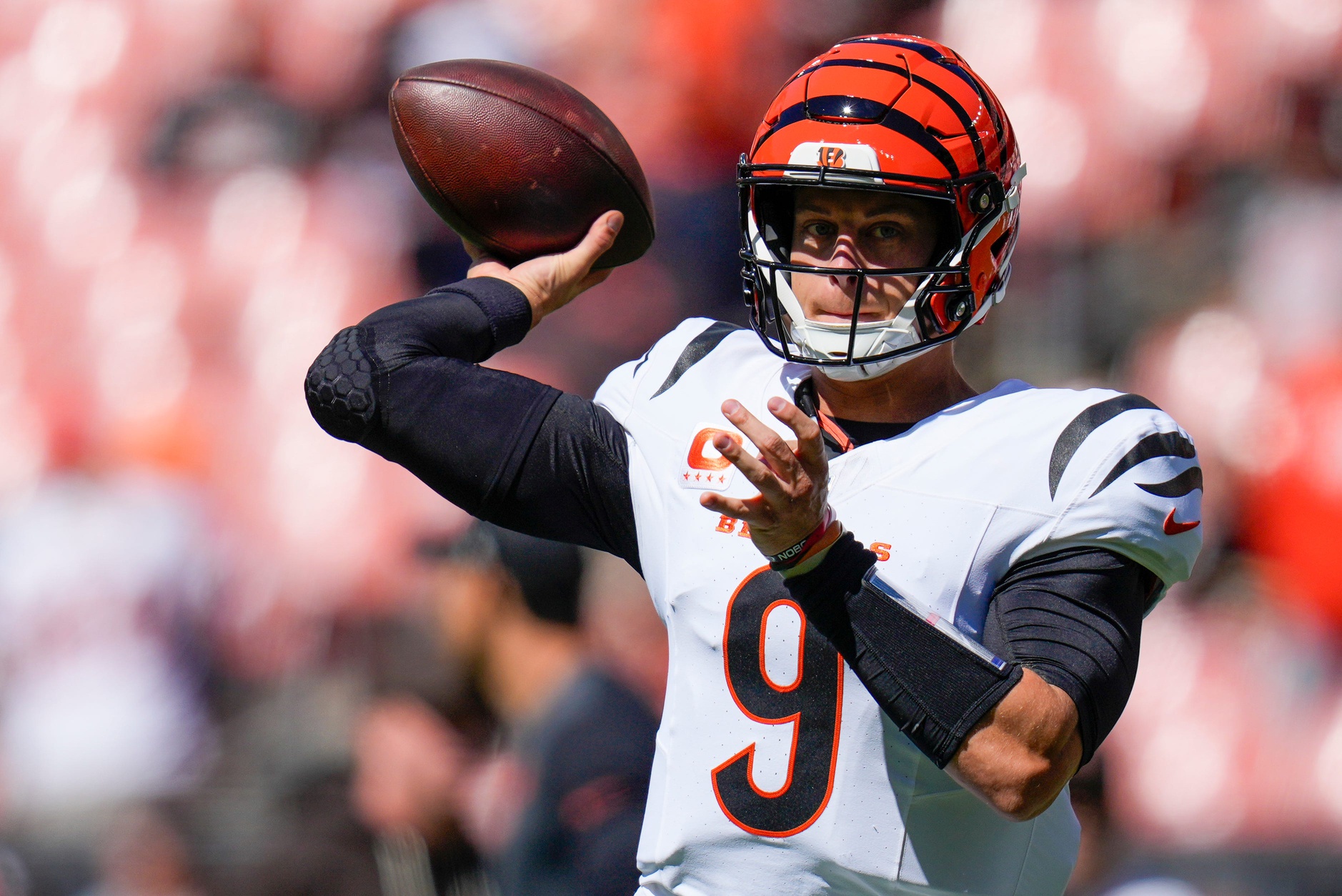
Joe Burrow

Future Contract: 4 yrs, $164M

All $35M of 2026 compensation is already fully guaranteed, and $18M of 2027 salary locks in next March. That’s the line of demarcation for the guaranteed portion of this contract, and a likely starting point for extension (or Trade?) conversations.

Deshaun Watson

Future Contract: 1 yr, $46M

Almost to the finish line. Unfortunately, Cleveland has pushed so much of this contract down the line that a whopping $131M+ of dead cap now exists in the 2026 season. A standard Post June 1st release of Watson next March would mean dead hits of $80.5M in 2026, and $50.4M in 2027.

Dak Prescott

Future Contract: 3 yrs, $140M

All $40M of 2026 salary is fully guaranteed, and all $45M of 2027 compensation locks in next March. $17M of 2028 salary then fully guarantees in March of 2027, accounting for a nearly 73% guarantee rate on remaining compensation. With that said, It’s safe to assume that an extension - or exit strategy - could begin to be discussed in March 2027.

Bo Nix

Future Contract: 2 yrs, $5.8M + option

All $5.8M of remaining rookie contract is fully guaranteed through 2027. Nix doesn’t become extension-eligible until after the 2026 season.

Jared Goff

Future Contract: 3 yrs, $142M

All $55M of 2026 salary is fully guaranteed, and $18M of 2027 compensation locks next March. There’s a world where that $18M guarantee becomes a buyout if the wheels fall off over the course of the next season and a half, but for now it’s a pretty safe 2 year, $95M outlook.

Jordan Love

Future Contract: 3 yrs, $139M

$50M of 2026 compensation is already locked in, and $20M of 2027 salary guarantees next March. Love probably sees out another 2 years, $94M on this contract before extension conversations get serious.

C.J. Stroud

Future Contract: 1 yr, $5.7M + option

All $5.7M of remaining rookie contract is fully guaranteed through 2026. Stroud becomes extension-eligible at the end of this current regular season, putting pressure on the Texans to elevate to the next level sooner rather than later.

Daniel Jones

Future Contract: Pending UFA

A wildly strong start to 2025 now puts Jones in the driver’s seat to be the next "resuscitated" QB1. We’ll reassess this scenario around Thanksgiving for a reality check. Sidenote: Anthony Richardson is guaranteed $5.3M through 2026, plus a 5th-year-option that is very likely to be declined at this point.

Trevor Lawrence

Future Contract: 5 yrs, $230M

$66M of it is already guaranteed right now. $12M more locks next March. $46M more fully guarantees March of 2027, making this an almost entirely secured 3 year, $125M contract through 2028 for practical purposes.

Patrick Mahomes

Future Contract: 6 yrs, $266M

Despite strong cashflow, only $10.4M of Mahomes’ remaining contract is fully guaranteed right now. A recent renegotiation set up a scenario where his next-year roster bonus locks in 1-season early, but the large base salaries don’t fully vest until March of that league year. It’s a somewhat moot point for a secured player, but it’s worth noting - especially as the injury guarantees fall off after 2026. For practicality purposes, Mahomes is scheduled to play out the next 2 years, $110M through 2027, after which a contract do-over will certainly be on the table.

Geno Smith

Future Contract: 2 yrs, $66M

$18.5M of Smith’s 2026 salary is already secure, and the remaining $8M locks in next March. No portion of 2027 ($39.5M) contains a guarantee.

Justin Herbert

Future Contract: 4 yrs, $162.5M

$85M (about 52%) of the remaining contract contains an early vesting trigger, setting up Herbert to see out the next 3 years, $112M for practical purposes. If all goes well, look for extension convos to begin in early 2028.

Matthew Stafford

Future Contract: 1 yr, $40M

A small contract adjustment for 2025 did little to further his security in 2026. The Rams will have the ability to move on from this contract in early March with no future cash owed. It could very well be a swan song for Stafford in 2025.

Tua Tagovailoa

Future Contract: 3 yrs, $141M

$54M of 2026 compensation is already fully secured, and another $3M from 2027 is set to lock in next March. If the next season and half doesn’t go well, look for that $3M to become a buyout, before another $22M of 2027 compensation guarantees.

J.J. McCarthy

Future Contract: 2 yrs, $6.5M + option

McCarthy is off to a slow start for a number of reasons, but he’s fully secure through 2027, and won’t become extension-eligible until after the 2026 campaign.

Drake Maye

Future Contract: 2 yrs, $9.9M + option

All $9.9M remaining on his rookie contract is fully guaranteed, and Maye will become extension-eligible after the 2026 season.

Spencer Rattler

Future Contract: 2 yrs, $2.2M

After securing a $336,480 signing bonus back in 2024, Rattler is operating on minimum base salaries through the rest of his rookie contract. He becomes extension-eligible after 2026. Sidenote: Tyler Shough signed a fully guaranteed rookie contract that will have 3 yrs, $5.5M remaining after the current season.

Russell Wilson

Future Contract: Pending UFA

Wilson secured a $10.5M base contract this past offseason, with plenty of opportunities to earn more via incentives. The future Hall of Famer has earned over $315M in his career. Sidenote: Jaxson Dart signed a fully guaranteed rookie contract that will have 3 yrs, $7.1M remaining after the current season.

Justin Fields

Future Contract: 1 yr, $20M

$10M of Fields’ 2026 salary is already guaranteed, but likely does little to secure a roster spot next season if the current campaign doesn’t end well. Fields will be hoping it becomes the starting point for a long-term extension with much more security (but we’re a long way from there currently).

Jalen Hurts

Future Contract: 3 yrs, $155M

All $55M of 2026 compensation is fully locked in, and $22M of 2027 salary guarantees next March. Those 2 years, $103M represents the practical outlook for this contract, but the Eagles have become famous for processing extensions earlier than usual. Even so, that probably doesn’t happen here until after the 2026 campaign.

Aaron Rodgers

Future Contract: Pending UFA

Rodgers signed a $13.65M contract that can get up to $19.5M via incentives, but he’s a year-to-year player until further notice. Pittsburgh’s QB room is TBD in 2026.

Brock Purdy

Future Contract: 5 yrs, $229M

Purdy’s new deal gets him $100M guaranteed into 2027 out of the gate. Another $77M+ contains an early vesting trigger, beginning next March ($15M of 2027 salary). There’s an interesting “expensive out” built into the structure of the cashflow for the 2027 season. If the Niners are hesitant to allow $55M of 2028 salary fully guarantee in April of 2027, they can buy out the $27.25M 2027 salary (along with a pile of dead cap of course) and get out before the hole gets even deeper. It’s not a likely outcome, but it exists.

Sam Darnold

Future Contract: 2 yrs, $63M

$17.5M of 2026 compensation becomes fully guaranteed on February 13th, but for now this is a 1 year, $37.5M contract until further notice.

Baker Mayfield

Future Contract: 1 yr, $40M

The Bucs amended Baker’s contract this summer, fully guaranteeing $13M of his 2026 compensation, but he’s hoping that’s a moot point when all is said and done. Another above average season out of the 30-year-old should mean he’s a lock for a major extension in the coming months.

Cameron Ward

Future Contract: 3 yrs, $15.8M + option

All $15.8M remaining on the rookie contract through 2028 is fully guaranteed. Ward doesn’t become extension-eligible until after the 2027 regular season.

Jayden Daniels

Future Contract: 2 yrs, $10.1M + option

All $10.1M remaining on the rookie contract through 2027 is fully guaranteed. Daniels doesn’t become extension-eligible until after the 2026 regular season.

Taylor VincentSeptember 17, 2025

Today the NWSL announced that this upcoming December the league would be launching their first Combines to showcase talent. It will take place over three days ahead of the 2026 Preseason. As a reminder, starting in 2025 the NWSL removed the Collegiate Draft and players coming from college would have free agency to sign with any team they wanted. 

The Combine will be split into an adult (U18-23) and youth (U13-17) segments and will present an meaningful opportunity for players to showcase and teams to identify top talent. The adult Combine will include performance testing, competitive matches, and an opportunity for players to have direct interaction with NWSL clubs. The youth Combine will act more as a bridge in the league's development ecosystem with training sessions, match play, and off-field educational programming to prepare them for a professional environment. 

“As the women’s soccer landscape continues to rapidly evolve, a Combine is a strategic platform that will allow us to support NWSL clubs in early talent evaluation and provide players with exposure to a professional environment,” said Director of Youth Development Karla Thompson. “This initiative is about widening the lens of who gets seen and ensuring that talent, wherever it resides, has a continued pathway to our league.”

The league is hoping with the Combines to expand avenues for player discovery, and elevate the scouting process.

Keith SmithSeptember 17, 2025
© USA Today Sports

NBA training camps open next week for the Brooklyn Nets, New York Knicks, Philadelphia 76ers, New Orleans Pelicans and Phoenix Suns. These teams get a week’s head start on the rest of the league because they’re all headed overseas for a portion of the preseason. By September 30, the entire NBA will be back to work.

While there are still a couple of key situations to be resolved (Jonathan Kuminga’s free agency and the Warriors filling out their roster; Quentin Grimes’ free agency), rosters are largely set for next season. There are camp signings happening, with a vast number of sign-and-waive deals taking place to get players lined up G League rosters, but the bulk of the offseason movement is complete.

That means it’s time to take a look at just how NBA teams spent this summer! Two important notes:

  • We’re looking at total money spent here. That means the total contract, not just those for the 2025-26 season.
  • This is all new money. No trades are factored in here, because in most cases that involves moving around salary that already existed.

Let’s start by saying that none of this look at spending is going to be critical of any team. All 30 teams are different places. Some had very little roster work to do, while others had a ton of work to do. Those who didn’t have to do much, didn’t spend a lot. Those who had extension-eligible players or roster spots to fill opened up their checkbooks in a major way.

But it also goes deeper than that.

Free agency, meaning the true movement of players from one team to a new one, has been lessened in recent years. Players take the security of long-term extensions, then when a change is needed, a trade is made. That means the big money spent in the offseason is largely committed via extensions. In fact, one of the league’s smaller-market teams led the way, by a large margin, in spending both in terms of extensions and overall.

Let’s dive in!

Overall Spending

  1. Oklahoma City Thunder: $807.5 million
  2. San Antonio Spurs: $347.9 million
  3. Dallas Mavericks: $339.3 million
  4. Memphis Grizzlies: $324.4 million
  5. Houston Rockets: $297.3 million
  6. Orlando Magic: $275.9 million
  7. Minnesota Timberwolves: $251.4 million
  8. Milwaukee Bucks: $210.2 million
  9. Los Angeles Lakers: $208.9 million
  10. Phoenix Suns: $173.7 million
  11. New York Knicks: $164.9 million
  12. New Orleans Pelicans: $150.8 million
  13. Chicago Bulls: $149.3 million
  14. LA Clippers: $139.6 million
  15. Toronto Raptors: $121.8 million
  16. Charlotte Hornets: $110.9 million
  17. Brooklyn Nets: $102.3 million
  18. Detroit Pistons: $99.4 million
  19. Atlanta Hawks: $98.3 million
  20. Philadelphia 76ers: $78.7 million
  21. Sacramento Kings: $72.9 million
  22. Portland Trail Blazers: $65.4 million
  23. Utah Jazz: $60.5 million
  24. Washington Wizards: $60.4 million
  25. Cleveland Cavaliers: $50.3 million
  26. Miami Heat: $49.6 million
  27. Indiana Pacers: $35.4 million
  28. Boston Celtics: $27.8 million
  29. Denver Nuggets: $6.7 million
  30. Golden State Warriors: $0.0 million

A few notes:

  • This includes reported deals (Josh Giddey with the Bulls for example) that haven’t been made official yet.
  • The Warriors are the lone team in the NBA to add a single new player yet this offseason. That’s related to the Jonathan Kuminga situation, but nonetheless true as of this writing.
  • First Round Rookie Scale deals, plus other rookie signings (Second Round Pick Exceptions and undrafted signings), are included in the totals.
  • All of the totals, sortable by team and type of signing, can be found on Spotrac’s 2025 NBA Offseason Summary.

As you can see, there’s quite the range here. Even taking the Warriors out of the mix, because they’re in a bit of an odd situation, we’d still have roughly an $800 million difference in money spent between the league-leading Thunder and the 29th-place Nuggets.

It’s also at least somewhat interesting that six of the top-10 spenders this offseason can be termed as small market teams: Thunder, Spurs, Grizzlies, Magic, Timberwolves and Bucks.

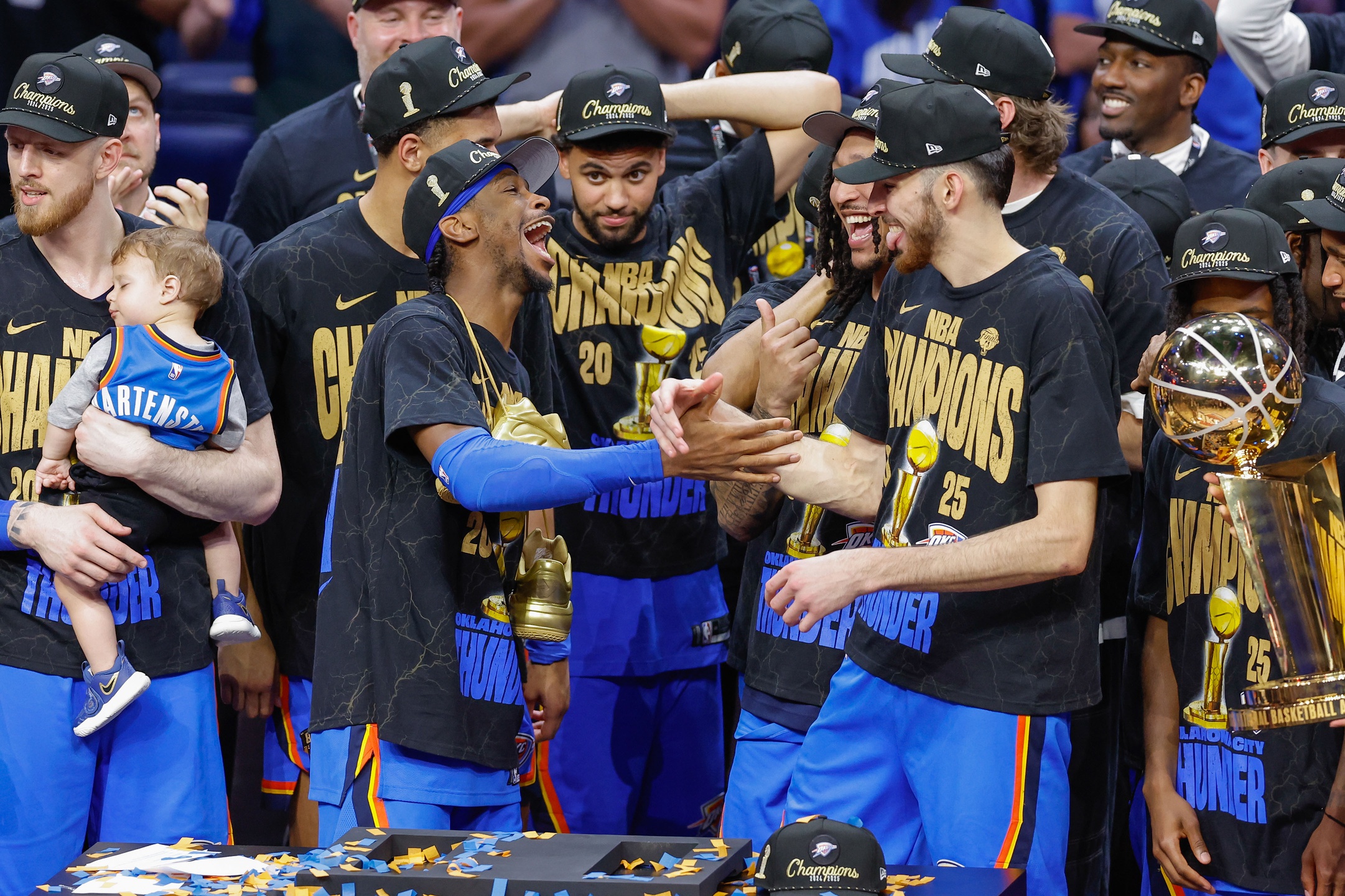
Of that above group, the Thunder got there by committing a league-high $776.3 million in new money via extensions. Max extensions went to Shai Gilgeous-Alexander, Chet Holmgren and Jalen Williams, while Jaylin Williams also extended. The Thunder spent comparatively little on free agents, only committing $8.7 million to re-sign Ajay Mitchell. The rest was spent on signing Thomas Sorber to his rookie scale deal.

By locking into three max extensions this offseason, Oklahoma City more than doubled the total outlay of the San Antonio Spurs in the second spot. That’s the power of max extensions, and why players are eager to grab that money when it’s offered to them.

In fact, nearly half of the $4.8 billion (yes, billion with a B!) that NBA teams spent this summer went to extension. Teams gave out over $2.3 billion in total money spent on extensions, with the Thunder alone accounting for a third of that figure.

Extensions

  1. Thunder: $776.3 million - Shai Gilgeous-Alexander, Chet Homgren, Jalen Williams, Jaylin Williams
  2. Magic: $239.9 million - Paolo Banchero
  3. Spurs: $222.4 million - De’Aaron Fox
  4. Grizzlies: $205 million - Jaren Jackson Jr.
  5. Rockets: $161 million - Jabari Smith Jr., Steven Adams
  6. Lakers: $160.8 million - Luka Doncic
  7. Knicks: $150 million - Mikal Bridges
  8. Mavericks: $143.1 million - P.J. Washington, Daniel Gafford
  9. Suns: $133.3 million - Devin Booker
  10. Raptors: $84.1 million - Jakob Poeltl
  11. Pelicans: $67.6 million - Herb Jones

Once again, small market teams lead the way with the Thunder, Magic, Spurs and Grizzlies locking up key players on long-term deals. Each team signed at least one player to a max or near-max contract, with the Thunder inking three max extensions, and the Grizzlies and Jaren Jackson Jr. agreeing to a near max in their renegotiation-and-extension deal.

The Lakers could have ranked higher on the list, but they agreed to only a three-year max extension with Luka Doncic. Otherwise, they would have been even with the Spurs.

The other max extension signed was Devin Booker with the Suns. His projected $133.3 million is interesting in that it covers only two seasons, despite averaging over $66 million per season.

Free Agency

  1. Timberwolves: $231.1 million - Naz Reid, Julius Randle
  2. Bucks: $210.2 million - Myles Turner, Bobby Portis
  3. Rockets: $136.3 million - Fred VanVleet, Dorian Finney-Smith
  4. Mavericks: $133.4 million - Kyrie Irving, D’Angelo Russell
  5. Clippers: $125.5 million - James Harden, Brook Lopez
  6. Bulls: $124 million - Josh Giddey, Tre Jones

A few notes:

  • We only included the teams who spent more than $100 million on free agents.
  • We listed each team’s two largest contracts that were given to free agents.

Most of the free agent money spent this offseason was for teams to retain their own players. Only Myles Turner, who left the Pacers for the Bucks, changed teams on a deal larger than $100 million in total salary.

Free agency accounted for just over 34% of total spending this offseason. That continued a trend of a few years of teams spending far more in extensions than on free agents.

Rookie Signings

  1. Hornets: $79.6 million - Kon Knueppel, Liam McNeeley, Sion James, Ryan Kalkbrenner
  2. Spurs: $79.6 million - Dylan Harper, Carter Bryant
  3. Nets: $71.3 million - Egor Demin, Nolan Traore, Drake Powell, Ben Saraf, Danny Wolf
  4. Pelicans: $67.2 million - Jeremiah Fears, Derik Queen, Micah Peavy
  5. Mavericks: $62.7 million - Cooper Flagg

We mostly added this section to show the cost of having a high draft selection, not that anyone is complaining about having such a “problem”. For the Hornets, Spurs, Nets and Pelicans to surpass the amount the Mavericks paid first overall pick Cooper Flagg, those teams all had to sign multiple first-round picks.

The Nets are rostering five first-round rookie scale players this season. The Spurs and Pelicans each have two lottery picks on their rosters. The Hornets have two first-round picks, plus two players who got full second round pick exception deals.

Takeaways

It came as no surprise that the vast majority spent this offseason was on extensions. We’ve hit a point where roughly half the money being committed to is on long-term extensions, with several of them being max deals.

Free agency isn’t dead though. Teams are still making moves with free agents, even if most of that money was spent to re-sign their own players. But some context is necessary here.

Only the Milwaukee Bucks and Brooklyn Nets ended up having significant cap space this offseason. The Bucks spent most of that space to sign Myles Turner, while also re-signing players and adding a few veteran minimum free agents. The Nets used the majority of their cap space to bring in veterans in salary-clearing moves (Michael Porter Jr., Terance Mann, Haywood Highsmith, Kobe Bufkin).

Next offseason could feature as many as 10 teams with significant cap space. The free agent class isn’t expected to be overly strong though. That means that space could be spent on acquiring players via trades, while also re-signing players. However, in the summer of 2027, we could see several major players hit free agency. A handful of teams are already talking about operating in a two-year window when it comes to cap management and free agency planning.

Mostly: Don’t write off free agency just yet. These things go in waves. For the last few years, the league has been largely capped-out. Over the next couple of years, we’re going to see several teams with cap space, including in marquee markets like Los Angeles and Miami.

We’ve also seen a whole new willingness from teams to eat dead money on their books. Things went to the extreme with the waive-and-stretch transactions for the Bucks and Damian Lillard and the Suns and Bradley Beal, but teams have been carrying more and more dead money. If NBA teams have a player they want, and the way to get there is to add some dead money to the books long-term, they’ve been increasingly willing to do so.

This offseason, the focus was on retention, either via extensions or re-signings. That will continue, but as the cap grows and current deals expire, more teams will get involved in free agency again. And the trade market, as always, remains robust. Whether it’s teams aggressively pursuing additions, or teams looking to shed money to dodge the tax and ease apron concerns, trades are still happening all over the NBA.


Dan SoemannSeptember 15, 2025

The final month of the 2025 MLB season is here, and Spotrac is tracking all of the various player performance incentives being earned as we approach the finish. Here's a review of the past week:

Earned:

Harrison Bader (OF, Phillies)
Bader hit two incentives thresholds last week which earned him an extra $400k total, $200k each for 425 and 450 plate appearances.

Andres Munoz (RP, Mariners)
Munoz reached 40 Games Finished which increased the 2026-28 Club options by $250k each.

Brooks Raley (RP, Mets)
Raley has added a total of $375k with $125k each for 10, 15 and 20 games.

Pete Fairbanks (RP, Rays)
Fairbanks combined for 150 pitching appearances from 2023-25 and added another $1M to his 2026 Club option, which is now valued at $11.5M.

Robert Suarez (RP, Padres)
Suarez earned another $500k by reaching 50 games finished and has added an extra $2.5M to his $8M salary.

Michael A. Taylor (OF, White Sox)
Taylor added another $25k for reaching 300 plate appearances and raised his overall incentive earnings to $225k.

Justin Wilson (RP, Red Sox)
Wilson earned another $150k by reaching 55 games and has added an extra $600k to his $2.25M salary.

Michael Lorenzen (SP, Royals)
Lorenzen earned $250k by reaching 125 innings and has added a total of $750k to his $5.5M salary.

Carson Kelly (C, Cubs)
Kelly earned $500k total, $250k each for 81 and 91 games started.

Ketel Marte (2B, Diamondbacks)
Marte reached 500 plate appearances which increased his 2026 salary by $500k.

Patrick Corbin (SP, Nationals)
Corbin added another $250k for reaching 145 innings and raised his overall incentive earnings to $1.4M.

Hoby Milner (RP, Brewers)
Milner added another $150k for reaching 65 innings and maxed out his $500k of incentives.

Andrew Kittredge (RP, Cubs)
Kittredge earned another $50k for reaching 50 games which increased his earned incentives to $200k.

Randal Grichuck (OF, Royals)
Grichick earned another $250k for reaching 275 plate appearances which maxed out his earned incentives at $500k.

Ryne Stanek (RP, Mets)
Stanek earned another $100k for reaching 60 games and has added a total of $300k to his $4.5M salary.

Keith SmithSeptember 15, 2025
© USA Today Sports

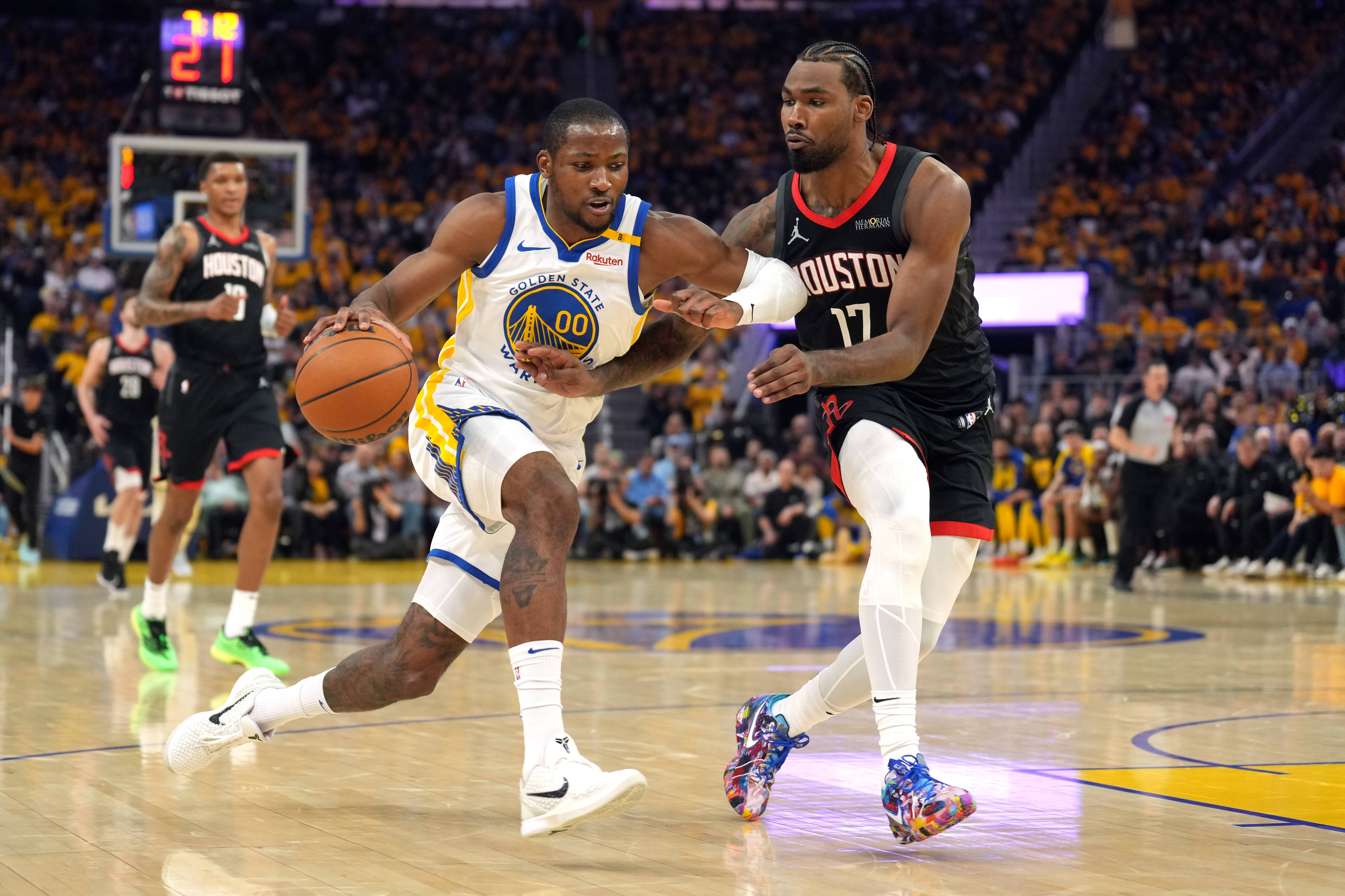
NBA training camps open in two weeks. Jonathan Kuminga remains an unsigned restricted free agent. Even more worrisome? Kuminga and the Golden State Warriors don’t seem particularly close on a deal either.

Unlike Josh Giddey and the Chicago Bulls, who needed to meet in the middle on a long-term deal, Kuminga and the Warriors have a lot more to figure out. This isn’t just about money or years, or even the combination of the two. There are questions about no-trade clauses, Bird rights, Base Year Compensation in a potential sign-and-trade and the prospect of Kuminga being an unrestricted free agent in 2026, when multiple teams project to have significant cap space.

There are some fairly important short- and long-term implications for both Kuminga and the Warriors on his next deal. We’re going to take a look at some potential factors for both the player and the team, in the immediate and down the line.

The Warriors Cap Sheet

As of this writing, the Golden State Warriors have only nine players signed to standard contracts. That’s five below the NBA’s minimum of 14 players (teams can drop below 14 players for up to 14 days at a time and for no more than 28 total days each regular season) and six below the maximum of 15. Golden State has preferred to fill all 15 roster spots, as they proactively manage both games and minutes played for their veterans throughout the season.

The Warriors are currently not facing any form of hard-cap issues. Golden State currently sits about $14.8 million under the luxury tax. In addition, the Warriors are $22.5 million under the first apron and $34.3 million under the second apron.

Let’s take Jonathan Kuminga out of the mix for a moment. Golden State isn’t going to want to trigger anything more than a second-apron hard cap, if they can avoid it. That means they’ll limit themselves to using the Taxpayer MLE of about $5.7 million. From there, it’s probably minimum contracts to fill out the rest of the roster.

If the Warriors take the above approach, that would leave just over $22 million available for Kuminga while fitting in under the second-apron hard cap that would be triggered by using the Taxpayer MLE. So, that’s sort of the baseline for Kuminga, and likely why the team had offered him deals that were for either $45 million over two seasons or $75 million over three seasons. Both of those contracts could come with structures that allow GM Mike Dunleavy Jr. to re-sign Kuminga, use the Taxpayer MLE and fill out the roster with four veteran minimum signings.

Working under these tight margins is why the Warriors haven’t filled out their roster yet. There’s likely an understanding with the free agents they’re linked to (Al Horford, De’Anthony Melton, Gary Payton II and Seth Curry among them) that they’ll sign them to one type of contract if Kuminga is returning, and another type of deal if Kuminga isn’t going to be on the roster. Golden State isn’t going to complete any other deals until they have resolution with Kuminga, simply because of how tight these margins are.

The Qualifying Offer

With each passing day, the likelihood of Jonathan Kuminga signing his $7.9 million qualifying offer increases. Neither Kuminga nor the Warriors are going to want this to drag into training camp, never mind into the regular season. The “easy” out is that Kuminga signs the qualifying offer. It’s not the best outcome for Kuminga or Golden State, but it’s certainly a way this could go.

Why would Kuminga not want to sign the qualifying offer? First, he’d lose out on some money. At the very least, it appears that Kuminga has an offer for about $22 million the table for this season. That’s about $14 million more than playing out the season on the qualifying offer.

Second, Kuminga would have no long-term security while playing out the year on the qualifying offer. It’s a one-year deal. If things go sideways, he could be in a rough spot this coming offseason. Kuminga would be betting on himself, but it would be a wager made while playing for a team that may no longer see him as a necessary part of the immediate rotation or the future one.

Lastly, signing the qualifying offer would mean that if Kuminga is traded, he’d lose his Bird rights as an unrestricted free agent in 2026. Players on a one-year deal lose their Bird rights when traded. That’s why Kuminga would get an implicit no-trade clause if he signed the qualifying offer. And if Kuminga is traded after signing the qualifying offer, he would not be extension-eligible, because he’d be on a one-year deal, which a player can’t extend off of. He’d be headed for free agency in the offseason, no matter what.

One of the positives of signing the qualifying offer is that implicit no-trade clause. Kuminga would have full control if the Warriors were to find a deal for him. (Note: This is exclusive of a sign-and-trade right now, which we’ll talk about later.)

Another positive for Kuminga is that he would be an unrestricted free agent in 2026. The Warriors, or another team if he were traded, would have no control over his free agent status. As it currently stands, somewhere between five and 10 teams should have significant cap space next offseason. That’s good news for Kuminga.

On the Warriors side, things basically flip the opposite way of Kuminga’s side of things. If Kuminga signed the qualifying offer, Golden State could stay well below the second-apron hard cap. They still wouldn’t have enough room to use the full Non-Taxpayer MLE of $14.1 million, but they’d have considerably more wiggle room to work with.

Beyond this upcoming season, Golden State wouldn’t have any additional money on the books for Kuminga moving forward. With just Stephen Curry, Jimmy Butler, Draymond Green, Moses Moody and Brandin Podziemski on the books for 2026-27, the Warriors are basically at the salary cap. Not carrying an additional $23 to $25 million for Kuminga could give Dunleavy the room to make a couple of impactful additions.

On the negative side, Kuminga on the qualifying offer gives him control in trades vs the team. That’s always tough, and it’s why on any kind of one- or two-year deal with a second-year option (team or player), the Warriors have insisted that Kuminga waive the implicit no-trade clause. The team wants to retain control, and if Kuminga signs the qualifying offer, he’ll have it.

Beyond that, if Kuminga signs the qualifying offer and agrees to a trade, he’d be only $7.9 million salary. That’s not going to get Golden State all that much. They’d rather have him on a bigger contract and as more matching salary, as long as the future years are team-controlled.

And lastly for the Warriors, but probably most obvious, they’d see Kuminga hit unrestricted free agency next summer. In an offseason where multiple teams project to have significant cap space, that could all but end Kuminga’s time in the Bay Area. And, of course, pending free agent status could impact Kuminga’s trade value.

Related to the above: Working out a sign-and-trade would still be possible for Kuminga and the Warriors, but when the other side might have cap space, it’s nowhere near as necessary. That makes it far less likely. In those situations, Kuminga would likely just sign with the team straight out, assuming they had the cap space to do so.

Sign-and-Trade Complications

A very popular question related to Jonathan Kuminga and the Warriors has been: “Why don’t the Warriors just find a sign-and-trade deal now?”

That’s fair to ask, but it’s hardly that simple.

First, Kuminga and the acquiring team need to be on board. That’s probably the easier part. Even though cap space has all but dried up around the NBA (the Brooklyn Nets still have some, and we’ll it on that next!), sign-and-trade deals are still possible. But it’s complicated for a couple of reasons.

First, and the easier part to explain, is that 20 teams are hard-capped at the first or second apron. Of that group, 14 teams are so close to their hard cap that acquiring Kuminga via sign-and-trade would be pretty difficult. Of the 10 non-hard-capped teams, only a handful have the ability to acquire Kuminga. The ones who can’t would trigger a first-apron hard cap by acquiring Kuminga and they don’t have the flexibility to do so.

That leaves a fairly limited market. Could teams like the Chicago Bulls, Detroit Pistons or Memphis Grizzlies get involved? Sure. They’ve all got enough room under the first apron to bring in Kuminga on a commensurate salary. But, that’s not as easy to pull off on the Warriors side of things.

In a sign-and-trade transaction, Base Year Compensation (BYC) can come into play. BYC is triggered when a Bird or Early Bird free agent re-signs with an over-the-cap team as a part of a sign-and-trade and gets a contract that is 20% larger than his previous deal. When BYC is triggered, the player’s outgoing salary in trade is 50% of the new salary figure, while being 100% of the salary amount on the incoming side.

Let’s keep it simple in an example involving Kuminga. If the Warriors are going to sign-and-trade Kuminga, let’s say it’s happening at a first-year salary of $30 million, which seems to be where Kuminga would like to land in a new deal. That means on the Warriors side of the trade, he’d count for $15 million, while counting at the full $30 million amount on the acquiring side.

Now, because the expanded salary-matching rules allow for Golden State to take back an additional $8.5 million in a deal where they send out $15 million, they could return a salary of roughly $23.5 million for Kuminga. That’s a pretty solid amount, but it still makes finding a trade tricky. Roughly $6.5 million can be a tricky amount to make up the difference on.

The Warriors would need to find the right trade partner, with the right amount of salary to send back to find a deal. And that’s assuming Kuminga and the acquiring team are in agreement too. It’s certainly possible, but it’s not as easy as many seem to think.

Signing an offer sheet with the Nets

As of this writing, the Brooklyn Nets are sitting on about $16.1 million in cap space. If they were to waive some players who have partial/non-guaranteed contract, the Nets could create about $24 million cap space. That’s enough to give Jonathan Kuminga an offer sheet that the Warriors probably wouldn’t match. Let’s say something in the range of $103 million over four years with a player option Year 4. That’s probably not a deal Golden State is willing to match.

But, and there’s always a but, Brooklyn hasn’t been inclined to play the restricted free agent game this offseason. Unlike the previous rebuild he led, Sean Marks has built through the draft and trades so far this time around. No offer sheets to restricted free agents as of yet. And it doesn’t seem likely that will change in the dwindling days of this offseason.

The Nets drafted five players in the first round of the 2025 NBA Draft. They have some returning younger players. And they acquired three veterans via trades who will factor into the rotation. That’s a pretty stuffed roster. Even though Kuminga is going to be only 23 years old at the start of the season, he’s probably not the kind of young player that Brooklyn is ready to target just yet.

Re-signing with the Warriors

Of course, the door remains open for Jonathan Kuminga and Golden State to sign a new deal. The Warriors reportedly increased their offer to a three-year deal (with a third-year team option) worth $75 million. That’s up from the $45 million over two years (with a second-year team option) that Golden State had previously been offering. While there are still major hurdles to overcome, there’s at least some continued negotiations happening.

Those hurdles include money, years, options and no-trade clauses. If the Warriors do a two-year deal, they want Kuminga to waive his implicit no-trade clause. That’s been a no-go from Kuminga to date.

To give the Warriors a team option on a two- or three-year deal, Kuminga’s side wants an additional $10 million in annual money. The belief seems to be that’s the value of a team option to them. So, instead of a deal starting around $20 to $22 million, Kuminga would start around $30 to $32 million. As we covered, that could cause issues with Golden State’s ability to fill their remaining roster spots in the way they have laid out.

If he’s taking less money, Kuminga wants a fully guaranteed deal, or a player option. That’s not something the Warriors have been willing to budge on.

The Predicted Outcome

Jonathan Kuminga and the Golden State Warriors appear headed for a breakup. Whether that happens before the season or down the line, it seems pretty inevitable. ESPN did a good job of outlining the internal split in the Warriors leadership on Kuminga. Unless the pro-Kuminga side wins out, it’s hard to see how the player and team stay together long-term.

Finding a sign-and-trade at this point of the offseason seems unlikely. As we laid out, it’s not impossible, but it is complicated. And an offer sheet doesn’t appear coming from the Nets either.

That leaves Kuminga signing the qualifying offer or signing a likely short-term deal with Golden State. The Warriors seem intent on not giving Kuminga any deal that doesn’t include team control in the final season, as well as a contract where Kuminga waives any right to a no-trade clause. They haven’t moved off that stance yet, and don’t seem likely to.

Kuminga seems intent on keeping his options as open as possible unless he’s paid what he feels he’s worth on a short- or long-term deal. While his options to do so are somewhat limited, Kuminga had held fast this long. There’s no reason to give now.

The likely path forward is that Kuminga signs the qualifying offer. We already saw Cam Thomas do this earlier this offseason. When Thomas and the Nets were nowhere close on a new contract, he chose to bet on himself and to sign the qualifying offer. The situations aren’t exactly the same, as the Warriors are trying to contend and the Nets are rebuilding, but both players were similarly stuck between short-term, team-friendly deals and the qualifying offer.

It looks like Kuminga is poised to make a similar bet on himself. It may cost him some money this season, but he’d have full control moving forward. That’s probably worth it, as opposed to putting everything in the Warriors hands.


Top