


.png)


 NEWS
NEWS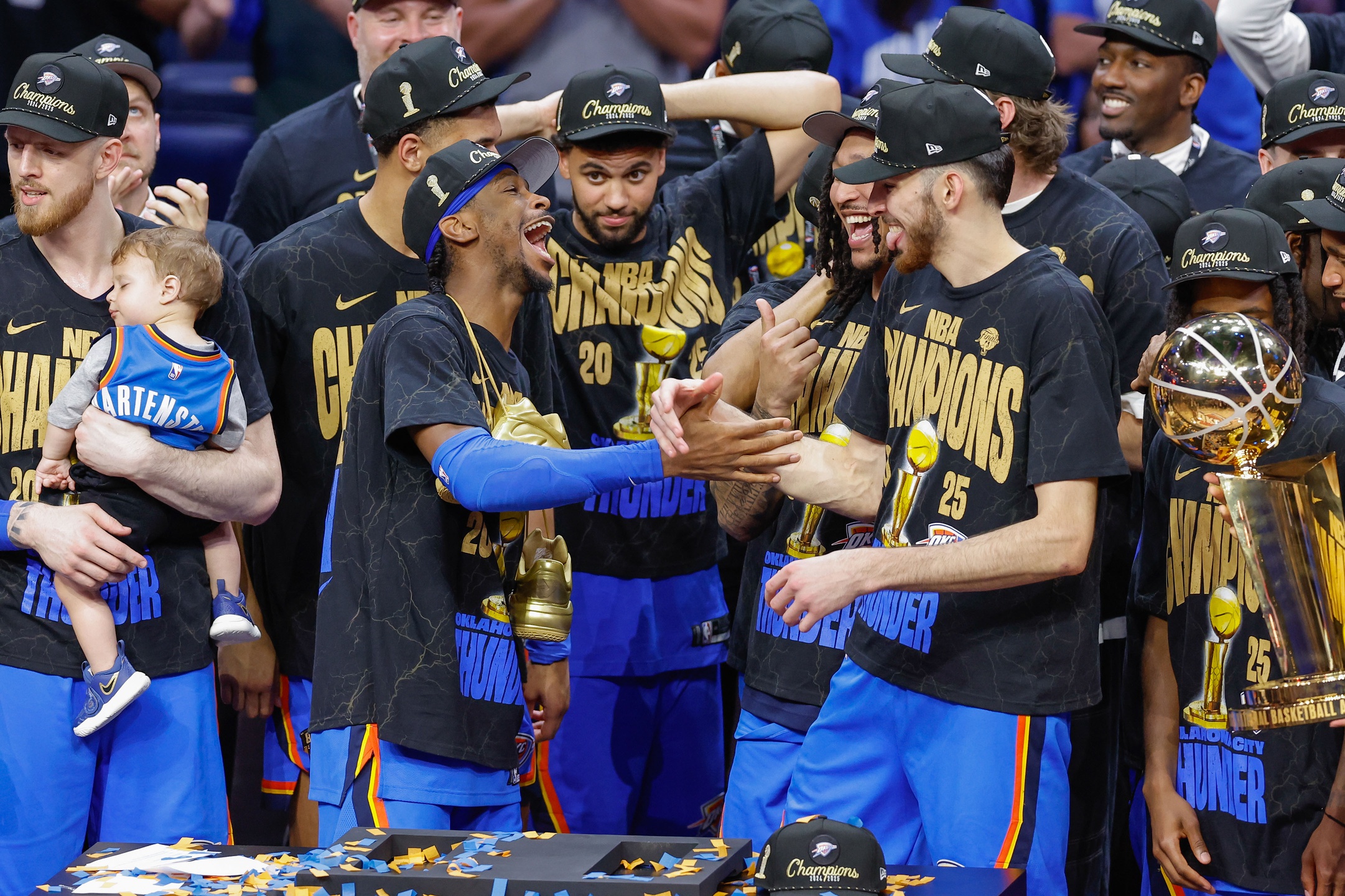 © USA Today Sports
NBA training camps open next week for the Brooklyn Nets, New York Knicks, Philadelphia 76ers, New Orleans Pelicans and Phoenix Suns. These teams get a week’s head start on the rest of the league because they’re all headed overseas for a portion of the preseason. By September 30, the entire NBA will be back to work.
While there are still a couple of key situations to be resolved (Jonathan Kuminga’s free agency and the Warriors filling out their roster; Quentin Grimes’ free agency), rosters are largely set for next season. There are camp signings happening, with a vast number of sign-and-waive deals taking place to get players lined up G League rosters, but the bulk of the offseason movement is complete.
That means it’s time to take a look at just how NBA teams spent this summer! Two important notes:
- We’re looking at total money spent here. That means the total contract, not just those for the 2025-26 season.
- This is all new money. No trades are factored in here, because in most cases that involves moving around salary that already existed.
Let’s start by saying that none of this look at spending is going to be critical of any team. All 30 teams are different places. Some had very little roster work to do, while others had a ton of work to do. Those who didn’t have to do much, didn’t spend a lot. Those who had extension-eligible players or roster spots to fill opened up their checkbooks in a major way.
But it also goes deeper than that.
Free agency, meaning the true movement of players from one team to a new one, has been lessened in recent years. Players take the security of long-term extensions, then when a change is needed, a trade is made. That means the big money spent in the offseason is largely committed via extensions. In fact, one of the league’s smaller-market teams led the way, by a large margin, in spending both in terms of extensions and overall.
Let’s dive in!
Overall Spending
- Oklahoma City Thunder: $807.5 million
- San Antonio Spurs: $347.9 million
- Dallas Mavericks: $339.3 million
- Memphis Grizzlies: $324.4 million
- Houston Rockets: $297.3 million
- Orlando Magic: $275.9 million
- Minnesota Timberwolves: $251.4 million
- Milwaukee Bucks: $210.2 million
- Los Angeles Lakers: $208.9 million
- Phoenix Suns: $173.7 million
- New York Knicks: $164.9 million
- New Orleans Pelicans: $150.8 million
- Chicago Bulls: $149.3 million
- LA Clippers: $139.6 million
- Toronto Raptors: $121.8 million
- Charlotte Hornets: $110.9 million
- Brooklyn Nets: $102.3 million
- Detroit Pistons: $99.4 million
- Atlanta Hawks: $98.3 million
- Philadelphia 76ers: $78.7 million
- Sacramento Kings: $72.9 million
- Portland Trail Blazers: $65.4 million
- Utah Jazz: $60.5 million
- Washington Wizards: $60.4 million
- Cleveland Cavaliers: $50.3 million
- Miami Heat: $49.6 million
- Indiana Pacers: $35.4 million
- Boston Celtics: $27.8 million
- Denver Nuggets: $6.7 million
- Golden State Warriors: $0.0 million
A few notes:
- This includes reported deals (Josh Giddey with the Bulls for example) that haven’t been made official yet.
- The Warriors are the lone team in the NBA to add a single new player yet this offseason. That’s related to the Jonathan Kuminga situation, but nonetheless true as of this writing.
- First Round Rookie Scale deals, plus other rookie signings (Second Round Pick Exceptions and undrafted signings), are included in the totals.
- All of the totals, sortable by team and type of signing, can be found on Spotrac’s 2025 NBA Offseason Summary.
As you can see, there’s quite the range here. Even taking the Warriors out of the mix, because they’re in a bit of an odd situation, we’d still have roughly an $800 million difference in money spent between the league-leading Thunder and the 29th-place Nuggets.
It’s also at least somewhat interesting that six of the top-10 spenders this offseason can be termed as small market teams: Thunder, Spurs, Grizzlies, Magic, Timberwolves and Bucks.
Of that above group, the Thunder got there by committing a league-high $776.3 million in new money via extensions. Max extensions went to Shai Gilgeous-Alexander, Chet Holmgren and Jalen Williams, while Jaylin Williams also extended. The Thunder spent comparatively little on free agents, only committing $8.7 million to re-sign Ajay Mitchell. The rest was spent on signing Thomas Sorber to his rookie scale deal.
By locking into three max extensions this offseason, Oklahoma City more than doubled the total outlay of the San Antonio Spurs in the second spot. That’s the power of max extensions, and why players are eager to grab that money when it’s offered to them.
In fact, nearly half of the $4.8 billion (yes, billion with a B!) that NBA teams spent this summer went to extension. Teams gave out over $2.3 billion in total money spent on extensions, with the Thunder alone accounting for a third of that figure.
Extensions
- Thunder: $776.3 million - Shai Gilgeous-Alexander, Chet Homgren, Jalen Williams, Jaylin Williams
- Magic: $239.9 million - Paolo Banchero
- Spurs: $222.4 million - De’Aaron Fox
- Grizzlies: $205 million - Jaren Jackson Jr.
- Rockets: $161 million - Jabari Smith Jr., Steven Adams
- Lakers: $160.8 million - Luka Doncic
- Knicks: $150 million - Mikal Bridges
- Mavericks: $143.1 million - P.J. Washington, Daniel Gafford
- Suns: $133.3 million - Devin Booker
- Raptors: $84.1 million - Jakob Poeltl
- Pelicans: $67.6 million - Herb Jones
Once again, small market teams lead the way with the Thunder, Magic, Spurs and Grizzlies locking up key players on long-term deals. Each team signed at least one player to a max or near-max contract, with the Thunder inking three max extensions, and the Grizzlies and Jaren Jackson Jr. agreeing to a near max in their renegotiation-and-extension deal.
The Lakers could have ranked higher on the list, but they agreed to only a three-year max extension with Luka Doncic. Otherwise, they would have been even with the Spurs.
The other max extension signed was Devin Booker with the Suns. His projected $133.3 million is interesting in that it covers only two seasons, despite averaging over $66 million per season.
Free Agency
- Timberwolves: $231.1 million - Naz Reid, Julius Randle
- Bucks: $210.2 million - Myles Turner, Bobby Portis
- Rockets: $136.3 million - Fred VanVleet, Dorian Finney-Smith
- Mavericks: $133.4 million - Kyrie Irving, D’Angelo Russell
- Clippers: $125.5 million - James Harden, Brook Lopez
- Bulls: $124 million - Josh Giddey, Tre Jones
A few notes:
- We only included the teams who spent more than $100 million on free agents.
- We listed each team’s two largest contracts that were given to free agents.
Most of the free agent money spent this offseason was for teams to retain their own players. Only Myles Turner, who left the Pacers for the Bucks, changed teams on a deal larger than $100 million in total salary.
Free agency accounted for just over 34% of total spending this offseason. That continued a trend of a few years of teams spending far more in extensions than on free agents.
Rookie Signings
- Hornets: $79.6 million - Kon Knueppel, Liam McNeeley, Sion James, Ryan Kalkbrenner
- Spurs: $79.6 million - Dylan Harper, Carter Bryant
- Nets: $71.3 million - Egor Demin, Nolan Traore, Drake Powell, Ben Saraf, Danny Wolf
- Pelicans: $67.2 million - Jeremiah Fears, Derik Queen, Micah Peavy
- Mavericks: $62.7 million - Cooper Flagg
We mostly added this section to show the cost of having a high draft selection, not that anyone is complaining about having such a “problem”. For the Hornets, Spurs, Nets and Pelicans to surpass the amount the Mavericks paid first overall pick Cooper Flagg, those teams all had to sign multiple first-round picks.
The Nets are rostering five first-round rookie scale players this season. The Spurs and Pelicans each have two lottery picks on their rosters. The Hornets have two first-round picks, plus two players who got full second round pick exception deals.
Takeaways
It came as no surprise that the vast majority spent this offseason was on extensions. We’ve hit a point where roughly half the money being committed to is on long-term extensions, with several of them being max deals.
Free agency isn’t dead though. Teams are still making moves with free agents, even if most of that money was spent to re-sign their own players. But some context is necessary here.
Only the Milwaukee Bucks and Brooklyn Nets ended up having significant cap space this offseason. The Bucks spent most of that space to sign Myles Turner, while also re-signing players and adding a few veteran minimum free agents. The Nets used the majority of their cap space to bring in veterans in salary-clearing moves (Michael Porter Jr., Terance Mann, Haywood Highsmith, Kobe Bufkin).
Next offseason could feature as many as 10 teams with significant cap space. The free agent class isn’t expected to be overly strong though. That means that space could be spent on acquiring players via trades, while also re-signing players. However, in the summer of 2027, we could see several major players hit free agency. A handful of teams are already talking about operating in a two-year window when it comes to cap management and free agency planning.
Mostly: Don’t write off free agency just yet. These things go in waves. For the last few years, the league has been largely capped-out. Over the next couple of years, we’re going to see several teams with cap space, including in marquee markets like Los Angeles and Miami.
We’ve also seen a whole new willingness from teams to eat dead money on their books. Things went to the extreme with the waive-and-stretch transactions for the Bucks and Damian Lillard and the Suns and Bradley Beal, but teams have been carrying more and more dead money. If NBA teams have a player they want, and the way to get there is to add some dead money to the books long-term, they’ve been increasingly willing to do so.
This offseason, the focus was on retention, either via extensions or re-signings. That will continue, but as the cap grows and current deals expire, more teams will get involved in free agency again. And the trade market, as always, remains robust. Whether it’s teams aggressively pursuing additions, or teams looking to shed money to dodge the tax and ease apron concerns, trades are still happening all over the NBA.