


.png)


 NEWS
NEWSJoin the free NFL Draft Pick contest powered and presented by BettorEdge, including a $50 prize to the winner. Presented by Spotrac & iHeartRadio.

 ATL Atlanta UnitedAtlanta United FC
 MTL MontrealCF Montreal
 CLT CharlotteCharlotte FC
 CHI FireChicago Fire
 CLB Columbus CrewColumbus Crew
 DC UnitedD.C. United
 CIN CincinnatiFC Cincinnati
 MIA Inter MiamiInter Miami CF
 NSH NashvilleNashville SC
 NE RevolutionNew England Revolution
 NYC New York CityNew York City FC
 RBNY Red BullsNew York Red Bulls
 ORL Orlando CityOrlando City
 PHI UnionPhiladelphia Union
 TOR TorontoToronto FC
 ATX AustinAustin FC
 COL RapidsColorado Rapids
 DAL DallasFC Dallas
 HOU DynamoHouston Dynamo
 LA GalaxyLA Galaxy
 LAFC Los AngelesLos Angeles FC
 MIN MinnesotaMinnesota United FC
 POR TimbersPortland Timbers
 RSL Real Salt LakeReal Salt Lake
 SD San Diego FCSan Diego FC
 SJ EarthquakesSan Jose Earthquakes
 SEA SoundersSeattle Sounders FC
 SKC Kansas CitySporting Kansas City
 STL St. Louis CITYSt. Louis CITY SC
 VAN WhitecapsVancouver Whitecaps FC
 ACFC Angel City FCAngel City FC
 BFC Bay FCBay FC
 BOS Boston Legacy FCBoston Legacy FC
 CHI Chicago Stars FCChicago Stars FC
 DEN Denver Summit FCDenver Summit FC
 HOU Houston DashHouston Dash
 KC Kansas City CurrentKansas City Current
 GFC NJ/NY Gotham FCNJ/NY Gotham FC
 NC North Carolina CourageNorth Carolina Courage
 ORL Orlando PrideOrlando Pride
 POR Portland Thorns FCPortland Thorns FC
 LOU Racing Louisville FCRacing Louisville FC
 SD San Diego Wave FCSan Diego Wave FC
 SEA Seattle Reign FCSeattle Reign FC
 UTA Utah Royals FCUtah Royals FC
 WAS Washington SpiritWashington Spirit ATL Atlanta UnitedAtlanta United FC MTL MontrealCF Montreal CLT CharlotteCharlotte FC CHI FireChicago Fire CLB Columbus CrewColumbus Crew DC UnitedD.C. United CIN CincinnatiFC Cincinnati MIA Inter MiamiInter Miami CF NSH NashvilleNashville SC NE RevolutionNew England Revolution NYC New York CityNew York City FC RBNY Red BullsNew York Red Bulls ORL Orlando CityOrlando City PHI UnionPhiladelphia Union TOR TorontoToronto FC ATX AustinAustin FC COL RapidsColorado Rapids DAL DallasFC Dallas HOU DynamoHouston Dynamo LA GalaxyLA Galaxy LAFC Los AngelesLos Angeles FC MIN MinnesotaMinnesota United FC POR TimbersPortland Timbers RSL Real Salt LakeReal Salt Lake SD San Diego FCSan Diego FC SJ EarthquakesSan Jose Earthquakes SEA SoundersSeattle Sounders FC SKC Kansas CitySporting Kansas City STL St. Louis CITYSt. Louis CITY SC VAN WhitecapsVancouver Whitecaps FC ACFC Angel City FCAngel City FC BFC Bay FCBay FC BOS Boston Legacy FCBoston Legacy FC CHI Chicago Stars FCChicago Stars FC DEN Denver Summit FCDenver Summit FC HOU Houston DashHouston Dash KC Kansas City CurrentKansas City Current GFC NJ/NY Gotham FCNJ/NY Gotham FC NC North Carolina CourageNorth Carolina Courage ORL Orlando PrideOrlando Pride POR Portland Thorns FCPortland Thorns FC LOU Racing Louisville FCRacing Louisville FC SD San Diego Wave FCSan Diego Wave FC SEA Seattle Reign FCSeattle Reign FC UTA Utah Royals FCUtah Royals FC WAS Washington SpiritWashington Spirit
Join the free NFL Draft Pick contest powered and presented by BettorEdge, including a $50 prize to the winner. Presented by Spotrac & iHeartRadio.
 © USA Today Sports
With NFL Draft week upon us, Spotrac takes a look at where the highest earning player at each position was originally drafted.
Further down, we’ll break out the top earning player by position selected from each draft round (including undrafted players).
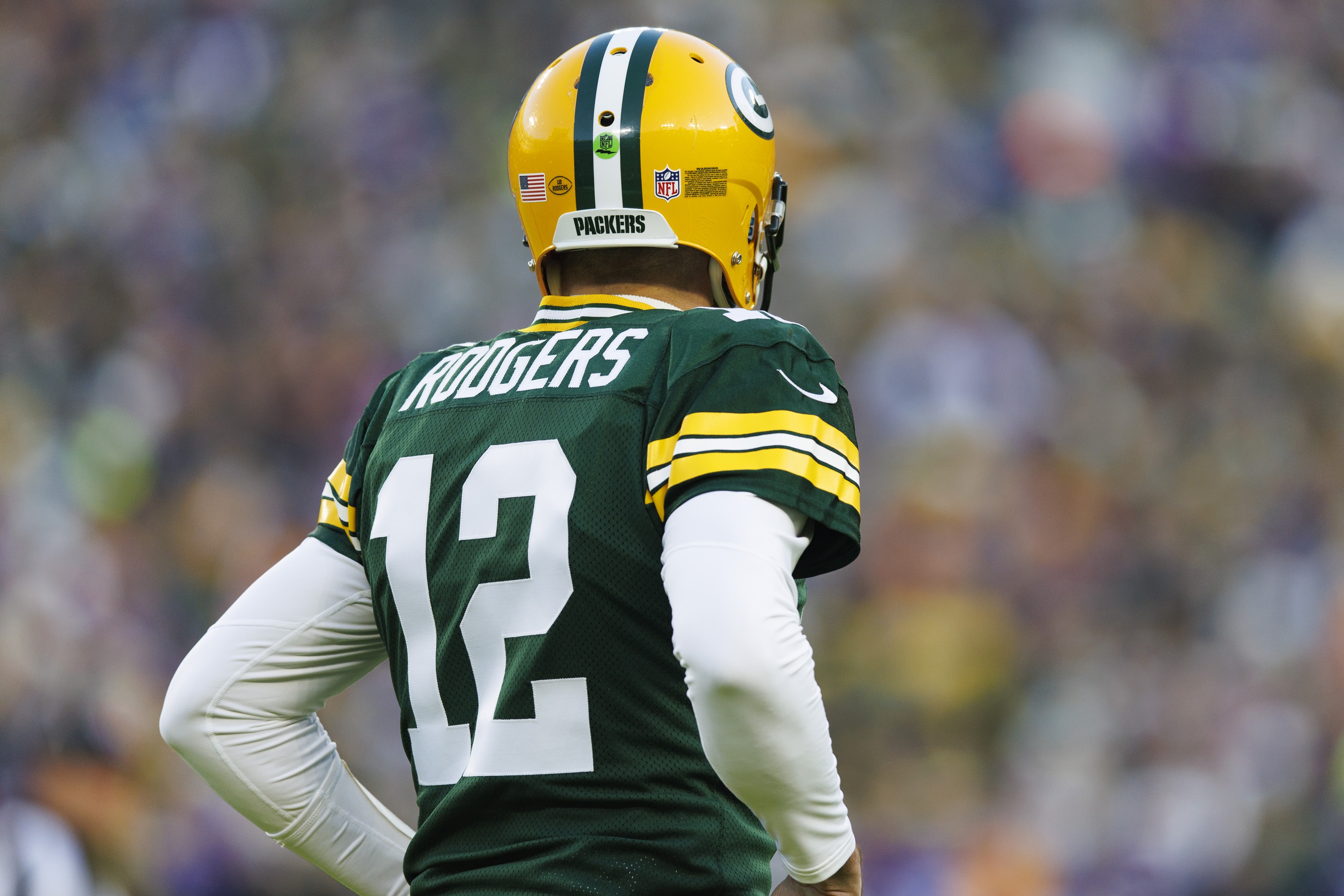
The Packers selected Rodgers as the second QB taken in the 2005 draft, with Alex Smith going #1 overall to the 49ers that same year. 20 years later he’s the highest paid player in NFL history, and could very well add to that number if he signs another contract for the upcoming season.
Honorable Mention
Matthew Stafford ($364M, R1/#1); Tom Brady ($333M, R6/#199)
Top Earning Quarterbacks by Draft Round (Full List)
| PLAYER | SEASONS | EARNINGS | |
|---|---|---|---|
| Round 1 | Aaron Rodgers | 20 | $380,658,010 |
| Round 2 | Drew Brees | 20 | $269,710,422 |
| Round 3 | Russell Wilson | 13 | $305,362,520 |
| Round 4 | Kirk Cousins | 13 | $294,192,254 |
| Round 5 | Mark Brunell | 17 | $75,523,000 |
| Round 6 | Tom Brady | 23 | $332,962,392 |
| Round 7 | Ryan Fitzpatrick | 17 | $82,118,420 |
| Undrafted | Tony Romo | 13 | $127,422,458 |
A 2007 draft known mostly for #1 overall bust JaMarcus Russell provided plenty of home runs at the top, including two Top 12 selected running backs in Peterson & Marshawn Lynch. The former would rush for nearly 15,000 yards in a 15-year career, and remains the only running back in history to top the $90M mark - let alone the $100M one
Honorable Mention
Christian McCaffrey ($81M, R1/#8); Ezekiel Elliott ($76M, R1/#4)
Top Earning Running Backs by Draft Round (Full List)
| PLAYER | SEASONS | EARNINGS | |
|---|---|---|---|
| Round 1 | Adrian Peterson | 15 | $103,215,972 |
| Round 2 | Derrick Henry | 9 | $67,472,749 |
| Round 3 | Alvin Kamara | 8 | $64,843,272 |
| Round 4 | Darren Sproles | 14 | $44,587,765 |
| Round 5 | Aaron Jones | 8 | $41,688,273 |
| Round 6 | Chester Taylor | 10 | $27,003,750 |
| Round 7 | Jamal Anderson | 8 | $17,880,000 |
| Undrafted | Arian Foster | 8 | $37,748,161 |
7 Wide Receivers were selected in the first round of the 2004 draft, but Fitzgerald remained far and away the best of the bunch throughout a 17-year career in Arizona. His $180M+ earned will remain the most by a WR through the 2025 season as well, $25M clear of Stefon Diggs & Mike Evans.
Honorable Mention
Julio Jones ($149M, R1/#6); DeAndre Hopkins ($139M, R1/#27)
Top Earning Wide Receivers by Draft Round (Full List)
| PLAYER | SEASONS | EARNINGS | |
|---|---|---|---|
| Round 1 | Larry Fitzgerald | 17 | $180,757,239 |
| Round 2 | Davante Adams | 11 | $129,528,141 |
| Round 3 | Keenan Allen | 12 | $133,142,051 |
| Round 4 | Brandon Marshall | 13 | $80,555,471 |
| Round 5 | Stefon Diggs | 10 | $137,370,421 |
| Round 6 | Antonio Brown | 12 | $80,744,339 |
| Round 7 | Julian Edelman | 11 | $46,021,530 |
| Undrafted | Adam Thielen | 11 | $83,224,638 |
The 5th tight end selected in 2013, Kelce passed Jimmy Graham to claim the top earnings spot after 2024, and will extend his number past the $111M mark once the upcoming season is completed. He’s $30M ahead of Zach Ertz, the next active top-earning TE, who was drafted #35 overall in that same 2013 draft.
Honorable Mention
Jimmy Graham ($82.8M, R3/#95); Jason Witten ($81.8M, R3/#69)
Top Earning Tight Ends by Draft Round (Full List)
| PLAYER | SEASONS | EARNINGS | |
|---|---|---|---|
| Round 1 | Vernon Davis | 14 | $78,681,846 |
| Round 2 | Zach Ertz | 12 | $74,832,571 |
| Round 3 | Travis Kelce | 12 | $93,943,975 |
| Round 4 | Tyler Higbee | 9 | $44,598,201 |
| Round 5 | George Kittle | 8 | $62,505,903 |
| Round 6 | Delanie Walker | 14 | $48,690,653 |
| Round 7 | Virgil Green | 10 | $19,131,758 |
| Undrafted | Antonio Gates | 16 | $70,956,236 |
The first OL taken in 2010 has certainly lived up to every expectation and then some, set to enter his 15th NFL season in 2025 where he’s due another $22M. At the time of this piece, Williams has earned $58M more than any other offensive lineman in history.
Honorable Mention
Lane Johnson ($138.4M, R1/#4); Tyron Smith ($128.3M, R1/#9)
Top Earning Offensive Tackles by Draft Round (Full List)
| PLAYER | SEASONS | EARNINGS | |
|---|---|---|---|
| Round 1 | Trent Williams | 14 | $196,099,784 |
| Round 2 | Andrew Whitworth | 16 | $107,775,928 |
| Round 3 | Terron Armstead | 12 | $115,863,667 |
| Round 4 | David Bakhtiari | 11 | $126,875,928 |
| Round 5 | Ricky Wagner | 8 | $40,068,154 |
| Round 6 | Will Svitek | 8 | $8,538,035 |
| Round 7 | Trenton Brown | 10 | $70,611,860 |
| Undrafted | Jason Peters | 19 | $120,370,125 |
Martin announced his retirement this past March after 11 seasons in Dallas, walking away from the game as the highest earning guard in league history. He likely won’t hold that belt for much longer however, as free agent Brandon Scherff is a minimum salary contract away from surpassing him in 2025.
Honorable Mention
Brandon Scherff ($111.2M, R1/#5); Joel Bitonio ($92.3M, R2/#35)
Top Earning Guards by Draft Round (Full List)
| PLAYER | SEASONS | EARNINGS | |
|---|---|---|---|
| Round 1 | Zack Martin | 11 | $111,985,531 |
| Round 2 | Joel Bitonio | 11 | $92,310,395 |
| Round 3 | Joe Thuney | 9 | $83,991,395 |
| Round 4 | Shaq Mason | 10 | $62,751,832 |
| Round 5 | Wyatt Teller | 7 | $46,808,020 |
| Round 6 | Mike Onwenu | 5 | $32,848,351 |
| Round 7 | J.R. Sweezy | 8 | $30,256,184 |
| Undrafted | Andrew Norwell | 9 | $58,104,631 |
Despite retiring nearly 3 years ago, Mack remains the top-earning center in league history and is still $15M ahead of the top active earner (Ryan Kelly, $68M). The 2009 1st-rounder spent 13 seasons with the Browns, Falcons, and Niners.
Honorable Mention
Rodney Hudson ($82.4M, R2/#55); Jason Kelce ($81.7M, R6/#191)
Top Earning Centers by Draft Round (Full List)
| PLAYER | SEASONS | EARNINGS | |
|---|---|---|---|
| Round 1 | Alex Mack | 13 | $83,228,068 |
| Round 2 | Rodney Hudson | 12 | $82,403,707 |
| Round 3 | Brandon Linder | 8 | $44,518,706 |
| Round 4 | J.C. Tretter | 8 | $44,837,627 |
| Round 5 | Corey Linsley | 10 | $66,101,658 |
| Round 6 | Jason Kelce | 13 | $81,708,745 |
| Round 7 | Scott Wells | 11 | $30,760,375 |
| Undrafted | David Andrews | 9 | $34,270,970 |
The 5-time All-Pro compiled over 71 sacks in 13 NFL seasons with Detroit, Miami, LA, Tampa, & Philly, earning over $168M for his efforts, $23M+ clear of any active player (Calais Campbell, $144M).
Honorable Mention
Julius Peppers ($165M, R1/#2); Aaron Donald ($157M, R1/#13)
Top Earning Interior Defensive Linemen by Draft Round (Full List)
| PLAYER | SEASONS | EARNINGS | |
|---|---|---|---|
| Round 1 | Ndamukong Suh | 13 | $168,165,157 |
| Round 2 | Chris Jones | 9 | $125,773,058 |
| Round 3 | Javon Hargrave | 9 | $83,463,363 |
| Round 4 | Geno Atkins | 11 | $95,999,495 |
| Round 5 | Grady Jarrett | 10 | $106,173,797 |
| Round 6 | Ahtyba Rubin | 10 | $38,327,625 |
| Round 7 | Shelby Harris | 10 | $35,115,695 |
| Undrafted | Damon Harrison | 9 | $43,662,075 |
Miller just completed his 13th season, pushing his earnings total $22M clear of any other defensive player in NFL history, though a few massive extensions across the league this offseason will unquestionably change that sooner rather than later.
Honorable Mention
Khalil Mack ($169.5M, R1/#5); Joey Bosa ($142.8M, R1/#3)
Top Earning Edge Defenders by Draft Round (Full List)
| PLAYER | SEASONS | EARNINGS | |
|---|---|---|---|
| Round 1 | Von Miller | 13 | $191,772,562 |
| Round 2 | Calais Campbell | 17 | $144,693,685 |
| Round 3 | Danielle Hunter | 9 | $124,364,477 |
| Round 4 | Jared Allen | 12 | $97,862,763 |
| Round 5 | Matt Judon | 9 | $74,606,612 |
| Round 6 | Sebastian Joseph | 6 | $25,278,122 |
| Round 7 | Brett Keisel | 12 | $32,033,750 |
| Undrafted | Shaquil Barrett | 10 | $78,236,927 |
The 34-year-old is under contract again in Washington on an $8M guarantee, furthering his lead atop the list of off-ball linebacker earnings. A 6-time All-Pro, Wagner spent 11 seasons in Seattle before moving on to LA & Washington in free agency.
Honorable Mention
Lavonte David ($94.7M, R2/#58); C.J. Mosley ($94.6M, R1/#17)
Top Earning Linebackers by Draft Round (Full List)
| PLAYER | SEASONS | EARNINGS | |
|---|---|---|---|
| Round 1 | C.J. Mosley | 10 | $94,656,002 |
| Round 2 | Bobby Wagner | 13 | $109,508,441 |
| Round 3 | Demario Davis | 13 | $70,686,971 |
| Round 4 | Anthony Hitchens | 8 | $40,367,083 |
| Round 5 | Avery Williamson | 7 | $23,540,233 |
| Round 6 | Danny Trevathan | 10 | $45,395,877 |
| Round 7 | Zaire Franklin | 7 | $22,007,297 |
| Undrafted | London Fletcher | 16 | $53,691,000 |
Revis has been the league’s top-earning DB since 2016, stemming from an unprecedented financial journey throughout his playing career - while also proving that the position has fallen off track in terms of its earning power. The 4-time All-Pro spent 11 seasons in the league with the Jets, Bucs, Patriots, and Chiefs.
Revis’ incredible run as the Top Earning DB will end after 2025, as both Jalen Ramsey, and Darius Slay are slated to pass him.
Honorable Mention
Joe Haden ($121.4M, R1/#7); Jalen Ramsey ($118.2M, R1/#5)
Top Earning Defensive Backs by Draft Round (Full List)
| PLAYER | SEASONS | EARNINGS | |
|---|---|---|---|
| Round 1 | Darrelle Revis | 11 | $124,211,129 |
| Round 2 | Darius Slay | 12 | $110,139,394 |
| Round 3 | Tyrann Mathieu | 12 | $91,094,901 |
| Round 4 | Asante Samuel | 11 | $57,166,600 |
| Round 5 | Richard Sherman | 11 | $83,860,115 |
| Round 6 | Jason McCourty | 13 | $55,949,524 |
| Round 7 | Cortland Finnegan | 10 | $46,351,757 |
| Undrafted | Chris Harris | 12 | $68,993,414 |
Janikowski retired 6 years ago, but he’s been atop the highest earning kicker list since - ready? - 2009! The idea of a franchise selecting a special teamer as high as #17 overall these days seems preposterous (and by all accounts, absolutely is), but Janikowski gave Oakland 17 stellar seasons before moving to Seattle for a 1-year swan song.
His reign at the top of the list could be threatened this season, as Justin Tucker is scheduled to surpass him based on his current contract. But with off-field issues lingering, it’s not a given that he’ll earn the $4.2M currently owed to him in 2025.
Honorable Mention
Adam Vinatieri ($51.13M, UDFA); Justin Tucker ($51.1M, UDFA)
Top Earning Kickers by Draft Round (Full List)
| PLAYER | SEASONS | EARNINGS | |
|---|---|---|---|
| Round 1 | Sebastian Janikowski | 18 | $53,285,137 |
| Round 2 | Mike Nugent | 16 | $17,061,196 |
| Round 3 | Jason Elam | 17 | $20,308,402 |
| Round 4 | Stephen Gostkowski | 15 | $39,437,002 |
| Round 5 | Jake Elliott | 8 | $25,219,401 |
| Round 6 | Mason Crosby | 17 | $44,840,172 |
| Round 7 | Ryan Succop | 14 | $32,799,154 |
| Undrafted | Adam Vinatieri | 24 | $51,131,999 |
Morstead has been the top-earning punter since 2022, and is on the books for another $2.5M from the Jets in 2025. He’s the first member of the $40M club among NFL punters, having earned nearly $10M more than the next active player on the list (Johnny Hekker, $31M).
Honorable Mention
Dustin Colquitt ($36.2M, R3/#99); Sam Koch ($36M, R6/#203)
Top Earning Punters by Draft Round (Full List)
| PLAYER | SEASONS | EARNINGS | |
|---|---|---|---|
| Round 1 | |||
| Round 2 | |||
| Round 3 | Dustin Colquitt | 17 | $36,252,763 |
| Round 4 | Dave Zastudil | 12 | $13,481,000 |
| Round 5 | Thomas Morstead | 16 | $40,058,893 |
| Round 6 | Sam Koch | 16 | $36,077,950 |
| Round 7 | Donnie Jones | 15 | $15,926,777 |
| Undrafted | Johnny Hekker | 13 | $31,108,629 |
Jensen has been atop the long snapper list since 2022, and is on the books in Carolina for another $1.4M in 2025.
Honorable Mention
Morgan Cox ($14.5M, UDFA); Clark Harris ($14.3M, R7/#243)
Top Earning Long Snappers by Draft Round (Full List)
| PLAYER | SEASONS | EARNINGS | |
|---|---|---|---|
| Round 1 | |||
| Round 2 | |||
| Round 3 | Coy Wire | 9 | $6,115,000 |
| Round 4 | Zak DeOssie | 13 | $12,305,255 |
| Round 5 | Joe Cardona | 10 | $10,815,454 |
| Round 6 | Blake Ferguson | 5 | $5,247,867 |
| Round 7 | Clark Harris | 15 | $14,356,325 |
| Undrafted | J.J. Jansen | 16 | $16,648,809 |
 © USA Today Sports
Starting the first full cycle of the rebuild with a high lottery pick
-$30.8 million
$55.9 million
$113.2 million
Nic Claxton
Noah Clowney
Tosan Evbuomwan (two-way)
Cameron Johnson
Maxwell Lewis ($100,000 guaranteed)
Dariq Whitehead
Reece Beekman (restricted – two-way)
Tyson Etienne (restricted – two-way)
Keon Johnson (unrestricted – team option)
Tyrese Martin (restricted – team option)
De’Anthony Melton (unrestricted)
D’Angelo Russell (unrestricted)
Day’Ron Sharpe (restricted)
Cam Thomas (restricted)
Drew Timme (restricted – team option)
Trendon Watford (unrestricted)
Ziaire Williams (restricted)
Jalen Wilson (restricted – team option)
None
Room Exception ($8.8 million)
None (projected to be renounced for cap space)
#8
#18
#26
#27
Cameron Johnson (veteran extension)
Maxwell Lewis (veteran extension)
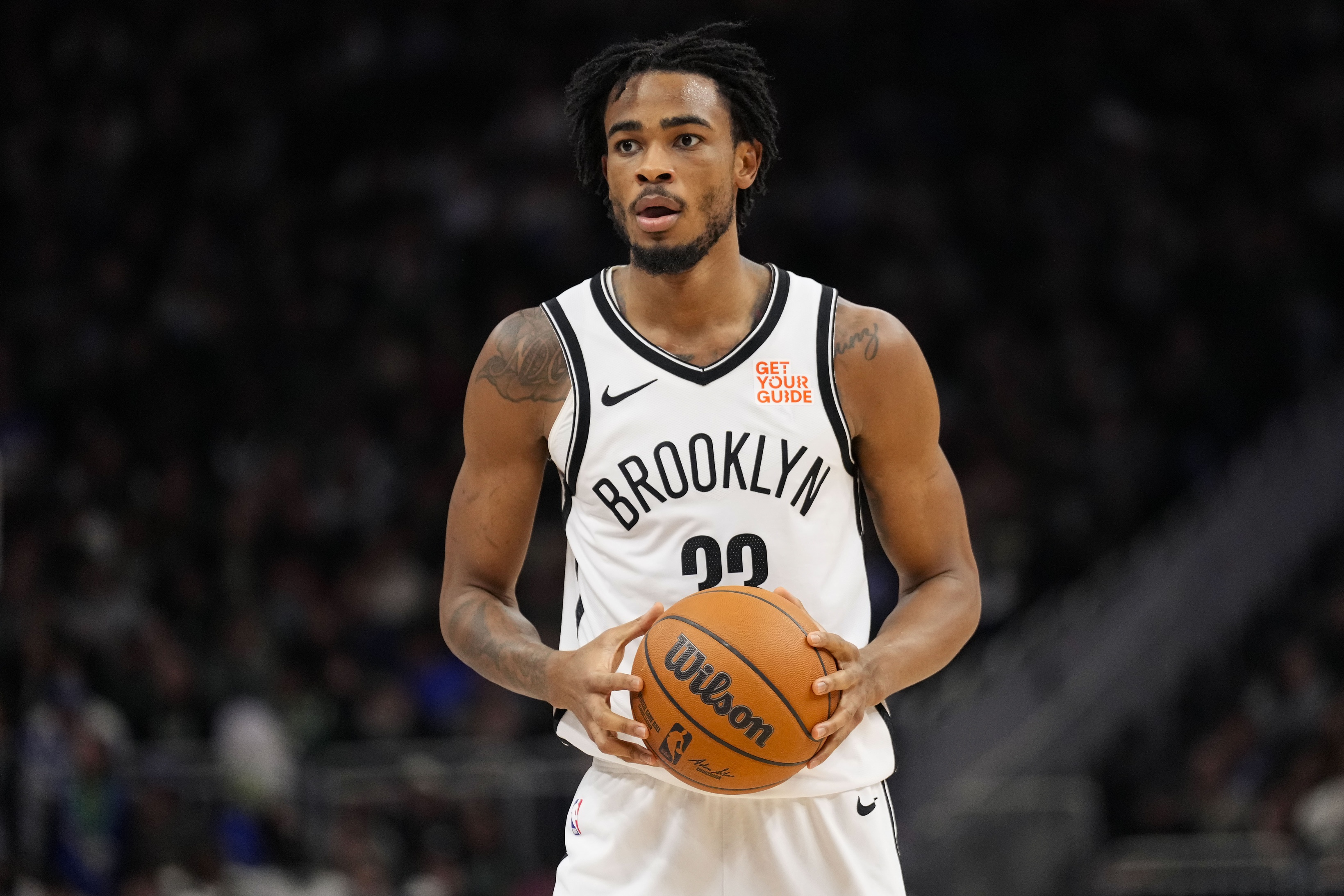
The Brooklyn Nets are hitting the one-year mark of entering the full rebuild cycle. They started the process last summer by trading away Mikal Bridges. Several other moves later, general manager Sean Marks can now start the serious process of rebuilding his team.
Brooklyn will likely hit the offseason with 10-to-12 free agents and in the range of $55 million in cap space. Not only is that the most projected cap space in the league this summer, but the Nets are projected to be the only team with cap space in the NBA this offseason.
That puts Marks in position to really get this rebuild moving. The Nets could be active in restricted free agency, something Marks has done in the past. Or Brooklyn could rent out cap space by taking on deals in trades, likely as a facilitator in multi-team trades where apron teams are involved.
Of the Nets league-high 12 potential free agents, some seem likely to be back in Brooklyn. Keon Johnson, Tyrese Martin, Jalen Wilson and Drew Timme all have team options for just above the minimum. Bet on at least two players from that group, and possibly all four, returning next season. All showed good development as potential rotation players this season, with Johnson becoming a regular starter.
From there, the big decisions will be with restricted free agents Cam Thomas and Day’Ron Sharpe. Given no other team is likely to have cap space this offseason, Brooklyn should be able to retain both players on relatively team-friendly contracts.
When we examined the 2025 restricted free agents, we pegged Thomas to get a three-year, $45 million deal and Sharpe to land a three-year, $30 million contract.
Those figures might seem light, but unless a team is floating their full Non-Taxpayer MLE in front of either player, Thomas and Sharpe might be stuck. That’s why the shorter-term nature of the contract could be a good compromise between the players and team.
Thomas’ profile suggests he could command more, but he’s coming off a relatively lost season. Some of that might have been due to the Nets tanking, but given it was a contract year for Thomas, the games missed were likely mostly valid. Sharpe has flashed a lot of potential, but the demand for centers, especially in restricted free agency, is never really all that high.
Don’t rule out a sign-and-trade for Thomas or Sharpe. If a team is willing to make them an offer that the Nets don’t want to match, it would behoove Marks to consider moving them and returning some assets. If all else fails, Thomas and/or Sharpe could sign their qualifying offer and then hit unrestricted free agency in the summer of 2026.
Beyond the two young restricted free agents, the Nets have several pending veteran free agents. D’Angelo Russell is chief among them. Russell is a good, if limited, scoring guard. He’s not someone you can build a team around, but Russell can still be productive starter or reserve on a good team. It wouldn’t be a surprise to see Brooklyn re-sign Russell to a short-term contract that leaves him a tradable player down the line.
De’Anthony Melton was acquired in a contract swap. He’s probably headed elsewhere this summer. Ziaire Williams had moments, but he’s not likely to get tendered a qualifying offer. If Brooklyn wants to maximize cap space, Williams is likely to have his free agent rights renounced. He could return, but it won’t be on any kind of sizable deal for Brooklyn.
Trendon Watford is in a weird spot. He’s been productive when given minutes. He’s also only turning 25 years old near the start of next season. But he’s kind of a tweener forward and hasn’t been a rotation regular yet in the NBA. He could be another short-term re-signing for the Nets, but it won’t be for much more than a minimum deal.
That turns us to the draft and to trades. This is where Marks will have to, no pun intended, make his mark.
At the draft, the Nets will have four first-round picks. They should be in best player available mode with each pick. In addition, Brooklyn should look to trade one of their later picks in a kick-the-can-down-the-road type of deal. Rostering four rookies on what already projects to be a young team is a lot. It can also cause problems down the line when players become extension eligible. Moving a pick in this year’s draft for a future pick should bring some better balance for the future roster.
No matter what, coming away with at least one high-end starter and a couple of future rotation players is the goal at the draft for Marks. Barring some lottery luck, Brooklyn should be in position to select that high-end starter with their first pick. Given the team has needs everywhere on the roster, position shouldn’t be given much, if any, consideration.
As far as trades go, Marks will explore the market for Cameron Johnson and Nic Claxton. Both are good players and are on good contracts. If anything, the fact that both players have multiple years remaining on their deals should increase their trade value. Anyone trading for Johnson or Claxton would be doing so knowing that they’ll have them for a while.
At the deadline, it was reported that Marks wanted multiple first-round picks for Johnson. That’s probably a bit rich, but the Nets could get there if they’re willing to take on some salary in a trade. Think of it as one first-round pick for Johnson and one first-round pick for eating a deal.
Claxton’s value is slightly less, because he’s a traditional center. While a good defender, Claxton is never going to be an All-Defensive team candidate, and his shooting range is measured in inches vs feet. While that limits his value some, he’s still an improving player and a good fit for several teams that need a center.
Marks should be firm in talks for Johnson or Claxton. There’s no need to give either player away. If the right deal isn’t there this summer, take it into the season and see if one materializes by the trade deadline.
The Nets and Sean Marks have been here before. In many ways, this is when Marks did his best work. He’s shown a great eye for undervalued talent. Joe Harris and Spencer Dinwiddie were both part of the diamond-mining process the last time around. Marks is off to a good start with guys like Keon Johnson, Jalen Wilson, Tyrese Martin and Drew Timme. None might hit quite the level that Harris or Dinwiddie did, but that’s what this is all about. Keep churning the bottom of the roster and eventually a gem or two will pop up.
The last time Brooklyn had copious cap space, they went big. This time around, expect the Nets to be a lot more conservative. This process is just getting started, but Marks has proven he can build a winner. The Nets just need to give him time to do it again.
Updated Analysis Post-Draft Lottery:
The Nets analysis didn’t change all that much as a result of the lottery. Brooklyn dropped from the sixth pick to the eighth pick. That gives the Nets about $1.5 million in additional projected cap space. They’re still in range to draft the same players with the eighth pick as the sixth pick, as the group from the fifth pick to the 10 th pick are largely “eye of the beholder” types.
 © USA Today Sports
Nail the draft pick, try to start winning games
-$25.9 million
-$25.9 million
$26.6 million
LaMelo Ball
Damion Baugh (two-way)
Miles Bridges
Moussa Diabate (non-guaranteed)
Josh Green
DaQuan Jeffries (non-guaranteed)
Brandon Miller
Jusuf Nurkic
Josh Okogie (non-guaranteed)
Tidjane Salaun
K.J. Simpson (two-way)
Nick Smith Jr.
Grant Williams
Mark Williams
Seth Curry (unrestricted)
Taj Gibson (unrestricted)
Tre Mann (restricted)
Wendell Moore Jr. (restricted – two-way)
None
Non-Taxpayer MLE ($14.1 million)
Bi-Annual Exception ($5.1 million)
None
#4
Josh Green (veteran extension – as of October 23)
Jusuf Nurkic (veteran extension)
Grant Williams (veteran extension)
Mark Williams (rookie scale extension)
The Charlotte Hornets season started out with a lot of promise. The team was playing exciting basketball under new head coach Charles Lee. New front office head Jeff Peterson had made some smart, albeit relatively minor, roster moves. The young players were showing a lot of promise. After four games, the Hornets were 2-2.
That was pretty much the highwater mark for Charlotte. The team started losing games pretty rapidly after that.
It wasn’t all bad. Lee somehow got this group to defend at a middle-of-the-pack level for most of the season, before a stark drop off late in the year. Various players turned in solid minutes, around a series of injuries. And that’s kind of where we start for the offseason.
The Hornets still don’t really know what they have. At least they don’t as a full team. And that’s mostly because this group has hardly been together as a full unit.
This summer, that’s going to be where most of the decisions have to start for Charlotte: Deciding who is worth building around and who it’s time to cut loose.
They don’t have any major free agents. Tre Mann is the best of the bunch, but he’s coming off a lost season due to injury. It’s unclear if the Hornets will even tender him his $6.9 million qualifying offer. If they do, Mann should probably sign it. He’s not getting that much in a single year in free agency.
Mann can score, and he’s played well since coming to Charlotte at the 2024 trade deadline. If he’s over the back injury that cost him most of this season, Mann is worth re-signing for backcourt depth. But this needs to be a deal in the range of $5 to $6 million in terms of average annual value. Anything more than that would be overpay, given the lost season and Mann’s short window of strong play.
As far as things go with Seth Curry and Taj Gibson, either or both could return. Or either could move on to be part of the bench with a playoff team. Both are also at the stage where retirements is a possibility too. Curry can still shoot (Did you know he led the NBA in three-point percentage?) and Gibson is still a respected locker room voice. Both are veteran minimum, end-of-bench types at this point.
Because they are sitting on a few re-signed players, former high lottery picks, and another high pick in the 2025 NBA Draft, the Hornets won’t have cap space this summer. That means nailing the draft pick, while also hitting on some trades, are the paths towards improvement this summer.
Charlotte will be hoping to keep Cooper Flagg close by with some lottery luck. Pending that, they’d do well to draft one of the better guards in Dylan Harper, V.J. Edgecombe or Tre Johnson. Ace Bailey is a good player, but there’s a lot of overlap in his game with Brandon Miller. The Hornets don’t need to get silly about skipping over Bailey if he’s still on the board, should their pick move back to say four or five, but one of the guards would be a better fit. It would bring better balance and options to the roster to go with a guard, if the decision is there with the third or fourth pick.
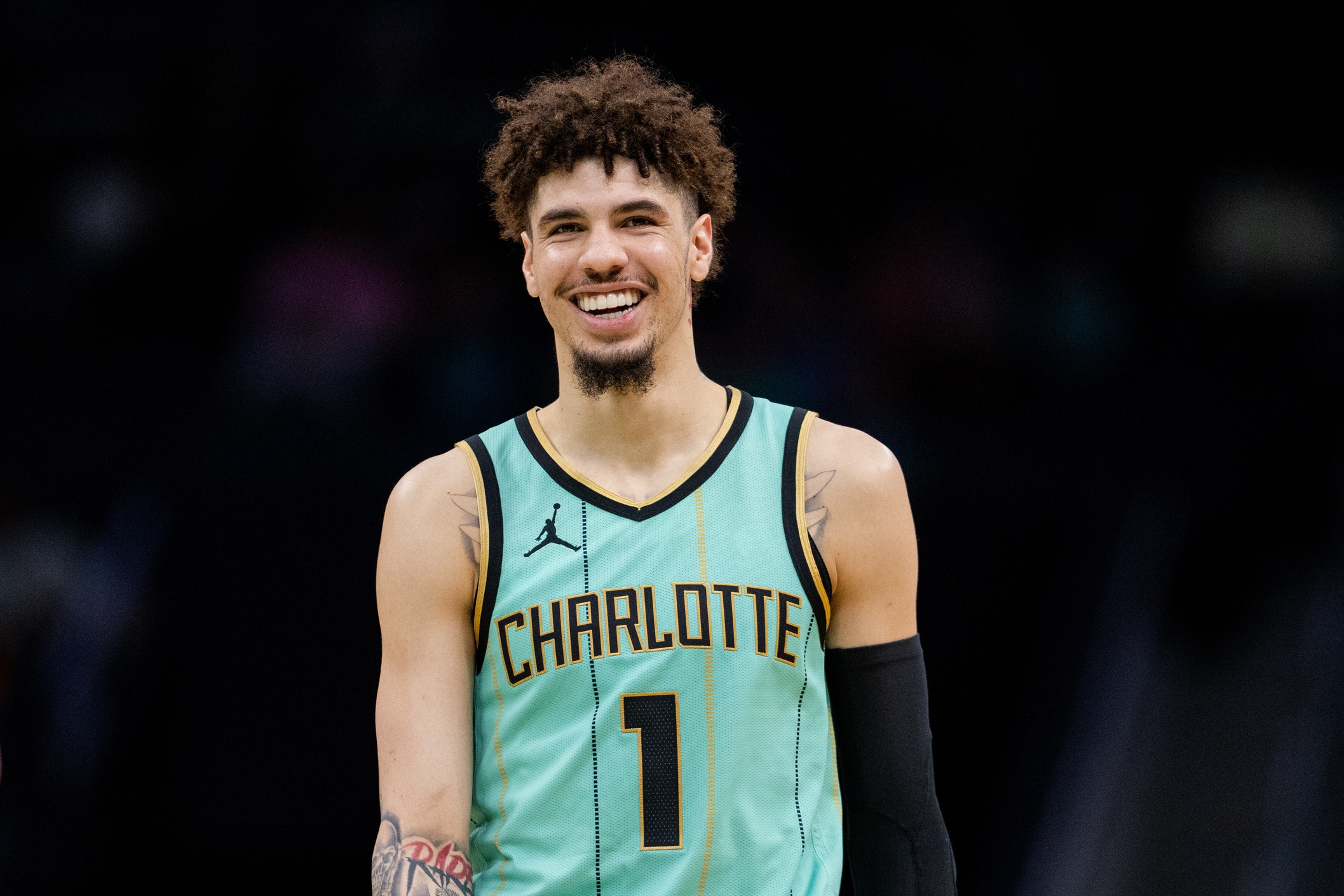
Why is drafting a guard so important? For one, the guard depth is lacking on this team. LaMelo Ball is entrenched as the starter at point guard, but the rest of the position is in flux. Miller is more of a big wing/forward, Josh Green is a 3&D wing, Nick Smith Jr. is still figuring things out and, as covered above, Tre Mann is a free agent and looks like a sixth-man type vs being a regular starter.
Also…is it time to at least consider trading LaMelo Ball?
Yeah, that might be harsh. But we’re now five years into this experience. The Hornets haven’t been good in those five years (hardly all on Ball) and Ball has played one full season during that time. He remains an inefficient shooter and scorer, and he’s shown little improvement on the defensive end of the floor.
The highlights from Ball are incredible. He’s really, really fun to watch. But that’s when you are zipping in and out. If you watch Ball play on a nightly basis, he becomes the occasional highlight, wrapped around bad shots, bad turnovers and bad defense.
To be clear, the Hornets shouldn’t give Ball away. But if the phone rings with reasonable offers, they’re worth considering.
In reality, only Brandon Miller should even approach untouchable status on this roster. And that’s mostly because Miller has great promise and is under team control for a while longer. The Hornets should be open to trading everyone else, if the right deal comes along.
Charlotte tried to move Mark Williams once, and that should be revisited this summer. It’s a shame from the Hornets side that the Los Angeles Lakers voided that deal, because Peterson had done quite well in that deal. It’s unlikely that kind of value will come to Charlotte again, but exploring moving the oft-injured Williams should be on the table. Certainly, that’s something Peterson should be looking at before considering extending Williams.
From there, the rest of the team is grab-bag of known quantities to developing younger players. Miles Bridges and Grant Williams might not have all that much trade value, but it’s worth seeing what’s out there for either player. Same with Josh Green and Jusuf Nurkic. The return won’t be overwhelming for any of the four veterans, but moving them could help bring in some minor assets, as well as freeing up minutes and roster spots for development players.
Both Nick Smith Jr. and Tidjane Salaun flashed potential this year. There’s still a long way to go with both players, but they proved that they are worth investing in. Charlotte also got quality minutes from the two-way ranks from Moussa Diabate and K.J. Simpson, enough so that Diabate got converted to a long-term standard contract. They’re good guys to have around as lower rotation projects.
The above, along with the defensive improvement for a large portion of the season, is a sign that Charles Lee was the right hire as head coach. Jeff Peterson’s moves have all been solid enough, given what he was working with.
Peterson won’t be able to change over large chunks of the roster this summer, but he can start the process. As previously stated, the Hornets have to hit with their draft pick. That will set the stage for what comes next. There are a lot more questions than answers in Charlotte, but the team finally seems to have the right guys in place to answer them.
Updated Analysis Post-Draft Lottery:
The Hornets were the most fortunate of the three teams that had the flattened odds for the first overall pick. While the Utah Jazz and Washington Wizards feel the maximum possible four spots, Charlotte only dropped one spot to the fourth pick from the third pick.
That should have the Hornets in range to select V.J. Edgecombe, Ace Bailey or Tre Johnson. Bailey overlaps with Brandon Miller a bit, but he’s got the most upside of this trio. No matter what, Charlotte should come away with a long-term starting wing or shooting guard.
Garrick Higgo wins the Corales Puntacana Championship. Higgo earns $720k bringing his 2025 on-course earnings to $843k and his career earnings to $5.6 million.

Justin Thomas wins the RBC Heritage. Thomas earns $3.6 million bringing his 2025 on-course earnings to $6.9 million and his career earnings to $95.4 million.

The Miller family and Miller Sports + Entertainment (MSE) announced today they have finalized the acquisition of the controlling interest in RSL Football Holdings (the Club). The purchase includes Real Salt Lake of Major League Soccer (MLS) and the Utah Royals FC of the National Women’s Soccer League (NWSL), along with the Real Monarchs of MLS NEXT Pro and the RSL Academy. Real estate assets include America First Field, Zions Bank Stadium and Zions Bank Training Center.
David Blitzer will remain the second largest shareholder, forming a powerful partnership with MSE that combines local and global sports leadership in building world-class professional teams.
Rumors of this sale were initially reported by sportico back in mid-March. Current reporting has the sale price sitting at $600 million for all assets (multiple teams, academy, real estate). The Utah Royals re-joined the NWSL in 2024 at an expansion fee of $2-5million.
 © USA Today Sports
On Tuesday July 1st, the NWSL’s secondary transfer window will open—and remain open for almost two months—before closing on August 25th. As a reminder, the European season ends in June, so teams will have the opportunity to sign new players (if they have the international spots available).
Using the 2024 Secondary Window as a baseline, which comparatively only was open one month, for incoming players there were 19 free agents signed, 12 transfers/loans, and 15 intra-league trades. On the outgoing side there were 19 mutual terminations of contracts, five transfers, and nine loans.
At any time, there are a maximum of 98 international spots and currently there are only 23 of those not occupied on active rosters. Here’s a look at where teams sit with potentially available active roster spots and international spots:
Gotham, Racing, and San Diego have the largest number of active roster spots available, but each team has varying amounts of international spots available for potential additions. San Diego is in an interesting position with no international spots available to add external talent. Bay and Portland are both in good positions with a few open positions and at least two international spots as well.
Angel City has three active roster spots available but also has two 2024 season-ending injuries and a loan which technically would put them back at 26 players if both situations occurred. Both Jun Endo (2024 SEI) and Vanessa Gilles (loan through June) would also take up international spots, leaving Angel City with just one remaining. In a March interview the Canadian defender Gilles did say in an interview that she didn’t see herself coming back to the U.S.
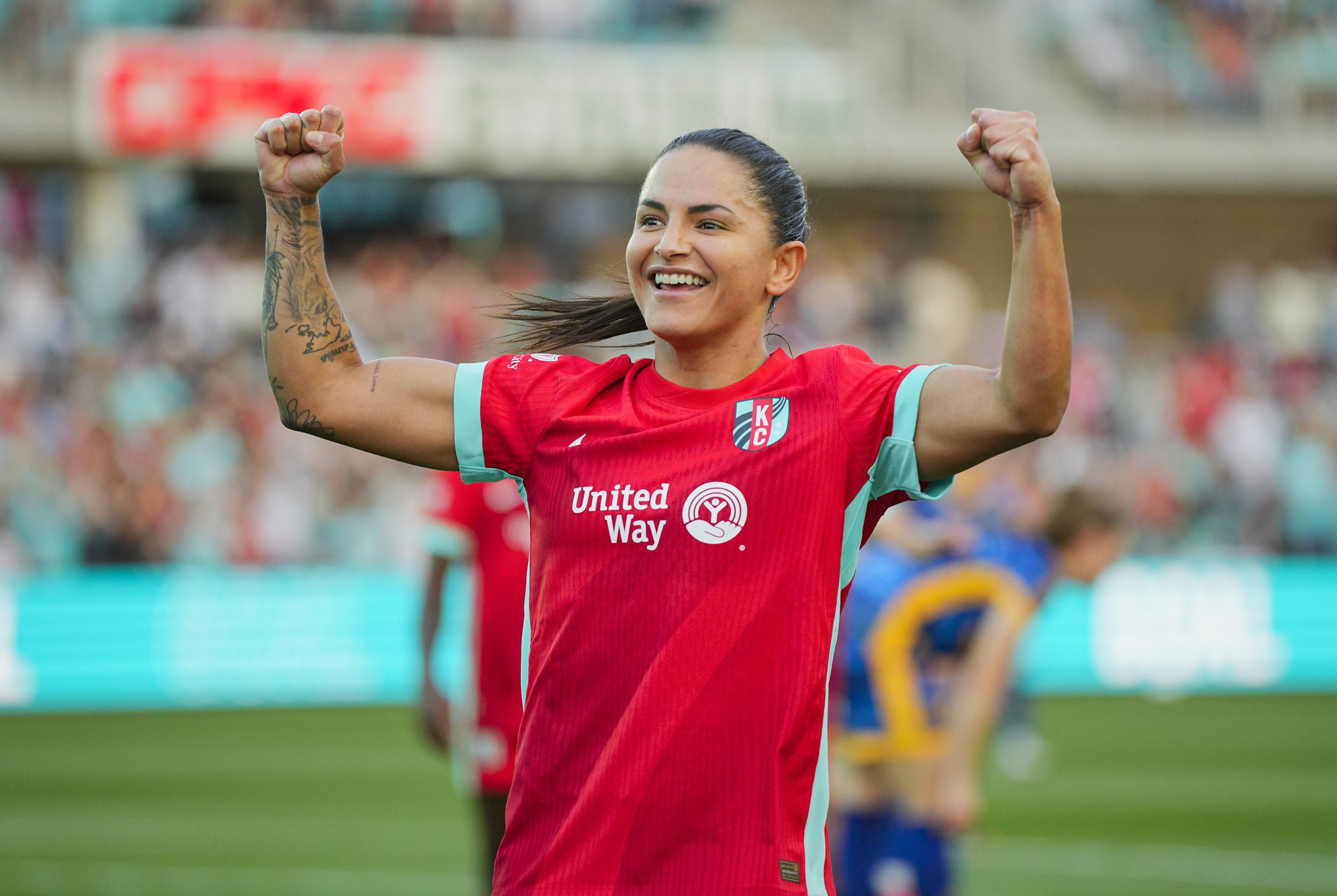
Kansas City and Houston both have the maximum 26 active players and players expecting to come back to active roster, meaning there is a good chance of there being some outward movement in the coming months from those teams. Kansas City has won all four of their matches this season and is building on the momentum of last season, so there isn’t a lot of reason for them to be crazily active in the secondary window.
Houston is coming off a 2024 season that found them at the bottom of the table and with a new head coach, they currently sit tied with four teams at seventh in the table with four points but are dropped down to 10th on tiebreakers. While Houston doesn’t have active roster spaces, they do have three unused international spots.
Utah and North Carolina have both had hard starts to the season and are 14th and 13th in the table respectively. They are the only teams in the bottom five with no available international spots heading into the secondary window.
The Miami Dolphins have allowed CB Jalen Ramsey to explore a trade this spring, despite extending the 30-year-old this past September. Ramsey's contract currently has 4 years, $91.8M remaining, including a fully guaranteed $25.1M through 2025. Of that, $4M has already been paid out by way of a March roster bonus, setting up his tradeable contract to look like:
2025: $21.1M
2026: $21M
2027: $21.7M
2028: $24M
The dead cap structure on the deal makes a trade before June 1st complicated, as the Dolphins would stand to take on $29.2M, a $12.5M cap loss. If the trade is processed after 6/1, that $29.2M would be split as $10.7M in 2025, $18.5M in 2026, representing a $5.9M cap savings for the upcoming season. All of this dead cap derives from previously paid out signing/roster bonus.
The acquiring team would essentially be taking on a 1 year, $21.1M contract, with the remaining three years setup as a pay-as-you-go structure. Ramsey checked in as the #10 rated cornerback in 2024 according to PFF.
 © USA Today Sports
Keep building around the young talent, while collecting assets
-$104.7 million
-$92.2 million
$18.1 million
Saddiq Bey
Bub Carrington
Justin Champagnie (non-guaranteed)
Bilal Coulibaly
Kyshawn George
Anthony Gill (non-guaranteed)
Richaun Holmes ($250,000 guaranteed)
A.J. Johnson
Colby Jones (non-guaranteed)
Corey Kispert
Jaylen Martin (two-way)
Jordan Poole
Alex Sarr
Marcus Smart
Malcolm Brogdon (unrestricted)
Khris Middleton (unrestricted – player option)
J.T. Thor (restricted – two-way)
Tristan Vukcevic (restricted – two-way)
None
Non-Taxpayer MLE ($14.1 million)
Bi-Annual Exception ($5.1 million)
Jonas Valanciunas ($9.9 million)
Johnny Davis ($5.3 million)
#6
#19
Malcolm Brogdon (veteran extension – through June 30)
Colby Jones (veteran extension)
Khris Middleton (veteran extension)
Jordan Poole (veteran extension)
Marcus Smart (veteran extension)
Let’s start in a bit of an odd place for an 18-win team: This is how you tank!
Or better put: This is how you fully rebuild!
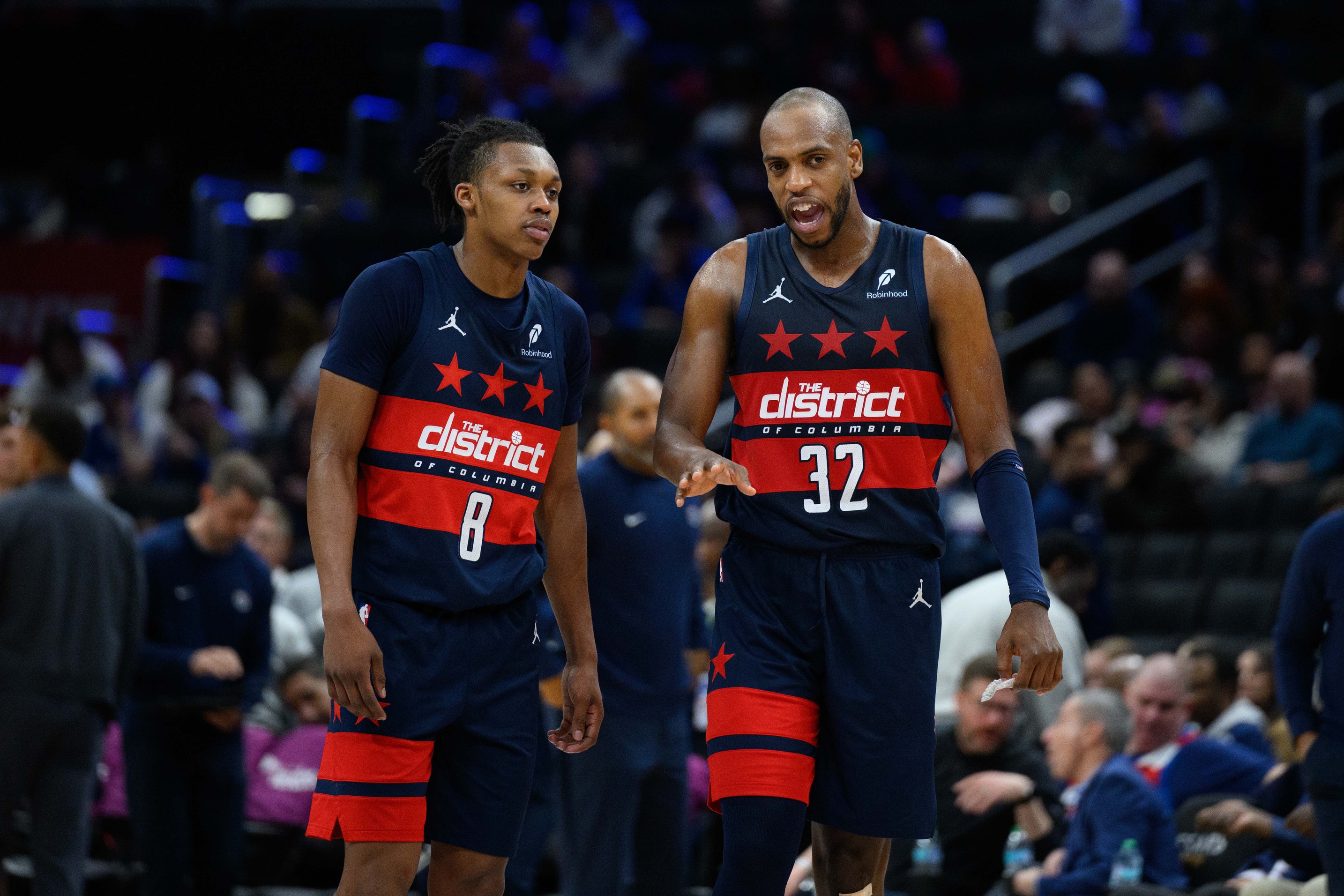
Five of the Wizards top six players in minutes played this season were on their rookie scale contracts. Yes, that includes Corey Kispert, who is finishing up his rookie scale deal before starting a four-year, $54 million extension. But that group also includes Alex Sarr, Bub Carrington and Kyshawn George, who were rookies, and Bilal Coulibaly, who was finishing up his second year.
In the preseason, Washington’s front office was very transparent that they were still in the “teardown phase” of their rebuild. They said they were going to go young and they followed through. The end result was a terrible record, but it was a terrible record with multiple purposes.
First and foremost, the Wizards are among the group with the best odds of landing the first overall pick and Cooper Flagg. If they don’t land at the top spot, Washington is still in place to land a top-five pick and to come away with one of Dylan Harper, Ace Bailey, V.J. Edgecombe, Tre Johnson, Kasparas Jakucionis or Jeremiah Fears. That means the Wizards are set up to draft a difference maker without having to worry much about fit, because they still need a lot of everything at every position.
The second most important thing this season delivered was terrific experience for Coulibaly, Sarr, Carrington and George. All four youngsters have a long way to go, but all four were vastly improved players by the end of the season vs at the start of it. You could see it statistically and with the eye test. That quartet forms a really nice, complementary core for Washington to build around.
This summer, you can kind of expect more of the same as what we saw over the past year from the Wizards. After all, the front office set the expectation that they were in this rebuild for the long haul. They aren’t going to take any shortcuts now.
Instead of hitting the summer with a bunch of cap space to absorb undesirable contracts from other teams, Washington did that work at the trade deadline. The Wizards acquired both Khris Middleton (who is very likely to opt in for next season) and Marcus Smart.
Middleton and Smart, along with holdover veteran Jordan Poole, don’t really have much of a place on a rebuilding team. None of the three have amazing trade value, although Poole did rebuild his somewhat after a solid season. But none of three have contracts that are drastically under water. Yes, this includes Poole’s deal, which once looked as sunk as a shipwreck.
Middleton and Smart will both be on expiring deals. Both are the type of veteran that a contender can easily talk themselves into taking on. Even better? If that contender has some questionable longer-term salary they’d like to get off of, the Wizards would be happy to be paid to take it on.
Poole is in a bit of a different spot. He’s still got a couple of years and over $65 million remaining on his deal. But he played well enough, and efficiently enough, that a team that really needs scoring could take a look. Again, if there’s a contract that team would like to get off of, Washington is probably ready to talk trade.
Other than Middleton, the Wizards only other free agent of real note is Malcolm Brogdon. Washington didn’t trade Brogdon at the deadline, because there wasn’t a deal to their liking. Now, they can use his Bird rights to help facilitate a sign-and-trade. This season was ruined by injuries for Brogdon, but he’s only a couple of years away from winning Sixth Man of the Year. If he’s not signing on for the MLE with a contender, Washington could help facilitate a sign-and-trade to help Brogdon get where he wants to be.
A sneaky free agent to keep an eye on is two-way player Tristan Vukcevic. The pending restricted free agent showed some real flashes throughout the season. Vukcevic offers some potential of the stretch big-rim protector combo that teams desire. In a frontcourt where Sarr is the only player locked in long-term, Washington would do well to keep Vukcevic around. This could be one where Vukcevic is back initially on another two-way deal, then he’s converted later in the season when a roster spot opens up.
That leads us to the issue of roster spots. As noted above, Washington only has four total free agents this summer, of which two are two-way players. They have a few players on partial/non-guaranteed contracts that could be waiver candidates too, but roster spots are a bit tight for the Wizards.
After adding three first-round rookies last season, Coulibaly the year before and signing Kispert to a four-year extension, the Wizards have two more first-round picks this year. And let’s not forget that A.J. Johnson, another 2024 rookie, was added at the trade deadline. Johnson showed some real potential late in the season. He’s another youngster to keep an eye on.
While it sounds great for a rebuilding team to pile of up draft picks, that only really lasts until you start running out of roster spots. Washington only needs to look at recent vintages of the Oklahoma City Thunder and Houston Rockets to see how things go there. Of course, things have worked out pretty great for the Thunder and Rockets, to be sure. The Wizards will have to have a similar sense of ruthlessness with moving on from former first-round picks when roster spots get tight. You can’t afford to get too precious with players, simply because you drafted them. If they aren’t working out, you have to be willing to move on when necessary.
We aren’t there yet, but seven players on rookie scale deals is a lot. And that could lead to deal where Washington moves off their latter first-round pick in a re-balancing trade. Why not kick the can down the road a bit and give yourself more of a spread of the guaranteed rookie scale deals?
The Washington Wizards were terrible this season, but they were a lot of fun to watch. Sure, the team is a ways off from the group that regularly competed for a playoff spot via the Play-In Tournament. But for several years, it felt like the annual appearance in the PIT was the ceiling for those Wizards teams.
This Washington team, under a front office with a steadfast vision, is committed to being better than that. It might take a few years to get there, but the future is bright in Washington. Another fun rookie is joining the group this summer. There will be more action involving veterans moving on and off the roster, with more draft picks coming in too. Things are set up for the Wizards to go to new heights in the years to come.
Updated Analysis Post-Draft Lottery:
Much like the Utah Jazz, the Lottery was a nightmare for the Wizards. They dropped the maximum of four picks from the second pick pre-Lottery to the sixth pick. That’s a brutal blow for a franchise still looking for that franchise guy to lead their rebuild.
Washington won’t get Copper Flagg or Dylan Harper. They likely won’t get Ace Bailey or V.J. Edgecombe either. But they are in position to snag Tre Johnson as a perimeter scorer or Kasparas Jakucionis or Jeremiah Fears as their long-term point guard. One of those three should probably be the pick, as the backcourt remains a bit more unsettled than the wing rotation and the frontcourt.
The Wizards are still going to add another nice young player to their mix. Unfortunately, it just won’t be someone that the franchise can orbit everything around for years to come.

