Scott AllenApril 14, 2025

Rory McIlroy wins the Masters Tournament to complete the Career Grand Slam, sixth person in PGA history to accomplish that feat. McIlroy earns $4.2 million million bringing his 2025 on-course earnings to $13.2 million and his career earnings to $185.6 million.

Masters Tournament Top 10 Payouts

Keith SmithApril 11, 2025
© USA Today Sports

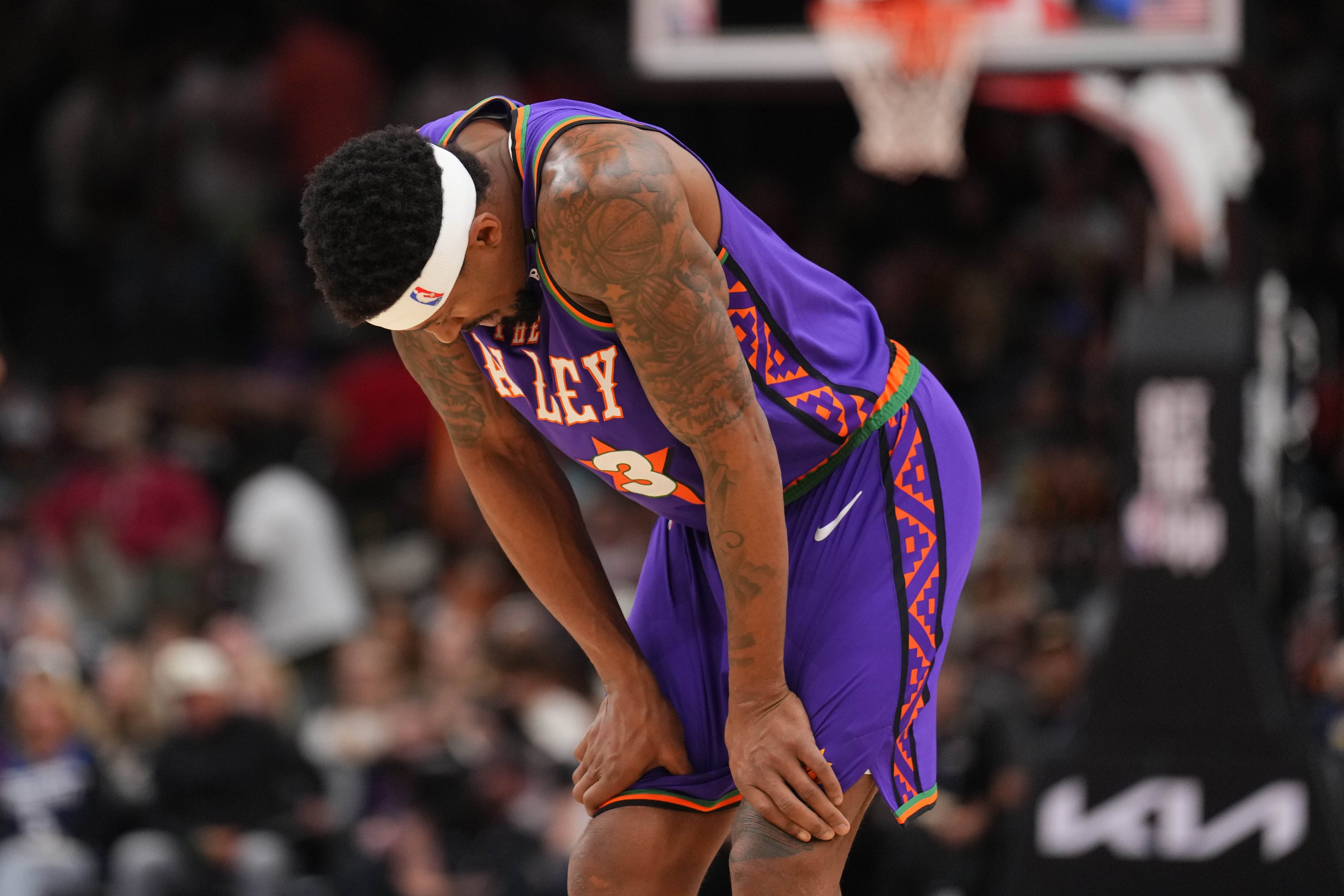
It’s academic at this point, but the Phoenix Suns have just two more games left before this season will mercifully be put to bed. They’ve been officially eliminated from postseason contention, ending any dreams of a miracle playoff run.

That means Suns fans have turned their eyes towards the offseason. It should be an eventful summer in Phoenix, because Kevin Durant seems likely to be traded. That’s the kind of mega-deal that will see things reset for the team in a major way.

However, even after moving Durant, the Suns will still have Bradley Beal and his contract to deal with. At this point, Beal’s contract is considered one of the worst deals in the NBA. As a reminder, here’s what we’re looking at:

  • 2025-26: $53,666,270
  • 2026-27: $57,128,610 (player option)
  • Total: Two years, $110,794,880

Whew, boy.

If that wasn’t enough, you’re probably aware that Beal also has a full no-trade clause. The combination of max salary, NTC, player option, plus injury history and waning production combine to make this the worst contract in the NBA.

So, what can Phoenix do? Is there any hope for working around this onerous contract?

Straight Waiver

Some Suns fans are so desperate to shed Beal that they’ve suggested simply waiving the veteran guard. That would be a drastic and extremely unwise move.

For one, even with the NTC, Beal is more valuable as a $53.6 million salary in a trade than he ever would be as $53.6 million in dead money on the books. You can trade salary. You can’t trade dead salary. It’s that simple.

Will it be hard to find a team that wants to take on Beal’s salary, while also being a destination Beal will approve a trade to? Absolutely. Is it impossible? No. We see crazy things happen in NBA trades all the time.

If Phoenix was to waive Beal, that’s it. It’s over. He’s not getting claimed on that contract, so Phoenix would have $53.6 million in dead salary on their books for next season and $57.1 million in dead salary for 2026-27 too. (In a case where there’s a player option involved, the option is considered exercised before the waiver, unless specifically stated. In this case, it’s highly unlikely Beal would decline to exercise his player option before being waived.)

Taking in the above, it’s easy to see why Phoenix would rather have Beal, rough as the contract may be, on the roster. Dead money is just that: dead. You want to avoid that as long as possible.

Buyout

A buyout is another form of waiver, but in a buyout the player agrees to reduce the salary he’s owed. This would be an ideal path for Phoenix, but it’s probably not ideal for Beal…at least not yet.

Except in pretty rare situations, players don’t take buyouts until they are in the final season of their contract. And they usually agree to a buyout when there are two things at play:

  • They really want to leave the team they are currently on and have no other path to getting free.
  • They have another deal lined up with a new team.

Sometimes the two above items overlap. And for the second bullet, the salary for the lined-up new deal is usually how much the player will give back to the incumbent team in a buyout. For example, let’s say Beal knew he had a new contract lined up for $10 million. He could agree to give that much back in a buyout with the Suns, while not losing any money himself. It’s kind of a win-win situation.

In a buyout, the player is still waived. So, even with a salary reduction, the team ends up with dead money on their books. As covered above: you can’t trade dead salary. As also covered above: Beal wouldn’t get claimed on his current deal, unless he agreed to an absurd salary reduction. (Stop dreaming, Suns fans. It’s not happening.)

That means the Suns would be on the hook for less dead salary on their cap sheet, but still a hefty amount of dead salary.

Waive and Stretch

In a waive-and-stretch transaction, the player is waived just like in a Straight Waiver or a Buyout. However, the team then takes the dead salary owed to the player and spreads it across several years. That formula for the Stretch Provision is remaining total salary divided by two times the number years left on the contract, plus one year.

In Beal’s case, that would be the $110.8 million he’s owed for the remaining two seasons (again, the player option is considered exercised here) stretched over five seasons (2 x 2, plus 1). That would equal a dead money cap hit of $22,158,976 per season from 2025-26 through 2029-30.

However, there is a quirk with the Stretch Provision to prevent against a team just loading up on bad salary, then stretching it to no ends.

In any given season, the amount of stretched salary a team has on its books can total no more than 15% of the salary cap in the year the player was waived.

This is the catch for the Suns.

As covered above, Beal would count for roughly $22.1 million in dead salary on the books if he was waived and stretched. The Suns already have the following in stretched dead salary on their books for the 2025-26 season:

  • Nassir Little: $3,107,143
  • E.J. Liddell: $706,898
  • Total: $3,814,041

If you add Beal’s stretched $22.1 million to that, you get $25,973,017 in stretched salary.

The projected salary cap for the 2025-26 season is currently $154,647,000. That means that the total stretched money would be about 16.8% of the cap, which is above the allowable amount of 15%. That means it’s a no-go on waiving and stretching Beal’s salary.

Now, the Suns could work a buyout followed by a waive-and-stretch transaction. But that gets into a complicated sort of space that we haven’t seen in the NBA. Especially when this would seemingly solely benefit Phoenix and not Beal.

Summary

As you can see, the Phoenix Suns have no easy outs with Bradley Beal. His contract is difficult to trade for all of the reasons we laid out. Simply waiving Beal has little benefit for Phoenix. Waiving and stretching Beal isn’t even possible for the Suns.

That means that Phoenix could ride out Beal’s contract, at least for one more season. When he’s an expiring contract in 2026-27, things will flip to some extent.

Expiring contracts always have some value. Beal may be more willing to accept a trade, knowing the clock is ticking on his time with the Suns. And, buyouts are lot more likely to occur when there’s only one season left on the contract. And, finally, a waive-and-stretch transaction would work for Phoenix in 2026-27, because the cap will have gone up enough to fit all of the Suns stretched salary in under the 15% allowable mark. On that last one: The Suns should just wait it out. No reason to add a lot of dead salary to your cap sheet for two more years, if you can avoid it.

When you put it all together, Phoenix is far more likely to try to find a workable trade for Beal than they are to do any sort of waiver. That’s true even if things hit a point where Beal and the Suns agree to separate for the season while a trade is found. That’s a somewhat regular thing in the NBA.

In a trade situation, Phoenix isn’t going to get any sort of amazing return for Beal. But the Suns can likely break up Beal’s contract into smaller, more easily tradable contracts. That has value in and of itself, as it removes Beal’s deal from the Phoenix cap sheet, eliminates having to deal with the NTC for the Suns, while giving the team some flexibility moving forward.

There are no easy outs for the Phoenix Suns when dealing with Bradley Beal’s contract. But to try to take the easiest path of waiving him and wiping their hands clean would cause far more damaging issues than continuing forward as is. Nothing stops Phoenix from working with Beal to find a trade he’ll agree to. Waiving him removes that possibility and leaves the Suns sitting on a mountain of dead salary. Not exactly ideal while trying to retool a playoff team around Devin Booker.

Keith SmithApril 11, 2025
© USA Today Sports

Offseason Approach

Reset with a high draft pick and a healthy roster

Actual Cap Space

-$73.3 million

Practical Cap Space

-$73.3 million

Projected Luxury Tax Space

$9.8 million

Under Contract (12)

Jose Alvarado
Jordan Hawkins
Herb Jones
Karlo Matkovic
C.J. McCollum
Yves Missi
Trey Murphy III
Dejounte Murray
Kelly Olynyk
Lester Quinones (two-way)
Antonio Reeves (non-guaranteed)
Zion Williamson ($7.9 million guaranteed)

View Roster

Potential Free Agents (6)

Brandon Boston Jr. (unrestricted – team option)
Keion Brooks Jr. (restricted – two-way)
Bruce Brown (unrestricted)
Jamal Cain (restricted – two-way)
Elfrid Payton (unrestricted – team option)
Jeremiah Robinson-Earl (unrestricted)

Dead Cap (0)

None

Projected Signing Exceptions

Non-Taxpayer MLE ($14.1 million)
Bi-Annual Exception ($5.1 million)

Notable Trade Exceptions

Brandon Ingram ($13.0 million)
Jonas Valanciunas ($9.9 million)

First Round Draft Picks

#7

Notable Extension Candidates

Herb Jones (veteran extension)
C.J. McCollum (veteran extension)
Zion Williamson (veteran extension)

Analysis

Each offseason is starting to feel like Groundhog Day in New Orleans. Talented team coming off a season waylaid by injuries and needs to find a way forward. Rinse, repeat.

The Pelicans did start a bit of a reset when they traded Brandon Ingram away at the trade deadline. As opposed to letting Ingram walk in free agency, New Orleans got a future first-round pick and a couple of helpful players for the veteran wing.

Now, the Pels have to hit with their draft pick and get guys healthy. Sound familiar?

Because things went so poorly with injuries (Ingram, Zion Williamson, Dejounte Murray, Herb Jones, Trey Murphy III, C.J. McCollum and Jordan Hawkins all suffered season-ending injuries), the Pelicans were never really competitive this season. They always seemed to have enough guys around to keep them in games, but they lost and lost a lot.

That means New Orleans will have a high pick in the 2025 Draft. Pending how the lottery goes, that pick should land in the top five. Who to draft? That’s a whole other story.

Obviously, the Pelicans would take Cooper Flagg if they had the opportunity. Dylan Harper should be up next, because the team needs long-term stability in the backcourt. It’s that need that could see New Orleans bypass Ace Bailey for one the top guards in V.J. Edgecombe, Tre Johnson, Kasparas Jakucionis or Jeremiah Fears. Bailey is a higher-rated player than that guard group, but he overlaps with both Williamson and Murphy, and the backcourt would still need help.

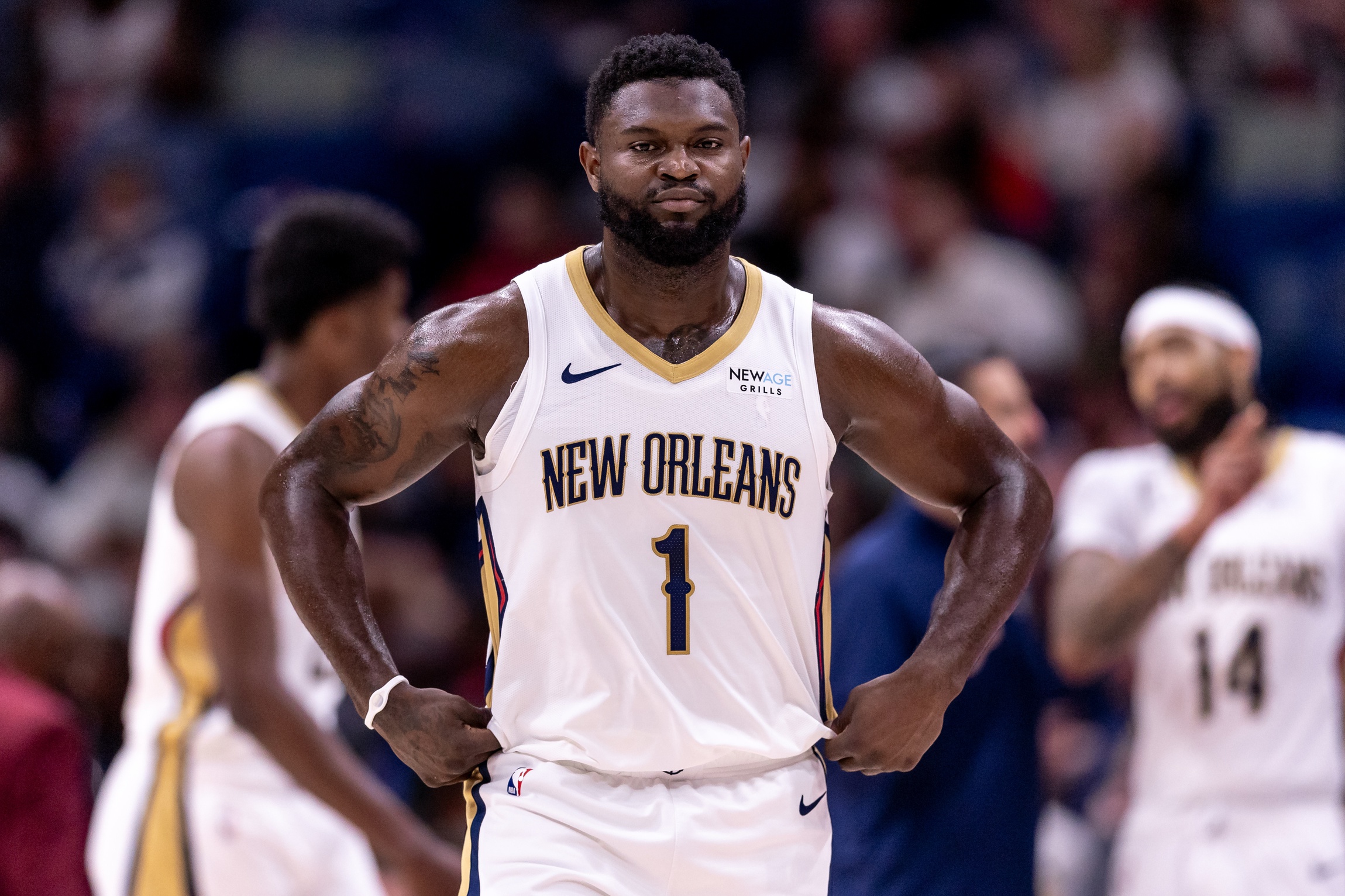
And that brings us to the biggest decision of all for the Pelicans…Is it time to consider trading Zion Williamson?

Williamson was awesome when he played. In fact, you could argue this was the best Williamson has looked in the NBA. Unfortunately, it was for all of 30 games. That’s the fourth time in six years that Williamson has played 30 games or fewer in a season.

Let’s back up for a second actually to address another crucial item for Williamson’s contract. The star forward’s deal is partially guaranteed for 2025-26, because he didn’t hit any of his games-played triggers. But the Pelicans only recoup any sort of saving if they waive Williamson. That isn’t on the table.

But a trade could be.

If a playoff team that fancied themselves a contender washes out earlier than expected, making a move for Williamson is the ultimate “boom or bust” type of deal. If you can get him moderately healthy (60-ish games), you know you’ll get tremendous production out of Williamson. If you can make a deal and still have some depth, so much the better.

The challenges are two-fold: How many teams can pull that off? And do the Pelicans even want to trade their franchise player?

The answer to the second one is probably “No…not yet.” And that’s where things will likely die. Which flips us back to building around Williamson.

New Orleans has a ton of talent on the roster. Murphy looks like a potential All-Star. Jones is an annual All-Defense guy, and he’s an improving offensive player. Yves Missi was a hit as a rookie and looks like the long-term answer at center. McCollum and Murray are solid veteran guards. Hawkins still has potential, despite a rough sophomore season. And Jose Alvarado and Kelly Olynyk are good backups at point guard and center, respectively.

Add a high draft pick to that group, and you might have something. But the health issue still remains. Murray is coming off a torn Achilles’ tendon, which will likely cost him half or more of next season. And then, who knows if Murray can get back to his previous level?

Beyond Williamson and Murray, will Murphy and Jones shake off the injury bug and stay healthy? McCollum will be 34 next season and he’s picked up several injuries over the years. Almost every key rotation player has some form of lingering health concern.

The other issue is rounding out the roster. If/when everyone is healthy, there are a lot of guys who need to play. It never became an issue last season, because the Pelicans were never healthy enough for it to matter. Given how things have gone, maybe it never becomes an issue.

Of the team’s own free agents, Bruce Brown is clearly the most interesting guy. Given the Pelicans are sitting just below the luxury tax line, re-signing Brown might not be on the table. But a sign-and-trade could be. That would be a good way for New Orleans to get some value out of Brown, as opposed to watching him leave in free agency.

Brandon Boston Jr. is the next most intriguing free agent. He had a breakout season before also suffering a long-term injury. When New Orleans signed Boston from his two-way deal, they set it up so that they could decline his team option for next year. That would allow the Pels to sign Boston to a longer deal. The other path is to pick up that option and to see how things go for Boston next season. That’s probably the most prudent path forward, given this turned into kind of a lost season for the young wing.

Williamson, McCollum and Jones are all extension eligible this offseason too. Nothing is going to happen with Williamson or McCollum. The Pelicans are going to want to keep the flexibility with Williamson long-term, while extending McCollum again would likely send the fanbase into hysterics.

Jones is a bit more interesting, but coming off injury and with two years left on his deal, an extension can wait for him too.

New Orleans needs some good luck in the draft lottery. At the very least, they really don’t need any bad luck. Coming away with a potential star player gives the Pelicans some different paths forward. If they choose to retool the roster around a high lottery pick, that can be done without having to commence a teardown. New Orleans could also bank on the addition of a talented rookie, combined with better health, to make a playoff push.

At this point, the Pelicans could go in almost any direction. History suggests they won’t extend this down period, if they can avoid it. That could mean moves are coming, but likely in the direction of playoff contention, as opposed to resetting. It’s hard to argue against that, given the talent on the roster. But it’s also hard to bank on much success, given the injury history. Eventually, something has to change one way or the other. It just doesn’t seem very likely to change this offseason.

Updated Analysis Post-Draft Lottery:

Lottery luck did not go the Pelicans way this year. They dropped from the fourth pick pre-lottery to the seventh pick. That takes New Orleans out of range to draft V.J. Edgecombe or Ace Bailey, which is a bit of a bummer. The team is still in range to select Tre Johnson, Kasparas Jakucionis or Jeremiah Fears. Any of those three would go a long way towards helping the Pelicans stabilize their backcourt.


Keith SmithApril 11, 2025
© USA Today Sports

Offseason Approach

Nail the draft pick and move things forward despite Lottery misery

Actual Cap Space

-$23.9 million

Practical Cap Space

-$10.6 million

Projected Luxury Tax Space

$22.6 million

Under Contract (15)

Jordan Clarkson
Isaiah Collier
Kyle Filipowski
Keyonte George
Elijah Harkless (two-way)
Taylor Hendricks
Johnny Juzang (non-guaranteed)
Walker Kessler
Lauri Markkanen
K.J. Martin (non-guaranteed)
Svi Mykhailiuk (non-guaranteed)
Brice Sensabaugh
Collin Sexton
Jaden Springer (non-guaranteed)
Cody Williams

View Roster

Potential Free Agents (3)

John Collins (unrestricted – player option)
Micah Potter (restricted – two-way)
Oscar Tshiebwe (restricted – two-way)

Dead Cap (0)

None

Projected Signing Exceptions

Non-Taxpayer MLE ($14.1 million)
Bi-Annual Exception ($5.1 million)

Notable Trade Exceptions

P.J. Tucker ($3.5 million)

First Round Draft Picks (pre-lottery, as of April 11)

#5
#21

Notable Extension Candidates

John Collins (veteran extension – if option is picked up)
Walker Kessler (rookie scale extension)
Collin Sexton (veteran extension)

Analysis

The 2024-25 season for the Utah Jazz went about as planned. Instead of being competitive until the trade deadline, the Jazz pivoted to ping pong balls early this season. Call it lessons learned from the last two years. With Cooper Flagg the ultimate prize in the 2025 NBA Draft, Utah wasn’t going to win a bunch of games, miss the postseason and come away with a mid-lottery spot.

Now, the Jazz find themselves near the top of the lottery. Nailing that pick will set the course for years to come.

Not to be flippant, but nothing else for Utah is nearly as important as adding a franchise player in the draft. There are other decisions to made, but they all pale in comparison.

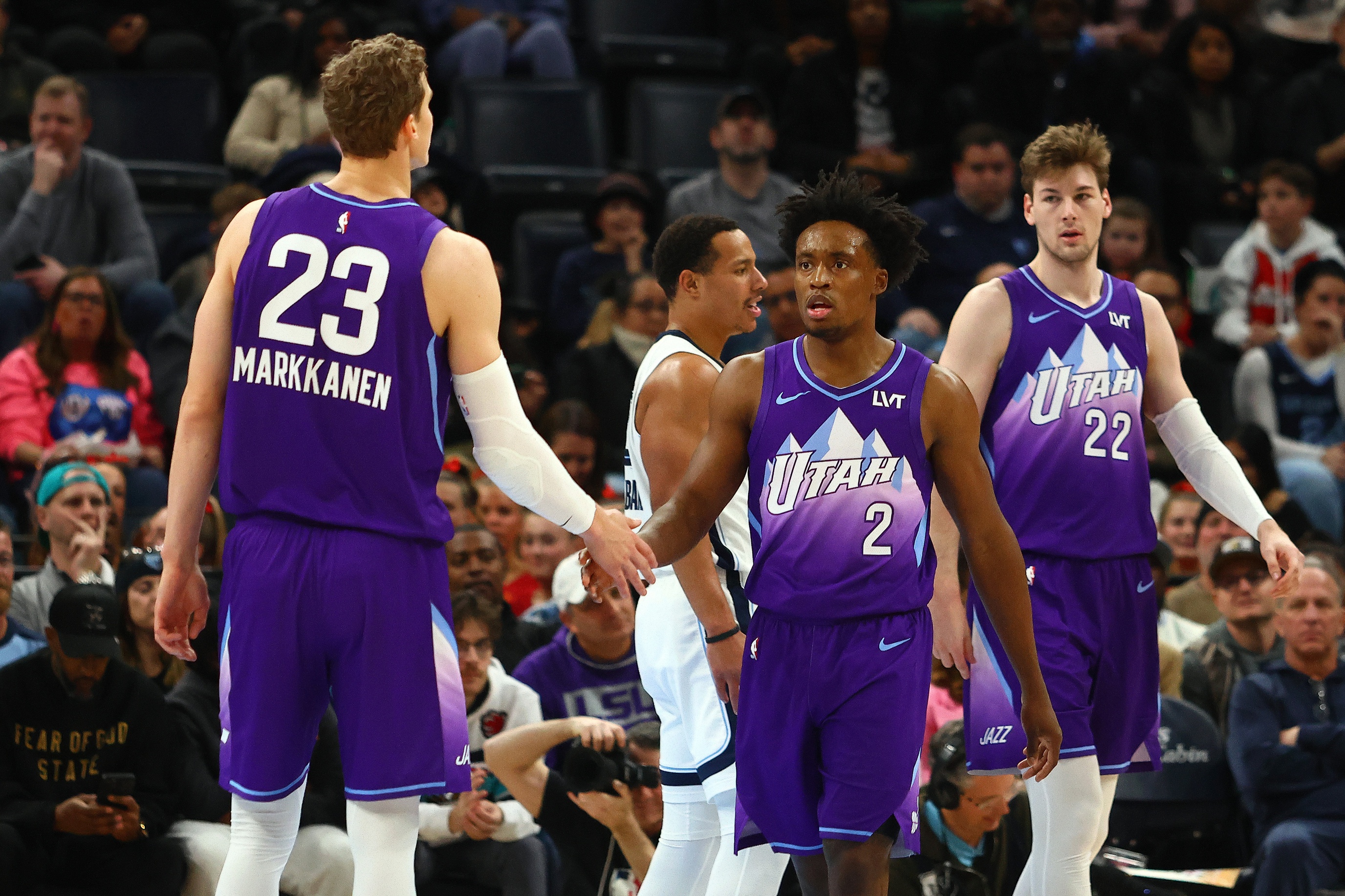
In an ideal world, the Jazz would land the first overall pick and would select Flagg. He’d fit in perfectly in a frontcourt that includes Lauri Markkanen and Walker Kessler. Flagg and Kessler can cover for Markkanen on defense. Markkanen and Flagg bring the shooting that is needed around Kessler.

If the ping pong balls don’t bounce Utah’s way, they could still come away with a top-three pick. That means Dylan Harper or Ace Bailey are probably next on the list. While a considerable drop-off from Flagg, both players are terrific talents. Harper would go a long way towards stabilizing the backcourt for years to come, while Bailey would give Jazz more scoring punch on the wing.

If the lottery really doesn’t go Utah’s way, they can still come away with a solid wing or guard in VJ Edgecombe, Tre Johnson or Kasparas Jakucionis. No matter where the Jazz are picking, they have to nail the pick.

The reason for that is that the roster lacks high-end upside outside of Markkanen. Even then, the talented forward is more of an All-Star talent vs an All-NBA one. Right now, the Jazz have a solid group of players – some with untapped upside – but they don’t have a superstar level player. That’s what this draft can bring to Utah.

Beyond the draft, the immediate roster decisions are pretty straight forward. The Jazz have only three pending free agents, John Collins (who has a player option) and two-way big men Micah Potter and Oscar Tshiebwe.

Despite missing a lot of games (whether due to real injuries or draft position purposes), Collins got back to being the guy he was a few years ago in Atlanta. He was solid around the rim, hit nearly 40% on 3.7 three-point attempts per game. Collins also did a nice job on the boards and had some good individual moments on defense.

Given the market this summer, it’s likely Collins will opt in for the final year of his deal for $26.6 million. From there, expect Utah to look for a trade, especially if they come away with Flagg for another forward/big in the draft. Given teams are always looking for stretch bigs than stay on the floor in the playoffs, and Collins having an expiring deal, the Jazz should find a decent market for him.

Potter can’t do another two-way deal with Utah, so he’s either joining the main roster (unlikely) or heading to free agency (likely). Tshiebwe is a really interesting player. He’s a dominant rebounder, which has carried over from the G League to the NBA. He doesn’t do a whole lot else though. Don’t be surprised if he’s back with the Jazz on another two-way deal.

From there, Utah has to decide on a handful of players who have non-guaranteed contracts Johnny Juzang seems should stick, as he provides solid value for slight above a minimum contract.

K.J. Martin, Svi Mykhailiuk and Jaden Springer have all had moments. All are carrying deals that are likely a touch bigger than what the Jazz would like to have on the books. In addition, because they’ve made a number of draft picks in recent years – with even more picks coming in the future – roster spots are becoming an issue for Utah. Call each of these a true 50-50 decision, with Martin and Mykhailiuk being potential trade chips if their deals are allowed to guarantee.

That’s it for immediate decisions before free agency opens. The Jazz have most of their roster on long-term or rookie scale deals. That leads us to the handful of players who aren’t locked in long-term and the possibility of extensions.

Walker Kessler is the key guy here, as he’s eligible for a rookie scale extension. Kessler has had a very nice bounce-back season for Utah. After a surprisingly good rookie year, the center had a sophomore slump and was pulled in and out of the starting lineup regularly.

This year, Kessler has returned to form. He’s done an outstanding job on the boards on both ends, he’s had a good individual defensive season and he’s shown improved skills on offense. (We aren’t buying this late-season three-point launching though. Let’s just say, there might be some ulterior motives involved there!)

Kessler will be 24 next year, so he’s headed into the prime years of his career. As a rim-protecting, rebounding big, Kessler has a lot of value. Look for an extension in the range of four-years, $120 million for Kessler. That’s not a max, but it reflects the value the big man has. Utah has seen what messing around and letting a good player reach restricted free agency has done in the past. That’s a mistake they aren’t likely to repeat.

The other two extension-eligible players are Collins and Collin Sexton. Nothing is likely to happen there. Both will be headed into their walk years and into unrestricted free agency in 2026.

The Jazz roster is full of potential. It was a bummer that Taylor Hendricks suffered that serious leg injury just as he was getting all the minutes he could handle. If he’s able to return to form, Utah has a fun mix of guards and forwards to develop around Markkanen and Kessler.

It’s hard to pin so much on the bounce of lottery balls, but that’s where the Jazz are. If things go their way, they could be a playoff team as soon as next season. If they don’t, front office and ownership have to have some serious conversations about the roster and how long of a rebuild they are in for. Because, hey, A.J. Dybantsa is playing right down the road and he could be the next big thing in terms of Utah basketball.

Updated Analysis Post-Draft Lottery:

The Lottery was a disaster for the Jazz. There’s no other way to put it. They went in dreaming of Cooper Flagg, but prepared to “settle” for Dylan Harper, or if things went poorly, V.J. Edgecombe or Ace Bailey.

Now? It’ll very likely be none of those players. Because Utah dropped the maximum of four possible spots, they likely won’t come away with any of those top choices. The team could still draft Tre Johnson for perimeter scoring, or Kasparas Jakucionis or Jeremiah Fears to be their long-term point guard, or they could go for some all-around upside with Egor Demin or Derik Queen.

The issue is that none of those players are Flagg, or Harper, or even Bailey or Edgecombe. That’s a brutal blow for a team that has effectively punted on three consecutive seasons. Next year’s draft class is loaded at the top too. But will Jazz fans have the stomach for a fourth year of playing for lottery odds? Based on initial reactions online, that’s a no-go. That means picking an immediate contributor this year or packaging this pick in a trade for a win-now veteran.


Scott AllenApril 11, 2025

The Columbus Crew have acquired Dániel Gazdag from Philadelphia Union in a cash-for-player in-season blockbuster trade.


Columbus acquires: Dániel Gazdag

Philadelphia Union acquires: $4,000,000, conditional $500,000


Gazdag is under contract through 2025 with a 2026 Club Option and will occupy a Designated Player roster spot with Columbus.

Scott AllenApril 09, 2025

Earnings Since 2020

  1. Scottie Scheffler: $6,876,32
  2. Jon Rahm: $3,766,617
  3. Cameron Smith: $2,674,200
  4. Dustin Johnson: $2,450,760
  5. Rory McIlroy: $2,232,500
  6. Ludvig Aberg: $2,160,000
  7. Collin Morikawa: $2,113,400
  8. Brooks Koepka: $1,999,617
  9. Sungjae Im: $1,723,000
  10. Phil Mickelson: $1,682,680

Earnings All-Time

  1. Phil Mickelson: $9,700,717
  2. Tiger Woods: $9,632,636
  3. Scottie Scheffler: $6,876,325
  4. Jordan Spieth: $5,338,828
  5. Jon Rahm: $4,683,217
  6. Dustin Johnson: $4,607,235
  7. Rory McIlroy: $4,313,021
  8. Bubba Watson: $4,021,305
  9. Justin Rose: $3,998,515
  10. Adam Scott: $3,992,127
Taylor VincentApril 08, 2025
© USA Today Sports

This week, over 228 days after the new CBA was announced, the document was released in its entirety. Totalling 118 pages, the CBA has a lot of details which build upon what was released by the league in the Competition Manual. Here’s what you can take away from the document:

Minimum Salary/Salary Cap Outlook

Section 8.1 – Minimum Salary: For a Player employed by the NWSL, the minimum annual base salary (excluding bonuses, other incentive compensation/benefits shall be as follows:

  • 2024: $37,856
  • 2025: $48,500
  • 2026: $50,500
  • 2027: $65,000 (auto stipend is eliminated & Locality COLA and Supplemental Stipend are implemented)
  • 2028: $67,600
  • 2029: $70,500
  • 2030: $82,500

Section 8.16 – Team Salary Cap: Nothing in this Section shall be construed to give NWSL the right to limit or reduce benefits in any other part of this Agreement or any SPA. For 2024, the Team Salary Cap shall be not less than $2,750,000. Commencing with the 2025 League Season, the Team Salary Cap shall be not less than the amounts set forth below. NWSL may in its discretion, after consultation with the NWSLPA, increase the Team Salary Cap in any year. NWSL may in its discretion, after consultation with the NWSLPA, reduce or eliminate the Salary Cap charge against the Team Salary Cap for certain roster classifications. 

  • 2025: $3,300,000 
  • 2026: $3,500,000 
  • 2027: $4,400,000 
  • 2028: $4,700,000 
  • 2029: $4,900,000 
  • 2030: $5,100,000 

The Team Salary Cap shall be increased by the Team Revenue Share from the prior League Season

Minimum spend. Beginning in 2025, teams must not spend less than (Minimum Salary above x number of players on the team) + Team Revenue Share. Any team who does not spend the Team Minimum Spend by the end of a league season will be required to distribute the difference in equal amounts to any player who was under contract for at least nine months of the league season. 

No Third-Party Influence or Ownership. The NWSL shall not enter into an SPA which enables a third party to influence the Player’s employment or receive compensation of any kind.

Other notes:  

NWSL is required to provide the NWSLPA with a team-by-team salary cap report on a monthly basis.

A SPA may not be made subject to a player being or becoming pregnant during its term, being on parental leave, or exercising rights related to the pregnancy or parental protections

Competition Bonuses

The NWSL shall provide the following minimum performance bonuses to each Player on the applicable Team, which may be funded in whole or in part by sponsors. 

In the event of format changes other than switching from a Spring to Fall to a Fall to Spring season format, NWSL and NWSLPA shall meet and confer concerning amendments to the above bonus schedule. 

In no event shall the total dollar amount of the bonus pools decrease as a result of format changes. 

If the NWSL or one of its Teams receives prize money from a Team’s performance in a Tournament (USSF, CONCACAF, FIFA), Players competing in that Tournament shall receive 50% of such prize money. 

Locality COLA (Cost of Living Adjustment)

Starting with the 2027 season, if the annual salaries have the following two conditions, then NWSL shall no longer provide Team-provided housing, the Locality COLA Stipend, or the Supplemental Stipend

  1. The Gross Income less market cost of all players is above the required minimum net value of compensation

  2. The salary of every NWSL Player is hgh enough that the cost of half of the annual rental of a two bedroom apartment in all NWSL Markets does not exceed 30% of their salary

The Locality COLA is effective beginning with the 2027 season.

Market Housing Cost - The cost of the annual average rental of a one-bedroom apartment together with the average cost of utilities.

Housing Security Threshold - The threshold at which a player is spending no more than 30% of their Gross Income on Market Housing Cost. 

Gross Income - Base salary plus guaranteed bonuses plus additional guaranteed compensation

Baseline Locality COLA - The difference between the Market Housing Cost in the Player’s market and the Market Housing Cost in the highest-cost housing market in which a player earning the minimum base salary would not be spending more than 30% gross income on housing. 

Stabilitizing Locality COLA - The difference between 85% of a player’s gross income and housing security threshold. 

Locality COLA - The lesser of the Baseline Locality COLA and the Stabilizing Locality COLA. 

For example, consider a Player on Team G with a Gross Income of $90,000 in 2027 (same as example above).
Baseline Locality COLA = $7,514
Stabilizing Locality COLA = $10,021
Locality COLA = $7,514

Starting in the 2027 League Season, if a Team has Market Housing Costs such that a Player earning the Minimum Base Salary is not spending more than thirty percent (30%) of their Base Salary on Market Housing Costs, that Team shall no longer be required to pay Players a Locality COLA during the remainder of the Term of the Agreement, even if that Team’s Market Housing Costs change.

Players who select Team-provided housing will not be eligible to receive the Locality COLA Stipend. 

Supplemental Stipend

Beginning in 2027, Players may be eligible for a supplemental stipend based on their Net Value of Compensation (NVC).

NVC is defined as Base Salary + Locality COLA Stipend – Market Housing Cost

Players making the Minimum Salary. The required Minimum NVC by year which includes a 4% increase YoY:

  • 2027: $55,640
  • 2028: $57,866  
  • 2029: $60,180  
  • 2030: $62,587 

Players making above Minimum Salary w/ multi-year contract prior to January 1, 2027. Beginning in 2027, Players will be eligible for Supplemental Stipends in each year so that the NVC increases by no less than 4% each year. 

Players making above the Minimum Salary who sign a new SPA beginning January 1, 2027 who are not “cost burdened”.: Beginning in 2027, Players will be eligible for Supplemental Stipends equal to the difference between the NVC of Minimum Salaried Players (on the same team) who do not choose (or do not have the option of choosing) Team Provided Housing and the Player’s NVC as determined by the terms of their contract

Roster Size 

Each league season, the roster compliance date will not be before or earlier than March 1 or two weeks following the start of preseason. A team shall have a minimum roster size of 22 players and a maximum roster size of 26 players. 

Beginning in 2027, the minimum roster size is moving from 22 players up to 23 players. 

In the event the NWSL implements a Home Grown Player rule during the term of this Agreement, NWSL will be permitted to roster Home Grown Players in excess of the maximum Roster Size

Scheduling

Schedule release. The NWSL shall release the final draft of the regular season game schedule to the NWSLPA at the same time it is released to the Teams, which shall be no later than 14 days prior to the start of the opening game. 

Number of Games. Teams may play no more than the following number of NWSL games in a single league season, unless otherwise approved by the NWSLPA:

  • Number of games that constitute a home and away League Season
  • Up to 7 post-season games
  • One league Season kick-off game (“Community Shield”)
  • Up to five Exhibition Games (which may include Tournament games)
  • Up to two NWSL created or supported Tournaments (e.g. NWSL/Liga MX Summer Cup)

Game Frequency. The NWSL will not schedule a Team for more than two NWSL Games in any seven day period, unless the NWSL Games are at least 48 hours apart. The NWSL shall not initially schedule a team to play mid-week regular season games in consecutive weeks. In preparing the schedule, the NWSL will use reasonable efforts to ensure balance and consistency in terms of the number of NWSL Games scheduled for each team on a week-to-week and month-to-month basis. 

Professional Development and Education

Tuition benefits. By Aug 1, 2022, the NWSL shall establish an educational partnership with 1+ post-secondary institutions to provide players with access to subsidized online or in-person education benefits. 

Coaching Licensure Pathway. NWSL will provide up to $25,000 at the beginning of each calendar year to subsidize enrollment costs for current players who participate in U.S. Soccer’s Coaching License Pathway. If the allocated amount is not used in a given calendar year, the remaining amount will be carried over to the subsequent year.

Random Tidbits

If you really want more details, some random tidbits:

What is/isn’t included in the Salary Cap.

Limited Reopener Trigger. If during this CBA, the structure of the relationship between the League and Teams changes from a single entity structure OR if shareable revenues exceed $300 million in 2028 or 2029, then NWSL may reopen this agreement with respect to the revenue sharing portions. 

Charter flights. Beginning in the 2025 season, teams may book charter flights for up to three roundtrips or six legs within a league season. The league can approve additional charter flights. Charter flights are required for most midweek games. The NWSL and NWSLPA can meet to discuss changes, but the NWSL cannot implement changes that are more restrictive than what is already established. 

Expansion Teams. The Expansion Draft is abolished (was announced in the initial announcement), the NWSL retains the discretion to establish new rules for expansion teams to build rosters. 

Sub-loans Prohibited. NWSL shall ensure that the terms of any such loan agreement with a non-NWSL club prohibits sub-loaning of the Player to a third club. 

Dual Representation. In 2025 any player-agent who represents players and the NWSL, a Team, or a staff member needs written consent of all applicable parties. Beginning in 2026 there can’t be dual representation arrangements in the same transaction. 

Severance Pay for Semi-Guaranteed SPA. A player whose semi-guaranteed SPA is terminated prior to the term for reasons other than misconduct and is not picked up by the waiver wire will receive severance pay equal to four weeks of their base salary and can elect to continue to reside in any provided team housing for up to 30 days. 

Per diem. Players per diem while on a Road Trip will follow the guidelines set below, for any day in which the player is fully or partially traveling, and a meal is not provided. For all road trips, the total trip per diem shall be paid in a lump sum no later than the beginning of travel. 

  • 2024: $91 ($22 for breakfast; $29 for lunch; $40 for dinner) 
  • 2025: $94 ($23 for breakfast; $30 for lunch; $41 for dinner) 
  • 2026: $96 ($24 for breakfast; $31 for lunch; $42 for dinner) 
  • 2027: $100 ($25 for breakfast; $32 for lunch; $43 for dinner) 
  • 2028: $100 ($25 for breakfast; $32 for lunch; $43 for dinner) 
  • 2029: $100 ($25 for breakfast; $32 for lunch; $43 for dinner) 
  • 2030: $105 ($26 for breakfast; $34 for lunch; $45 for dinner) 

Relocation. Newly-Signed, Traded, and other Relocating Players shall be entitled to:

  • 2024: Reimbursement up to $2,500 or stipend of $2,000
  • 2025-27: Reimbursement up to $7,500 or stipend of $5,000
  • 2028-30: Reimbursement up to $10,000 or stipend of $7,500

Drug/Alcohol Policy/Requirement of covid-19 vaccination. Before deciding to implement a new drug and alcohol policy, the NWSL shall notify the NWSLPA. If the NWSLPA demands bargaining over such a policy, the parties shall negotiate in good faith but implementation shall not be delayed beyond 60 days. Should the NWSL deem it appropriate, the NWSL shall have the right to implement a mandatory COVID-19 vaccination policy. The two parties will negotiate in good faith over the effects but the implementation shall not be delayed beyond 30 days. 

Anti-Collusion Policy. Prior to the start of the 2026 league season, the NWSL will develop an anti-collusion policy designed to ensure the integrity of the free agency market. 

Media Appearances. A Player shall be available for and participate in appearances and/or interviews for television, film, audio/radio, newspaper, digital media, magazine, and other media representatives at the request of the NWSL and/or the Player’s Team. Players shall not unreasonably refuse to participate in Media Appearances. The NWSL and/or the Team shall use best efforts to use the entire roster of Players throughout the course of the League Year to meet the demand for appearances/interviews, taking into consideration the requests of the media

Salary Transparency. This was confirmed by an NWSLPA rep previously, but Player’s salaries will not be disclosed to third parties by the NWSL or its Teams without the prior, written consent of the NWSLPA.

Keith SmithApril 08, 2025

The Denver Nuggets are firing general manager Calvin Booth and head coach Michael Malone, per several reports. Denver is making this move with less than a week to play in the regular season and with the team having three games left.

The Nuggets have slipped in recent weeks. Denver has lost four straight games to fall into a virtual five-way tie for the fourth through eighth seeds in the Western Conference.

Booth took over Denver's front office in May of 22, after Tim Connelly departed to run the Minnesota Timberwolves basketball operations. Booth led the Nuggets for three seasons, including the team's first NBA championship in 2023.

Malone took over the Nuggets sideline ahead of the 2015-16 season. In 10 seasons with Denver, Malone went 471-327. He also went 80-44 in six consecutive playoff appearances, winning the NBA Finals in 2023. David Adelman will take over as the interim head coach for the remainder of the season.

Scott AllenApril 07, 2025

Brian Harman wins the Valero Texas Open. Harman earns $1.71 million million bringing his 2025 on-course earnings to $2.35 million and his career earnings to $46.4 million. 

Valero Texas Open Top 10 Payouts

Scott AllenApril 07, 2025

Marc Leishman wins the fifth LIV Golf event of 2025 at Miami and earns $4.75 million. 

Miami Top 10

Top