Michael GinnittiFebruary 06, 2026

Drew Brees

Brees was a 2nd Round pick (#32 overall) by the San Diego Chargers back in 2001, signing a 4 year, $3.6M rookie contract that year. He’d see it out, garnering an $8M franchise tag from the team in 2005 which he opted to play on before hitting free agency for the first time in March of 2006.

The Saints pounced, signing 27-year-old Brees to a 6 year, $60 million free agent contract that included $20M fully guaranteed, and $22M cash in the first year. Once again, Brees would play out the entirety of the contract, which led to yet another franchise tag, this time however - an exclusive rights tender at $16.371M.

New Orleans and Brees negotiated right up to that July extension deadline, before agreeing to terms on a 5 year, $100 million contract that included $40M fully guaranteed, making Brees the first $20M per year player, and the highest average paid player in the history of football. He would play out 4 years, $80M of this deal before beginning a stretch of short, quick contract extensions that refreshed his wallet, and kept his current-year cap hit at bay.

In 2016, Brees turned the $20M remaining on his previous extension into a 2 year, $44M contract through 2017 that paid him $31.25M in the first season. He followed that up with a 2 year, $50M extension through 2019, and a 1 year, $25M contract through 2020 to finish off his career.

In total, Brees signed 7 contracts (2 for San Diego, 5 with the Saints) that secured him over $271M of on-field earnings, which still ranks 8th most in NFL history today.

VIEW ALL CONTRACTS

Larry Fitzgerald

The Cardinals selected Fitzgerald #3 overall out of Pitt back in 2004, signing him to a 6 year, $52.7M rookie deal (heavily back-loaded with potential escalators). He’d play out 4 years, $20.8M of the deal, before locking in a 3 year, $30M extension with the team through the 2010 season.

In August of 2011 things got real, as a 28-year-old Fitzgerald agreed to a 7 year, $113 million contract extension with Arizona, making him the highest average paid WR ($16.1M) in history, and the 4th highest average paid player in the NFL (behind Brady, Manning, and Manning). He’d play out 4 years of this contract, earning $58.5M over that span, before beginning a trend of short, quick turn-around contracts for cash/cap purposes.

He signed a 2 year, $22M deal in 2015 that became a 1 for $11M contract.
He signed a 1 year, $11M contract in 2016.
He signed a 2 year, $22M contract in 2017.
He signed a 1 year, $11M contract in 2019
And he finished things off with a 1 year, $11.5M contract in 2020.

In total, Fitzgerald signed 8 NFL contracts, all in Arizona, that secured him over $180M of on-field earnings, which ranks 25th most among WRs all-time.

VIEW ALL CONTRACTS

Luke Kuechly

Selected #9 overall back in 2012 by the Carolina Panthers out of Boston College, Kuechly signed a 4 year, $12.5M rookie contract to join the league. The Panthers had seen enough after three seasons to know they had found a franchise-leading defensive captain, agreeing to a 5 year, $61M extension with the 24-year-old in September of 2015.

Kuechly would see out the next 5 seasons, earning over $53M of the deal, before stepping away from the game due to injury in January of 2020.

He earned over $63M across 8 NFL seasons, signing just two professional contracts along the way.

VIEW ALL CONTRACTS

Adam Vinatieri

The Patriots signed Vinatieri as an undrafted free agent out of South Dakota State back in 1996, handing him a $1,000 signing bonus on a 2-year minimum deal. It worked out.

Vinatieri followed up a $238,000 tender in 1998 with a 3 year, $2.5M extension in 1999 that included a $900,000 signing bonus, and over $1.2M cash in Year 1. He’d see out the entire deal, adding a 3 year, $5.375M deal in 2002 that made him a Top 3 paid kicker in the league.

Unsure of his future, New England slapped a $2.5M franchise tag on the 33-year-old back in 2005, and Vinatieri agreed to play it out.

He hit free agency for the first time in 2006, joining the Colts on a 5 year, $12 million contract, making him the highest average paid kicker in football at $2.4M. Vinatieri would play the deal out, once again hitting the open market at 39-years-old. The Colts agreed to re-sign him to the tune of  3 years, $9.2M, including a $3.6M signing bonus.

He’d play out that contract in its entirety, agreeing to a 2 year, $5 million extension through 2015 (his age 43 season), following by another 2 year, $6M extension through 2017 (his age 45 season), a 1 year, $3.6M extension through 2018 (age 46) and a final 1 year, $3.8M deal through 2019 (age 47).

In total, Adam Vinatieri signed 11 NFL contracts (5 with New England, 6 with Indianapolis), accounting for over $51M earned on the field across an incredible 24 seasons. He ranks 3rd all-time among career earnings for kickers (Janikowski $53M, Gano, $53M).

VIEW ALL CONTRACTS

Roger Craig

Craig was the #49 overall pick by the 49ers back in 1983, signing a 3 year, $560,000 contract to join the club that summer. He would platform that into a 5 year, $2.6 million contract in 1986 that took him through the 1989 campaign. Craig would play out another 1 year, $1.5M in San Francisco, before joining the LA Raiders on an $800,000 deal for the 1991 season.

The then 32-year-old would finish off his career in Minnesota, earning $825,000 in 1992, and another $625,000 in 1993.

In total, Craig earned an estimated $7.1M on the field from 1983-1993.

VIEW ALL CONTRACTS

Keith SmithFebruary 05, 2026
© USA Today Sports

The NBA trade deadline has passed. For most, that means it’s time to take a breath and reset. For NBA front offices, they get right back to work.

The buyout market is the less-glamorous cousin to the trade deadline. Coming off a slow-to-start, but then utterly wild 2026 NBA trade season, the buyout market might seem a bit underwhelming.

That said, there will still be some recognizable names on the buyout market…maybe.

As they have for the past couple of seasons now, teams are working under tighter rules in the buyout market. Gone are the days of the most expensive teams filling out their rosters by snagging a high-salaried player who gave up the equivalent to a prorated veteran minimum to chase a ring.

Under the current CBA, teams who are over the first or second apron are restricted from signing a player after a buyout (or waiver) whose previous contract was greater than the Non-Taxpayer MLE for the current season. For this year, that’s $14,104,000.

So, on one side, you have a handful of contenders out of the mix to add a formerly high-salaried player. On the player side, they may be less likely to take a buyout if their options for the next team are limited.

For example, if you are making $20 million-plus, but your options are limited of where to go next, you may be better off staying where you are. This is especially true of players who have full Bird rights as a free agent in the summer of 2026. That could lock in a bigger contract via re-signing or a sign-and-trade than is prudent to give up by taking a buyout.

The same is true for teams. If they are capped out, they might prefer to have a player on an expiring deal, as opposed to buying them out. Similar to the player side, a team would rather be able to use that player’s Bird rights to bump up their salary in an outgoing sign-and-trade deal.

So, if you add it all up, the buyout market has changed over the last few years. Several players will still hit the market, as their contract situations now and moving forward won’t prevent them from taking a buyout.

As of this writing, the following teams are over the first or second apron and will be restricted from signing a player who makes more than $14,104,000 currently:

  • Cleveland Cavaliers
  • Golden State Warriors
  • New York Knicks

In addition, the following teams are over the luxury tax line. There’s no restriction on them adding a buyout player, but teams are often reluctant to add to their tax bill:

  • Houston Rockets
  • LA Clippers
  • Los Angeles Lakers
  • Minnesota Timberwolves

With all of that in mind, here the players to watch on the 2026 Buyout Market. Note: some of these players have already been waived. We’ll note where those waivers have happened or reported.

(This list is presented in alphabetical order. There is no ranking involved.)

Kyle Anderson (Memphis Grizzlies, PF, 32 years old)

Current Salary: $9.2 million

Anderson hasn’t played a lot this year and was a salary-matching part of the trade that sent Jaren Jackson Jr. to Utah. When Anderson has played, he’s shown he can still be productive. As the Grizzlies lean into rebuilding, they may let Anderson go to join a playoff team. If a team needs a veteran in the frontcourt, Anderson could be a nice pickup for the rest of the season.

Malaki Branham (Charlotte Hornets, SG, 22 years old)

Current Salary: $4.9 million

Branham went on quite the journey at the trade deadline. He was swapped from the Washington Wizards to the Dallas Mavericks to Charlotte Hornets. Branham could stick in Charlotte, but the red-hot Hornets may prefer to have an open roster spot to convert a two-way player or add a veteran after a buyout. Branham can shoot and score a bit, but the Hornets backcourt is stuffed full, making him unlikely to stick beyond the rest of this season at most.

Mike Conley (Free Agent (waived by Charlotte Hornets), PG, 38 years old)

Former Salary: $10.7 million

Conley was waived by the Hornets. Because he was traded a second time after the Minnesota Timberwolves sent him to the Chicago Bulls, Conley could return to Minnesota. That may even be the plan here. If not, Conley will have a wide market for teams looking for a veteran point guard.

Pat Connaughton (Free Agent (waived by Charlotte Hornets), SG/SF, 33 years old)

Former Salary: $9.4 million

Connaughton didn’t play much for the Hornets before he was waived to allow Charlotte to complete their deadline moves. As recently as a couple of seasons ago, Connaughton was a rotation player on playoff teams for the Milwaukee Bucks. If a team needs a veteran shooter (or at least a former shooter) for their bench, they could take a look at Connaughton.

Eric Gordon (Memphis Grizzlies, SG, 37 years old)

Current Salary: $2.3 million

Gordon was traded by the Philadelphia 76ers to the Memphis Grizzlies in a tax-avoidance deal. The Grizzlies are reportedly going to waive the veteran shooting guard. Gordon has barely played this season for the Sixers. When he got semi-regular minutes for Philadelphia last season, Gordon still hit 41% from deep on 3.5 three-point attempts per game. If a team is desperate for shooting, Gordon could make for a sensible pickup. Just don’t expect much beyond shooting at this point.

Haywood Highsmith (Free Agent (waived by Brooklyn Nets), SF/PF, 29 years old)

Former Salary: $5.6 million

Highsmith hasn’t played yet this season, as he’s been recovering from offseason knee surgery since August. However, it was reported that Highsmith is just about ready to make his season debut. When we last saw Highsmith, he was a rugged defender who could make shots. Not your typical 3&D wing, but more of a shooting combo forward. He’ll have plenty of offers from playoff teams who need some shooting and defense at the forward spot.

Isaac Jones (Free Agent (waived by Detroit Pistons), PF/C, 25 years old)

Former Salary: $1.9 million

The Pistons waived Jones when they needed a roster spot to complete a deadline acquisition. Jones didn’t see much NBA action with Detroit, but was solid in the G League. He’s tough and athletic, if a bit undersized. Keep an eye on rebuilding teams with an open roster spot that could bring Jones in for a rest-of-season look.

DeAndre Jordan (New Orleans Pelicans, C, 37 years old)

Current Salary: $2.3 million

Jordan is a valuable locker-room voice at this point. The Pelicans value his presence with their young roster. However, Jordan may want to finish his career on a title contender. In addition, New Orleans could use a roster spot to convert two-way player Bryce McGowens, who has been a regular rotation player this season. If Jordan is waived, a playoff team with the need for center depth will likely give him a call, as he’s well thought of around the league.

Kevin Love (Utah Jazz, C, 37 years old)

Current Salary: $4.2 million

Love has played a lot more for Utah than most expected he would. His shooting has slipped, which is an issue because Love is strictly a spot-up shooter now on offense. He can still rebound, so maybe a frontcourt-needy team will take a look. The Jazz also seem to like having Love around, so he may finish the season in Utah.

Khris Middleton (Dallas Mavericks, SF/PF, 34 years old)

Current Salary: $33.3 million

This is our only player who can’t be signed by the apron teams. It’s also a bit of a weird situation for Middleton, where his Bird rights could be more valuable to him and the Mavericks than simply buying him out. But if Middleton does give back some money, a playoff contender will definitely pick him up. He’s no longer a switchable wing, and is instead more of a small forward/small-ball power forward. It took Middleton a while to get going for the Wizards this season, but he’s found a good form recently. He’s a still a smart ball-mover, can still shoot a little and has been in big playoff games for years. That will have interest for playoff contenders.

Georges Niang (Memphis Grizzlies, PF, 32 years old)

Current Salary: $8.2 million

Like Kyle Anderson, Niang was tossed into the Jaren Jackson Jr. trade to make the salary-matching math work. Niang hasn’t played this year, as he’s battled a foot injury. When we last saw him, Niang was a productive backup forward, who can also play some small-ball five. If he’s healthy, Niang could help a team that needs some floor spacing and positional defense in their frontcourt.

Chris Paul (Toronto Raptors, PG, 40 years old)

Current Salary: $2.3 million

Paul will reportedly be waived by the Toronto Raptors. From there, it’s about two things: Does Paul still want to play? If so, where? This offseason, the veteran “Point God” self-limited his market to West Coast teams, specifically those close to his Los Angeles home. If he’s open to playing away from home, Paul will have no shortage of suitors. Just about any playoff team could use a veteran like him coming off their bench. There are also a few high-profile playoff teams that need another point guard. It’s all up to Paul where, and if, he wants to play.

Mason Plumlee (Free Agent (waived by Oklahoma City Thunder), C, 35 years old)

Former Salary: $2.3 million

Plumlee was waived by the Oklahoma City Thunder after being traded there from the Charlotte Hornets. He’s also dealing with recovery from a groin injury. Plumlee is expected to be healthy by the end of the season, so he could provide veteran frontcourt depth for a playoff team. Plumlee is still a good screener and ball-mover, and is solid enough on the glass. For a depth big, you could do worse.

Dario Saric (Detroit Pistons, PF/C, 31 years old)

Current Salary: $5.4 million

Saric hasn’t played much over the last two years. Injuries have sapped his ability to move on defense, and Saric isn’t big enough to be a deterrent in drop-coverage schemes. Offensively, he can still move the ball. But his long-range shooting has dropped off, and Saric doesn’t have the burst to take opposing bigs off the bounce anymore. The Pistons need a roster spot to convert two-way player Daniss Jenkins, and Saric is likely the one who will go. If so, he may find better offers to head overseas than trying to make it work in the NBA.

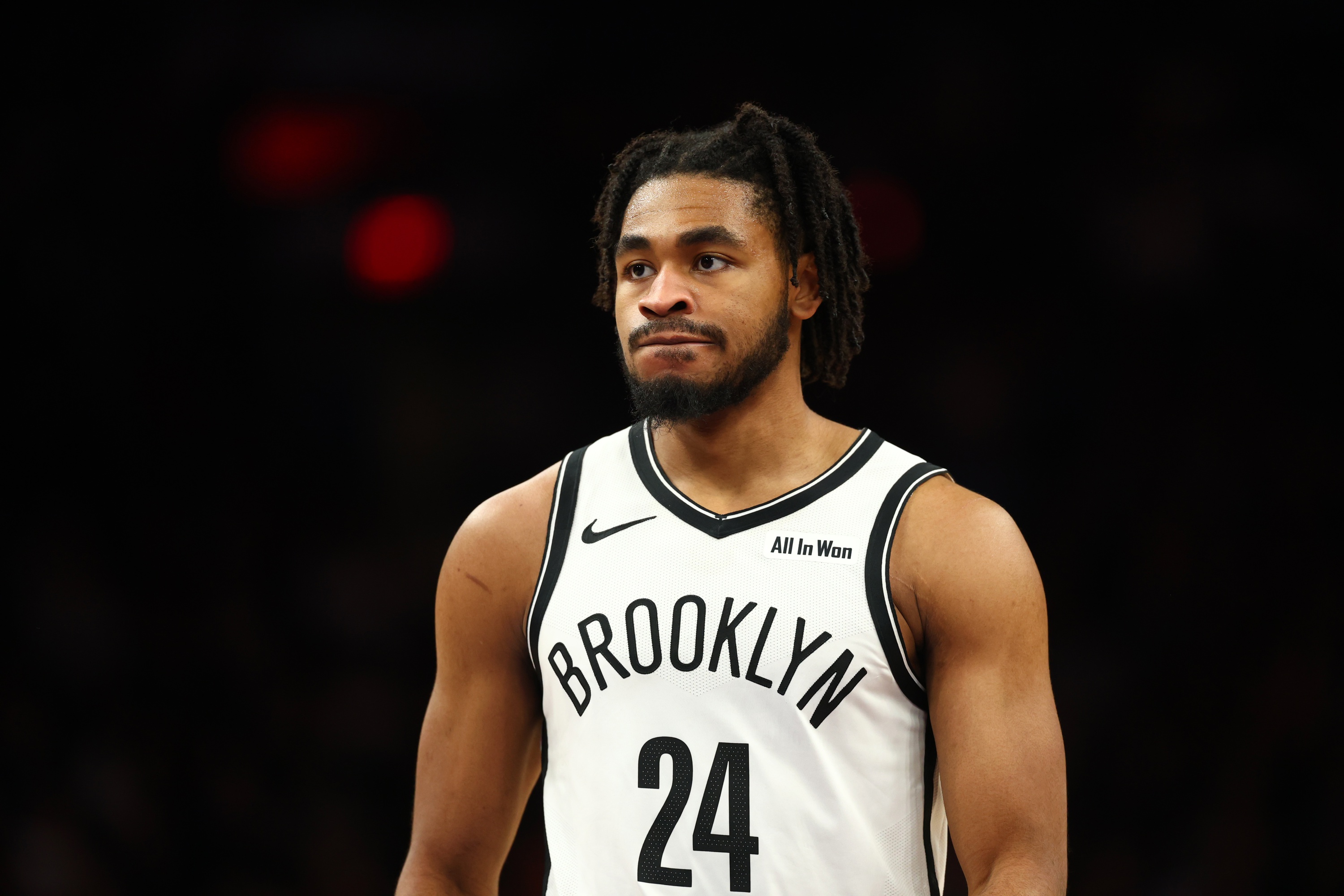
Cam Thomas (Brooklyn Nets, SG, 24 years old)

Former Salary: $5.9 million

Thomas is the best player on this list. He’s a scoring-machine, if not always the most efficient bucket-getter. But any team that needs some scoring punch off their bench will have interest in Thomas. A team that has part of their Non-Taxpayer MLE leftover could even give Thomas a multi-year contract. The more likely path is a rest-of-season deal with a good team, where Thomas can rebuild his value before hitting unrestricted free agency in July.

Keith SmithFebruary 04, 2026
© USA Today Sports

The Detroit Pistons acquired a hopeful shooting threat. The Bulls continued reshaping their roster by adding a young guard. The Minnesota Timberwolves got under the first apron to possibly set up a bigger move.

Here are the particulars:

Detroit Pistons acquire: Kevin Huerter, Dario Saric, 2026 protected first-round pick swap (as of now, it looks like the Pistons will swap their pick for the Timberwolves)

Chicago Bulls acquire: Jaden Ivey, Mike Conley

Minnesota Timberwolves acquire: Cash Considerations

Let’s dive in!

Detroit Pistons

Incoming salary: $23.4 million in 2025-26

  • Kevin Huerter (SG/SF, one year, $17.9 million), Dario Saric (PF/C, one year, $5.4 million)

Outgoing salary: $10.1 million in 2025-26

  • Jaden Ivey (SG, one year, $10.1 million (RFA this offseason))

The Detroit Pistons have been looking for a way to add shooting. It’s one of the only holes that Detroit has had this season. In theory, Kevin Hueter should provide that. Why in theory?

Well, Huerter hasn’t shot it well the last two seasons. He’s in the midst of third consecutive season of declining accuracy from behind the arc. If Huerter can find the form he showed earlier in his career, he’ll be exactly what Detroit needs. If not, he’s nothing more than expiring contract who won’t see minutes in the postseason.

Dario Saric is little more than a throw-in to make the salary-matching work in this trade. There’s a good chance he won’t last on Detroit’s roster much past the trade deadline. The Pistons need to create a roster spot to convert breakout two-way player Daniss Jenkins.

All of that really makes this trade Jaden Ivey for Huerter and a first-round pick swap. That pick will likely be better than the Pistons, so Detroit should be able to move up at least a few spots in the draft.

So, why did the Pistons give up on Jaden Ivey? The simple answer is that Ivey hasn’t regained the form he showed before suffering a broken leg last season. The more complex answer is that Ivey’s place in Detroit’s rotation was looking less certain with the emergence of Ausar Thompson, Ron Holland and the aforementioned Jenkins.

By trading Ivey, the Pistons also remove a potentially awkward situation with his restricted free agency this offseason. Detroit may have best off to non-tender a qualifying offer to Ivey and clearing his $30 million cap hold off the books. Now, they can let that decision be made by the Chicago Bulls.

As far as that near-term future goes for the Pistons, they’re in pretty good shape. Detroit can create up to $30 million in cap space this summer. That would mean clearing the books of all free agents except for Jalen Duren, and the team’s partial/non-guaranteed contracts. So, Detroit may choose to stay over the cap. Either way, the Pistons are in pretty good shape now and moving forward.

Chicago Bulls

Incoming salary: $20.9 million in 2025-26

  • Jaden Ivey (SG, one year, $10.1 million (RFA this offseason)), Mike Conley (PG, one year, $10.8 million)

Outgoing salary: $23.4 million in 2025-26

  • Kevin Huerter (SG/SF, one year, $17.9 million), Dario Saric (PF/C, one year, $5.4 million)

The Bulls are continuing to retool their roster. After agreeing to this trade, the Bulls sent Nikola Vucevic to the Boston Celtics for Anfernee Simons. After years of resisting a rebuild, the Bulls are clearing out some of their veterans and bringing in younger players.

Jaden Ivey is a good upside bet for Chicago. Before breaking his leg last season, Ivey was averaging a career-high 17.6 points per game on 46/41/73 shooting splits. Ivey has also flashed some playmaking skills, as well as playing some solid defense.

The one challenge for Ivey and the Bulls is that this backcourt is overstuffed with options. Expect another trade or two to thin things out, likely involving Coby White, Ayo Dosunmu, Tre Jones, or Chicago flipping Simons in another deal.

If Ivey can find the form he showed before getting hurt, and he’s showed signs this year, he’s a nice player to add to the mix for the Bulls. His shooting ability pairs well with Josh Giddey in the backcourt, and he can play on-ball in lineups where Chicago needs additional playmaking.

The Bulls are reportedly going to work with Mike Conley on finding him a new home. If another trade doesn’t materialize before the deadline, expect a buyout for Conley. Because the veteran point guard makes less than the Non-Taxpayer MLE on his current contract, he’ll be able to join any team on the buyout market.

If everything goes sideways with Ivey and the Bulls, Chicago is still in great shape. The Bulls will likely hit the offseason with somewhere between $25 million and $40 million in cap space. That figure could even rise, as Arturas Karnisovas continues to deal ahead of the deadline.

Minnesota Timberwolves

Incoming salary: None

  • The Wolves are receiving Cash Considerations in this trade

Outgoing salary: $10.8 million

  • Mike Conley (PG, one year, $10.8 million)

This one is simple: The Minnesota Timberwolves got themselves under the first apron in this deal. Minnesota will be about $2.5 million under the first apron. That’s not a massive amount, but it does allow the Wolves a lot of flexibility. They can take back a little money in a trade now. They have no worries of bumping up against the second apron. 

This deal is really all about what’s next for Minnesota. Is it a deal for Giannis Antetokounmpo? A trade for a point guard? Something smaller that rounds out the team’s depth? Only time will tell. But the Wolves are in a better position to make whatever it is happen now than they were previously.

In the short-term, it looks like Minnesota will lean on Bones Hyland and Rob Dillingham behind Donte DiVincenzo at the point guard spot. Hyland has played well this year, while Dillingham has struggled to find traction in his second year. It wouldn’t be a surprise to see Dillingham on the move, if the Timberwolves make a big trade ahead of the deadline.


Keith SmithFebruary 03, 2026
© USA Today Sports

The Utah Jazz have indicated that 2025-26 would be the final year of rebuilding. By making a big move to acquire Jaren Jackson Jr., the Jazz are backing that up. The Memphis Grizzlies have made another move that seems to be pushing them towards a total makeover.

Here are the particulars:

Utah Jazz acquire: Jaren Jackson Jr., John Konchar, Jock Landale, Vince Williams Jr.

Memphis Grizzlies acquire: Kyle Anderson, Walter Clayton Jr., Taylor Hendricks, Georges Niang, 2027 most-favorable first-round pick (likely Jazz), 2027 Lakers first-round pick (top-4 protected), 2031 Suns first-round pick

Let’s dive in!

Utah Jazz

Incoming salary: $45.7 million in 2025-26

  • Jaren Jackson Jr. (PF/C, five years, $240 million (final season player option)), John Konchar (SG/SF, two years, $12.3 million), Jock Landale (C, one year, $2.3 million), Vince Williams Jr. (SG/SF, two years, $4.8 million (final season team option))

Outgoing salary: $27.5 million in 2025-26

  • Kyle Anderson (PF, two years, $18.9 million (final season non-guaranteed)), Walter Clayton Jr. (PG, four years, $19.3 million (final two seasons team options)), Taylor Hendricks (SF/PF, two years, $13.9 million (RFA in 2027)), Georges Niang (PF, one year, $8.2 million)

This is an example of “pre-agency” at its finest. The Utah Jazz were set to have nearly $50 million in cap space this offseason. Now, the Jazz will have Jaren Jackson Jr. under contract as part of a jumbo-sized frontcourt. Utah made the decision that there wasn’t going to be a free agent, or another trade, that would be better than getting Jackson now.

In Jackson, the Jazz get one of the best defensive big men in the game. Jackson is a good shot-blocker. He’s an outstanding on-ball defender who is able to defend 1-5. He’s not a strong rebounder, but Utah should have that covered with Walker Kessler.

On offense, Jackson can stretch the floor, even if his shot is a bit streaky. The big man can do a little ballhandling and facilitation, but he’s best as a play-finisher vs being used too much as a creator.

When you put it together Jackson is worthy of his former All-Star status and the regular awards he gets for his defense. Jackson is also only 26 years old, so there’s still some room for untapped improvement. And that’s where Utah has to hope that there is still some room to grow.

On his current $35 million salary, Jackson feels properly paid, and perhaps a bit underpaid. Next season, when his salary bumps up to $49 million, flowed by $50-plus million for the next four years, the deal starts to feel a bit heavy. However, if Jackson continues to produce and defend at an All-Defense level, the contract should age just fine.

The Jazz intend to re-sign Walker Kessler this summer to a long-term deal. He’ll team with Jackson and Lauri Markkanen in a big, versatile frontcourt. Those three should make a nice trio moving forward.

The other players the Jazz acquired in this deal come with strengths too. Jock Landale gives the team center coverage this year if they trade Jusuf Nurkic. With Kessler out for the season, Kevin Love rested regularly (and possibly on the move too), and Utah not wanting to overextend Kyle Filipowski at the five, Landale is a helpful player to have around.

Vince Williams Jr. is a good, versatile player. He’s logged a lot of minutes for Memphis this year as their primary creator, and Williams has held up well. He’ll fit in nicely on the wing or in the backcourt rotation for Utah.

John Konchar has shown flashes of being a solid shooter at time. He’s an outstanding rebounder for a wing too. There’s nothing fancy here, but Konchar could be a solid rotation player, or $6.1 million trade chip for a future deal.

The Jazz likely were not thrilled about having to give up Walter Clayton Jr. and Taylor Hendricks in this trade. But, as the old saying goes, you have to give something to get something. Clayton was moved from a position of strength with Keyonte George having a breakout season and Isaiah Collier looking like at a solid backup, with potential for more. Hendricks is still finding his stride after coming back from a broken leg, but with Jazz have a lot of forwards under contract.

Kyle Anderson and Georges Niang were both acquired this offseason in salary-related trades and haven’t played a big on-court role for the Jazz this season.

As far as the draft picks go, the best pick Utah gave up looks like that 2031 Suns pick. Who knows what that pick will be this far out? If the Jazz and Lakers go as expected next season, there’s a good chance that both of those selections will be non-lottery picks. And Utah still has seven first-round picks moving forward to use in future deals.

Memphis Grizzlies

Incoming salary: $27.5 million in 2025-26

  • Kyle Anderson (PF, two years, $18.9 million (final season non-guaranteed)), Walter Clayton Jr. (PG, four years, $19.3 million (final two seasons team options)), Taylor Hendricks (SF/PF, two years, $13.9 million (RFA in 2027)), Georges Niang (PF, one year, $8.2 million)

Outgoing salary: $45.7 million in 2025-26

  • Jaren Jackson Jr. (PF/C, five years, $240 million (final season player option)), John Konchar (SG/SF, two years, $12.3 million), Jock Landale (C, one year, $2.3 million), Vince Williams Jr. (SG/SF, two years, $4.8 million (final season team option))

The Memphis Grizzlies are rebuilding. While the Desmond Bane trade could be pitched as a reset move, trading Jackson for a package headlined by young players, draft picks and cap flexibility, there’s no doubt Memphis is rebuilding.

And that’s fine! It’s probably even good!

The Grizzlies gave it a long run with the trio built around Jackson, Bane and Ja Morant. They committed a lot of money to that trio too. Now, they’re starting over.

In this deal, Memphis wiped $240 million off the books for Jackson alone. They cleared just over $18 million off their year’s books and would be under the cap if it wasn’t for the record $28.8 million TPE the Grizzlies created in this deal for Jackson.

Next season, Memphis knocked about $45 million off their cap sheet. Expect the shedding to continue, which is where we’ll go next.

When the Grizzlies first put Ja Morant on the market, they wanted a package of draft picks and/or young talent. Now, Memphis got that package from Utah. Could they be enticed by a similar return to what the Hawks got for Trae Young of expiring salary and a nice role player? If so, Morant could be on the move before the deadline, or before next season. Either way, as the Grizzlies kick off this rebuild, Morant’s time in Memphis seems short.

Similarly, look for the Grizzlies to try to move Kentavious Caldwell-Pope and possibly Brandon Clarke too. The two veterans are out of place on a rebuilding team.

The Grizzlies are going to build around a young core that consists of Cedric Coward, Zach Edey, Jaylen Wells, Cam Spencer, and the newly-acquired Walter Clayton Jr. and Taylor Hendricks. There isn’t a surefire blue-chip prospect in that group, but there’s a ton of potential, especially with Coward. Ty Jerome and Santi Aldama will likely stick around to make sure the team doesn’t trend too young.

Memphis will hit the offseason with potentially a good amount of cap space, or a massive TPE and the full Non-Taxpayer MLE. They now have 12 first-round picks over the next seven drafts, including five over the next two years. That’s really good place to start over from.

It hurts to say goodbye to team that a fanbase had fallen for. Memphis fans loved this version of the Grizzlies. But this was the right move for the franchise to move forward. They’ve got a ton of assets, cap flexibility and already existing young talent. This could be a momentary setback to set up for a major comeback for the Grizzlies.


Keith SmithFebruary 01, 2026
© USA Today Sports

The Atlanta Hawks made their second swap of trade season, sending Vit Krejci to the Portland Trail Blazers for Duop Reath a couple of second-round picks.

Here are the particulars:

Portland Trail Blazers acquire: Vit Krejci

Atlanta Hawks acquire: Duop Reath, their own 2027 second-round pick, 2030 New York Knicks second-round pick

Let’s dive in!

Portland Trail Blazers

Incoming salary: $2.3 million in 2025-26

  • Vit Krejci (SG/SF, three years, $8 million (final season team option)

Outgoing salary: $2.2 million in 2025-26

  • Duop Reath (C, one year, $2.2 million)

Did you know that the Portland Trail Blazers shoot the third-most three-pointers per game in the NBA this season? Did you also know that the Portland Trail Blazers shoot the worst percentage on three-pointers of any team in the NBA this season?

Welcome to Portland, Vit Krejci!

This trade is helpful for Portland and all it cost them was a couple of second-round picks. All due respect to Duop Reath, who had looked like a real backup center, but he’s out for the season and had fallen out of the Blazers rotation. This deal was functionally two seconds for Krejci.

In 46 games this year, Krejci has shot 42.3% on 5.2 three-point attempts per game. He’s averaged 9.0 points in 22.3 minutes per game too. But Krejci isn’t just a catch-and-shoot guy.

At 6-foot-8, Krejci is a good ballhandler and self-creator. He can get his own shot, as well as spotting up or shooting while on the move off screens. He’s a good ball-mover too. In years past, it was thought Krejci might eventually develop into a big point guard, but he’s settled in quite nicely as a wing.

Portland desperately needed someone who was a maker and not just a shooter. They’ve got lots of the latter, and few of the former. Krejci will fill that role, while under team control at a shade above the minimum for the next two season after this one.

Reath had been a nice find by the Blazers front office, and their player development system had done a wonderful job coaching him up. But Reath recently had surgery for a stress fracture in his right foot, and he’ll miss the remainder of this season. Reath had also fallen well behind Donovan Clingan, Robert Williams III and rookie Yang Hansen in the Blazers center rotation.

This seems like a small, around-the-edges move for Portland. But sometimes those pay off huge. This feels like one that the Blazers will be happy they made as their teams grows into a playoff contender.

Atlanta Hawks

Incoming salary: $2.2 million in 2025-26

  • Duop Reath (C, one year, $2.2 million)

Outgoing salary: $2.3 million in 2025-26

  • Vit Krejci (SG/SF, three years, $8 million (final season team option)

When the Hawks acquired Corey Kispert as part of the Trae Young deal, you had the sense that Vit Krejci’s time could be short in Atlanta. There’s a lot of overlap in role and play-style between Kispert and Krejci. And Luke Kennard is still around for some additional bench shooting too.

By sending out Krejci, the Hawks add two more second-round picks. Atlanta now has seven tradable second-round picks to work with, and they’re about $6.8 million under the luxury tax. For a team that’s been active in trade talks, the Hawks have a lot to work with before the trade deadline.

There’s a good chance that Reath will be waived to open up a roster spot. The Hawks could use that to convert Christian Koloko to a standard deal. In the team’s banged-up frontcourt, Koloko has become an every-game contributor. In six games with Atlanta, Koloko has averaged 4.2 points, 3.2 rebounds and 1.2 blocks in 15.7 minutes per game.

Lastly, if Atlanta does an unbalanced trade, they have center N’Faly Dante, who is also out for the season, on the roster. Don’t expect waivers for Reath or Dante before the deadline but, if necessary, the Hawks have the ability to do what they need to create additional roster spots.

Keith SmithFebruary 01, 2026
spotrac

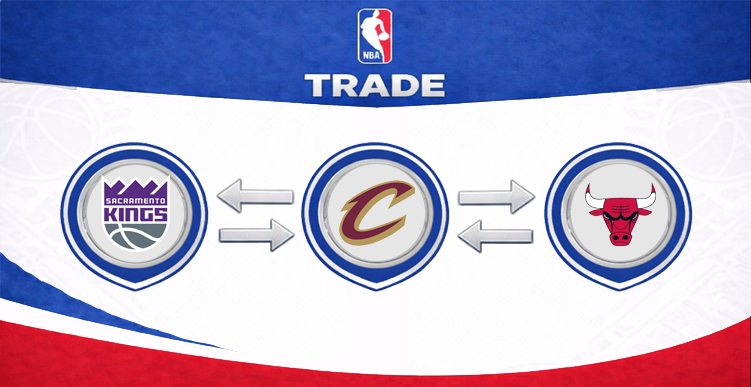
It took a while for trade season to get moving with a second deal, but when it did, we got a three-team trade! The Cleveland Cavaliers began the process of getting under the second apron, while adding backcourt depth. The Sacramento Kings added a combo forward for the future. The Chicago Bulls uncharacteristically jumped in to facilitate and picked up a couple of assets.

Here are the particulars:

Cleveland Cavaliers acquire: Keon Ellis, Emanuel Miller (two-way), Dennis Schroder

Sacramento Kings acquire: De’Andre Hunter

Chicago Bulls acquire: Dario Saric, 2027 Nuggets second-round pick, 2029 least-favorable second-round pick

Let’s dive in!

Cleveland Cavaliers

Incoming salary: $16.4 million in 2025-26

  • Keon Ellis (SG, one year, $2.3 million), Dennis Schroder (PG, three years, $44.4 million (final season $4.4 million guaranteed)), Emanuel Miller (two-way)

Outgoing salary: $23.3 million in 2025-26

  • De’Andre Hunter (SF/PF, two years, $48.2 million)

  • Luke Travers (two-way) waived

The Cleveland Cavaliers pulled off the rare double feat of clearing out some salary while also improving their team. This trade has both immediate impacts and long-term impacts for the Cavs.

De’Andre Hunter’s play has really slipped this season. After being a Sixth Man of the Year candidate last season, Hunter has fallen off to 42% shooting, including just 31% from behind the arc. Maybe it’s a one-year blip, as Hunter had been on an upswing as a shooter, but it came at an awful time for the Cavaliers.

Cleveland has battled injuries all year long. Part of Hunter’s value is that he should have been able to slide into Max Strus’ spot in the rotation without the team missing a beat. Instead, he’s been surpassed in the rotation by Jaylon Tyson. Now, Tyson has a runway to playing more, which is a win for him and the team. Add it all up, and this made Hunter, and the $48 million he’s owed through next season, a logical trade candidate for the Cavs.

Dennis Schroder and Keon Ellis should pay immediate dividends for the Cavaliers backcourt. As of this writing, Donovan Mitchell is the only healthy and productive playmaker on the roster. Craig Porter Jr. is day-to-day with a knee injury, while Darius Garland is out long-term with a toe injury. Lonzo Ball hasn’t been productive and has fallen out of the rotation. Off-ball, Sam Merrill is back, but he’s dealt with injuries all season. And, as referenced above, Strus remains out, as he recovers from a foot injury.

Schroder has his foibles, but he’s a reliable veteran playmaker and scorer. He’ll help take some of the pressure off Mitchell. Ideally, Schroder will help the Cavs offense from going to pieces when Mitchell is on the bench. Cleveland’s offensive rating drops by nearly nine points when Mitchell is off the floor.

Ellis will help by giving the Cavs a 3&D component they’ve lacked since Isaac Okoro was traded. Okoro wasn’t perfect, but he was the best 3&D player that Cleveland had. Ellis will step into that role. His shooting has slipped this year, but context is important here. All season long, Ellis’ role and playing time have been all over the place. He goes from playing a lot to not playing at all to being yanked in and out of games. It’s been impossible for him to find any kind of rhythm.

Emanuel Miller is coming in to satisfy the Chicago Bulls need to send something out in this three-team trade. Miller has seen very little NBA action in his two-year career, and his G League production has been mixed. The Cavaliers are waiving Luke Travers to open up the spot for Miller. This is probably a wash in terms of on-court value and production.

In terms of the bookkeeping, the Cavs win there too. They saved $6.9 million in salary in this deal. Because Cleveland is a second-apron team and deep into the tax, that results in more than $44 million in luxury tax savings. Altogether, the Cavaliers will knock just over $51 million off their books in salary plus tax penalties.

Long-term, Cleveland gets out of Hunter’s $24.9 million for next season too. Some of that savings will be taken up by the $14.8 million that is owed to Schroder for 2026-27. In addition, Cleveland is expected to pursue an extension with Ellis. On February 9, Ellis will be eligible for a three-year extension worth up to $52 million. He may not see that much, but expect Cleveland to keep Ellis in the fold on a new deal.

The second-rounder the Cavs gave up is a 2027 second from the Denver Nuggets. Cleveland still has three more tradable seconds in their cache (their own in 2026, 2028 and 2032).

Last thing to keep an eye on for Cleveland is roster spots. The roster is now full with 15 players on standard contracts. That means that there is no room to convert/sign two-way player Nae’Qwan Tomlin to a standard deal. Expect that to be rectified by the deadline, as Tomlin is a regular rotation guy for the Cavs. With the backcourt now strengthened, Lonzo Ball’s pseudo-expiring $10 million contract could be on the move. If Cleveland can get off Ball’s deal without salary coming back, that would save them another $65 million in salary plus tax penalties.

Sacramento Kings

Incoming salary: $23.3 million in 2025-26

  • De’Andre Hunter (SF/PF, two years, $48.2 million)

Outgoing salary: $21.8 million in 2025-26

  • Keon Ellis (SG, one year, $2.3 million), Dario Saric (PF/C, one year, $5.4 million), Dennis Schroder (PG, three years, $44.4 million (final season $4.4 million guaranteed))

The Sacramento Kings are the NBA’s preeminent sadness factory and this trade does little to change that. De’Andre Hunter is a good and helpful player, assuming this year’s shooting dip is a one-year blip and not the start of a slide. But this really doesn’t do a lot for the Kings on the court, hurts the cap sheet next year and is a disappointing return for Keon Ellis.

On-court, Sacramento is said to be excited about teaming Hunter with Keegan Murray in a versatile, interchangeable forward pairing. That’s a fair thing to be positive about. Murray now has a defensive partner, and one who has shown the ability to slide down and cover bigger guards. If Hunter gets his shot back on track, and history tells us that he will, that’s a good set of forwards moving forward.

The Kings lose backcourt depth and production in this deal with Ellis and Schroder headed out. Trading the two guards opens up even more of a runway for rookie Nique Clifford to play, but that was already happening. Ellis’ playing time and role were inconsistent all season, as the fourth-year guard never found a real role under Doug Christie.

Schroder will be a loss in terms of ballhandling and playmaking. He’s been inefficient as a shooter, but he’s still a solid volume scorer and creator to have off the bench or in the starting lineup. However, the Kings roster still seems in flux, so we’ll see what happens next with the backcourt.

It’s there where we have to pause and preach a little patience. Sacramento is tied to countless trade reports involving just about everyone on the roster except for Murray, Clifford and rookie center Maxime Raynaud. It’s hard to always sell hope, but we do have to see what comes next. This deal could be the first in a series that reshapes the roster.

The challenge is that when you are pivoting towards rebuilding, you really don’t want to take on money, unless you are paid to do so. The Kings didn’t receive any kind of draft capital in this deal to taking on about $10.1 million in additional salary for 2026-27. That will have Sacramento nudging up against the luxury tax next season, when you factor in a hopefully high draft pick and filling out the roster.

It’s kind of a neutral thing, but the second-round pick Sacramento gave up is a 2029 second that is the least-favorable of the Detroit Pistons, Milwaukee Bucks and New York Knicks. There’s a good chance that pick won’t be very good. You don’t want to be in the business of just giving picks away, but this shouldn’t hurt the Kings too much.

That leads to the next challenge here…Sacramento was said to be asking for a first-round pick for Ellis in trade talks. Going from looking for a first to giving up a second is either a mistake in execution or valuation. Either way, it’s not a good look for the Kings.

To finish on a positive, Sacramento now has the roster opening to convert two-way player Dylan Cardwell to a standard contract. The rookie big man has been a nice find for the Kings this season. He’s averaged 4.7 points, 7.1 rebounds and 1.7 blocks in 19.8 minutes per game. Sacramento’s defensive rating improves by nearly 11 points when Cardwell is on the court. For a team that struggles with interior defense, Cardwell has been an outstanding pickup. Look for the Kings to use some of the Non-Taxpayer MLE to give the rookie big man a multi-year deal.

Chicago Bulls

Incoming salary: $5.4 million in 2025-26

  • Dario Saric (PF/C, one year, $5.4 million)

Outgoing salary: None

  • Jevon Carter waived

  • Emanual Miller (two-way) traded

The Chicago Bulls have long-been criticized for the reluctance to take on salary in exchange for draft capital. The Bulls didn’t hit a homerun here or anything, but it’s a small step forward towards maybe a new era of roster management in Chicago.

The Bulls will take on the $5.4 million owed to Dario Saric, while eating the $6.8 million owed to Jevon Carter in this deal. Chicago is using most of their Traded Player Exception from when they dealt Zach LaVine to the Sacramento Kings to bring in Saric. The Bulls were over $13.6 million from the luxury tax, so taking on the additional salary for Saric doesn’t burden them at all.

Given that roughly half of Saric’s contract has already been in actual dollars by the Kings, the Bulls essentially bought two second-round picks for the price of about $2.5 million. Given that the going rate for second-round picks at the draft has landed anywhere from $1.5 million to $3 million in recent years, this is good work by Chicago.

The Bulls are getting a 2027 Denver Nuggets second-round pick from the Cleveland Cavaliers and a 2029 least-favorable second-round pick (Detroit Pistons, Milwaukee Bucks or New York Knicks) from the Kings to facilitate this deal. Even if neither pick pans out to be very good, it’s additional draft capital for the Bulls.

Saric has no real on-court value for Chicago. He may be waived to open up a roster spot when all is said and done. Jevon Carter rarely played in a deep backcourt. His loss will be felt more as a locker room voice than on the floor. And Emanuel Miller had rarely played in the NBA over two seasons, so there’s no production lost there either.

On the cap sheet for next season, there is no impact as Saric is on an expiring deal. We still projected the Bulls of have over $33 million in cap space this summer. It’s an uncharacteristic move from Chicago and one we haven’t seen in a while. It may be baby steps, but it’s still progress!

Bella MunsonFebruary 01, 2026
© USA Today Sports

Draft picks

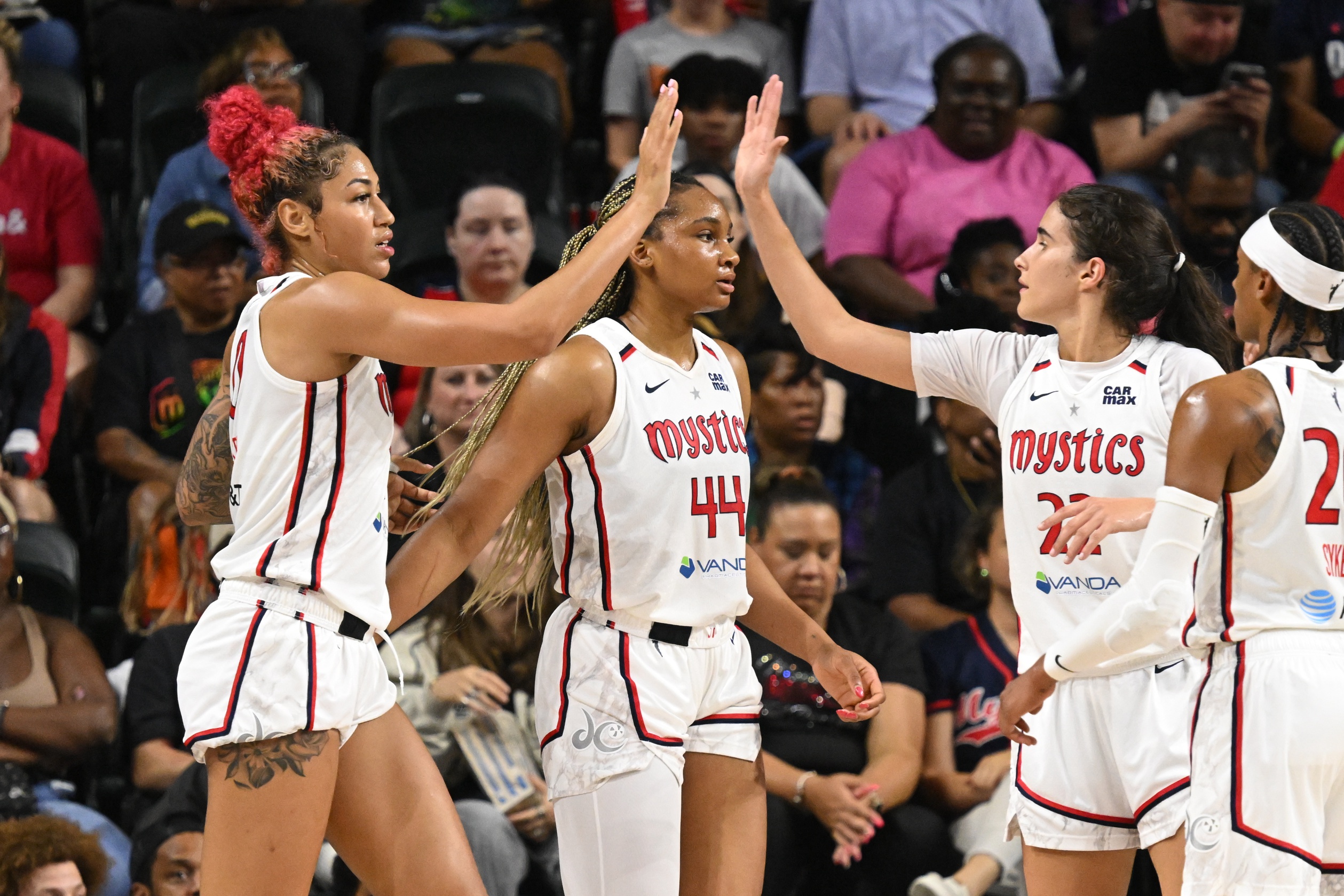
The Washington Mystics finished 2025 with a 16-28 record and in 10th place. It was a better performance than was expected, but it still put them in the draft lottery. As a result of the lottery and some auspicious trades, the Mystics have three picks in the first round of the 2026 WNBA Draft — their own, No. 4 overall, Seattle’s at No. 9 and New York’s at No. 11. Washington also has an extra second-round pick from their 2024 trade of Myisha Hines-Allen, so they’ll pick No. 19 and No. 30. Lastly, they retained their own third round pick, No. 34 overall, for a total of six picks in the upcoming draft. All this is good news for a team that began overhauling itself with youth last year and is looking to continue building through the draft.

Under contract

The Washington Mystics have a lot of young, cost-controlled depth, but the crown jewels are undoubtedly 2025 WNBA All-Stars Sonia Citron and Kiki Iriafen. After stellar rookie seasons, they are under contract for an unprotected $80,408 each. Citron could be a No. 2 option on a true contender — she broke the Mystics’ rookie season scoring record set by Chamique Holdsclaw in 1999 — and Iriafen looks like a quality big for years to come.

Georgia Amoore was Washington’s third first-round pick in 2025, picked No. 6 overall out of Kentucky, but missed the entire 2025 season after injuring her ACL on just the third day of training camp. The 5’6 point guard will be a 25-year-old rookie coming off an ACL tear, so it is hard to predict what her play will look like in 2026. She averaged 19.6 points, 6.9 assists, 2.3 rebounds and 1.0 steals per game in her fifth and final collegiate season. If her potential as the team’s long-term point guard comes to fruition, she is under contract for only $77,156, unprotected.

Lucy Olsen was comparably picked much later in the same draft, No. 23 overall, but had some impressive moments and played well above her draft slot. The 5’10 guard averaged 4 points, 1.2 rebounds, 1.2 assists in just 12.4 minutes per game with an effective field goal percentage of 47.5%. Outside of her solid performances, Olsen’s teammates and coaches praised her for staying ready, putting in extra work and continuing to support her teammates even as her minutes fluctuated throughout the season. Her $70,653 unprotected salary is the team’s cheapest contract.

The Mystics acquired second-year guard Jacy Sheldon in August via a trade that sent Aaliyah Edwards to the Connecticut Sun. This is Sheldon’s third team in two WNBA seasons, but the 25-year-old is a talented shooter and defender. Unfortunately, after playing 28 games for Connecticut — where she averaged 7.5 points, 1.9 rebounds, 2 assists and 1 steal in 24.1 minutes per game, shooting 47.0% from the field and 41.2% from 3-point range — she played just two games for Washington, then missed the remainder of the season to injury. The Ohio State product is under contract for an unprotected $82,399.

Extension candidate

Sheldon is Washington’s only player under contract not coming off their rookie season, so, during this offseason (pending CBA changes), Washington has to make a decision about the fourth-year team option on her contract. If the team does not exercise its option, Sheldon would become an unrestricted free agent after the 2026 season. The fourth-year option would pay $93,636 and be fully protected. Acquiring Sheldon at the cost of Edwards indicates that the Mystics had a firm belief in Sheldon’s potential impact. So, it is a smart move to keep her under low-cost, team control for another year.

Contracts

  1. Jacy Sheldon - $82,399

  2. Sonia Citron - $80,408

  3. Kiki Iriafen - $80,408

  4. Georgia Amoore - $77,156

  5. Lucy Olsen - $70,653

Value of all protected contracts: $0
Value of all contracts: $391,024

Unrestricted free agents

Compared to many other teams, Washington has very few unrestricted free agents — just Stefanie Dolson, Alysha Clark and Jade Melbourne. Two experienced, accomplished veterans and one of the league’s youngest players.

Dolson, a 6’5 center who was a 2021 WNBA Champion with the Chicago Sky, had a down year. With Iriafen’s quick adjustment to the WNBA and Shakira Austin returning from injury, Dolson rarely played more than 20 minutes a game and averaged a career low 3.7 points per game, plus 2.3 rebounds and 1.4 assists, less than her career average of 4.4 and 1.8. As a strong big who can also stretch the floor with her 3-point shot, Dolson is a great veteran to have on your team. But now 34 years old, she may not fit into Washington’s rebuild plans and look for more playing time elsewhere.

Clark is a similar story. The league’s oldest player at 38 years old, Clark returned to Washington via a midseason trade that she requested after having signed with Seattle in free agency ahead of the 2025 season. Clark had previously played for the Mystics when she joined as a free agent in 2021, after winning the 2018 and 2020 WNBA Championships with the Seattle Storm. Following two years in Washington, she spent two years in Vegas, winning WNBA Sixth Player of the Year and another championship in 2023. Unquestionably an experienced winner, the lockdown defender was, however, overpaid in 2025 given her playing time, which did increase in Washington after a sharp decrease in Seattle. Given that a desire to play and be utilized reportedly motivated her trade request, the same desire will likely shape where she decides to sign in free agency.

Free agent spotlight

Still just 23 years old and entering her fourth WNBA season, Melbourne is a young yet experienced point guard worth keeping around. The Australian already has a bronze medal from the 2024 Paris Olympics, where she was named the tournament’s Rising Star after starting all six games for Australia and averaging 7.0 points, 2.8 assists, 1.7 rebounds and 1.2 steals per game. Averaging the most playing time of her WNBA career in 2025 (23.4 minutes per game), the 5’10 guard’s averages of 5.9 points, 1.9 rebounds and 2.9 assists per game, shooting 40% from the field, aren’t exactly eye-popping, but they are solid. Pacey, creative and aggressive to the basket, Melbourne is likely to continue to improve and could add to the team’s young core.

Restricted and reserved free agents 

Washington has two restricted free agents, Sug Sutton and Shakira Austin, and two reserved free agents, Emily Engstler and Madison Scott. Both distinctions only become official when a Qualifying Offer (QO) is sent to the player, otherwise they become an unrestricted free agent.

If a QO is extended to a restricted free agent, the player can negotiate an offer sheet with a team other than their last team. However, that player’s prior team has a “Right of First Refusal” by matching the offer sheet. If the team matches the offer sheet, which must be for a multi-year contract, the player signs a contract with their original team on the terms agreed upon with the new club. If a QO is extended to a reserved free agent, however, the player is subject to that team’s exclusive negotiating rights.

The biggest question the Mystics will have to answer is how much Austin and Sutton are worth. Austin will be the player they should be most keen on retaining as her return to something close to full health reminded everyone that she is ideally part of Washington’s future, looking at an Iriafen-Austin post pairing for years to come. However, there are injury concerns with Austin, who played just 19 games in 2023 and 12 in 2024. They may hope to avoid paying Austin too much given that history, but they might not have a choice if another team is willing to take the risk on her.

Sutton is not as big a priority, but she did have a solid year after being thrust into a much bigger role than expected before Amoore’s injury. In 2025, the 5’8 guard appeared in all but one game for Washington, averaging 7.4 points, 1.8 rebounds and 3.9 assists per game shooting 42.2% from the field and 35.3% from beyond the arc.

Engstler should receive a reserved qualifying offer and continue to provide post depth in Washington. Though she is just 6’1, she plays bigger than she is with toughness and spaces the floor with her 3-point shooting. The No. 4 overall pick in 2022, Engslter had a winding WNBA career before finding a spot in D.C., where she has been a strong contributor and a good player to keep under team control.

There is no harm in Washington extending a reserved qualifying offer to Scott as well, as the money is unprotected, and she could be cut later. However, she only played 47 minutes across nine games. So the decision likely depends on whether they still see a potential future in the WNBA for Scott after such minimal impact as a rookie.

Analysis

After trading away Ariel Atkins and Karlie Samuelson in the preseason and later Britney Sykes midseason, for draft equity, it looked like it would be a rough rebuilding year in Washington. Instead, the new era got off to a promising start. They were fun to watch with Austin and Iriafen inside and Citron on the perimeter, and were in solid playoff contention until the final weeks of the season.

Similar to the other teams that missed the playoffs in 2025, Washington has a wealth of young talent on rookie-scale contracts and ample funds to spend in free agency, should players be interested. They don’t have quite as much top-tier talent as Dallas or Los Angeles, but they do have good depth and have been historically a more attractive destination in free agency. Plus, their young core should help attract free agents who’ll know players like Citron and Iriafen can help them win. However, playing in an arena that sits just 4,200 isn’t the most appealing; it is a margin that will likely be increasingly important as standards rise across the league.

Given the youth already on the team (and what will likely be more youth coming in through the 2026 draft unless they trade picks away), Washington general manager Jamila Wideman will want some veteran signings who can help lead the young players without limiting their growth. A veteran point guard could be particularly useful if Amoore struggles to adapt after returning from injury. And if Washington really wants to contend, they’ll be looking for a true No. 1 option in free agency or hope they get that quality with the No. 4 overall pick, which isn’t impossible, but it is unlikely. Another wing to complement Citron would be ideal, and there are plenty of strong free agent options — like Jackie Young, Allisha Gray and Kelsey Mitchell — but every team will want to sign them, and there is no guarantee they are interested in leaving their current teams.

Overall, soon-to-be second-year head coach Sydney Johnson and the Washington Mystics are in a solid spot for 2026, but can’t get ahead of themselves so early in the rebuild process.

Note: This will be updated accordingly with salary cap details and any relevant definitional changes when a new Collective Bargaining Agreement is signed.

Bella MunsonJanuary 31, 2026

The WNBA and WNBPA are set to meet in person on Monday, Feb. 2, for the first time since the fall. This meeting comes after the parties had not agreed to an extension or new CBA by the already extended Jan. 9 deadline and entered a “status quo” period. Since Jan. 10, the working conditions of the former CBA have been maintained, but anti-strike and anti-lockout clauses in the now-expired CBA have been lifted, giving either side the ability to initiate a work stoppage. Both sides reportedly agreed to a moratorium on league business though, halting the initial stages of free agency in which teams would have delivered qualifying offers and core designations to players from Jan. 11-20.

However, CBA talks have reportedly been at a standstill for weeks. The WNBPA submitted a proposal a month ago that the league has not yet officially responded to. The league believed it didn’t warrant a response because it wasn’t that different from previous ones the union had submitted. ESPN reported that the league is waiting for the players to submit a more “realistic” proposal. 

Revenue sharing and related salaries continue to be a sticking point. We previously broke down the revenue-sharing debate and other potential issues.

Despite the lack of CBA, the WNBA released the full 2026 schedule on Jan. 21. The regular season is scheduled to begin May 8 — less than 100 days away. And before the league’s milestone 30th season can begin, it still needs to host a two-team expansion draft and unprecedentedly large free agency. The WNBA college draft is scheduled for April 13. 

The WNBA players are prepared to strike if an agreement can’t be met, as they already voted to authorize the WNBPA executive committee to call a strike when they deemed necessary on Dec. 18.

WNBPA first vice president Kelsey Plum told reporters that she is not entering Monday’s meeting with any expectations. However, hoping to avoid “games of telephone,” this is an important last-chance effort. Plum, WNBPA president Nneka Ogwumike, WNBPA vice presidents Napheesa Collier and Breanna Stewart will be in attendance, The IX Sports reports. The players are hopeful that owners will also join the meeting.

“I’m not trying to put it on the meeting, but this is a meeting that I think everyone understands what’s at stake,” Plum said. “The league has their timelines; we as players understand what’s at stake. I always come into anything that I do with a great attitude, and I’m gonna see the best in this.”

Keith SmithJanuary 29, 2026
© USA Today Sports

The 2026 NBA trade deadline is a week-and-a-half away.  The trade market has been slow to get started this season. We’ve seen only Trae Young traded from the Atlanta Hawks to the Washington Wizards for C.J. McCollum and Corey Kispert. There have been other reports of trade talks, but nothing else has gotten done as of this writing.

We’re now a week out from the deadline, so things should start picking up. Teams that insisted on multiple first-round picks for their players come down to a single first-round pick, while their partners in trades come up from offering a couple of second-rounders to offering that single first-rounder. As desperation increases, so does reasonability in trade talks.

We covered the Eastern Conference earlier this week. Here’s where each of the Western Conference teams sits ahead of the deadline. We’ll be looking at the following:

  • How much space the team has under the cap or luxury tax. And for the apron-impacted teams, we’ll call out how much room they have under the first or second apron.

  • What usable Traded Player Exceptions (TPEs) they have. This will also include any money left in the Non-Taxpayer, Room or Bi-Annual Exception that can be used as a TPE. Reminder: TPEs can’t be aggregated together or with outgoing salary!

  • What tradable draft picks teams have to offer. We’ll run through the first-round picks, while giving a count of tradable second-round picks.

  • If the team is expected to be a Buyer, Seller, Either or Neither at the deadline. Everyone has different goals and we’ll analyze where each team stands.

  • Which player is most likely to be traded. Some might be stars, some might be salary dumps, most will fall in between. We’ll pick someone from every team.

Dallas Mavericks

Cap/Tax/Apron Picture: $1.2 million under the second apron

Notable Traded Player Exceptions: $11 million (Maxi Kleber), $4.3 million (Quentin Grimes)

Draft Pick Situation: Dallas owns their own first-round pick in 2026, 2031 and 2032. However, because the Mavs owe a top-2 protected pick to the Hornets in 2027, the 2026 pick can’t be traded due to the Stepien Rule. Dallas also owes a pick in 2029, as well as least-favorable swap rights in 2028 and 2030. The Mavs do have an incoming Lakers pick in 2029. 

The Mavericks have two tradable second-round picks.

Trade Deadline Strategy: Neither Buyers nor Sellers. It no longer feels very likely that Anthony Davis gets moved ahead of the trade deadline. Dallas has set high prices on players like Naji Marshall and Max Christie, so they’ll probably stick too. As far as buying, the Mavs seem motivated to make the most of this draft pick, since it’s the last one that they have control over for a while.

Most Likely to be Traded: Dante Exum. This would be a straight salary-dump to open a roster spot to convert Ryan Nembhard or Moussa Cisse to a standard contract.

Denver Nuggets

Cap/Tax/Apron Picture: $402,059 over the luxury tax, $2.8 million under the first apron

Notable Traded Player Exceptions: $14.1 million (Non-Taxpayer MLE), $6.8 million (Michael Porter Jr.), $5.4 million (Dario Saric), $5.1 million (Bi-Annual Exception)

Draft Pick Situation: The Nuggets have their own first-round pick in 2026 and 2031. They owe two separate top-5 picks to the Thunder in as early as 2027 and 2029. That means the Nuggets will likely have their own picks in 2028 and 2030. Denver also owes their 2032 pick to Brooklyn. All of the owed picks make it hard for Denver to include outgoing first-round picks in any trades.

The Nuggets have one tradable second-round pick.

Trade Deadline Strategy: Either Buyers or Sellers. Denver will look to add some talent if they can, but it won’t be any kind of blockbuster. The Nuggets would like to get another helpful rotation player while getting off some salary. At the very least, Denver will salary-dump a player to get under the luxury tax line by the deadline.

Most Likely to be Traded: Hunter Tyson. This may be the single most-likely player to be traded by the deadline. Tyson isn’t a rotation guy for Denver and trading him would get the Nuggets under the tax.

Golden State Warriors

Cap/Tax/Apron Picture: $11.6 million over the first apron, $264,372 under the second apron

Notable Traded Player Exception: $8.8 million (Kyle Anderson)

Draft Pick Situation: The Warriors own their own first-rounders in every season but 2030. In 2030, Golden State has a top-20 protected first, with Washington getting that pick if it lands 21-30.

The Warriors can trade only the 31-50 portion of their 2032 second-round pick, as far as tradable seconds go.

Trade Deadline Strategy: Buyers. The sense is that Golden State is committed to making the most of whatever years they have left with Stephen Curry. Jimmy Butler is out for the season, but the Warriors have Jonathan Kuminga’s pseudo-expiring contract to trade. Golden State also has draft capital that they could put into trades, as well as a few interesting younger players.

Most Likely to be Traded: Buddy Hield. Both the Warriors and Jonathan Kuminga would like if this was Kuminga. But the market has been there for Kuminga, and he’s now injured. That leaves Hield, who is on a tradable $9.2 million contract, with only $3 million guaranteed next season, as the guy who Golden State is most likely to move if they make a deal.

Houston Rockets

Cap/Tax/Apron Picture: $6.8million over the luxury tax, $1.2 million under the first apron

Notable Traded Player Exceptions: $12.5 million (Disabled Player Exception - Fred VanVleet), $3.5 million (Cam Whitmore)

Draft Pick Situation: Houston has their own first-round picks in 2028 and 2030-2032. They have most-favorable swap rights in 2027 (with Brooklyn) and the two most-favorable picks in 2029 (with Brooklyn, Dallas and Phoenix). The Rockets owe a top-4 protected pick to the Thunder in 2026.

Houston has at least four tradable second-round picks.

Trade Deadline Strategy: Buyers. The Rockets will look to add some rotation help, especially in light of losing Steven Adams for the season. Don’t expect a blockbuster though. It would more likely be a move or two to firm things up for the playoff rotation.

Most Likely to be Traded: Jeff Green. Houston may do at least a salary-dump to create more wiggle room under their first-apron hard cap. That would allow for a buyout addition, while also leaving room to convert a player from a two-way contract, likely J.D. Davison.

LA Clippers

Cap/Tax/Apron Picture: $6.9 million over the luxury tax, $1.1 million under the first apron

Notable Traded Player Exceptions: $6.5 million (P.J. Tucker), $4.1 million (Bones Hyland), $2.7 million (Disabled Player Exception - Bradley Beal)

Draft Pick Situation: The Clippers have their own first-round picks from 2030-2032. They have a least-favorable pick in 2027 and a top-3 protected swap in 2029. LA owes their 2026 and 2028 first-round outright.

The Clippers have at least two tradable second-round picks.

Trade Deadline Strategy: Buyers. In the midst of an incredible in-season turnaround, the Clippers will look to add to their roster if they can. One caveat: LA isn’t looking to take on money that extends past next season, at the most. That will self-limit their market to some extent.

Most Likely to be Traded: Chris Paul. If his contract isn’t included in a bigger deal, Paul will likely be salary-dumped to free up a bit more spending power under the Clippers first-apron hard cap. LA wants to convert both Jordan Miller and Kobe Sanders to standard contracts, as well as leaving room for a potential buyout addition.

Los Angeles Lakers

Cap/Tax/Apron Picture: $7.1 million over the luxury tax, $977,225 under the first apron

Notable Traded Player Exceptions: None

Draft Pick Situation: The Lakers have their own first-round picks in 2026, 2028, and 2030-2032. However, because of picks they have outgoing, Los Angeles can’t trade their 2026, 2028 or 2030 first-round picks due to the Stepien Rule. The outgoing picks are a top-4 protected first to Utah in 2027 and 2029 first to Dallas.

The Lakers have one tradable second-round pick.

Trade Deadline Strategy: Buyers. Much like the crosstown rival Clippers, the Lakers are looking to add to their roster. But they also don’t want to take on money. For the Lakers, they’re being even more conversative, as they don’t want to take on salary that extends past this season, unless that player is a long-term fit on the roster.

Most Likely to be Traded: Maxi Kleber or Gabe Vincent. There’s a good chance that Los Angeles will do something with either Kleber or Vincent, because both are on expiring deals that are very tradable. It’s possible both could be on the move before the deadline.

Memphis Grizzlies

Cap/Tax/Apron Picture: $15.8 million under the tax

Notable Traded Player Exceptions: None

Draft Pick Situation: The Grizzlies have all of their own first-round picks. That includes most-favorable swaps in 2026, 2029 and 2030. Memphis also has additional first-round picks coming in 2026 and 2030.

The Grizzlies have at least four tradable second-round picks.

Trade Deadline Strategy: Neither Buyers nor Sellers. Maybe the Grizzlies move Ja Morant, but that seems to have cooled way off. Keeping Morant means that Memphis will probably keep most of the rest of the roster too. Maybe they make a smaller move, but they have no tax concerns to worry about this season, and the Grizzlies are too far away to go for a big addition.

Most Likely to be Traded: Ja Morant. We’re going with Morant, only because he’s been involved in trade rumors for a while now. But the real answer here is no one. Memphis has a lot of guys on rookie deals, or team-friendly contracts. With no real reason to make a big move, the Grizzlies will probably sit out the deadline.

Minnesota Timberwolves

Cap/Tax/Apron Picture: $14.7 million over the tax, $8.3 million over the first apron, $3.6 million under the second apron

Notable Traded Player Exception: $7.6 million (Nickeil Alexander-Walker)

Draft Pick Situation: The Timberwolves have their own first-round pick in 2028 and 2032, but that 2032 pick is frozen and can’t be trade. Minnesota has a least-favorable pick in 2026. They have a top-5 protected pick in 2029 and top-1 protected swap in 2030. The Wolves owe their 2027 and 2031 picks outright to other teams.

Minnesota has at least six tradable second-round picks.

Trade Deadline Strategy: Buyers. The Wolves are looking for rotation help. They’d love to land some backcourt depth and have been linked to a lot of available guards in various trade rumors. They don’t have a lot of room under the second apron, and won’t go back over it. That means a blockbuster move probably isn’t in the cards for Minnesota, even if they’ll take a look at any star that become available.

Most Likely to be Traded: Rob Dillingham. This would be selling very early on Dillingham, but if the Wolves are bringing in help, his $6.6 million salary would be a nice matching piece in a trade. Recent reports are that veteran Mike Conley is going to stick around, so that leaves Dillingham as the only real choice here.

New Orleans Pelicans

Cap/Tax/Apron Picture: $1.9 million under the tax

Notable Traded Player Exceptions: $13.4 million (Kelly Olynyk), $13 million (Brandon Ingram), $6.1 million (remaining Non-Taxpayer MLE), $5.1 million (Bi-Annual Exception)

Draft Pick Situation: New Orleans owns all their own first-round picks from 2028-2032. They have a more-favorable first in 2027, and possible a second first-rounder that year. The Pelicans owe their 2026 first-round pick to the Hawks or Bucks (Atlanta gets the best, Milwaukee gets the worst).

New Orleans has three tradable second-round picks.

Trade Deadline Strategy: Neither Buyers nor Sellers. New Orleans isn’t ready to buy. They’ve sent word that they aren’t selling their most-valuable players either. That leads towards a team that may more or less sit out the deadline.

Most Likely to be Traded: Jose Alvarado. A handful of contenders who need backcourt help have expressed interest in Alvarado, who has a very tradable $4.5 million contract.

Oklahoma City Thunder

Cap/Tax/Apron Picture: $1 million under the tax

Notable Traded Player Exceptions: $14.1 million (Non-Taxpayer MLE), $5.1 million (Bi-Annual Exception), $2.3 million (Disabled Player Exception - Thomas Sorber)

Draft Pick Situation: The Thunder have all of their own first-round picks. They have the two most-favorable picks of their own, the Rockets and the Clippers in 2026. They have protected picks from the Sixers and Jazz in 2026, as well, but only the Philadelphia pick is likely to convey. The Thunder also have future first-round picks incoming from Nuggets (two picks), the Spurs (top-16 protected), and two sets of most-favorable swap rights in 2027 and 2028.

Oklahoma City has at least 15 tradable second-round picks, and up to 20, pending if first-round picks convey.

Trade Deadline Strategy: Neither Buyers or Sellers. The Thunder could buy if they wanted. They could use another big. They could use more ballhandling/shot creation. But those needs aren’t really so glaring that Oklahoma City is likely to make an in-season move.

Most Likely to be Traded: Ousmane Dieng. The Thunder don’t desperately need a roster spot. But if they want to open one, they could salary-dump Dieng using a couple of second-round picks from their stash. That would leave room for a buyout addition, while staying under the tax, or would create a roster spot for a two-way conversion.

Phoenix Suns

Cap/Tax/Apron Picture: $255,632 over the luxury tax

Notable Traded Player Exceptions: $14.1 million (Non-Taxpayer MLE), $5.1 million (Bi-Annual Exception), $3.6 million (Vasilije Micic)

Draft Pick Situation: The only unconditional first-round pick the Suns have is their own in 2032…sort of. That pick is frozen and can’t be traded! Phoenix has a least-favorable pick in 2027, 2028 and 2030. The Suns owe first-round picks in 2026, 2029 and 2031.

Phoenix has three tradable second-round picks.

Trade Deadline Strategy: Buyers. The Suns have played better than most expected. That’s got them in position to add to their team for a playoff run. Don’t expect anything huge though. Phoenix worked hard to get out from under second-apron rubble. But a smaller move or two to add rotation help seems reasonable.

Most Likely to be Traded: Nick Richards. Richards rarely plays, and he overlaps with Khaman Maluach as the third center. Moving him in a deal could also create some wiggle room under the luxury tax, which would allow for a buyout addition or converting a two-way player, likely Jamaree Bouyea.

Portland Trail Blazers

Cap/Tax/Apron Picture: $1.5 million under the luxury tax

Notable Traded Player Exceptions: $5.1 million (Bi-Annual Exception)

Draft Pick Situation: Portland owes a lottery-protected pick to Chicago sometime between 2026-2028. From 2029-2032, the Blazers own all of their own first-round picks, or have most-favorable swap rights. They also have additional incoming first-round picks in 2028 and 2029.

The Trail Blazers have at least seven tradable second-round picks.

Trade Deadline Strategy: Either Buyers or Sellers. Portland is in a bit of a weird spot. They’re pushing for a spot in the Play-In Tournament, but they have a lot of veterans that could fetch them assets. This might be one where the Trail Blazers make moves that rebalance the roster, but don’t amount to really buying or selling.

Most Likely to be Traded: Duop Reath. The Blazers could move someone like Matisse Thybulle or Robert Williams III in a bigger deal, but it’s unclear what will happen there. Salary-dumping Reath would open a roster spot to allow Portland to convert Sidy Cissoko or Caleb Love from their two-way contract. Look for both to eventually land standard deals with the Trail Blazers before the year is out.

Sacramento Kings

Cap/Tax/Apron Picture: $1 million under the luxury tax

Notable Traded Player Exceptions: $14.1 million (Non-Taxpayer MLE), $5.1 million (Bi-Annual Exception), $4.9 million (Jonas Valanciunas), $2.7 million (Kevin Huerter)

Draft Pick Situation: The Kings own all of their own first-round picks. They have additional picks inbound from the Spurs in 2027 (top-16 protected) and the Timberwolves in 2031.

Sacramento has at least three tradable second-round picks.

Trade Deadline Strategy: Sellers. All of the signs point towards Sacramento moving their veterans to start a rebuild. Zach LaVine, Domantas Sabonis, DeMar DeRozan, Keon Ellis and Malik Monk are just some of the guys who could be on the move before the deadline.

Most Likely to be Traded: Keon Ellis. Until recently, Ellis had fallen out of the Kings rotation. He’s on what amounts to a veteran minimum contract, which means just about everyone in the NBA can trade for him. If Sacramento doesn’t demand a haul for Ellis, he’ll move by the deadline.

San Antonio Spurs

Cap/Tax/Apron Picture: $5.6 million under the luxury tax

Notable Traded Player Exceptions: $5.1 million (Bi-Annual Exception), $3.1 million (remaining Non-Taxpayer MLE)

Draft Pick Situation: San Antonio has all of their own first-round picks, outside of their 2027 pick being top-16 protected. The Spurs also have most-favorable swap rights in 2026, 2028, 2030 and 2031 with several different teams.

The Spurs have at least 15 tradable second-round picks.

Trade Deadline Strategy: Neither Buyers nor Sellers. You can make an argument that San Antonio should be buying. They are really good, but could use some help to make a deeper playoff push. But the Spurs seem set on being patient for now and giving this group at least one playoff run before making moves. They aren’t likely to sell anyone off either.

Most Likely to be Traded: Jordan McLaughlin. The answer here is really no one. But if someone was going to go, trading McLaughlin would be the move. San Antonio has a lot of guard depth and could open a roster spot by moving McLaughlin.

Utah Jazz

Cap/Tax/Apron Picture: $43.8 million under the tax

Notable Traded Player Exceptions: $18.4 million (John Collins), $4.8 million (remaining Non-Taxpayer MLE), $3.5 million (P.J. Tucker)

Draft Pick Situation: The Jazz own all of their own first-round picks, barring their top-8 protected pick possibly going to OKC. They have most-favorable swap rights on first-round picks from 2026-2029. They also have additional first-round picks coming in 2027 and 2031, with two more additional first-rounders coming in 2027 and 2029.

Utah has at least seven tradable second-round picks.

Trade Deadline Strategy: Sellers. The Jazz will sell, if the right deals are there. Jusuf Nurkic is available for teams needing center help. Kevin Love. Georges Niang and Kyle Anderson could also help teams looking for frontcourt depth. And Utah will also sell in terms of taking on money in trades to acquire draft capital, since they are miles from the luxury tax line.

Most Likely to be Traded: Jusuf Nurkic. The contract is kind of big for Nurkic at $19.4 million, but he can really help a team that needs a starting-level center. He’s still really good on offense and can rebound. Given how many teams seem to be looking for a quality starting big man, Nurkic seems likely to be moved by the deadline.

Taylor VincentJanuary 29, 2026
© USA Today Sports

Yesterday FIFA published its breakdown of the 2025 women’s soccer global transfer report. 2025 showed another year of record growth with $28.6 million spent on international transfers—an 86% increase over 2024 (and more growth than the 50+% that 2024 saw going after 2023). 2025 also saw a 6.3% increase in the total number of international transfers going from 2,284 in 2024 to 2,440 in 2025. This was a slowdown in growth compared to the 20% that 2024 saw compared to 2023. There was also an increase in the number of transfers with fees up to 11.8% compared to 2024’s 8.7%.


Image 1: Spending on transfer fees and number of clubs with fees, 2025 FIFA Global Transfer Report


The Summer transfer window—July to September—which overlaps with the traditional European schedule off-season and the NWSL’s midseason window again saw almost 60% of all transfers and spending with a peak in April as the NWSL’s primary window was coming to a close.


Image 2: Distribution of number of transfers and spending on transfer fees across the year in 2025, 2025 FIFA Global Transfer Report


The majority of transfers (81.4%, down from 84.6% in 2024)) were for players who were out of contract–free agents–and almost all of the international transfer money was spent on players making permanent transfers


Image 3: Distribution of number of transfers and value of transfer fees by transfer type, 2025 FIFA Global Transfer Report


The majority of the transfer fees came from fixed fees—$24.5 million or 85.7% of the overall sum—while only $3.5 million came from conditional fees and $600,000 in release/buy-out fees. 2025 also marked the first year where there was a buy-out clause actually activated in women’s soccer. 

Despite the number of transfers involving a sell-on fee rose in 2025, the percentage of transfers with a sell-on fee remained level with 2024 around 31% and well below the level observed in the men’s side (~50%). 

Although the FIFA report does report the top five transfer fees of the year across the globe, there is no transparency into official numbers past what leaks out to reporters. The NWSL was involved in four of the five highest transfer fees globally in 2025. 


Image 4: Top five transfers by size of transfer fee (2025), 2025 FIFA Global Transfer Report

The average length of international transfers was 16.3 months (an increase from 14.9 months in 2024). The general distribution across length stayed within a few percentage points for every segment. Only 5.5% of contracts were over three years—up from 2.3% in 2024. In a similar trend to the men’s professional landscape, younger players were the most likely to receive the longest contracts with players under 18 averaging contracts of 27.9 months, and then a solid dropoff in the 18-23 bracket with average contracts around 16.8 months.


Image 5: Distribution of contract duration in international transfers, 2025 FIFA Global Transfer Report

FIFA published that the median annual fixed salary agreed upon in international transfers was only $19,800. More than one fifth of players (21.7%) earned over $50,000/year, an increase from the 17.4% in 2024. For the first time ever, 2025 saw contracts in women’s professional football with annual fixed remuneration exceeding USD 1 million, although only 0.5% of all contracts concluded in 2025 were $500,000 or more. 


Image 6: Distribution of yearly total fixed remuneration in international transfers in 2025, 2025 FIFA Global Transfer Report

With 129 different nationalities involved, the United States had the most players transferred internationally (240 transfers), with the United Kingdom (108), Nigeria (94), Colombia (89), and Canada (87) rounding out the top five. Brazil dropped out of the top five list this year after finishing second with 121 in 2024.  


Image 7: Player nationality by number of international transfers in 2024, 2024 FIFA Global Transfer Report

Players from the United States also topped the charts in terms of spending on transfer fees, with $4.1 million — the United States hadn’t broken into the top 5 nations in this category in 2024. Of the 129 nationalities involved in transfers, 54 had at least one transfer that included a fee

Looking at all of the transfers in 2025, a roughly 60% were between clubs in the same confederation with 43% occurring between two clubs in UEFA (European Federation). Players moving from Concacaf (USA, Mexico, Canada, etc) to UEFA were the second-largest with 177 transfers. In 2024, the opposite direction, UEFA to Concacaf, was the second-largest, but it’s now dropped to third. 


Image 7: Number of transfers between and within confederations, 2025 FIFA Global Transfer Report

Once again, UEFA clubs led in spending on transfer fees, accounting for $8.4 million in 2024 (54.4% of all transfer fees) and all the way up to $19.3 million in 2025 (67.3%) Concacaf clubs spent the second highest amount, with $8.3 million spent, up from $6.9 million in 2024. Similarly to 2024, most of the transfer fees went to clubs in UEFA – 66%, equalling $18.9 million.

England completed the most incoming transfers with 135, while the United States moved down to third compared to 2024 with 111. The United States led the way in outgoing transfers with 227, up 120 from 2024 where they were third. 

As far as spending goes, clubs from England dethroned the United States at the top with $11 million spent in 2025. The United States increased from the $5.8 million spent in 2024 to $7.9 million in 2025. On the opposite side of that, clubs from the United States received the most transfer fees in 2025 with $5 million compared to 2024 where they didn’t even break into the top five. 

The largest transfer stream amount came from England transferring players from the United States (Alyssa Thompson, Naomi Girma) 


Image 8: Top three transfer streams in terms of spending on transfer fees (USD) in 2025, 2025 FIFA Global Transfer Report

Eight of the 14 NWSL clubs made it into the 2025 top spending clubs, the same number that were on the list in 2024. Bay FC went from first in 2024 to not on the list in 2025, Portland (10th), North Carolina (11th), and Seattle (13th) were in similar boats. Only Orlando, Utah, Houston, and Washington stayed on the list both years, while Angel City, San Diego, Chicago, and Gotham joined the top 20 ranking. 


Image 9: Top 20 clubs by spending on transfer fees in 2025, 2025 FIFA Global Transfer Report

Top