Michael GinnittiNovember 03, 2025

As we approach the midway point of the 2025 NFL season, a few QB outlooks are beginning to materialize. The following is a list of players with future contract guarantees who are trending toward the possibility of a contract buyout in 2026.

RELATED: NFL QB CONTRACTS

Kyler Murray (Cardinals)

Arizona is beginning to send signals that Murray's stranglehold on their QB1 position could be weakening. Does the contract follow suit? Murray is on the books for another 3 years, $125.1M through 2028, with the following guarantee structure:

2026: $39.835M fully guaranteed
2027: $19.5M becomes fully guaranteed March 15th, another $14.185M the 5th league day of 2027

A 2026 Release
If the Cardinals look to outright release Murray next March, they'll be dealing with $57.7M of dead cap ($39M of which stems from that salary guarantee). By designating him a Post June 1st Release, the dead cap would split slightly ($50.5M in 2026, $7.2M in 2027).

A 2026 Trade
If a trade partner were to surface, the financial burden would decrease significantly for Arizona, as the dead cap would drop to $17.9M. However, this would require a team taking on the following contract:
2026: $42.535M ($39.8M guaranteed)
2027: $36.335M ($19.5M guaranteed)
2028: $46.35M (non-guaranteed)

Deshaun Watson (Browns)

Will 2026 be the end of this long miserable journey for both Watson and the Browns? The contract holds a fully guaranteed $46M for next season. It also holds $131.1M of total dead cap due in large part to 3 significant cap conversions in recent years. Will these numbers be lowered by insurance cap reductions for time missed this season? Yes, but just how much remains to be seen. As it currently stands, a Post 6/1 release next March means dead cap hits of:

2025: $80.7M ($46M cash)
2026: $50.4M

Anthony Richardson (Colts)

Richardson’s time as the Colts starter appears long over, due both to his performance, and the emergence of Daniel Jones in his place. His rookie contract contains a fully guaranteed $5.3M in 2026, the final year of the deal (assuming the 5th-year option is declined). The 23-year-old could be discussed in trade discussions both at this upcoming deadline, and the following offseason. But if nothing materializes, look for Indy to take on the $10.8M dead cap hit (including the $5.3M cash) to move on next March.

Tua Tagovailoa (Dolphins)

The Dolphins handed Tua a 3+ year guarantee on his 4 year, $212.4M extension signed back in July of 2024. This means $51M cash through 2025, another $54M guaranteed in 2026, and $3M of 2027 compensation if he’s on the roster next March. There’s a world where Miami considers a Post 6/1 release before that $3M guarantee locks in. Here’s a look at how that might break down:

If the '26 Option Bonus is Declined
2026: $67.4M ($11M cap lost)
2027: $31.8M ($21M cap saved)

If the '26 Option Bonus is Exercised
2026: $55.4M ($1M cap saved)
2027: $43.8M ($9.6M cap saved)

Kirk Cousins (Falcons)

The Falcons have already paid Cousins $11M for 15 snaps of work this season, and are on the hook for all $27.5M of his salary this season, plus a $10M roster bonus due next March. A move at the trade deadline could shift things a bit, but for now, Atlanta is scheduled to take on $35M of dead cap to move on from Cousins next year (including the $10M cash payment).

Justin Fields (Jets)

The 26-year-old may be at the end of the starting QB line after his latest let down in NY. Fields is owed $20M this season (a $15M signing bonus, $5M base salary), and $10M of his 2026 salary is already fully guaranteed. An outright release next March leaves behind $22M of dead cap to the Jets (including that guaranteed cash). 

Geno Smith (Raiders)

The Raiders guaranteed $58.5M of Smith’s $106M total value contract this April, including $18.5M of his 2026 salary. They also structured this contract without a signing bonus, taking on full base salaries to mitigate future dead cap. In doing so, that $18.5M salary guarantee represents the only dead cap to release Smith next March (before an additional $8M of salary locks in). 

Will Levis (Titans)

Levis will miss all of 2025 due to a separated shoulder that required surgery this offseason. He’ll be entering a contract year in 2026, with $1.24M of his $2M salary already guaranteed. With Cameron Ward securely in the QB1 role ahead of him, Tennessee might be motivated to fill the backup role with a more seasoned veteran. The Titans would be on the hook for a $2.22M dead cap hit if they opt to move on next March.

Keith SmithNovember 03, 2025
© USA Today Sports

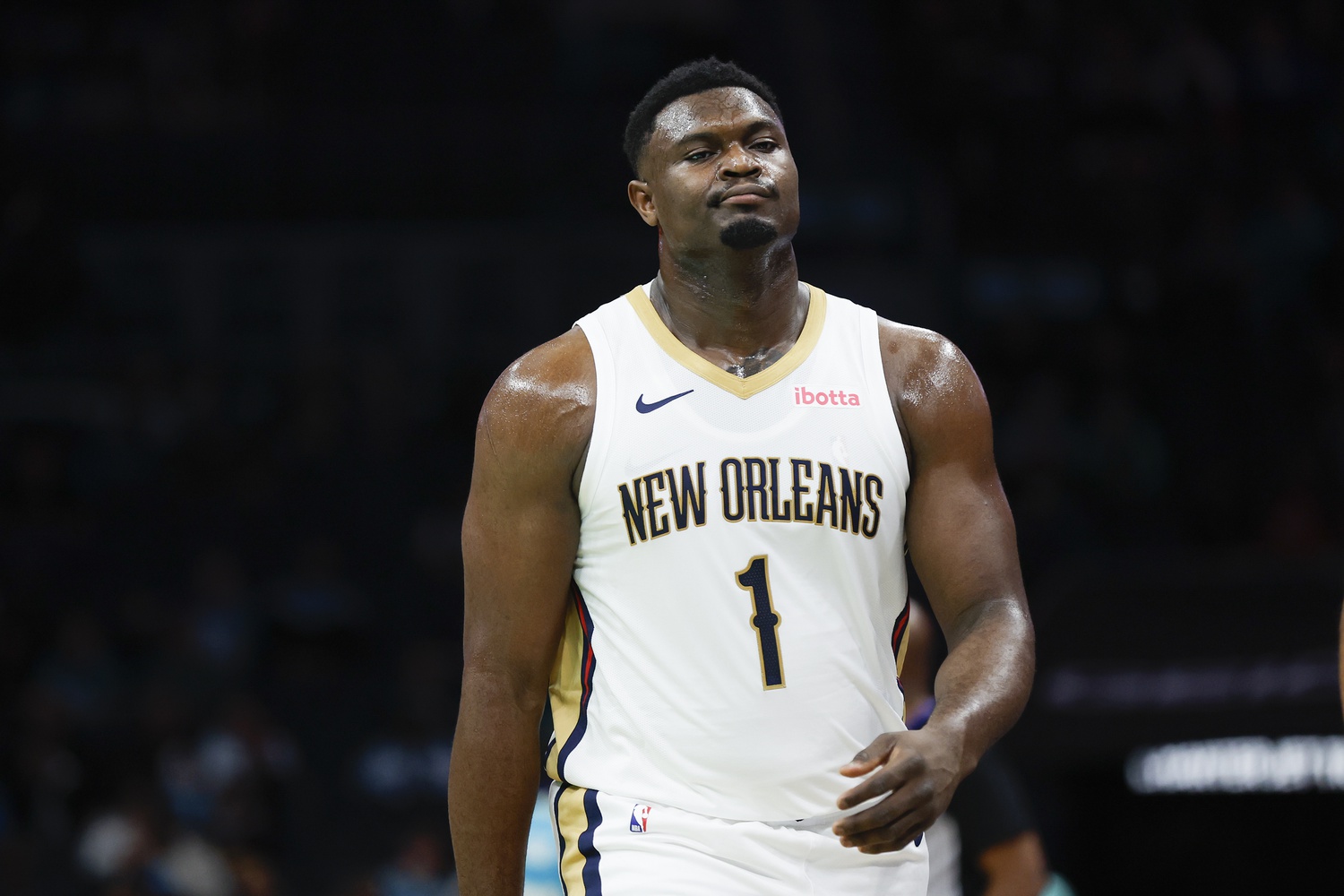
The New Orleans Pelicans have existed for 24 seasons now. (They were the Hornets for the first 11 years and they spent two seasons splitting time between New Orleans and Oklahoma City.) There have been some highlights in that run. Nine playoff appearances, with two series wins. The 2017-18 team pulled off a memorable upset over the Portland Trail Blazers.

Unfortunately, there have been some rough years in there. In 2004-05, New Orleans went 18-64. Only also truly terrible seasons from the Atlanta Hawks and Charlotte Bobcats kept them from being the worst team in the NBA.

The Pelicans have won more than 50 games once. They’ve been .500 or better nine times. Last season was the second-worst year in franchise history. This season isn’t shaping up to be any better.

New Orleans is 0-6 at the time of this writing and they’ve lost three of their last four games by more than 30 points. The worst part? They’ve been mostly healthy. So, this can’t even be blamed on injuries.

Quite simply: The Pelicans are awful and look like one of the worst teams in the NBA this season.

Adding to that ignominy: The Pelicans don’t have a first-round pick in the 2026 NBA Draft.

As recently as mid-June, the Pelicans had two picks in the first-round of the 2026 NBA Draft. They also had the seventh overall pick in the 2025 NBA Draft. Despite coming off the second-worst season in franchise history, things were looking somewhat bright in New Orleans.

So, where did it all go wrong? Some will say that started with a trade made in the midst of the 2025 NBA Finals, and that was plenty bad, but things went sideways for the Pelicans long before then. Let’s look back at how we got here. Then, we can look at how New Orleans can move forward.
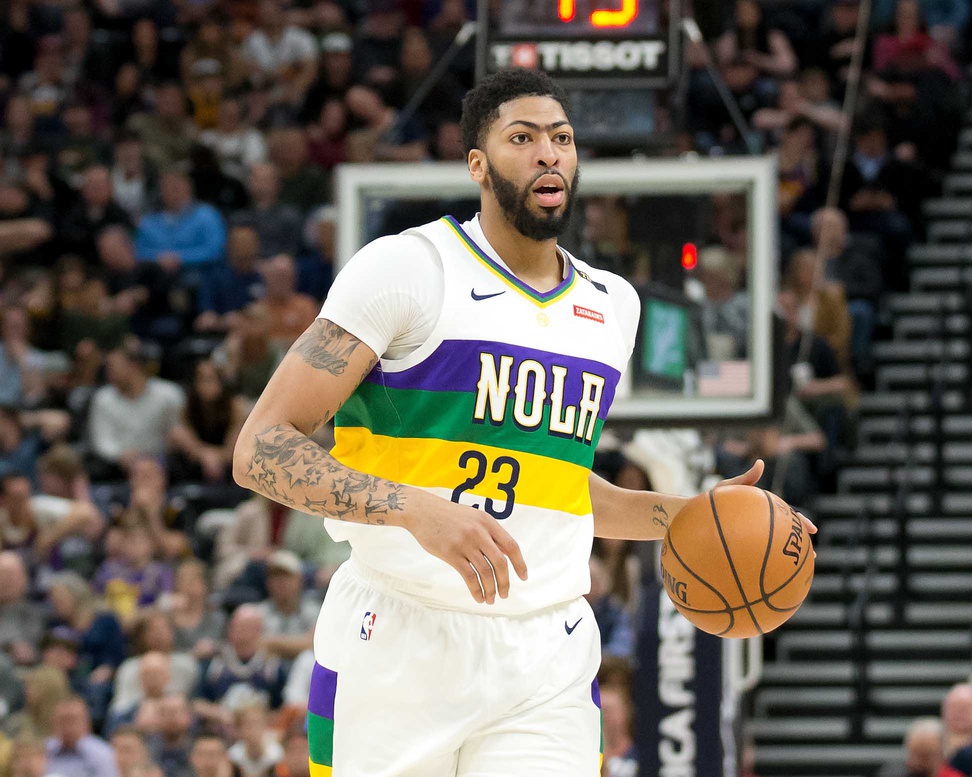
Despite being tied for the NBA’s seventh-worst record heading into the 2019 NBA Draft Lottery, the Pelicans vaulted to the first overall pick. This was followed by brand-new New Orleans front office executive David Griffin agreeing to trade Anthony Davis to the Los Angeles Lakers for a haul that included:

  • Brandon Ingram
  • Lonzo Ball
  • Josh Hart
  • the 2019 fourth overall pick
  • 2022 Lakers first-round pick
  • 2023 first-round swap rights with the Lakers
  • 2024 Lakers first-round pick (deferred to a 2025 first-round pick).

In a series of related moves at the 2019 draft, the Pelicans selected Zion Williamson first overall, as was expected. New Orleans then traded the fourth overall pick in a deal that netted Jaxson Hayes, Nickeil Alexander-Walker, a protected 2019 Cleveland Cavaliers first-round pick and some second-round picks. (One of those second-round picks would later become Herbert Jones, which is a major win!)

In an effort to fast-track their post-Davis rebuild around Williamson, the Pelicans traded two second-round picks for Derrick Favors. The team then signed JJ Redick in free agency.

The resulting outcome for the 2019 opening night roster was:

  • Derrick Favors
  • Brandon Ingram
  • JJ Redick
  • Jrue Holiday
  • Lonzo Ball

Josh Hart and Nickeil Alexander-Walker saw time off the bench. Jaxson Hayes was a DNP-CD, while Zion Williamson wouldn’t debut until late-January after tearing a meniscus in the preseason.

The Pelicans lost that night in overtime, which started a string of seven losses in their first eight games. The team finished the COVID-shortened season at 30-42.

Things haven’t gone a whole lot better since.

From that 2019 Draft and the haul from the Davis trade, New Orleans still has Williamson and Herb Jones. Everyone else has left town or been traded. The 2022 Lakers pick turned into Dyson Daniels. The 2023 swap rights never turned into anything, because Los Angeles was one-game better than New Orleans that season. The 2024 pick was deferred to 2025, and ultimately traded to the Atlanta Hawks in a deal that included Daniels.

So, what happened to everyone from that fast-track reset summer of 2019?

  • Brandon Ingram played six injury-impacted seasons for the Pelicans before being traded to the Toronto Raptors at the 2025 trade deadline.
  • Lonzo Ball played two injury-impacted seasons for the Pelicans before a sign-and-trade sent him to the Chicago Bulls in 2021.
  • Josh Hart made it two-and-a-half seasons before he was traded to the Portland Trail Blazers at the 2022 trade deadline.
  • Derrick Favors lasted one non-descript season with the Pelicans.
  • JJ Redick played in New Orleans for a season-and-a-half before he was traded to the Dallas Mavericks at the 2021 trade deadline.

Ingram stayed with the Pelicans the longest, but things never really got better than his first season, when he was named an All-Star. Everyone else was gone after a couple of seasons.

It’s safe to say that the fast-track approach to the post-Davis rebuild didn’t work. But that didn’t stop the Pelicans from trying to right the ship with a roster built around Williamson.
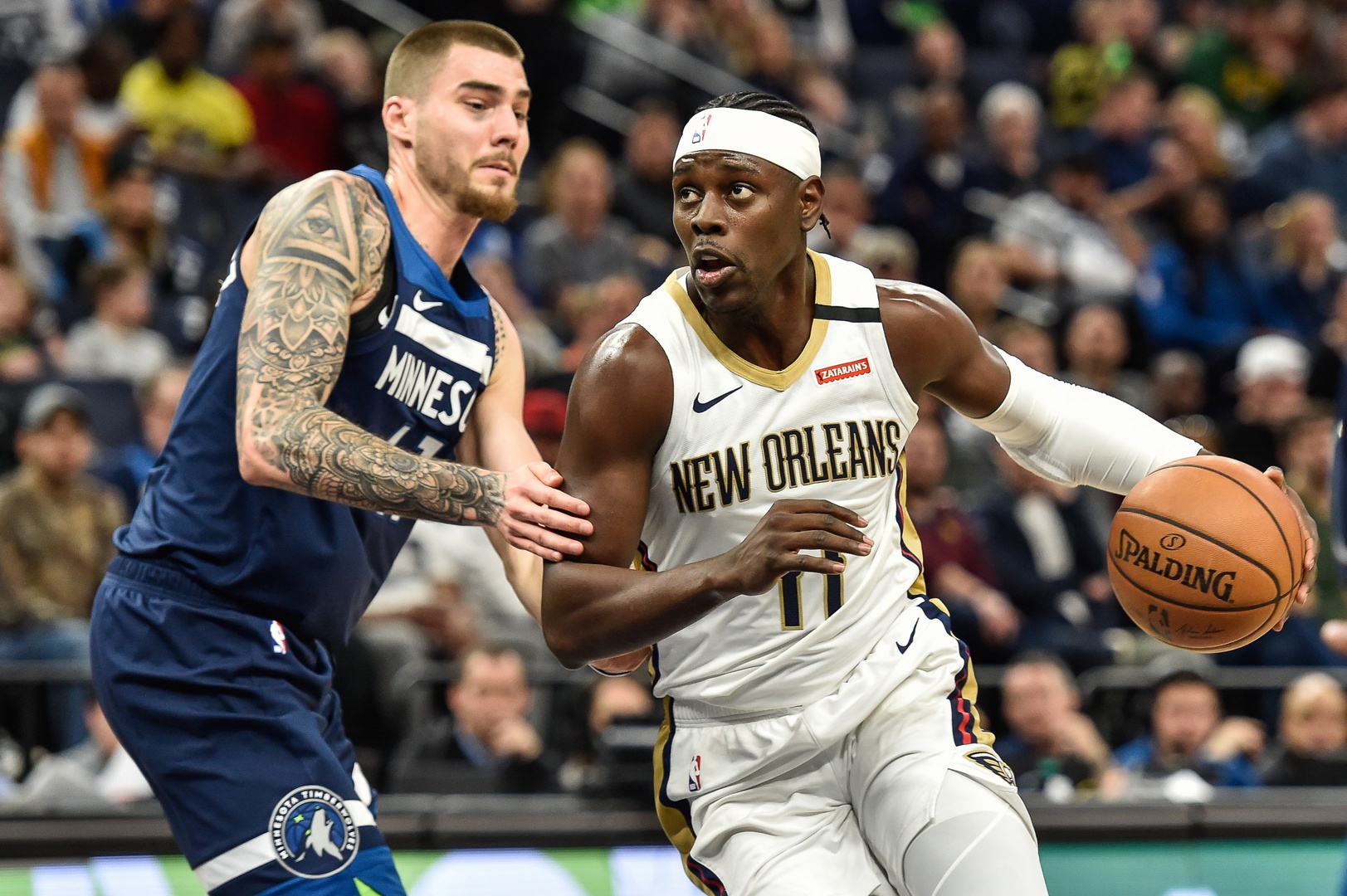
We’re not going to go over everything the New Orleans Pelicans did after drafting Zion Williamson. Chaining together transactions is often an exercise in futility, because the NBA trade landscape is like sand in an hour glass. Every time it’s flipped, the sands fall a slightly different way.

But we are going to look at the next big trade, because it was a recognition that the team wasn’t ready to win. But it was another example of not making the most of trading away a valuable veteran player.

After moving Anthony Davis in a deal that led to the Los Angeles Lakers winning the 2020 NBA Finals, the Pelicans again influenced the title chase. New Orleans traded Jrue Holiday to the Milwaukee Bucks, who ended up winning the 2021 NBA Finals with Holiday playing a huge role.

In that deal, New Orleans again got a haul. In a complicated four-team trade, the Pelicans came away with:

  • Steven Adams
  • Eric Bledsoe
  • 2024 first-round pick swap rights
  • 2025 Bucks first-round pick
  • 2026 first-round pick swap rights
  • 2027 Bucks first-round pick

Let’s recap again!

  • Steven Adams and Eric Bledsoe played one season for the Pelicans before being traded to the Memphis Grizzlies.
  • The 2024 first-round swap rights turned into Yves Missi.
  • The 2025 Bucks first-round pick was traded to the Portland Trail Blazers along with Josh Hart, and Nickeil Alexander-Walker for C.J. McCollum at the 2022 trade deadline
  • The 2026 first-round swap rights were traded, without protections, to the Atlanta Hawks at the 2025 NBA Draft
  • The 2027 Bucks first-round pick was traded as a least-favorable of Milwaukee and New Orleans to the Atlanta Hawks in a deal for Dejounte Murray.

Yeah…this one didn’t really work out either. Maybe Yves Missi will end up being a long-term starter or more. That would salvage things some. Adams, Bledsoe and McCollum never really had any sort of major impact for the Pelicans that mattered before they were all traded.

And that leaves us with those two Bucks picks. Spoiler: It’s not great.
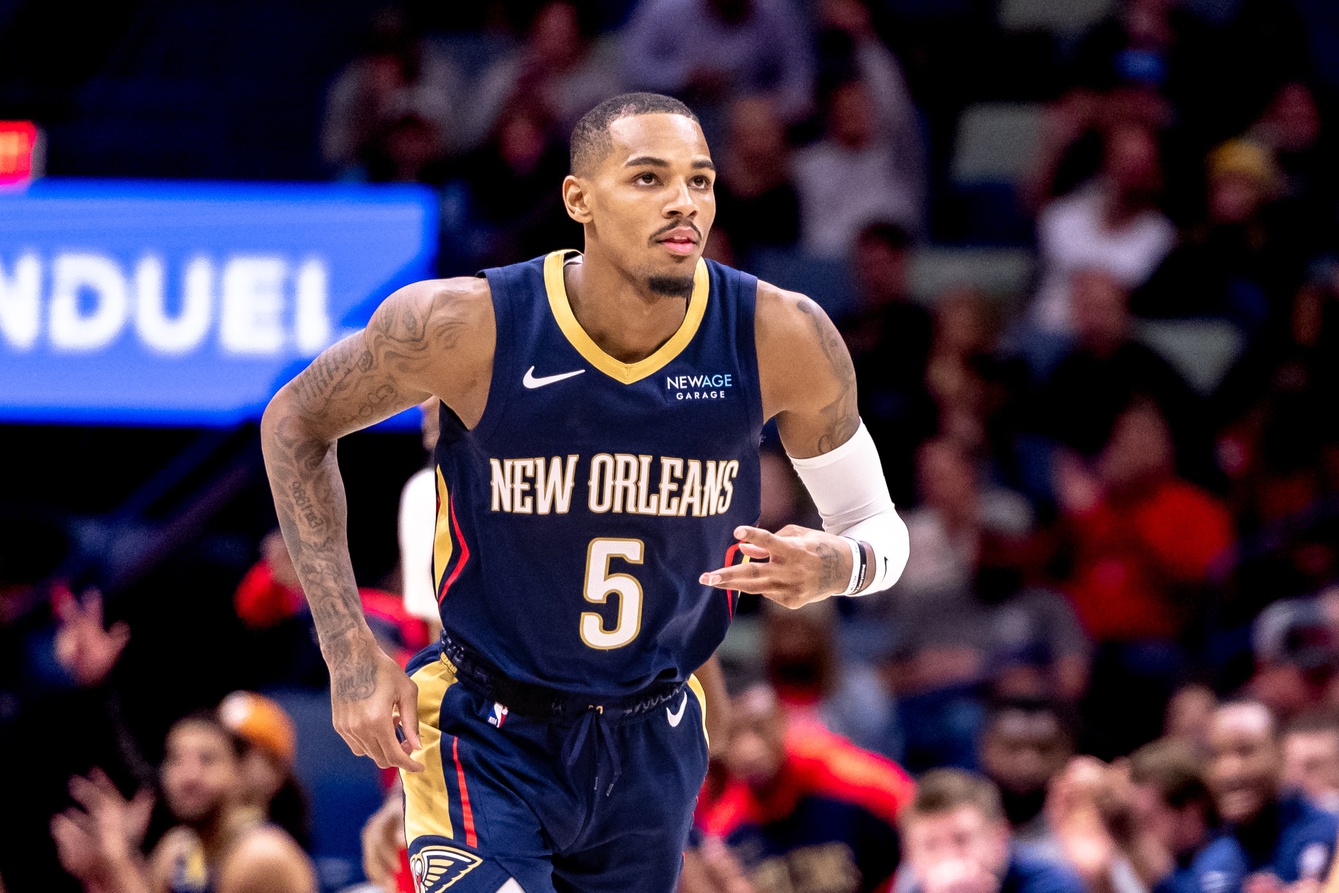
Perhaps feeling pressure to try one more time to put a winner around Zion Williams, New Orleans Pelicans front office leader David Griffin went the trade route one last time. Griffin went to the Atlanta Hawks and came away with Dejounte Murray. This time, New Orleans was the one sending things out. That package included:

  • Dyson Daniels
  • 2025 Lakers first-round pick
  • 2027 Bucks first-round pick as a least favorable of Milwaukee and New Orleans
  • Salary fillers in the form of E.J. Liddell, Larry Nance Jr. and Cody Zeller

Ouch.

Daniels has blossomed into one of the NBA’s best perimeter defenders (Imagine having him AND Herb Jones?). The Lakers pick ultimately became Drake Powell. And, on the plus side, the Pelicans get the best pick in 2027.

But Murray, who was just starting a four-year, $123 million extension, has played a grand total of 31 games for the Pelicans so far. It’s no one’s fault that Murray tore his Achilles’ last season, but it’s another trade that hasn’t gone in the Pelicans favor.

Murray is now 29 years old, coming off a major injury and the Pelicans drafted his would-be replacement at the 2025 NBA Draft.

We’re almost to the 2025 NBA Draft, but we’ve got one more big trade to cover first.


The Dejounte Murray was one of the final big moves David Griffin made. His last actual trade for the franchise was sending Brandon Ingram to the Toronto Raptors in a deal that brought back:

  • Bruce Brown Jr.
  • Kelly Olynyk
  • 2026 Pacers first-round pick
  • 2031 Raptors second-round pick

Ok…this isn’t bad! The Pelicans weren’t re-signing or extending Ingram. There had been too many injury-marred years for that to happen, especially with Zion Williamson and his own injury issues still on the books. Brown and Olynyk were expiring salaries, so nothing lost there either.

The real get here was the 2026 Indiana Pacers first-round pick…until it wasn’t. Let’s go there now.
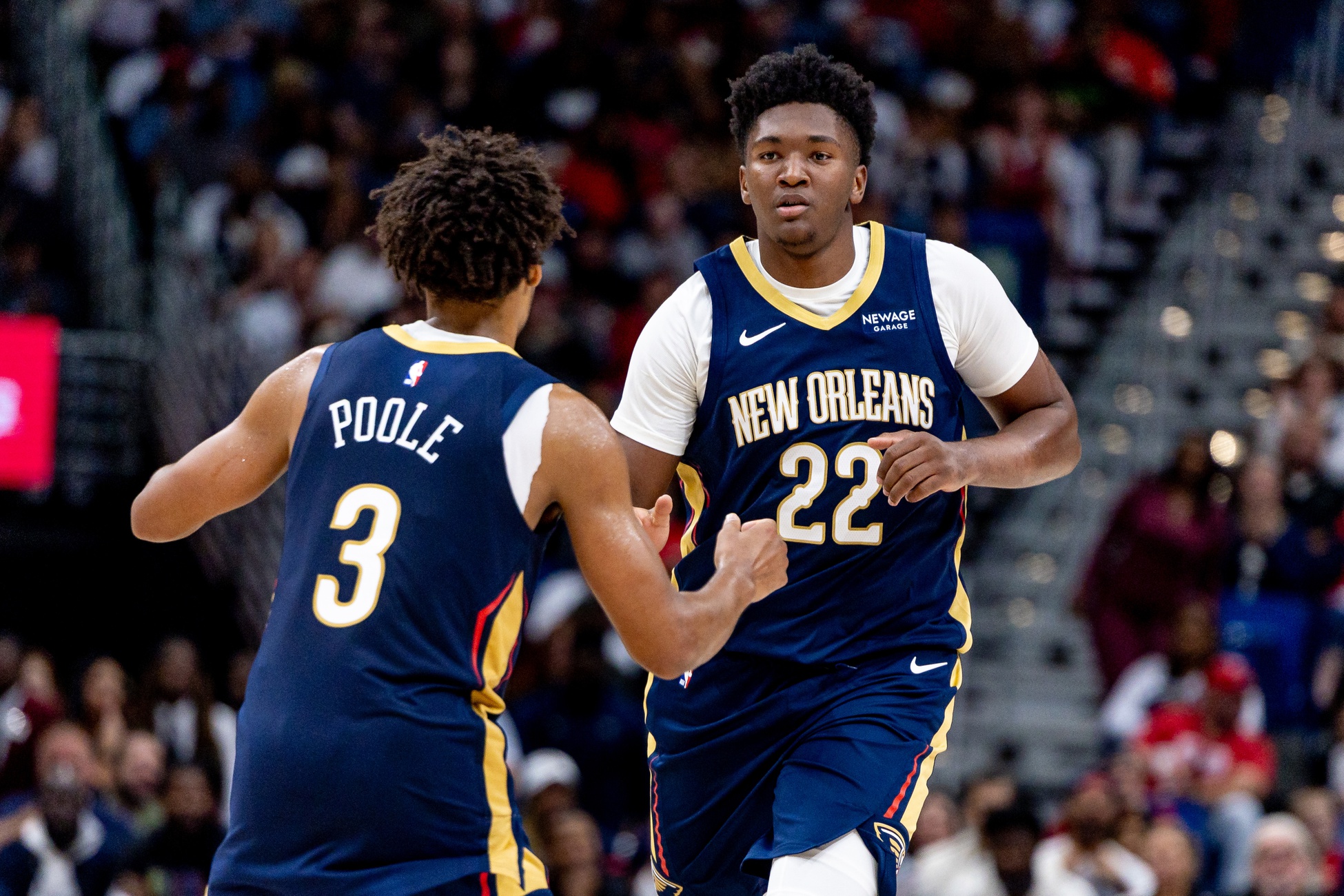
Following last season, the Pelicans let David Griffin go. They brought in Joe Dumars to lead the front office. Dumars hired Troy Weaver as his second-in-command. They pretty quickly made their trade by linking up with the Indiana Pacers. While the Pacers were in the middle of the NBA Finals, and before Tyrese Haliburton was injured, the Pelicans traded Indiana their 2026 pick back in exchange for the Pacers 2025 pick.

Sigh.

Let’s say you thought at the time that the Pacers were set up for a multi-year run, there still wasn’t much upside here. Even if you thought that in 2026, the Pacers would be sending you the 30th overall pick, you traded for the 23rd pick in the 2025 NBA Draft. That’s not a big enough jump in value to offset the potential that the Pacers unknown 2026 first-round pick had at the time.

And, of course, the Pacers are off to a rough start in what looks like a Haliburton-less 2025-26 season.

And, even if you could excuse this low-upside move with a “Who could have known?” shrug, it gets worse.

At the 2025 NBA Draft, the Pelicans took that 23rd overall pick and combined it with the best of their own pick or the Milwaukee Bucks in the 2026 pick to trade up in the draft to select Derik Queen with the 13th overall pick.

Big, long, exasperated sigh.

Now, to be very fair, this space is a big fan of Derik Queen. But that’s in a vacuum. On this Pelicans roster next to Zion Williamson? That’s not a good fit. Queen’s best traits are his ball-skills, scoring and playmaking. He’s not an impactful defender nor a dominant rebounder. If Queen’s a five, you need a rim-protecting, rebounding four next to him. If Queen’s a four, then you need those same things at the five.

There isn’t a world where Queen and Williamson are a great fit together. That makes trading up for Queen an iffy proposition all on its own.

But to give up the best of your own or Milwaukee’s pick makes this an Defcon 1 level of emergency. (And yes, 1 is when things are most dire on the Defcon scale.) And New Orleans doesn’t even get the worst of the two picks! That one goes to Milwaukee. A complete, unmitigated disaster.

It’s only been two weeks, but the Pelicans have been awful this season. Again, they’ve lost three of their six games by more than 30 points. Only the existence of the fully rebuilding Brooklyn Nets and only slightly-less rebuilding Washington Wizards may keep New Orleans from being the worst team in the NBA. Even then, who knows how the 2026 NBA Lottery may play out? You don’t have to be the worst team to get the first pick. Just being near the top of the lottery odds will have you in the mix.

Let’s pause to recap what has happened here since mid-June.

The Pelicans traded away the Pacers 2026 first-round pick. Then they traded the rights to their own first-round pick.

Two weeks into the season, the Pelicans pick projects to be second overall, with the Pacers pick at fourth overall, pre-Lottery.

Even if you say “Well, the Pelicans have no reason to tank, so they’ll win some games” and “The Pacers won’t be this bad all year”, how good do you think those teams will be? The Pelicans are in a deep Western Conference where wins will be very hard to come by. The Pacers injury list is getting longer by the day. They might see this gap year as the best chance to add a big-time talent next to Haliburton for years to come.

That’s where you counter with “Well, if the Pacers didn’t have their pick, they would have no reason to tank”, and that’s fair. But you also have no idea what the Pacers would have been, or will be, this season. Maybe the injuries become too much to overcome. It wasn’t worth getting the 23rd pick in the draft, especially with what followed.

The bottom line: The Pelicans could have had two top-five picks pre-Lottery and now they have none. That’s horrendous asset management, no matter how you try to spin it.
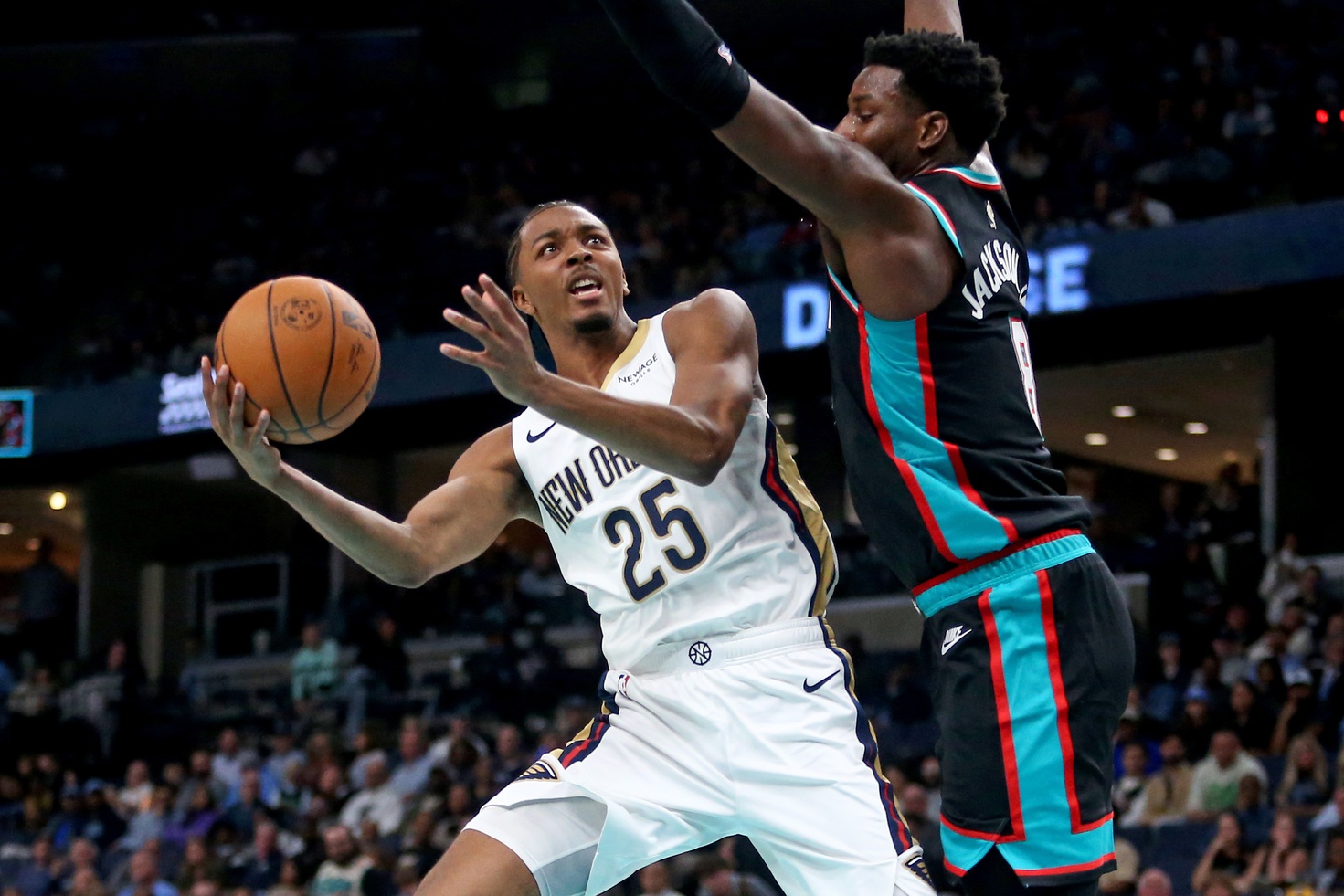
By now you should have the sense that things are a mess in New Orleans. We didn’t even mention the curious trade of C.J. McCollum’s expiring contract for Jordan Poole. Or signing Kevon Looney using a large enough chunk of the Non-Taxpayer MLE to hard-cap themselves at the first apron. Or keeping Jaden Springer out of the preseason, then waiving him merely a couple of days later. Or picking up Jordan Hawkins 2026-27 rookie scale fourth year team option for $7 million when he’s far down in the rotation pecking order. 

The Pelicans could have had their own pick and the Pacers pick in a loaded 2026 NBA Draft and somewhere around $50 million in cap space in the 2026 offseason.

Instead, the Pelicans have no picks in the 2026 NBA Draft and they are well over the cap, and not that far from the luxury tax.

It’s not hyperbole to suggest that the very future of NBA basketball in New Orleans is in the balance. The arena situation is one of the worst in the NBA. The league doesn’t want teams relocating, but they also don’t want teams playing in outdated arenas. Attendance has regularly lagged near the bottom of the NBA. Unless things change here, we’re going to hear chatter about forcing the Pelicans to relocate growing louder.

A big part of the attendance problem is that Pelicans fans haven’t had a whole to cheer for. Anthony Davis was a generational superstar. He asked for a trade. Zion Williamson was supposed to replace Davis as the franchise player and next generational superstar, but he can’t stay on the floor.

The cap sheet is kind of a mess. David Griffin and crew had the foresight to protect themselves when they signed Williamson to his current max deal. But the only way you get any benefit there is by waiving Williamson. As rough as things have gotten, a straight waiver of Williamson seems unlikely over the two years left he has beyond this season.

Dejounte Murray has two years left on his deal after this one. We have no idea what he’ll be when he returns. Jordan Poole has one more year left after this one.

That means that for this season, plus a couple more, there are major salaries sitting on the books. And, not to beat a dead horse, but the team has no draft picks this year.

Now, there is some good news! Trey Murphy III and Herb Jones are on good-value deals. Yves Missi is interesting. Jeremiah Fears and Derick Queen should be good players, despite the investment made to acquire Queen.

If the Pelicans are going to make this work, they have to exercise extreme patience. Yes, this year is going to be bad without any benefit. But it’s really hard to put spilled milk back in the bottle. That milk is gone. Trying to replace it with orange juice in your cereal just makes everything worse.

Take your lumps. Chasing upgrades won’t make this better. And we have no reason to believe that the people making those decisions on trades should have our trust in doing it well.

Next season, you have your own pick. It’s probably going to be another rough year, but you have your own pick. The 2027 Draft doesn’t project to be as good as this year’s, but there are some really interesting prospects looming in that class.

In addition, Poole will shift to an expiring contract next summer. Murray could be on an expiring deal, as he could opt out at the end of next season. And Williamson’s contract remains protected in the team’s favor, which is where we have to look next.

It’s time to move on from Zion Williamson.

Williamson is incredible when he’s healthy, but that’s so rare, that it almost doesn’t matter. He’s also already lost some explosiveness, which suggests his game may not age very well. This is Year 7, and sad as it may be, it looks like it’s never going to happen for Williamson.

Find a trade, if someone wants to take the chance that they can figure out how to keep the talented forward on the floor. If there isn’t a trade to be found, the Pelicans should waive Williamson next offseason.

It’s time to begin the process of cleaning up your cap sheet and resetting the franchise fully. The Pelicans tried. They really did. They traded away All-Stars, got nice returns, but didn’t make it work. When they’ve tried to add talent, it’s gone even worse. But it all orbits around Williamson and the fact that he never got there as a top-tier, doesn’t-matter-who-else-you-have, superstar.

Build around the value deals of Murphy and Jones, and the young group of Fears, Queen and Missi. Heck, start those five together and see what you have. You’re going to be bad and pick-less anyway, might as well be bad and pick-less with a point to it. Give the fans a reason to buy into your young talent. They’ll come if they have a reason to believe again.

Starting over isn’t just what the Pelicans need to do for basketball reasons. It’s what’s necessary to save NBA basketball in New Orleans.


Caleb PongratzNovember 03, 2025
© USA Today Sports

If it wasn’t obvious already, Sporting Kansas City have officially entered their 180° rebuild phase.

On March 31st, 2025, after nearly 16 seasons with Sporting Kansas City, the club mutually parted ways with long-time Technical Director & Head Coach Peter Vermes. Vermes was one of the longest-serving managers in global soccer. The club named Kerry Zavagnin as interim head coach in March. 

Another MLS squad that seemed winless early on this season, it took SKC 10 games (April 5th) to find their first win of the season. 

The biggest news from this season for SKC was the hiring of David Lee as President of Soccer Operations & General Manager on a seven-year contract in September of 2025. Lee will serve as the teams CSO & will play an executive leadership role in all areas of Sporting’s soccer enterprise, including first-team roster management, player recruitment, scouting, analytics, technical staff oversight and the continued development of Sporting KC II and the Sporting KC Academy. He will oversee Sporting Director Mike Burns, who was hired in mid-June of 2024.

In short – Sporting struggled all season & it was no shock to see them finish last place in the Western Conference this season.

There’s a lot of change needed in order for this team to become a successful one once again. In the offseason guide:

The Positives

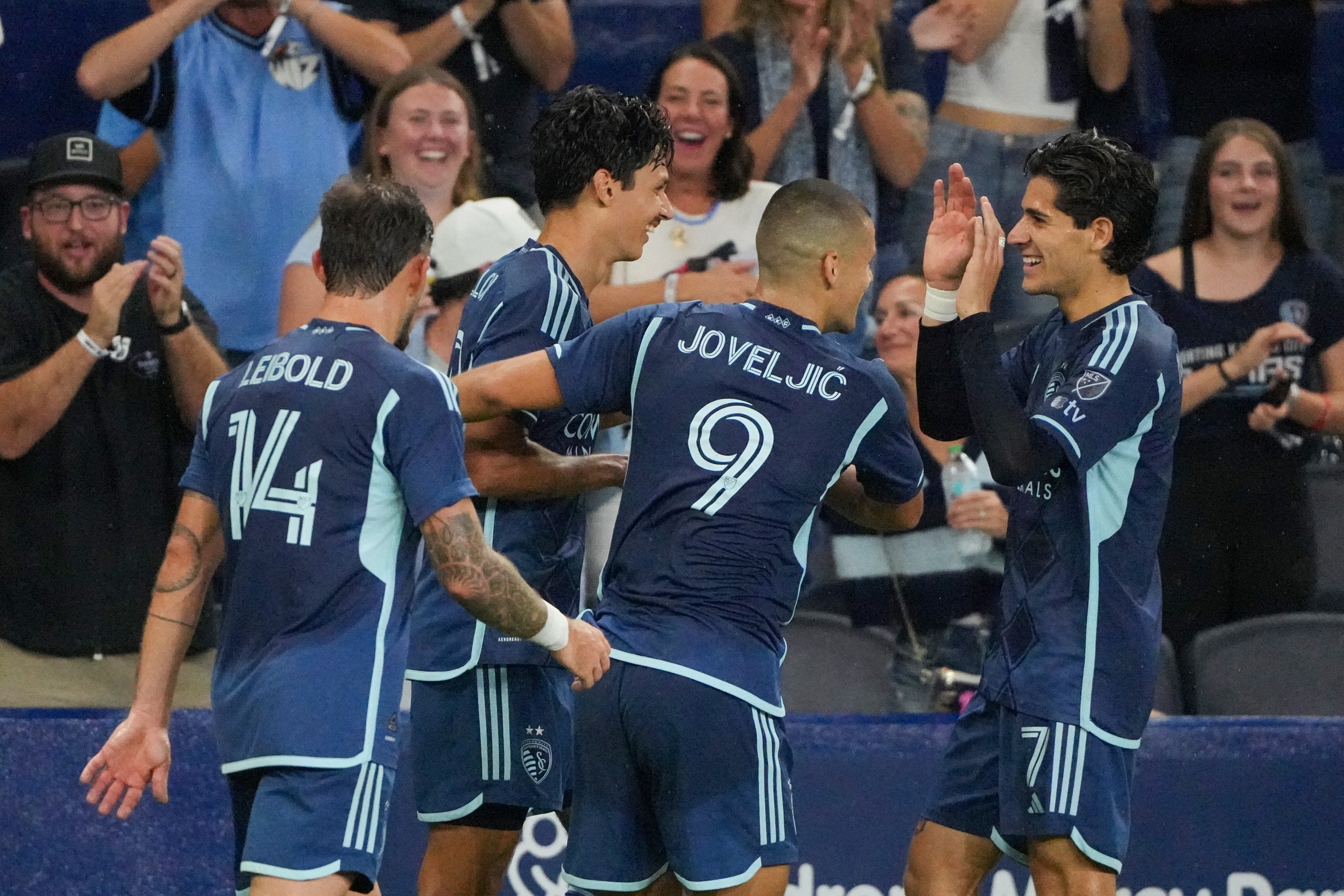
Acquiring Dejan Joveljić for $4,000,000 might be the signing of the season in regard to inter-MLS deals. After the deal, Joveljić was signed to a Designated Player contract running through 2027 with an option for 2028. In his first season with SKC, Joveljić provided 20 goal contributions (18 goals & 2 assists). He would finish T-5th in the MLS golden boot race.

Along with Joveljić, SKC relied heavily on Dániel Sallói, who had 11 goal contributions of his own (7 goals & 4 assists)

With David Lee taking control, this club is undergoing a complete turnaround.

This group is entering the offseason with ONLY 12 players rostered & have the ability to completely change their roster.

With the framework of Dejan Joveljić, Manu Garcia, & Dániel Sallói, the club has a lot of work to do and a lot of room to make changes.

The Negatives

Defensively, this team was tragic. It’s no shock to see that Mike Burns is essentially nuking the roster to the point that only two defenders (Ian James & Jansen Miller) remained on the roster.

SKC allowed the most goals out of any team in the league. 70 goals in a single season. Simply not good enough.

Adding to that, SKC offensively struggled too. With only 46 total goals scored, they did better than some teams, however, when you calculate what Joveljić & Sallói contributed, they scored 54% of their total goals. If the team lost either of those players, this team would’ve looked even worse.

Roster Flexibility

Sporting Kansas City enters this offseason with an unbelievable amount of flexibility. At the moment, the club has two designated players (Dejan Joveljić & Manu Garcia) and have 0 U-22 initiative signings. This club can decide whether or not it wants to enter the 3DP, 3U22 player model or enter the 2DP and 4 U-22s model, which includes up to $2 million in GAM, pending which route they go. They have every single U22 slot open.

The club announced their end-of-season roster update, where they announced most contract option decisions. The club is entering the 2026 season with 12 players rostered. 

David Lee & Mike Burns have a lot of decisions to make. This roster rebuild is NOT going to happen overnight & the expectation is that this will be a multi-year process. 

Offseason Priorities

Priority #1 for David Lee & Mike Burns is to determine the club’s next head coach. If interim head coach Kerry Zavagnin is going to remain as the head coach, it is imperative that he & Burns begin working on this roster immediately.

Priority #2 for SKC is their backline & goalkeeper position. The club is entering the offseason with 2 defenders (17-year-old Ian James & 23-year-old Jansen Miller) & 2 goalkeepers (17-year-old Jack Kortkamp & 24-year-old John Pulskamp). If the club is going to make strides, they need to improve those positions with some talented veteran players.

Priority #3 is finding offensive threats to assist Garcia, Joveljić, & Sallói. If this team wants to be “successful”, they need to surround their talented assets with some better pieces. 

Again, this isn’t going to happen overnight. This is a multi-year process that Lee & Burns need to get right.


Michael GinnittiNovember 03, 2025
© USA Today Sports

10 MLB Free Agents to Watch

MLB teams have until November 6th to negotiate exclusively with their pending free agents. At 5PM Thursday, MLB’s marathon free agency window opens, setting a few notable names out into the open.

RELATED:
2026 MLB Free Agents
Spotrac’s MLB Market Values

Kyle Tucker (29, RF, Cubs)

10 years, $400M

Tucker’s shine wore off a bit as he pushed through a fractured hand, but he remains the top all-around pending free agent this winter. The numbers likely won’t reach Soto or even Judge thresholds, but this should be another eye-popping free agent contract nevertheless. (Qualifying offer expected)

Dylan Cease (30, SP, Padres)

7 years, $210M

Cease doesn’t have the statistical resume or consistency as many of the top-paid pitchers possess, but he’s got age and durability on his side this winter. Since making his debut in 2019, Cease has never missed a start. That might be worth an extra year on the contract when it’s all said and done. (Qualifying offer expected)

Framber Valdez (31, SP, Astros)

6 years, $200M

Valdez hits the market with a bit of a weird vibe, as questions surrounding his health, conditioning, and locker room presence all surfaced in 2025. The production on the mound hasn’t wavered a bit however, and there’s a world where contending teams overpay on the annual to maximize a shorter term deal here. (Qualifying offer expected)

Bo Bichette (28, SS, Blue Jays)

7 years, $175M

Bichette is a hit machine, and has shown a good deal of power in his first 6+ seasons as well. This recent knee injury could be a nail in the coffin for his days as a shortstop, but a willingness to slide over to 2nd or 3rd in a more primary manner could help bolster his market this winter. A mini bidding war should get his bottom line north of $200M. (Qualifying offer expected)

Pete Alonso (31, 1B, Mets)

5 years, $150M

Pete’s first go-round in free agency didn’t exactly go as planned, as the 30-year-old returned to NY on a 2 year, $54M contract that became a 1 for 30 per his opt-out. With no qualifying offer attached to him this time, and coming off yet another stat-filled campaign in 2025, there should be a fairly strong market for Alonso in the coming weeks. Can he secure himself a 5 (or maybe even 6) year guarantee? (Qualifying offer unavailable)

Alex Bregman (32, 3B, Red Sox)

4 years, $120M

Bregman just opted-out of a 2 year, $80M guarantee in Boston, so the thought of him accepting a new deal at less than $40M per year might seem off, but the goal here is to maximize the overall guarantee (and remain in a winning setting) for the next 3-5 seasons. Both he and Pete Alonso will be working hard to secure that 5th year this winter. (Qualifying offer unavailable)

Cody Bellinger (30, 1B, Yankees)

6 years, $180M

Bellinger’s rollercoaster career has been mostly on the positive track since the 2023 season, and he was a big part of the Yankees strong run in 2025. Will a team or two value him as a central figure in their window of contention, or is he destined for short-term, option-filled contracts for the remainder of his career? (Qualifying offer unavailable)

Ranger Suarez (30, SP, Phillies)

6 years, $160M

The best case to be made for Suarez is that he’s found a way to be successful in a variety of ways, despite a dip in velocity the past few seasons. Every team in the league wants a LHP who can give them 150 IP without blinking, but longevity will be a red flag per these negotiations. (Qualifying offer expected)

Kyle Schwarber (33, DH, Phillies)

4 years, $120M

Mathematically, Schwarber in a full-time DH role carries a value at around $25M per year, but his pedigree, experience, and history of clutch production should be considered nearly invaluable to contenders this winter. Will the Phillies push more into the tax in order to retain his services? (Qualifying offer expected)

Munetaka Murakami (26, 3B, Japan)

5 years, $115M

His stock has cooled a bit over the past few seasons, but Murakami remains the international position player to watch this winter. He has experience at both corners defensively, and many believe his approach at the plate will translate extremely well to the MLB game. (Posting Fee Required)

10 MLB Trade Candidates to Watch

As of November 2nd, the MLB Trade Window is now back open, and based on a few early reports - it may very well be an active one. Generally we don’t begin to see this kind of movement until during/after the December Winter Meetings, but here are a few names we’re watching closely over the coming weeks.

RELATED:
Spotrac’s Trade Candidate Tracker
2026 Tax Payrolls

Mitch Keller (29, SP, Pirates)

2026 Salary: $16.5M

Keller has 3 years, $54.5M remaining on his contract in Pittsburgh, including $16.5M for the upcoming 2026 season. The Pirates have developed a strong young rotation, which could make Keller expendable this winter, especially if they can bring back an MLB-ready bat or two.

Freddy Peralta (29, SP, Brewers)

2026 Salary: $8M club option

Milwaukee holds an $8M team option (no buyout) with Peralta for 2026, and obviously would have no trouble keeping him on that number (204 Ks, 154 ERA+, 5.5 WAR in 33 2025 starts). But the option represents the final year of his contract, and if the two sides don’t see a future past 2026, flipping this value salary for a good return now makes sense for the Brewers.

Joe Ryan (29, SP, Twins)

2026 Salary: $6M (arbitration estimate)

The Twins are largely expected to cut costs in 2026, and that will include the active payroll as well. Ryan was sought after at the trade deadline, but a deal didn’t materialize. The 29-year-old is arbitration-eligible through 2027, with an estimate near $6M for the upcoming season.

Jarren Duran (29, OF, Red Sox)

2026 Salary: $8M club option/$7.2M arbitration estimate

Boston has a surplus of young positional player talent that could/should culminate in a sizable trade or two this winter. Duran seems the most likely man to move, and there will be more than a handful of teams ready to pounce. The 29-year-old has been filling up the stat board each of the past 2+ seasons, and is a Day 1 starter elsewhere. Furthermore, he’s cost controlled through the 2028 season.

Brendan Donovan (28, 2B, Cardinals)

2026 Salary: $5.75M arbitration estimate

Now a positional utility man (2B, 3B, LF, RF) Donovan’s stock is at a career-high, and the Cardinals appear poised to bank off of it this winter. The 28-year-old is cost-controlled through 2027, which should net St. Louis a fairly strong prospect in return.

Steven Kwan (28, LF, Guardians)

2026 Salary: $8.5M arbitration estimate

Kwan is arbitration-eligible through the 2027 season, so there’s no real urgency for Cleveland to cut ties just yet. However, extension negotiations appear to have turned sour, and could be all but dead between the two sides. Generally speaking, once Cleveland knows they won’t have a featured player going forward, they begin to nibble at the trade market. That’s likely what this winter looks like for these two sides.

Pete Fairbanks (31, RP, Rays)

2026 Salary: $12.5M club option ($1M buyout)

One of the more consistent back-end relievers in the game, Fairbanks may simply be too expensive for a Tampa team that prides itself on flipping players at certain thresholds, and relying heavily on their draft/develop process to backfill. Proven Relievers continue to provide strong trade returns - even with an expiring contract such as Fairbanks here.

Luis Castillo (32, SP, Mariners)

2026 Salary: $22.75M

Castillo has 2 years, $45.5M remaining on his contract, plus a potential $25M vesting option for 2028). There’s also a $1M trade assignment bonus built into the deal, adding another layer of complexity to a winter move. Seattle has plenty of starting pitching depth, and could handle a move to help generate a little more offense going forward.

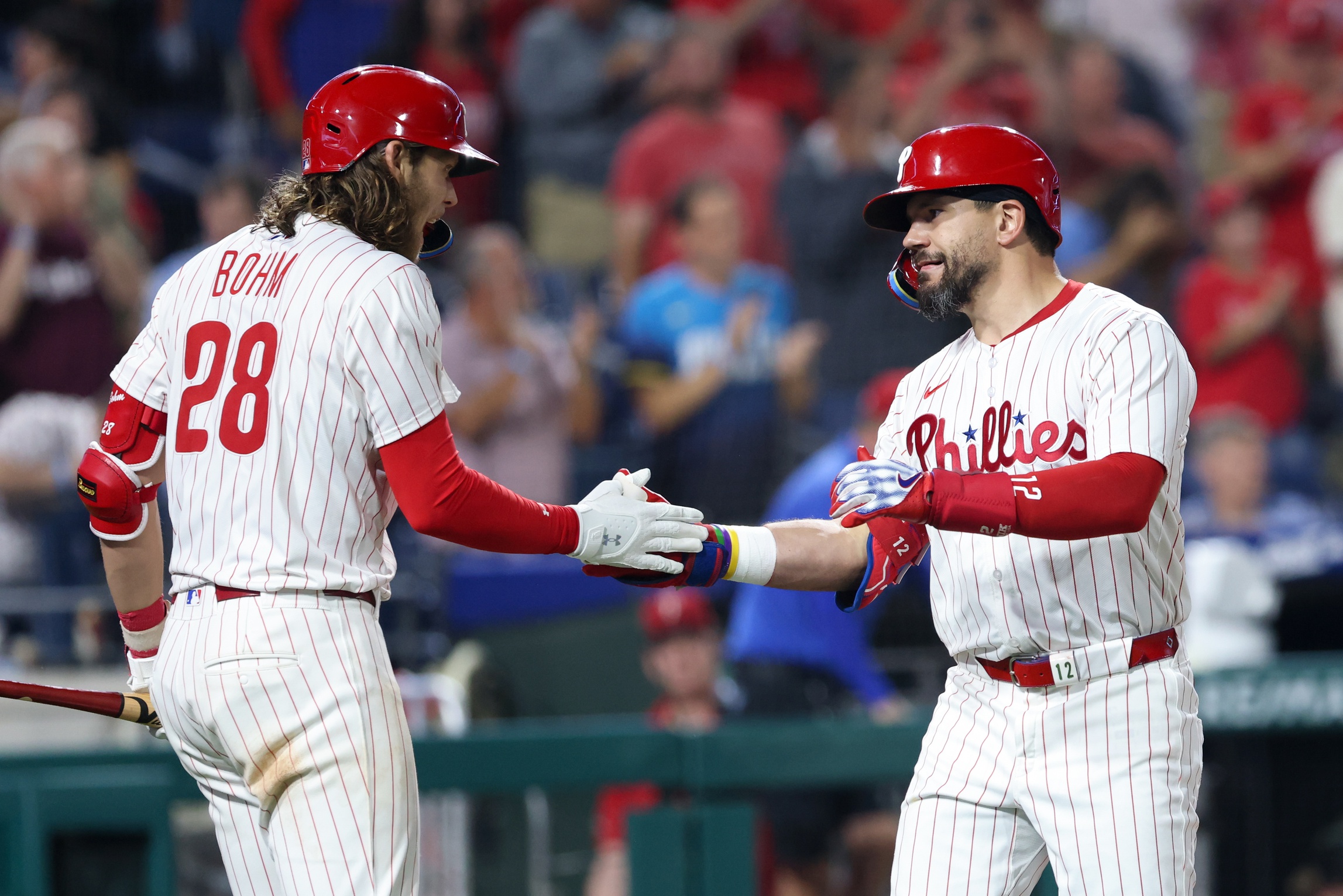
Alec Bohm (29, 3B, Phillies)

2026 Salary: $10.25M arbitration estimate

Bohm remains a solid player for the Phils, but a few things are true right now: 1) He’s entering a walk year in 2026, and will likely price himself out of Philadelphia’s reach 2) The Phillies have three, expensive free agents they’d like a crack at retaining in Ranger Suarez, Kyle Schwarber, and JT Realmuto. Moving on from Bohm helps reduce what is setting up to be a very expensive tax year.

Kyle Freeland (32, SP, Rockies)

2026 Salary: $16M

Freeland remains a solid, reliable starter despite the shortcomings that exist as a pitcher in Colorado. He’s also headed into a contract year for the Rockies (who are headed for a complete overhaul, again) and doesn’t figure to be in the long-term plans going forward.

Caleb PongratzNovember 03, 2025
© USA Today Sports

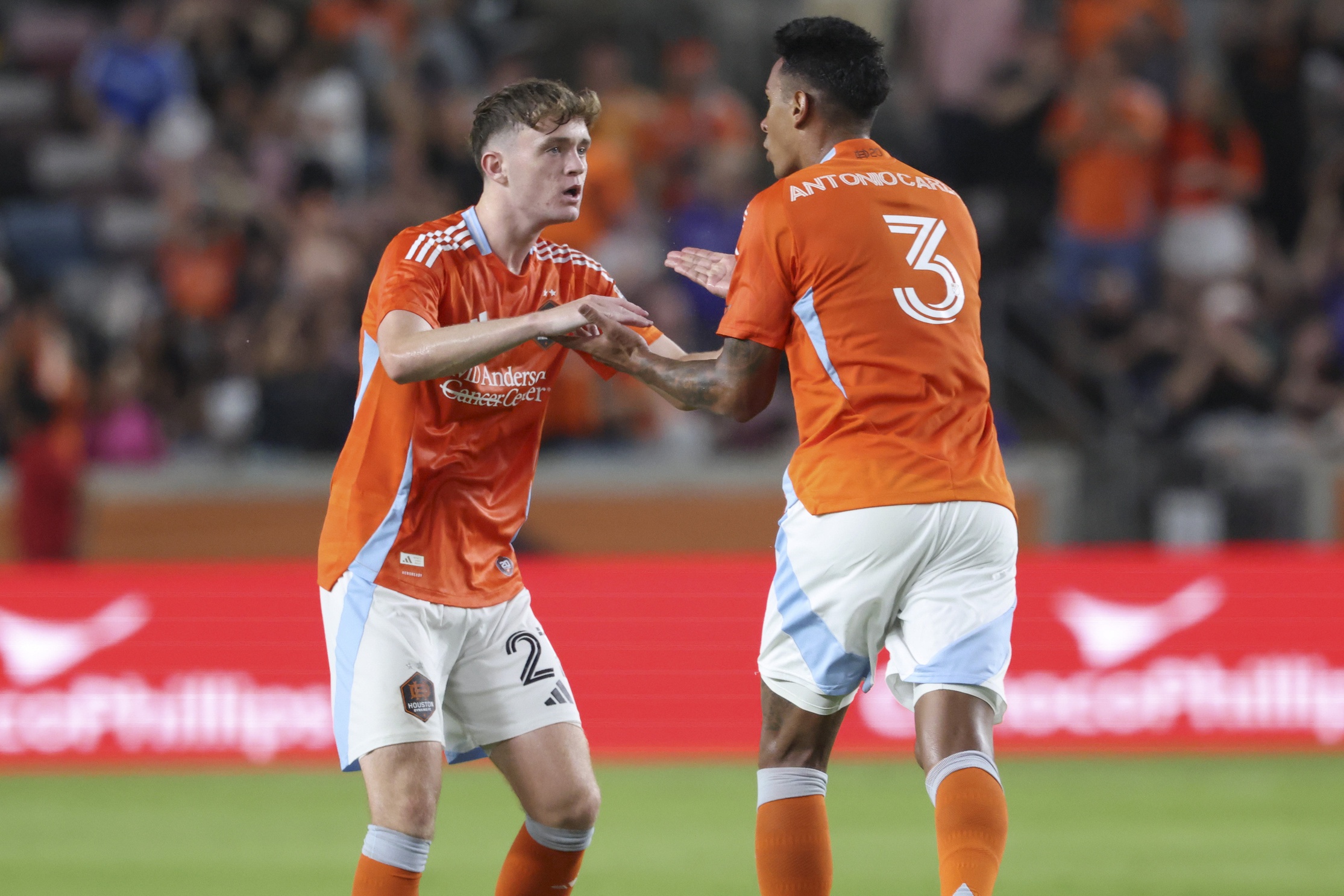
In comparison to the last two seasons that Houston Dynamo have had, this one was surely a disappointing one. After back-to-back playoff appearances in 2023 & 2024, the club had playoff expectations entering 2025, however, the club lost important games at the tail-end of the season and fell short of the playoff line by just 4 points.

It took Houston 8 MLS regular season games to secure their first win & it was an up-hill battle trying to recover above the playoff line.

In terms of on-field product, this squad ranked 20th in both expected goals scored & expected goals against. 

Injuries hurt this side for sure, but, this team isn’t far out in terms of roster improvement to become a playoff team.

With the offseason approaching, Houston is entering the 2026 offseason with the 2nd most General Allocation Money in the league (as of October 1, 2025). Lots of room for improvement and lots of roster flexibility. In the offseason guide:

The Positives

Trading for Jack McGlynn was a massive factor in Houston’s offense this season. After acquiring the midfielder from the Philadelphia Union for $3,400,000 in February, the midfield facilitator had 14 goal contributions (8 goals & 6 assists) and essentially was the engine of the offense.

By adding McGlynn, Designated Player Ezequiel Ponce had a playmaker that would be able to unlock the Designated Player forward. The forward improved on his 5 goals in 10 games from last season and showed his attacking prowess to contribute 10 goals & 1 assist in 32 games.

This group is entering the offseason with 19 players rostered & have a ton of roster flexibility. With 1 DP slot OR 1 U22 slot open, this team can very easily update their roster and become a massive problem in the Western Conference next season. They are 2nd in terms of available GAM with $2,931,725 (as of October 1, 2025). 

The Negatives

Injuries hurt this team. With starting goalkeeper Andrew Tarbell suffering a torn ACL injury in the squad’s matchup versus Real Salt Lake in March, the trajectory of the season plummeted early. The squad found its footing with Jonathan Bond replacing Tarbell, however, the injury list still haunted this team.

Even in the late stretch, Jack McGlynn’s foot injury in late September had massive implications on how their season ended.

In terms of scoring and defending, on both sides, Houston declined in comparison to last season as they scored 4 less goals and allowed 17 more goals.

My biggest concern for this team is their backline.

Roster Flexibility

Houston Dynamo FC enters this offseason with amazing roster flexibility. At the moment, the club has two designated players (Ondřej Lingr & Ezequiel Ponce) and 3 U-22 initiative signings (Jack McGlynn, Lawrence Ennali, & Nelson Quiñónes). This club can decide whether or not it wants to enter the 3DP, 3U22 player model or enter the 2DP and 4 U-22s model, which includes up to $2 million in GAM, pending which route they go.

The club announced their end-of-season roster update, where they announced most contract option decisions. The club is entering the 2026 season with 19 players rostered. 

With head coach Ben Olsen entering his 4th season with the Dynamo, he is in complete control of what happens within this roster. Ideally, a handful of changes can make this a playoff team quite easily.

Offseason Priorities

Whether Houston decides to enter the 3DP & 3U22 model or 2DP & 4U22 model, they should look to sign a DP or U22 centerback. 

If this group can secure a talented defender, then a lot of their problems can be solved.

They currently are entering the offseason with only 4 defenders on their roster (Felipe Andrade, Antônio Carlos, Griffin Dorsey, Erik Sviatchenko), so, it seems that Ben Olson will be targeting primarily defenders in the offseason market.

More help in the defense and remaining healthy will catapult this team back to success.

Dan SoemannNovember 03, 2025
© USA Today Sports

Player, Club and Mutual options for the 2026 season must be decided within five days of the World Series conclusion, which is Thursday, November 6th.

Players reaching free agency via:

Player opt-outs (multi-year):

Alex Bregman (3B) - 2 years, $80M total ($40M base + $40M deferrals + 2027 Player option)
Edwin Diaz (RP) - 2 years, $28M total ($27M base + $1M buyout from 2028 Club option)
Robert Suarez (RP) - 2 years, $16M

Alex Bregman had offers from the Tigers (6 years, $171M; 2027 opt-out), Astros (6 years, $156M) and Cubs (4 years, $120M; 2027 + 2028 opt-outs) last offseason but ultimately signed with Boston who offered an immediate path back to free agency. Scott Boras used a similar approach in 2024 with third baseman Matt Chapman who signed a 3 year, $54M (w/ opt-outs) contract before agreeing on a 6 year, $151M extension with San Francisco. Edwin Diaz and Robert Suarez immediately become the best back end options available.

Player options (single season):

Pete Alonso (1B) - $24M salary
Cody Bellinger (OF) - $25M salary / $5M buyout ($20M decision)
Ha-seong Kim (SS) - $16M salary
Shota Imanaga (SP, Cubs) - 3 year, $57.75M Club option or $15.25M Player option if Club declines
Jorge Polanco (2B) - $6M salary / $750k buyout ($5.75M decision)

Pete Alonso always planned to opt-out barring an injury. He turned down a 7 year, $158M extension offer from the Mets in June 2023 before hiring Scott Boras as his agent that October. Alonso will need to sign for at least 5 years, $107.5M (21.5M AAV) to match that previous offer. The Cubs declined a 3 year, $57.75M option extension and Imanaga subsequently declined his $15.25M player option.

Club options:

David Fletcher (SS) - $8M salary / $1.5M buyout ($6.5M decision)
Scott Barlow (RP) - $6.5M salary / $1M buyout ($5.5M decision)
Jorge Mateo (SS) - $5.5M salary
Jonathan Loaisiga (RP) - $5M salary
Kyle Hart (RP) - $5M salary / $500k buyout ($4.5M decision)
Tom Murphy (C) - $4M salary / $250k buyout ($3.75M decision)
Tyler Wade (SS) - $1M Club option ($50k buyout)

Mutual options:

Brandon Woodruff (SP) - $10M buyout
Lucas Giolito (SP) - $1.5M buyout
Rhys Hoskins (DH) - $4M buyout
Jose Quintana (SP) - $2M buyout
Michael King (SP) - $3.75M buyout
Liam Hendriks (RP) - $2M buyout
Austin Hays (OF)
Mitch Garver (C) - $1M buyout
Michael Lorenzen (SP) - $1.5M buyout
Danny Jansen (C) - $500k buyout
Justin Turner (3B) - $2M buyout
Harrison Bader (OF)
Paul Sewald (RP)
Martin Perez (SP)
Elias Diaz (C) - $2M buyout
Randal Grichuk (OF) - $3M buyout
Kyle Farmer (SS) - $750k buyout

Mutual options are mostly utilized for payroll budgeting purposes now and it’s been over a decade since both sides were exercised. Milwaukee will pay a combined $16.5M towards buyouts for Woodruff, Hoskins, Quintana, and Jansen.

Players retaining their current contract:

Player opt-outs (multi-year):

Trevor Story (SS, Red Sox) - 2 years, $55M total ($50M base + $5M buyout from 2028 Club option)
Tyler O’Neill (OF, Orioles) - 2 years, $33M total
Wandy Peralta (RP, Padres) - 2 years, $8.9M total

Boston would love to free up some playing time in their middle infield by eliminating Trevor Story from the equation but that will need to happen via trade. Baltimore hoped Tyler O’Neill would play his way out of town but another injury plagued season leaves them footing the bill for his remaining guarantees.

Player options (single season):

Jack Flaherty (SP) - $20M salary
Shane Bieber (SP) - $16M salary / $4M buyout ($12M decision)
Joc Pederson (DH, Rangers) - $18.5M salary
Frankie Montas (SP, Mets) - $17M salary
Lourdes Gurriel Jr. (OF, Diamondbacks) - $13M salary
A.J. Minter (RP, Mets) - $11M salary

Shane Bieber and Jack Flaherty are two of the most surprising outcomes. Bieber returned from Tommy John in the final months and seemed likely to find a multi-year deal exceeding his $12M decision. Joc Pederson had a conditional opt-out that Texas could void if they guaranteed another $18.5M for 2027, but the Rangers won’t re-commit. Montas, Minter, and Gurriel Jr. are expected to miss parts of 2026 after suffering significant injuries.

Club options:

Luis Robert (OF, White Sox) - $20M Club option ($2M buyout)
Chris Sale (SP, Braves) - $18M salary
Salvador Perez (C, Royals) - $13.5M salary ($2M buyout)  EXTENDED
Pete Fairbanks (RP, Rays) - $12.5M salary ($1M buyout)
Brandon Lowe (2B, Rays) - $11.5M salary ($500k buyout)
Max Muncy (3B, Dodgers) - $10M salary
Jose Alvarado (RP, Phillies) - $9M salary ($500k buyout)
Andrew Kittredge (RP, Orioles) - $9M Club option ($1M buyout)  TRADED
Freddy Peralta (SP, Brewers) - $8M salary
Ozzie Albies (2B, Braves) - $7M salary ($4M buyout)
Andres Munoz (RP, Mariners) - $7M salary
Ramon Laureano (OF, Padres) - $6.5M salary
Colin Rea (SP, Cubs) - $6M salary ($750k buyout)
John Means (SP, Guardians) - $6M salary
Brooks Raley (RP, Mets) - $4.75M salary ($750k buyout)
Jose Urquidy (RP, Astros) - $4M salary
Tim Hill (RP, Yankees) - $3M salary ($350k buyout)
Drew Smith (RP, Mets) - $2M salary

Salvador Perez had his option declined but Kansas City signrevised extension. Pete Fairbanks and Brandon Lowe will return on below market options but both are potential trade candidates for the always cost conscious Rays. Milwaukee could take a similar route with Freddy Peralta as he heads into the final year of a pre-arbitration extension. Starters Jose Urquidy and John Means are likely to provide surplus value if they’re fully healthy entering next season.

TBD:

Pierce Johnson (RP) - $7M Club option ($250k buyout)
Tyler Kinley (RP) - $5.5M Club option ($750k buyout)
Brent Suter (RP) - $3M Club option ($250k buyout)

Arbitration:

William Contreras (C) - $12M Club option ($100k buyout)
Jarren Duran (OF) - $8M Club option ($100k buyout)
Alex Vesia (RP) - $3.55M Club option ($50k buyout)
Taylor Walls (SS) - $2.45M Club option ($50k buyout)
Justin Topa (RP) - $2M Club option ($225k buyout)
Thairo Estrada (2B) - $4M Mutual option ($750k buyout)

These players have an option but will remain arbitration eligible if declined.

Related Links: 2026 MLB Options, 2026 MLB Free Agents

Taylor VincentNovember 02, 2025

For the second year in a row Kansas City Current forward Temwa Chawinga has won the NWSL Golden Boot award—by being the league's highest goalscorer during the regular season—and will take home the $5,000 bonus that goes along with it. 

She finished with 15 goals and 3 assists across her 23 regular season appearances. Chawinga outscored her closest Golden Boot contender, Gotham's Esther, by two goals and two assists. Joining Sam Kerr, Chawinga becomes the second player in league history to win the award multiple times. Kerr won it three consecutive seasons from 2017-2019.

The 2026 season will be the final season under the old monetary award values and starting in 2027 the Golden Boot winners will be taking home $10,000. 

You can find all of the Golden Boot winners by year here

Michael GinnittiNovember 02, 2025

With the MLB Offseason now officially upon us, dive into the details using Spotrac’s Team Offseason Financial Previews. Each breakdown includes upcoming option decisions, pending free agents (with market values), estimated arbitration salaries, plus analysis and projected opening day payrolls.

Arizona Diamondbacks Offseason Preview
Athletics Offseason Preview
Atlanta Braves Offseason Preview
Baltimore Orioles Offseason Preview
Boston Red Sox Offseason Preview
Chicago Cubs Offseason Preview
Chicago White Sox Offseason Preview
Cincinnati Reds Offseason Preview
Cleveland Guardians Offseason Preview
Colorado Rockies Offseason Preview
Detroit Tigers Offseason Preview
Houston Astros Offseason Preview
Kansas City Royals Offseason Preview
Los Angeles Angels Offseason Preview
Los Angeles Dodgers Offseason Preview
Miami Marlins Offseason Preview
Milwaukee Brewers Offseason Preview
Minnesota Twins Offseason Preview
New York Mets Offseason Preview
New York Yankees Offseason Preview
Philadelphia Phillies Offseason Preview
Pittsburgh Pirates Offseason Preview
San Diego Padres Offseason Preview
San Francisco Giants Offseason Preview
Seattle Mariners Offseason Preview
St. Louis Cardinals Offseason Preview
Tampa Bay Rays Offseason Preview
Texas Rangers Offseason Preview
Toronto Blue Jays Offseason Preview
Washington Nationals Offseason Preview

Caleb PongratzOctober 30, 2025

Los Angeles Galaxy announced its year-end roster decisions which include options exercised, options declined, extensions and contract terminations.

Contract Options Exercised

John Nelson (D)
Mauricio Cuevas ((D)
Tucker Lepley (M)
Brady Scott (GK)
Isaiah Parente (M)
Gino Vivi (M)
Christian Ramirez (F)

Contract Optioned Declined

Eriq Zavaleta (D)
Diego Fagúndez (M) - in talks over return
Miguel Berry (F)

Loan Agreements

Matheus Nascimento (F) (from Botafogo) - in talks over return

Players Under Contract

Goalkeepers: JT Marcinkowski, Novak Mićović, Brady Scott

Defenders: Julián Aude, Mauricio Cuevas, Ascel Essengue (on loan to PHX USL), Emiro Garcés, Harbor Miller, John Nelson, Chris Rindov, Miki Yamane, Maya Yoshida, Zanka

Midfielders: Edwin Cerrillo, Tucker Lepley, Isaiah Parente, Riqui Puig, Marco Reus, Lucas Sanabria, Gino Vivi, Elijah Wynder

Forwards: Joseph Paintsil, Gabriel Pec, Ruben Ramos Jr., 

Related: 

Los Angeles Galaxy Multi-Year Outlook

Los Angeles Galaxy Transactions

Michael GinnittiOctober 30, 2025
© USA Today Sports

With the November 4th trade deadline just days away, Spotrac has identified 10 notable names who could be on the move as the NFL calendar flips to Week 9.

RELATED
NFL Trade Candidate Financials
Spotrac’s NFL Trade Machine

Adonai Mitchell (WR, Colts)

Mitchell isn’t a highly rumored trade candidate, but the Colts have been distancing themselves from him more and more - especially as the team has skyrocketed to the top of the AFC. Indy is expected to add a piece or two at the deadline, and using Mitchell as part of those trade requests could be a best of both worlds situation for them. The 23-year-old 2nd Round pick carries a $566k deadline salary, and $700k of his 2026 salary is fully guaranteed.

Potential Fits: Cardinals, Patriots, Steelers, Raiders

Breece Hall (RB, Jets)

The Jets have made it clear that trading Hall is not in their plans, but the right offer for a player on an expiring contract should peak a 1-7 team’s interest. NY is on a bye this weekend, furthering their ability to be aggressive before the 11/4 deadline. Hall has $1.7M remaining on his contract for the next 9 weeks, and is a pending free agent next March.

Potentials Fits: Chargers, Rams, Buccaneers

David Njoku (TE, Browns)

The 29-year-old is in a contract year in Cleveland, and is almost certain for a change of scenery this coming March. With just $1.1M remaining on his salary for the next 9 weeks, it’s perfectly plausible that a team or two could look to bolster up their TE room down the stretch.

Potential Fits: Broncos, Chargers, Jaguars, Rams

Dre'Mont Jones (ED, Titans)

The Titans have a half dozen potential candidates this weekend, but teams get especially desperate for pass-rush help this time of year. Jones is on an expiring contract, with $1.2M remaining on his 2025 salary. The 28-year-old has 22 tackles and 3 sacks in 8 games.

Potential Fits: Chiefs, Cowboys, Eagles, Lions, Patriots, Ravens

Jakobi Meyers (WR, Raiders)

Meyers didn’t receive the contract extension he was seeking this offseason, putting his time in Las Vegas on notice. Factor in now a team going in the wrong direction, and a QB1 position very much in flux and it’s not unrealistic to assume that the Raiders could be looking to send out a few dollars at the deadline. Meyers holds a $5.3M salary at the deadline, which might be a little rich for some contenders to take on. Retaining some of that salary could buy LV a better draft pick.

Potential Fits: Steelers, Bills, Patriots, 49ers

Jaelan Phillips (ED, Dolphins)

The 26-year-old is on an expiring contract in Miami, and has seen limited action in each of the past 2+ seasons due to injury. But the former #18 overall pick out of Miami (FL) has big-time pass rush potential - and every contender in football is looking for more of that down the stretch. His current 5th-year option salary contains $6.6M remaining through the final 9 weeks.

Potential Fits: Chiefs, Cowboys, Eagles, Lions, Patriots, Ravens

Joel Bitonio (G, Browns)

Bitonio hasn’t been a strongly rumored candidate, but the 34-year-old has shown frustration in Cleveland recently, and is on an expiring contract with the Browns. There are more than a few notable contenders looking for mid-line help down the stretch, and with just $627,500 remaining on his salary, there’s plenty of reason for interest here.

Potential Fits: Broncos, Buccaneers, Seahawks, 49ers

Logan Wilson (LB, Bengals)

Wilson requested a trade out of Cincy, has seen his snap counts drop ever since, and is now battling a light calf injury that kept him out of the Week 8 lineup. All signs point to a breakup happening here. Acquiring teams can bring in Wilson at $2.9M for the remainder of 2025, with non-guaranteed salary of $6.5M, and $7.2M on the books through 2027. Wilson was the Bengals’ 3rd Round pick out of Wyoming back in 2020.

Potential Team Fits: Dallas, Indianapolis, Washington

Rashid Shaheed (WR, Saints)

The Saints have a 3-pack of weapons in Chris Olave, Alvin Kamara, and Shaheed that have been rumored at the deadline, but it’s starting to become clear that the 27-year-old UDFA out of Weber State could be the odd man out. Shaheed is in the final year of a 2 year, $6.2M contract in New Orleans, with $2.1M remaining on his salary at the deadline.

Potential Fits: Bills, Steelers, Patriots, 49ers

Tariq Woolen (CB, Seahawks)

The 5th round pick is in the final year of his rookie contract, with a little over $2.6M remaining on his 2025 salary. Why would an NFC contender trade a starting CB midseason? It’s long been rumored that Woolen has been a tough fit in Mike McDonald’s system, and the organization has drafted/added around him accordingly. A recent injury to Patrick Surtain II in Denver could really elevate the possibility of this move.

Potential Fits: Broncos, Colts, Bears

RELATED
NFL Trade Candidate Financials
Spotrac’s NFL Trade Machine

Top