


.png)


 NEWS
NEWS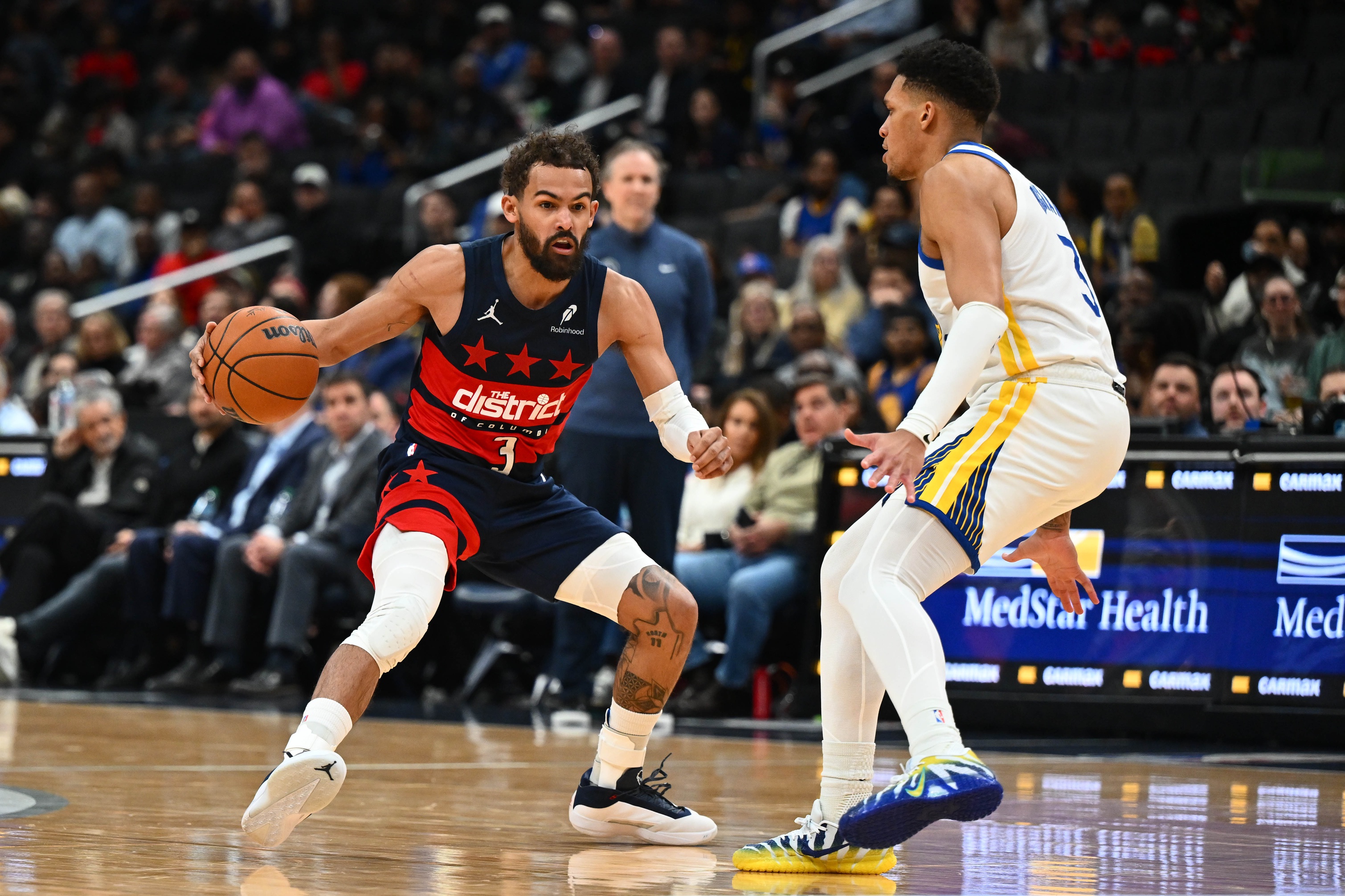 © USA Today Sports
NBA transaction season is just about behind us. A handful of teams have roster spots to fill before the postseason. We may still see another two-way player land a standard contract. And we’ll see another set of 10 Day contracts, including a few more hardship deals too.
All of those deals are important for the players and teams involved, but few will register for most NBA fans. What may draw some eyes and ears is possible veteran extensions.
There are 44 players who are still eligible to extend their contracts before the NBA league year changes over. In order to extend right now, players have to fit one of the following criteria:
-
Be eligible to extend in terms of years into their current contract
-
Be on an expiring contract
-
If not on an expiring contract, have an option (player or team) that can be declined to make the current deal an expiring contract
Late-season extensions are a regular thing in the NBA. Players and teams have until midnight on June 30 to agree to an extension. With free agency opening six hours before the extension deadline, it can sometimes create confusion where we ask: “Is this an extension or a new contract?”. Thankfully, teams and players often agree well in advance of the deadline, which leaves no doubt that it’s an extension.
Today, we’re going through each of the eligible players and projecting whether or not they extend before the deadline at the end of the league year.
(Note: The amounts we are presenting are the maximum that player could extend for.)
Atlanta Hawks
-
Mouhamed Gueye (if team option is declined): eligible for up to four years, $86.9 million
-
C.J. McCollum: eligible for three years, $115.9 million
-
Gabe Vincent: eligible for three years, $52.4 million
The Hawks are in an interesting spot, because they could have almost $33 million in cap space this summer. That would mean cutting ties with the three above players, as well as players like Jonathan Kuminga, Jock Landale and Buddy Hield. How Atlanta wants the summer to go will determine if they look at extending any of the above players.
McCollum is an interesting one. He won’t approach anything near the maximum he could extend for. But he’s been really productive and the Hawks could offer him something in the range of a two-year, $40 million extension without too much worry of it being drastic overpay.
If Atlanta wants to keep Gueye around, and they likely do, they’re more likely to decline his team option and give him a new deal as a restricted free agent this offseason. Vincent is very unlikely to be extended, as the Hawks have backcourt depth, and two incoming first-round picks.
Boston Celtics
-
Nikola Vucevic: eligible for up to three years, $81.2 million
-
Jordan Walsh (if team option is declined): eligible for up to four years, $86.9 million
The Celtics did a great job to get themselves out of the luxury tax at the trade deadline, without weakening the team. While adding Vucevic was a part of that process, Boston hasn’t seen a lot of him on the court, because he suffered a fractured finger. Despite that, the Celtics might still want to look into extending Vucevic or re-signing him as a free agent.
Something in the range of a two-year, $30 million deal would make sense. It’s a fair value for Vucevic, given he’s still a good offensive player and rebounder. And it would give Boston a mid-range contract that is tradable in future moves.
Walsh is a trickier decision. He had great moments this season when he saw rotation minutes. As other young players have developed, and with Jayson Tatum back, Walsh hasn’t played much. Look for the Celtics to pick up Walsh’s option for next season, then if he proves to be a rotation guy, they’ll extend him in-season a year or so from now.
Brooklyn Nets
-
Jalen Wilson: eligible for up to four years, $86.9 million
The Nets are looking at being a cap space team again this offseason. They aren’t going to extend Wilson.
Charlotte Hornets
-
Coby White: eligible for up to three years, $52.4 million
The Hornets would love to get White on this type of extension, which would carry an AAV of $17.5 million. But that figure is too low for White. He’s going to be looking for a deal that starts around $20 million. Don’t expect an extension here.
Chicago Bulls
-
Zach Collins: eligible for up to four years, $113.4 million
-
Leonard Miller (if team option is declined): eligible for up to three years, $52.4 million
-
Nick Richards: eligible for up to three years, $52.4 million
-
Collin Sexton: eligible for up to three years, $71.7 million
-
Anfernee Simons: eligible for up to three years, $104.6 million
The Bulls can create $63.5 million in cap space this summer, without losing a single one of their more interesting younger players. That is the likely path, as opposed to extending anyone on this list. That doesn’t rule out some of these players returning, but that would happen on new deals vs extensions.
The one exception could be Leonard Miller. But unless his extension is really, really team-friendly, Chicago would more likely opt him out and re-sign Miller vs extending him.
Cleveland Cavaliers
-
Keon Ellis: eligible for up to three years, $52.4 million
-
Craig Porter Jr. (if team option is declined): eligible for up to four years, $86.9 million
-
Dean Wade: eligible for up to four years, $86.9 million
All three of these players are candidates to be extended. The Cavs like all three players and none will break the bank in an extension. The big question for Cleveland is how they want to handle the aprons and an ever-increasing tax bill.
Ellis would make a lot of sense on an extension around $30-36 million over three years. $10-12 million AAV is fair for a guy who has bounced in and out of the rotation throughout his NBA career. For Ellis, that might be too low, and he may prefer to test unrestricted free agency instead.
Wade is eligible for a lot more, but he likely won’t get more than $10-12 million AAV either. Cleveland could go to four-years, $40 million for Wade, with the final season having team protection in terms of a team option or being non-guaranteed.
Because the Cavs are so expensive, and they are deep are the guard spot, it’s more likely Porter’s team option will be picked up than it is that he gets extended. It’s one way to help keep next year’s tax bill down a bit. And the team could still work out an in-season extension next year for Porter.
Dallas Mavericks
-
Khris Middleton: eligible for up to three years, $125.8 million
-
Dwight Powell: eligible for up to four years, $86.9 million
Middleton is interesting for the Mavericks, considering they hope to be a playoff team next season. He’s been solid since arriving in Dallas in the Anthony Davis trade. He won’t get anything near $40 million AAV. But if Dallas could get Middleton for two years, $34 million, with a second-year team option), that’d be pretty solid. And, that would give the team another tradable mid-range contract, if it turns out that they don’t need Middleton.
Powell probably won’t be extended, but he’s a franchise lifer at this point. If he’s back with the Mavs, it’s time for it to be on a veteran minimum deal.
Denver Nuggets
-
Jalen Pickett (if team option is declined): eligible for up to four years, $86.9 million
The Nuggets have a lot of payroll issues, which will only be exacerbated if they re-sign Peyton Watson. That means no extension for Pickett. Look for his option to be picked up to give Denver a nice depth guard on an affordable deal.
Detroit Pistons
-
Kevin Huerter: eligible for up to three years, $68 million
No extension coming here for Huerter. The Pistons could choose to create nearly $30 million in cap space this offseason. That wouldn’t be possible with Huerter on the books. If Detroit stays over the cap, maybe Huerter is re-signed, but it’s unlikely that he’ll be extended.
Golden State Warriors
-
Draymond Green (if player option is declined): eligible for three years, $117.5 million*
-
Kristaps Porzingis: eligible for three years, $116.2 million
*Green is functionally limited to a three-year deal, due to the Over-38 rule. (It’s more complex than this, but it’s not worth getting into here.)
If the Warriors extend either player, it won’t be for anything near the max that they can get. For Green, a change in the current CBA could actually help his chances of being extended. Under previous CBA’s the first year in an extension couldn’t start lower than the declined option amount. Now, it can.
However, it still seems the most likely path for Green is that he opts in, which would align his contract with that of Stephen Curry’s and Jimmy Butler’s. Then, starting next season, it becomes more of a year-to-year thing for the veteran trio.
For Porzingis, the Warriors seem to like his fit…when he plays. Because of that issue, it’s hard to see Porzingis getting anything more than $20 million a year. Something like two-years, $40-$45 million with a team option on the second season could make sense for Golden State and Porzingis.
Houston Rockets
-
No extension-eligible players.
Indiana Pacers
-
No extension-eligible players.
LA Clippers
-
Bogdan Bogdanovic (if team option is declined): eligible for four years, $100.5 million
Bogdanovic is out of the Clippers rotation. He hasn’t played regular minutes this season. There’s almost no chance he’s extended on any kind of deal.
Los Angeles Lakers
-
Rui Hachimura: eligible for four years, $114.5 million
-
Maxi Kleber: eligible for up to four years, $86.9 million
-
Austin Reaves (if player option is declined): eligible for up to four years, $87.4 million
The Lakers would love to get Austin Reaves on the max he can extend for. But that’s now just a fantasy. Reaves has far outplayed that figure and will opt out and cash in as a free agent this offseason.
Because the Lakers, even while holding Reaves’ cap hold, can create nearly $50 million in cap space this summer, they aren’t going to extend Hachimura or Kleber.
Memphis Grizzlies
-
GG Jackson (if team option is declined): eligible for up to four years, $86.9 million
The Grizzlies are in transition. They’re going to want to keep as much salary flexibility as possible for the next few seasons. Jackson hasn’t quite popped enough that Memphis should feel pressure to lock in on an extension right now. They can pick up their team option and if Jackson plays great next year, they can extend him in-season.
Miami Heat
-
Norman Powell: eligible for up to four years, $128.5 million
-
Terry Rozier*
-
Andrew Wiggins (if player option is declined): eligible for up to four years, $177 million
Powell and Wiggins are both really interesting situations. They are both good, productive players, but both are aging a bit. For Powell, Miami has seemed at least somewhat reluctant to fully commit to him. This includes even bringing him off the bench at times, which Powell made clear he’s not a fan of.
Wiggins has been pretty good for Miami, but he may just choose to pick up his $30.2 million player option and see where things are at in the summer of 2027. He could always extend in-season.
The Heat also have to factor in their long-term books. After next season, when Tyler Herro’s deal runs out, the only sizable contract Miami has is Bam Adebayo. They may want to gear up for future free agent classes that look to be a bit stronger than what we’ve seen in recent years.
Bet on no extensions here, with Powell being more likely if the Heat can get him to sign in the $22-25 million AAV range.
*For Rozier, it’s unclear if the NBA would even approve an extension right now. But even with that being said, there’s a better chance that your intrepid author here signs a minimum contract next season than there is of Rozier extending with the Heat.
Milwaukee Bucks
-
Andre Jackson Jr. (if team option is declined): eligible for up to four years, $86.9 million
Considering there was some question as to if Jackson would stick on the roster when the Bucks needed a spot to convert Pete Nance, that rules out an extension. For Jackson, he may be better off if he’s set free to join another team that can give him minutes. It doesn’t seem like he’s going to get consistent run in Milwaukee while Doc Rivers is coaching the team.
Minnesota Timberwolves
-
Ayo Dosunmu: eligible for up to three years, $52.4 million
-
Julian Phillips (if team option is declined): eligible for up to three years, $52.4 million
For Dosunmu, this extension amount comes in right around what he may get in free agency. Teams aren’t going to break the bank for him, but he’s a very good guard to have in your rotation. This extension would come in a roughly the same as the Non-Taxpayer MLE amount, which is probably where offers would top out for Dosunmu. The Wolves should try to get this one done. If Minnesota really wants Dosunmu on a four-year deal, then they may hold until the summer to re-sign him.
Phillips isn’t going to be extended. He’s more likely to have his team option declined and to be allowed to go into free agency.
New Orleans Pelicans
-
No extension-eligible players.
New York Knicks
-
Mitchell Robinson: eligible for up to four years, $86.9 million
This extension, even at its maximum amount that Robinson is eligible for, looks pretty good. A handful of cap space teams this summer could use a center. That may see Robinson’s next deal coming in at more than $20 million AAV. The Knicks have issues with a mounting payroll, but Jalen Brunson and Mikal Bridges left money on the table so that the team could retain their own guys. In addition, if Karl Anthony-Towns is traded, or things get sideways with his own free agency in 2028, having Robinson in the fold would be ideal.
Oklahoma City Thunder
-
Lu Dort (if team option is declined): eligible for up to four years, $114.3 million
-
Kenrich Williams (if team option is declined: eligible for up to four years, $86.9 million
The Thunder are in an incredibly interesting place with their roster. Maximum rookie scale extensions kick in for Chet Holmgren and Jalen Williams next season. After that, a max extension kicks in for Shai Gilgeous-Alexander. This summer, Oklahoma City has team options for Lu Dort, Isaiah Hartenstein and Kenrich Williams. Those decisions might very well come on the heels of winning a second consecutive NBA title.
All total, if options are picked up, the Thunder have 15 players under contract for next season and are well over the second apron. Oh yeah, they also have at least two incoming first-round picks too.
None of this is bad, but it means that real decisions have to be made, both for the immediate and the long-term.
Expect the Thunder to pick up Williams’ option and to keep him at least through next season. He’s a valuable veteran for team culture and a great stay-ready guy.
Dort’s situation is more complicated. His defense, hustle and edge are invaluable. But his salary will likely need to come down to stick around. The roster is getting tight, OKC has a lot of other guards and Dort’s play has slipped some. There likely won’t be an extension, unless it’s very team-friendly. That makes the real question about declining Dort’s option and re-signing him.
Orlando Magic
-
No extension-eligible players.
Philadelphia 76ers
-
No extension-eligible players.
Phoenix Suns
-
No extension-eligible players.
Portland Trail Blazers
-
Matisse Thybulle: eligible for up to four years, $86.9 million
-
Robert Williams III: eligible for up to four years, $86.9 million
Both Thybulle and Williams have been helpful players for Portland…when available. If they were more consistently available to play, extension conversations would be a lot more interesting. As it stands, with a lot of other long-term money already on the books, and younger options at their positions, the Trail Blazers likely will let Thybulle and Williams get to free agency this summer.
Sacramento Kings
-
Zach LaVine (if player option is declined): eligible for up to four years, $260.3 million
There’s no chance LaVine is extended, unless he wanted to leave a lot of money on the table by signing something extremely team-friendly. With the Kings looking at another rebuild, the most likely path forward is LaVine picks up his $48.9 million player option for next season. Then, Sacramento can go about trying to trade LaVine and his expiring contract.
San Antonio Spurs
-
Harrison Barnes: eligible for up to four years, $119.2 million
-
Julian Champagnie (if team option is declined): eligible for up to four years, $86.9 million
-
Kelly Olynyk: eligible for up to four years, $86.9 million
The Spurs aren’t going to extend Olynyk. That one is easy.
Champagnie has been a regular starter. He’s outside of the window to make him a restricted free agent. If San Antonio wants to keep him on a lower number next season, they could pick up the $3 million option they hold. Then the Spurs could extend Champagnie in-season next year. If they want to get ahead of things, they could offer him something like four-year, $40 million extension and see if he’ll bite. That might be a bit low for Champagnie, but it’s not too far out of bounds.
Barnes lost his starting spot to Champagnie, but he’s still got plenty of gas in the tank. The question is if the Spurs want to lock in long-term for a player who is about to turn 34 years old. A two-year extension for $30-32 million with a second-year team option makes sense for both sides. That gets Barnes a nice payday, while allowing the Spurs to get clear when some bigger deals start kicking in via rookie scale extensions.
Toronto Raptors
-
Trayce Jackson-Davis: eligible for up to three years, $52.4 million
The Raptors aren’t likely to extend Jackson-Davis. He’s barely played since arriving in Toronto. Instead expect the Raptors to conserve whatever flexibility they have to re-sign Sandro Mamukelashvili.
Utah Jazz
-
Jusuf Nurkic: eligible for up to four years, $121.5 million
Nurkic won’t touch anywhere close to the maximum he could sign for. That would be crazy. However, the Jazz are no longer going to be a cap space team this summer. They used their potential cap space when they acquired Jaren Jackson Jr.
That could leave room for a Nurkic extension. Despite his flaws, and the overall weirdness with Utah’s season, Nurkic is still a pretty productive player. He should probably be an offense-first backup at this point, but the Jazz could use that kind of player behind Jackson and a presumably re-signed Walker Kessler.
A shorter extension makes sense here. Two years and $30 million with a team option on the second season should work. That gets Nurkic a nice deal, and gives Utah an experienced backup center on a tradable contract.
Washington Wizards
-
Trae Young (if player option is declined): eligible for up to three years, $156.9 million
The Wizards didn’t trade for Trae Young to mess around with getting him on a long-term deal. Is Young going to get contract that comes in at $52.3 million AAV? Probably not. But could something like three years, $135 million and a $45 million AAV be in play? Probably. Young isn’t going to take too big of a discount, but the Wizards have to be careful. Anthony Davis is going to want an extension this summer. The guys on their rookie deals will need paid before you know it. Getting Young on a slight discount makes sense.
If things can’t be worked out, expect Young to opt in for $48.9 million for next season. From there, Washington and Young can hammer out an extension in-season before he hits free agency in 2027.