Michael GinnittiMarch 24, 2026
© USA Today Sports

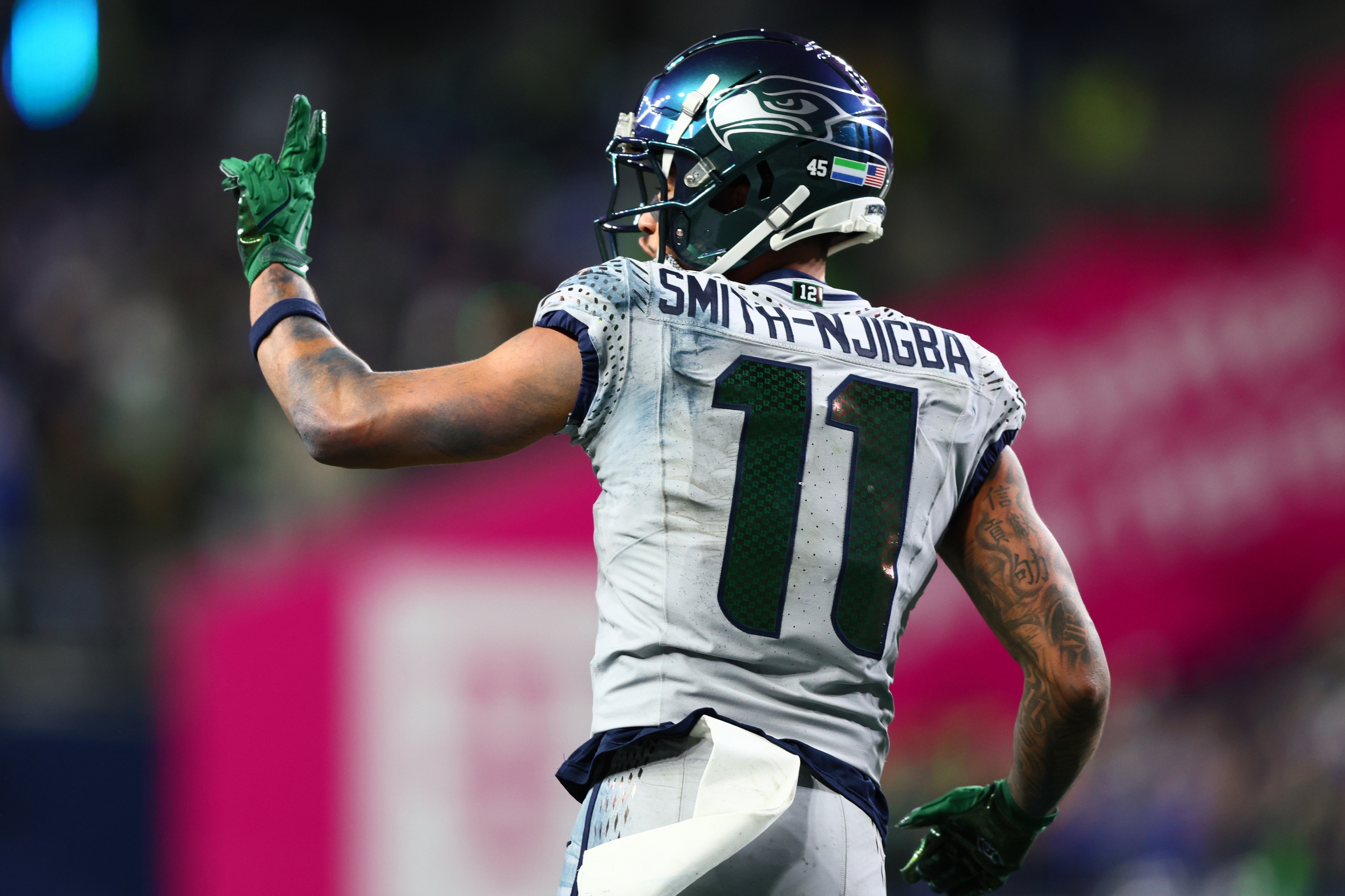
The Seattle Seahawks and WR Jaxon Smith-Njigba agreed to terms on a 4 year, $168.6M contract extension Monday, kicking off what could be another highly profitable offseason for wide receivers across the league.

The 24-year-old was entering the 4th-year of his rookie contract in Seattle, who had just previously exercised a 5th-year option for the 2027 season. In total, JSN entered 2026 with 2-years, $26.5M remaining on his entry-level contract. That now gets factored into the extension, placing him under contract at a total of 6-years, $195.1M through the 2031 season.

The Average Per Year

In terms of new years-new money (how the league tracks all contracts), Smith-Njigba’s extension makes him the highest average paid WR in NFL history at $42.15M.


If we run the numbers down the entirety of the contract, that APY adjusts as follows:
2-Year APY: $34.5M
3-Year APY: $29.6M
4-Year APY: $30M
5-Year APY: $30.6M
6-Year APY: $32.5M

With 4 years of this contract currently designated as practical based on the guarantee structure, we’ll place the practical adjusted APY for the contract at a nice clean, $30M per year mark - a very strong figure for Seattle.

The Cash Flow

JSN will receive a whopping $36.5M cash for the upcoming 2026 season, a $33.8M pay raise. In 2027, his $23.5M 5th-year option salary now soars to $32.6M per terms of the new contract. In other words, the 2 years, $26.5M remaining on his rookie deal now becomes 2 years, $69.1M. So for all of you claiming that this new contract doesn’t officially kick-in until the 2028 season, JSN’s bank account will say otherwise.

Full Cash Flow
2026: $36.5M
2027: $32.6M
2028: $19.9M
2029: $31M
2030: $33.3M
2031: $41.8M

  • the $36.5M 1st-year cash ranks 4th all-time among WRs
  • the $69.1M 2-year cash ranks 3rd among WRs
  • the $89M 3-year cash ranks 4th among WRs

The Cap Flow

The triple-bonus structure (2026 signing bonus, 2027 option bonus, 2029 option bonus) allows for a good portion of JSN’s cap to be spread out across a 7-year window (6 salaried seasons plus a void year). An additional void year could be included to propagate the 2029 option bonus even further.

The result is a team-friendly cap structure early on, with reasonable salary conversion options in both 2028 & 2029.

Full Cap Flow
2026: $10.3M
2027: $15.6M
2028: $32.9M
2029: $36.5M
2030: $48.8M
2031: $50.3M
2032: $2.5M (void)

The 2026 cap figure has increased by $5.7M per this extension, but Seattle gains over $8.2M of cap space for the 2027 season.

The Guarantee Structure

Generally speaking, the guarantee-at-signing portion of nearly all Seattle Seahawks contracts leaves something to be desired. The team has a rigid year-to-year guarantee policy that errors on the side of caution more times than not.

In this case however, Seattle let down their hair a bit, providing JSN with a 2-year, $69.1M full guarantee at signing, 3rd most among active WR contracts (and nearly $20M less than Justin Jefferson’s structure in Minnesota). That figure includes a $35M signing bonus, a $30M 2027 option bonus, and near-minimum salaries for each of the next two seasons.

From there, Seattle reverted back to their standards, as the next batch of guaranteed money ($29.9M to be exact) doesn’t fully vest until the 5th waiver period day of 2028 (February 18th). This trigger includes all of JSN’s 2028 compensation, plus $10M of 2029 salary.

On the 5th day of the 2029 waiver period, a final $21M of compensation (all in 2029) will become fully guaranteed, representing a practical guarantee of a little more than $120M in total.

Top WR Total Guarantees

Quick Thoughts

JSN’s deal will be the first of a few mega-extensions at the wide receiver position this offseason, with Puka Nacua and the Rams now on the veritable clock.

While his $42.15M APY is historic, it doesn’t quite eclipse the top APY % of metric (Ja’Marr Chase, 14.42%; JSN, 13.99%). Smith-Njigba would have needed to eclipse $43.4M per year in order to reset the APY % market. Is this now in the cards for Nacua?

With all of that said, this is a largely successful outcome for both JSN and Seattle. The Seahawks broke a few of their own rules to make sure this deal had enough early stability to match the market, and JSN is now all but guaranteed a really strong $120M over the next four seasons.

Furthermore, at just 24-years-old at the time of signing, he’ll be well within reason to secure another blockbuster contract well before he turns 30.

Michael GinnittiMarch 24, 2026
© USA Today Sports

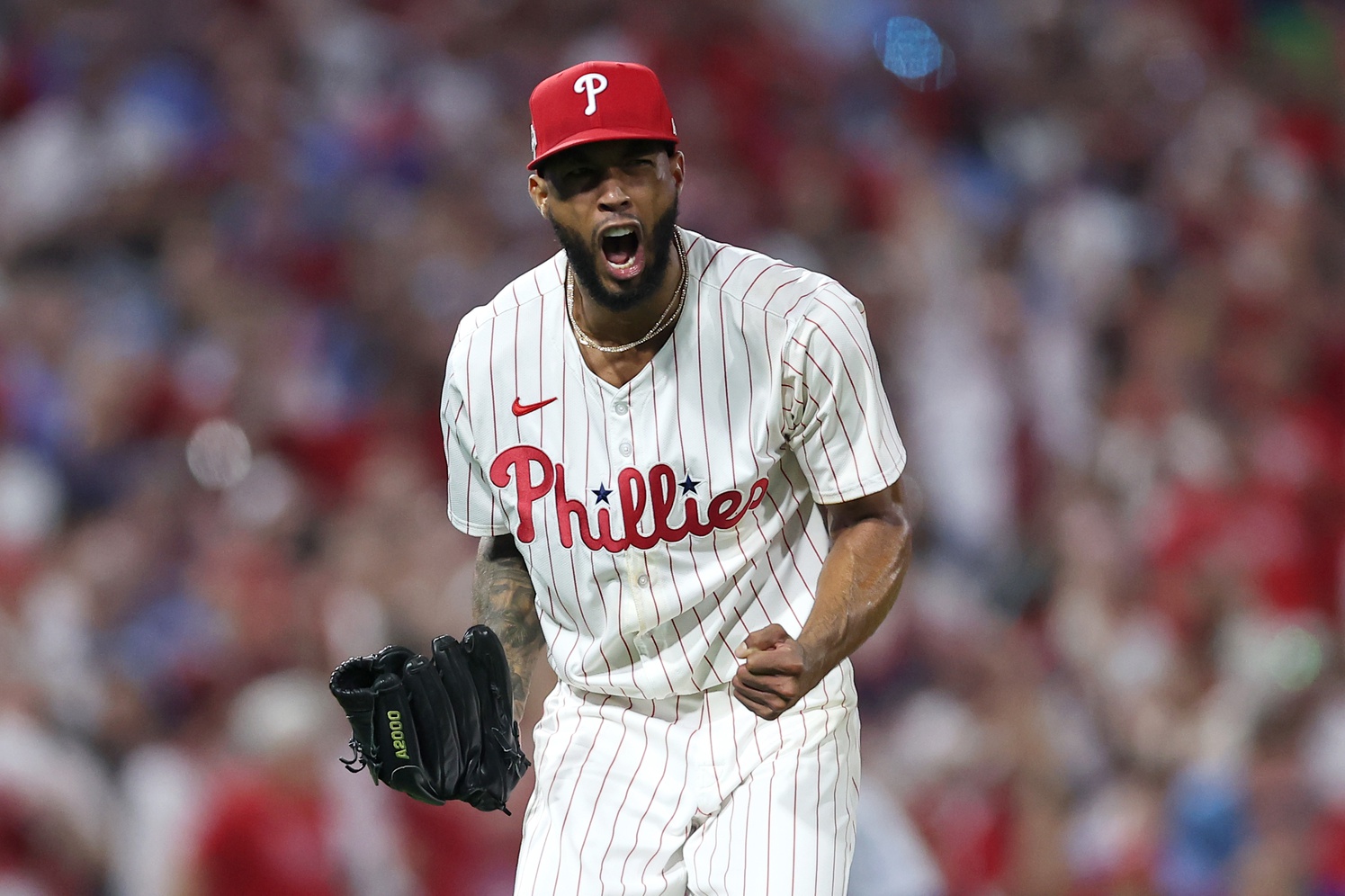
The Phillies and SP Cristopher Sanchez reached agreement on a renegotiated contract that locks the 29-year-old in for another 6-years, $107M through the 2032 season. The deal does not affect his current $3M salary ($5.625M CBT hit) for 2026, as the extension won’t become effective until the 2027 season.

Sanchez was previously under contract going forward at 4 years, $45M, including club options of $15M/$16M in each of 2029 & 2030 respectively.

Before & After Contracts

Previous Contract Season New Contract
$3,000,000 2026 $3,000,000 + $6,000,000 bonus
$6,000,000 2027 $6,000,000
$9,000,000 2028 $9,000,000
$14,000,000 (option) 2029 $14,000,000
$15,000,000 (option) 2030 $15,000,000
  2031 $27,000,000
  2032 $27,000,000
  2033 $10,000,000 (option)

$10M of the 2031 & 2032 salaries will be deferred to 2035-2044 payments.The 2033 club option, which begins at $10M, can escalate to $32.5M if Sanchez doesn't hit the IL for 130 consecutive days in 2031 or 2032. That same option can be escalated by a maximum of another $12M based on Cy Young voting across 2027-2032. In essence, this makes the deal a 6-year, $104M guarantee at base value, with $126.5M practical based on that injury escalator in 2033.

Why are the initial salaries still so low?

Sanchez got a late start to his MLB service-time window, and is entering his first arbitration-eligible season in 2026. Thus, his $3M salary for the upcoming season is commensurate with this timeline. Doubling a salary for the second season through arbitration is common, so a $6M payout in 2027 is on par, but certainly holds a significant amount of potential value based on where Sanchez finished in 2025. It’s the 2028 salary ($9M) where things could get extremely team-friendly for Philadelphia. For a gross comparison, Tarik Skubal just signed on to his final year of arbitration at $32M. More down to earth examples would be Dylan Cease ($13.75M) & Zac Gallen ($13.5M). In any effect, the extension should provide Philly with a good amount of value through the 2028 season.

Contract Rankings

The new money deal carries an average salary of $17.3M, which currently ranks 33rd among starting pitchers for the 2027 season. Furthermore - Sanchez remains the 4th highest average paid starting pitching on the Phillies:

Zack Wheeler: $42M through 2027
Jesús Luzardo: $27M through 2031
Aaron Nola: $24.5M through 2030

Quick Thoughts

With Wheeler’s contract set to come off of the books after 2027, and Sanchez coming off of a career-year in 2025, the organization clearly felt it was the right time to invest in the 29-year-old as their incumbent top of the rotation arm (despite the fact that Luzardo and Nola will carry higher salaries for the balance of his deal).

Still, it’s a puzzling renegotiation for both sides of this equation. The Phillies are marketing this deal as a way to “do-right” by their “ace”, and yet the next 5 seasons (2026-2030) remained identical to the previous contract. This new deal is in essence a 2 year, $61M extension that doesn’t begin until the 2031 season, tying him up through his age 35 campaign.

Some might point to the fact that the pending CBA negotiations could lead to sweeping financial changes to MLB’s structure, so it makes a little more sense for players to be capitalizing on the current system, locking down future guarantees as much as possible. But from the outside looking in, this appears to be evidence of a team that doesn’t necessarily believe Sanchez will ever rise to true “ace” stature - and a player/agent that might just also agree.

Bella MunsonMarch 22, 2026

With the WNBA and players’ union’s announcement of the key elements of the new CBA came confirmation of “accelerated pathways to maximum contracts for star players on rookie deals.” ESPN reports that the new provision that will make this possible is called "EPIC" (Exceptional Performance on Initial Contract).

According to ESPN, the new provision will allow players to “renegotiate what would have been the fourth year of their rookie deal and agree to a three-year contract extension.” If a player was previously named to All-WNBA first or second team they can earn the maximum in that fourth year. If a player has won MVP they can earn the supermax. Following an extension under this provision, the player would not be eligible for the core designation.

Under the previous CBA, the fourth-year of a rookie contract was an option year that was solely up to the club to exercise or not and continued on the same original rookie scale. The only difference from the first three years of the contract was that the fourth was protected. A player could only earn the supermax after the completion of a four-year rookie-scale contract.

Three players still on their rookie-scale contracts would be eligible to make the max in the fourth year of their deal. Aliyah Boston, who was named to the All-WNBA Second Team in 2025, is max eligible in 2026, though it is unclear if her 2026 contract can be renegotiated accordingly as the fourth-year option on her contract was already picked up. Her teammate Caitlin Clark could earn the projected max in 2027 thanks to being named to the All-WNBA First Team in 2024, her rookie season. Paige Bueckers was named to the All-WNBA Second Team in 2025, her rookie season, making her eligible in 2028.

Clark is likely to be one of, if not the first player to benefit from the maximum salary part of this new provision. She made $78,066 in 2025 and should already see her salary jump in 2026, as all existing rookie-scale deals will be adjusted to align with the new salary scale – sources told ESPN she will see an increase to $530,000. After that, if Clark so chooses, she could earn the projected max of $1.3 million in 2027. In the first year of her extended term, 2028, she could earn the projected supermax of $1.7 million.

While all players on rookie-scale contracts can potentially benefit from this new provision, it seems a select few will benefit the most thanks to its reliance on WNBA awards, the voting system for which is not without flaws and can at times seem more like a popularity contest. That’s not to say those former No. 1 overall picks do not deserve to be paid that much, only that what I am most interested to see is how often this provision is used to lock in young talent outside of those big names, how much they will be paid, and how we will see the core designation used (or in this case, not used) as a result.

Bella MunsonMarch 19, 2026

WNBA Board of Governors unanimously vote to ratify new CBA

(Updated 3/24/26)

The WNBA Board of Governors has unanimously voted to ratify the terms of the new Collective Bargaining Agreement, the WNBA announced Tuesday. Now that the agreement has been ratified by both the players' union and the league, lawyers on both sides are working on writing up the long-form legal document. The new, unanimously approved CBA will begin this season and run through 2032.

WNBA players unanimously vote to ratify new CBA

(Updated 3/23/26)

The new WNBA Collective Bargaining Agreement is one step closer to completion as WNBA players unanimously voted yes to ratification, WNBPA president Nneka Ogwumike announced Monday on ESPN. In a release, the players’ union said that 93% of players participated in the vote. Now we await approval by the WNBA Board of Governors, whose voting is set to wrap up in the coming days, ESPN reports.

WNBA, players’ union announce key elements of agreed CBA

(Updated 3/21/26)

The WNBA and players’ union announced Friday the key elements of the Collective Bargaining Agreement term sheet verbally agreed to on Wednesday after extended negotiations. Though the deal is still pending ratification from the WNBA Board of Governors and the WNBPA player body, which could take another few weeks, it provided confirmation of some reported monetary figures and new details on other key updates.

The specifics of how the new revenue-sharing system and revenue-based salary cap will work, the institution of which was a primary objective of the players’ union, is not yet known. But the league and players’ union announcement confirmed a “comprehensive revenue-sharing model” and “revenue-based salary cap directly tied to league and team revenue growth.”

Reports were also confirmed that the team salary cap will be set at $7 million in 2026, a player maximum of $1.4 million, an average salary of $583,000, and a minimum salary of $270,000 to $300,000 based on years of service. Current league financial projections predict that those will increase to over $11 million, $2.4 million, over $1 million, and $340,000 to $380,000, respectively, in 2032. Additionally, rookie-scale salaries will increase significantly, and all 38 existing rookie deals will be adjusted to align with the new salary scale. There will also be “accelerated pathways to maximum contracts for star players on rookie deals,” a new provision reportedly called "EPIC" (Exceptional Performance on Initial Contract).

As was reported earlier in negotiations, teams will now be required to carry 12 players on their roster, rather than that being the maximum, and there will be two additional developmental roster spots per team that don’t count against the salary cap. New salary cap exceptions will also be introduced for season-ending injuries, pregnancy and childbirth.

The “Core” designation, which allows teams to designate an unrestricted free agent as a franchise player and retain exclusive negotiating rights, and players sought to eliminate entirely, remains. But, starting in 2027, the designation can’t be used on players with seven or more years of service.

Additionally, likely at least partially in response to Dearica Hamby’s lawsuit against the league and Las Vegas Aces, but also the union looking for more protections around pregnancies, teams will now be required to obtain player consent before trading a pregnant player.

The players also seemingly achieved many of their asks in terms of improved player benefits and league standards. 

As expected, league-wide charter air travel will be codified along with new facility standards that require teams to provide “enhanced training and treatment resources” and expanded team staffing requirements, “including access to additional physicians, athletic trainers, strength and conditioning coaches, physical and massage therapists, and nutritionists.” Relatedly, they are expanding first-class travel accommodations for players travelling to league events.

Housing was one of the key issues still being hotly debated as negotiations entered their final stages. The final agreement come to is that league-provided housing will be available for all players in 2026, 20227 and 2028. In 2029 and 2030, the league will provide housing for players making $500,000 or less. Developmental players will be provided with housing every year.

To help players in retirement, there will be significant increases in team contributions to players’ 401(k) retirement accounts. Already retired players will get a one-time recognition payment based on years of service in the league: $100,000 for 12+ years of service, $50,000 for 8-11 years, and $30,000 for 5-7 years.

Looking at insurance, players made more gains, including greater life insurance benefits and expanded mental health coverage, “including a specific mental health reimbursement benefit.” There will also be expanded family planning benefits.

The two sides also announced substantial increases in bonus compensation for all league and postseason awards that will “increase at the rate of growth in the salary cap” beginning in 2027. The increases for 2026 are:

  • WNBA Champion: $60,000 per player (up from $22,908) 
  • WNBA Championship Runner-up: $20,000 per player (up from $8,521) 
  • Teams Eliminated in the Second Round: $10,000 per player (up from $3,435) 
  • Teams Eliminated in the First Round: $5,000 per player (up from $1,778)
  • All-WNBA First Team: $30,000 per player (up from $10,300) 
  • All-WNBA Second Team: $15,000 per player (up from $5,150) 
  • All-Defensive First Team: $15,000 per player (up from $1,500) 
  • All Defensive Second Team: $7,000 per player (up from $0) 
  • All-Rookie Team: $5,000 per player (up from $1,500) 
  • Most Valuable Player: $60,000 (up from $15,450)
  • Defensive Player of the Year: $30,000 (up from $5,150) 
  • Rookie of the Year: $15,000 (up from $5,150) 
  • Sixth Player of the Year: $15,000 (up from $5,150) 
  • Most Improved Player: $15,000 (up from $5,150) 
  • Sportsmanship Award: $10,000 (up from $5,150) 
  • WNBA Finals Most Valuable Player: $30,000 (up from $5,000) 
  • Commissioner’s Cup Most Valuable Player: $10,000 (up from $5,000) 
  • All-Star Game Most Valuable Player: $20,000 (up from $5,150) 
  • All-Star Game Participant: $15,000 (up from $2,575) 
  • All-Star Three-Point Contest Winner: $20,000 (up from $2,575) 
  • All-Star Three-Point Contest Participant: $10,000 (up from $1,030) 
  • All-Star Skills Competition Winner: $15,000 (up from $2,575) 
  • All-Star Skills Competition Participant: $7,500 (up from $1,030)

WNBA, players’ union verbally agree to new CBA terms

(Updated 3/19/26)

The WNBA and WNBPA finally reached a verbal agreement on new Collective Bargaining Agreement terms in the early hours of Wednesday morning after over 100 hours of in-person meetings in New York over the past week. A formal term sheet still needs to be finalized and ratified by the players and the WNBA Board of Governors. More details of the agreement are expected to be announced once a term sheet is completed in the coming days.

"For the first time, player salaries are tied to a truly meaningful share of league revenue, driving exponential growth in the salary cap, increasing average compensation beyond half a million dollars and raising the standard across facilities, staffing and support," WNBPA President Nneka Ogwumike said in a statement.

With the new CBA, the salary cap will reportedly start at $7 million (was $1.5 million in 2025) and exceed $10 million by the end of the agreement. The supermax will start at $1.4 million ($249,244 in 2025), the average salary will be around $600,000 ($120,000 in 2025) and the minimum salary will surpass $300,000 ($66,079 in 2025), according to ESPN. Sports Business Journal reports a $6.9 million salary cap and that the core designation remains in some form. Both report that the average revenue share would be nearly 20% across the length of the deal. ESPN and Front Office Sports report that it will be a seven-year deal with an opt out after year six. The agreement is also expected to enhance various player benefits, codify charter travel and establish other professional standards.

Despite work still to be done, WNBA Commissioner Cathy Engelbert told reporters that the 2026 schedule will not change and that the season will begin on time. Training camps are set to open April 19, with preseason games beginning April 25 and the regular season starting on May 8. Exact dates for the rest of the offseason calendar have yet to be announced. Dates that were reportedly provided to teams back in February had April 1-6 marked for the Expansion Draft (includes teams protecting their players, coin flip between Toronto and Portland, and actual draft) and April 7-18 for free agency (7-8 for designations and qualifying offers, 9-11 for negotiations, 12-18 for signings). The college draft is scheduled for April 13.

Taylor VincentMarch 18, 2026

In 2025 the NWSL debuted a new feature of the regular season named the ‘Good Behavior Reduction’ where players who went five games (entering by 80:00 and playing 10 minutes) could see a reduction in the number of yellow cards counting toward their accumulation total.

Once a player has five accumulated yellow cards, they must sit out the next regular season match and in previous seasons, the accumulation warnings came into play during the final matches of the regular season. 

Over the season, 216 players received a card, 143 players earned a Good Behavior Reduction leading to 194 Good Behavior Reductions over the regular season. 

Thirteen players received 5+ yellow cards and 5 players were able to have reductions to avoid serving an accumulation suspension. Comparatively, during the 2024 season, 18 players served accumulation suspensions. 

Additionally, 17 players finished the season with four yellow cards, but were able to reduce the stress of a potential accumulation suspension with a Good Behavior Reduction. Only two players reached four yellow cards without a reduction by the end of the season. 

When did players receive yellow cards?

Looking deeper into the data, after a player had been carded, they were most likely to receive another card after reduction or games without the minimum number of minutes — which is pretty understandable. 


Looking at when during the cycle of Good Behavior, players were most likely to receive another yellow card three matches into the five matches required, while 13 players over the course of the season got all the way to the potential reduction match before acquiring an additional yellow card. 


Overall Trends

Obviously, when looking at the cumulative number of yellow cards and reductions over the entire season, reductions don’t start coming into play until Matchday 6 when we start to see an uptick and the gap between the two lines continues to widen with time. By season end there were 2.4 yellow cards for every reduction. 


Looking at a per-team breakdown, Utah had the most yellow cards of any club (54), and although Bay FC is the closest in 2nd with 46, they also had the most reductions with 20. 

North Carolina had the fewest yellow cards with only 22, while Racing had the worst reduction rate with 39 yellows and only 11 reductions (28.2% conversion rate). Portland had the best Good Behavior reduction rate, converting 55.2% of their yellow cards into reductions (16 reductions from 29 cards).  

The Good Behavior Reductions will be continuing in the 2026 season…

Caleb PongratzMarch 17, 2026

Major League Soccer on Monday afternoon announced that following a four-month investigation conducted by the law firm Littler Mendelson, Major League Soccer has suspended Philadelphia Union Sporting Director Ernst Tanner without pay through June 1, 2026.

Tanner had been under scrutiny for some time as back in January of 2025, the MLS Players’ Association (MLSPA) filed a complaint that included eight allegations of misbehavior involving Ersnt Tanner’s usage of insensitive & inappropriate comments.

Writer Pablo Maurer of The Guardian, who was the first to report on the initial allegations in November of 2025, confirmed and received (through 17 different sources) detailed misbehaviors spanning the entirety of Tanner’s seven-year tenure with the Union while separately reporting additional misbehaviors involving misogyny, sexism, racism, inappropriate touching (for which he was reporting to the Union’s HR department), and more.

Major League Soccer confirmed to The Guardian that they had run an investigation into Tanner’s conduct that was alleged in the initial January MLSPA complaint but had closed the case after failing to verify the initial claims. The Guardian had noted that both the Union & MLS stated that furthering their investigation into Tanner remained a possibility.

On November 19, 2025, MLS announced that they had reopened its investigation into allegations of inappropriate and insensitive comments and that Mr. Tanner was placed on administrative leave.

Following an investigation that was concluded on March 16, 2026, Major League Soccer stated, “Based on new information obtained during outside counsel’s independent review, the investigation substantiated violations of MLS policies and standards of professional conduct required of League and Club leadership.”

The league announced that Tanner was suspended without pay through June 1, 2026.

MLS did not provide any details about specific allegations the league had substantiated in their new investigation.

“Based on the findings from Major League Soccer’s investigation, the Philadelphia Union supports the league’s disciplinary action and restorative practices program for Sporting Director Ernst Tanner. The Union will evaluate the best and appropriate structure for the organization following the disciplinary process,” the Union said in a statement. “The Philadelphia Union remains committed to maintaining a safe, respectful, and inclusive environment for everyone associated with our club.”

Philadelphia Union announced that Jon Scheer, Director of Academy & Professional Development, will serve as Interim Sporting Director.

Tanner released a statement of his own on Monday by stating, “I regret the impact that this situation has had on the Philadelphia Union organization and its supporters. I remain proud of my work with the Philadelphia Union and look forward to my return and future work with the team.”

Tanner, 59, first joined the Philadelphia Union as Sporting Director back in 2018. He signed a multi-year contract extension with the club back in 2021. He was named the 2022 MLS Sporting Executive of the Year.

This isn’t the first instance of a Sporting Director being at the center of a league investigation as current San Jose Earthquakes head coach Bruce Arena was also at the center of a league investigation during his time at the New England Revolution back in 2023. Arena was placed on administrative leave and eventually resigned from New England after he was involved in an investigation of “insensitive & inappropriate remarks” which was reported by a member of his own coaching staff. The specifics of that investigation were never publicly addressed due to “legal restrictions”.

In their statement, the league noted that Ernst Tanner must successfully complete a League-approved restorative practices program. This same requirement was also required for Bruce Arena to return to the league as well.

MLS concluded their statement by noting that they are “committed to fostering an environment of respect, inclusion, and accountability. We will continue working to ensure our clubs reflect those principles at every level of the organization.”


Caleb PongratzMarch 17, 2026

On Wednesday, March 11th, Orlando City SC & head coach Óscar Pareja mutually agreed to part ways, effective immediately.

“I want to thank Oscar for the dedication, leadership and professionalism he brought to our club,” said Ricardo Moreira, Orlando City SC General Manager & Sporting Director. “He delivered one of the most significant moments in Orlando City’s history with the 2022 Lamar Hunt U.S. Open Cup and helped establish the competitive foundation that has propelled us forward, highlighted by our active club-record run of six straight playoffs appearances, which is currently the longest streak in MLS. At the same time, we believe this is the right moment to take the Club in a new direction as we look to the next phase of our growth and ambitions. We are grateful for everything Oscar has contributed and wish him nothing but success in the next chapter of his career.”

“Oscar’s impact on our club and community will always be remembered,” said Mark Wilf, Orlando City SC Owner & Chairman. “He helped elevate Orlando City on and off the field, guided us through milestones that reshaped our trajectory and represented our crest with integrity. We are grateful for all he has given to the organization.”

Pareja, 57, served as Orlando City SC head coach since December of 2019, where he took charge ahead of the 202 Major League Soccer season.

The Colombia native guided Orlando to their first ever trophy, the 2022 Lamar Hunt U.S. Open Cup. Additionally, Pareja helped guide Orlando to the 2020 MLS is Back Tournament Final & aided the team in securing an active MLS-record of six consecutive Audi MLS Cup Playoff appearances.

Pareja & Orlando came to terms mutually parting ways after just three MLS games this season. Orlando began the year with three straight losses (2-1 to Red Bull New York, 4-2 to Inter Miami CF, & 5-0 to New York City FC).

In a release from Orlando City, Oscar Pareja stated, “I want to express my sincere gratitude to the Club’s players, staff and supporters for the trust they’ve given me over these last several years,”

“Together, we shared moments that will stay with me forever. While it is the right time for both me and the Club to move in new directions, I leave proud of the work we did and with deep appreciation for the people who made it possible. Orlando will always have a special place in my heart, and I wish the team nothing but success in the future.”

Pareja now concludes his tenure with Orlando with a 103 win, 66 draw & 72 loss record across all competitions.

Assistant coach Martín Perelman has been appointed the title of interim head coach following Pareja’s departure.

Perelman steps into the role after serving as First Team assistant coach since 2024. 

In regard to additions toward his staff, it will consist of Manuel Goldberg (current head coach of Orlando City B). Current First Team goalkeeper coach César Baena and interim strength & conditioning coach Sandro Graham will continue in their roles.


Caleb PongratzMarch 17, 2026

We’re officially through matchday 4 of the 2026 Major League Soccer season!

With fans seeing the current state of their teams, many are happy with the results & many others are quite concerned.

With all that in mind, Major League Soccer has announced the Audi 2026 MLS Cup Playoff schedule, so, here at Spotrac, we’re showcasing the new official dates of the 2026 MLS Cup Playoffs:

Audi 2026 MLS Cup Playoffs Wild Card Matches: Wednesday, November 18

The Audi 2026 MLS Cup Playoffs Wild Card matches will feature a single-game elimination match in each conference between the No. 8 and No. 9 seed, which will be hosted by the higher seed and played on Wednesday, November 18.

 The winners will advance to the Round One Best-of-3 Series to face their respective conferences’ No. 1 seeds.

Audi 2026 MLS Cup Playoffs Round One Best-of-3 Series: Friday, November 20 – Wednesday, December 2

The top seven teams from each conference will automatically qualify for the Round One Best-of-3 Series, followed by the respective winners of the Wild Card matches. 

All 16 teams participating in Round One will play at least one home playoff game in the series. 

Each series will see the higher seed host the first game, the lower seed host the second game, before returning, if necessary, to the higher seed’s venue for the pivotal final game.

Audi 2026 MLS Cup Playoffs Conference Semifinals: Saturday, December 5 – Sunday, December 6

Following the excitement of the Best-of-3 Series, the single-elimination win-or-go-home Conference Semifinals will be contested on Saturday, December 5, and Sunday, December 6. 

MLS regular season play is key as each of the four matches are hosted by the team with the better regular-season record.

Audi 2026 MLS Cup Playoffs Conference Finals: Friday, December 11 – Saturday, December 12

A berth to 2026 MLS Cup presented by Audi will be up for grabs on Friday, December 11 and Saturday, December 12 as the Eastern and Western Conference Finals will determine who competes for 2026 MLS Cup.

2026 MLS Cup presented by Audi: Friday, December 18

The postseason culminates with a historic 2026 MLS Cup presented by Audi taking place in primetime on Friday, December 18. 

Hosting rights will be awarded to the finalist that finished higher in the Supporters’ Shield standings at the conclusion of the regular season. 

2026 MLS Cup presented by Audi marks the last time the marquee match will take place in December before the league’s historic shift to a summer-spring calendar.

In addition to becoming 2026 MLS Cup presented by Audi champion, the winner will receive a bye in the 2027 Concacaf Champions Cup and begin play in the Round of 16, and represent MLS in the 2027 Michelob ULTRA Campeones Cup.


Keith SmithMarch 12, 2026
© USA Today Sports

The 2025-26 NBA transaction periods are behind us. The trade deadline saw a ton of massive movement, as several teams elected to go the pre-agency route. Those moves saw a lot of potential 2026 spending power evaporate around the NBA.

We’ll likely see a handful of veteran extensions that will get done before the end of the season. But, with most of the roster movement behind us for the time being, it’s time to look forward!

The General 2026 Offseason Landscape

The 2025 offseason saw the Brooklyn Nets as the only true cap space team. The Memphis Grizzlies and Milwaukee Bucks also went the cap-space route, but for direct reasons to renegotiate-and-extend Jaren Jackson Jr. and to sign Myles Turner in free agency, respectively.

This coming offseason looks like a bit of a return to form. While some teams used their spending power by taking on long-term money in trades, a couple of others opened up the ability to have a lot of cap space. This includes some marquee markets, which should make for an interesting summer.

After a bit of a worry that the cap might not increase as much as hoped for, the NBA’s last protection nudged the numbers up to a bit. Here are the current projected lines of note for the 2026-27 season:

  • Salary Cap: $166 million

  • Salary Floor: $149.4 million

  • Luxury Tax: $201.7 million

  • First Apron: $210.3 million

  • Second Apron: $223.1 million

Here are the projected signing exception amounts for the 2026-27 season:

  • Room Exception: $9.4 million (team has access if they are a cap space team)

  • Non-Taxpayer MLE: $15.1 million (using triggers a first-apron hard cap)

  • Taxpayer MLE: $6.1 million (using triggers a second-apron hard cap)

  • Bi-Annual Exception: $5.5 million (using triggers a first-apron hard cap)

Right now, we project three teams to have a cap space, with two others as potential cap space teams. A handful more could join them, but seem most likely to operate as over-the-cap teams. But here’s what really matters when it comes to projected 2026 cap space, and it’s twofold:

First, we’re talking significant cap space available this summer. The three likely cap space teams are in range to offer max deals to free agents. That’s huge for potential movement.

Second, and even more crucial, some of the NBA’s glamour teams are on here. When the Los Angeles Lakers have space, things tend to happen. The Chicago Bulls project to have cap space, and they’ve been active with space before. Then, you have the rebuilding Brooklyn Nets, who have sent some signals they intend to take steps forward this year.

Now, to be fair, it’s not exactly a marquee free agent class. That’ll more likely come in 2027. But there are a handful of big-name players who could hit free agency next summer. There are also several potential interesting restricted free agents that cap space teams could pursue.

And, as always, a weaker free agent class doesn’t mean having spending power is useless. With the Apron Era fully upon us, NBA teams are embracing creativity with their rosters more than ever. Trades will always be a factor, and having cap space makes you a more available trade partner than a team that is over the cap.

With all that said, here’s how things look today for 2026 spending power around the NBA!

(Note: These projections are made using the noted cap and tax figures above, draft pick cap holds based on ESPN’s BPI projected standings and a projection on all option and guarantee decisions by players and teams. No extensions or trades have been projected. We will call out where those types of situations could impact a team projection.)

Cap Space Teams – 3 Teams

  1. Chicago Bulls: $63.5 million

  2. Los Angeles Lakers: $48.4 million

  3. Brooklyn Nets: $46.9 million

Three big markets with enough cap space to chase a max player or to go after several players to fill out their roster. Of course, the Lakers are readymade contenders, while the Bulls and Nets are a lot further away.

Chicago set a full rebuild in motion with their trade deadline moves. They moved off pending free agents in Nikola Vucevic, Coby White and Ayo Dosunmu. The only long-term money the Bulls took on was for Rob Dillingham, who is still on his rookie scale deal. That’s left a roster with some intriguing young talent, but a with a lot of holes to fill. Fortunately, Chicago should have plenty of cap space to work with as far as filling those roster holes.

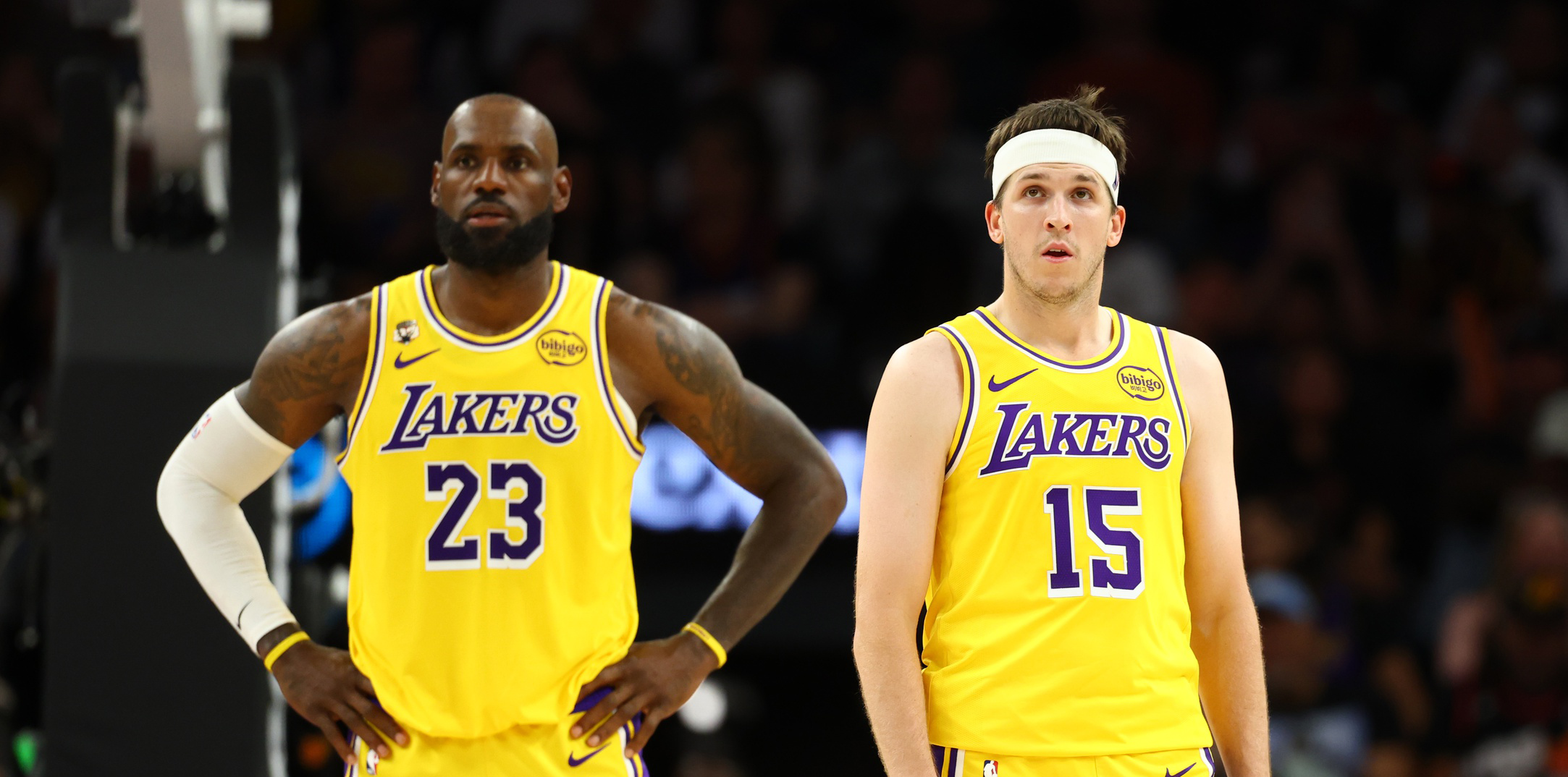
In order for the Lakers to get here with cap space, they’ll have to cut ties with LeBron James. Or, of course, James could make that decision for Los Angeles by retiring, or by choosing to move to another team. This would also mean clearing the books of every other free agent, minus Austin Reaves’ cap hold, and Deandre Ayton and Marcus Smart opting in. But that doesn’t mean all of the other Lakers would be gone. They’d just take care of them using cap space or the Room Exception. Or, as we’ve seen before, that cap space could be used to get a co-star for Luka Doncic and Reaves.

The Nets are very likely to have significant cap space for a second straight summer. Some of this could go toward retaining their own free agents again (Day’Ron Sharpe and Ziaire Williams both have pending team options), but Brooklyn will have lots of room to again act as a clearing house for unwanted salaries for tax and apron teams. Just send some draft picks or young talent with those undesirable deals. The Nets also don’t have control over their own pick for the 2027 or 2028 drafts. That could signal a team that is ready to spend to move the roster forward. Look for a measured approach to spending, as opposed to an all-in one.

Swing Cap Space and Non-Taxpayer Mid-Level Exception Teams – 2 Teams

  1. Atlanta Hawks - up to $32.9 million in cap space

  2. Detroit Pistons - up to $27.9 million in cap space

Atlanta is more likely to go the cap space route than Detroit. The Hawks could also keep C.J. McCollum via an extension, and could pick up their team option for Jonathan Kuminga. Both have proven to be good fits around the Hawks locked-in core group. If McCollum and Kuminga stick in Atlanta, the Hawks will operate over-the-cap, but with the Non-Taxpayer MLE.

The Pistons probably won’t go the cap space route. That would mean clearing the books of a lot of guys who are rotation players. Instead, expect Detroit to stay over the cap, but to still have enough room to use the Non-Taxpayer MLE to bring in some talent. Life is good for the league’s most pleasant surprise.

Non-Taxpayer Mid-Level Exception Teams – 10 Teams

  1. Charlotte Hornets

  2. Dallas Mavericks

  3. LA Clippers

  4. Memphis Grizzlies

  5. Milwaukee Bucks

  6. New Orleans Pelicans

  7. Portland Trail Blazers

  8. San Antonio Spurs

  9. Utah Jazz

  10. Washington Wizards

As per usual, this group features a mix of title contenders, playoff contenders and rebuilding teams.

You have playoff contenders like Charlotte, LA, Portland and San Antonio. They’re in good shape to add a player or two to their rotations, even if they re-sign a few key free agents.

The Mavericks and Bucks are both kind-of, sort-of, semi-rebuilding. Because of Cooper Flagg and Kyrie Irving in Dallas, and Giannis Antetokounmpo in Milwaukee, both of these teams could easily add to aid in a playoff chase next season. And, of course, the ever-present trade swirl around Antetokounmpo will be a thing until it isn’t.

The Pelicans are playing pretty good basketball when they’ve been healthy this season. They’ve got most of their guys coming back. They could be a team that goes into next season thinking playoffs, but it’s less of a sure thing than the Mavs or Bucks are.

The Grizzlies are closer to fully rebuilding than the other teams in this group. They’re likely to look at moving Ja Morant, which could even put Memphis in position to have cap space. But that doesn’t seem overly likely. Bet on a slower-and-steadier rebuild for Memphis.

The Jazz and Wizards both went the pre-agency route. Utah added Jaren Jackson Jr, while Washington traded for Anthony Davis and Trae Young. Both teams think that adding veterans to their younger core players will push them into playoff contention next season. That should see both teams looking to add talent via the Non-Taxpayer MLE.

Swing Non-Taxpayer Mid-Level Exception Teams and Taxpayer Mid-Level Exception Teams – 5 teams

  1. Boston Celtics

  2. Miami Heat

  3. Philadelphia 76ers

  4. Phoenix Suns

  5. Toronto Raptors

These five teams are all playoff contenders, with Boston being a title contender.

The Celtics and Suns both went all the way from the second apron to out of the tax entirely. They took drastically different routes, as Boston traded away most of their players, while Phoenix made a few trades and also waived-and-stretched Bradley Beal. But both are now in great shape. Their rosters are solid, and both could have some spending power this summer. The difference between having the NTLME and Taxpayer MLE will come down to re-signing some key free agents, including Nikola Vucevic for the Celtics and Mark Williams for the Suns.

Miami’s spot here is largely about how much they re-sign Norman Powell for this summer. Powell has been terrific for the Heat. If that contract comes in really high, the Heat will be looking at the Taxpayer MLE. If Miami can get Powell on even a bit of a discount, they could have the full Non-Taxpayer MLE.

Philadelphia has three guys on max deals, plus some key free agents. If they re-sign players like Kelly Oubre Jr. and Quentin Grimes, they’ll be a tax team and maybe able to use the Taxpayer MLE. If those players walk, the Sixers will be able to use the full Non-Taxpayer MLE.

The Raptors are kind of on the other end. They’re more likely to be restricted to the Taxpayer MLE, but they could make a move or two to free up some additional spending power. Look for Toronto to use at least some of the Non-Taxpayer MLE to re-sign Sandro Mamukelashvili, who has become a key rotation player for the Raptors.

Taxpayer Mid-Level Exception Teams – 3 teams

  1. Golden State Warriors

  2. Houston Rockets

  3. Minnesota Timberwolves

Golden State could get themselves into range to use the Non-Taxpayer MLE. However, that seems unlikely. The more likely path is to re-sign Kristaps Porzingis on a short-term deal, while also bringing back a few other free agents. That should leave enough room to use the Taxpayer MLE, while staying under the second apron.

The Rockets have a bit of flexibility, but they’d presumably like to re-sign Tari Eason. That means it could be tight to use even the Taxpayer MLE while filling out the roster. Maybe a move to shed some salary to free up flexibility could be in the cards here.

Minnesota’s team salary should come down enough that they’ll be able to use the Taxpayer MLE. They might even be able to use a chunk of the Non-Taxpayer MLE, but that doesn’t seem very likely, assuming the Wolves re-sign Ayo Dosunmu. They should still be able to add a helpful player either way.

Swing Taxpayer Mid-Level Exception Teams and Second Apron Teams – 7 teams

  1. Cleveland Cavaliers

  2. Denver Nuggets

  3. Indiana Pacers

  4. New York Knicks

  5. Oklahoma City Thunder

  6. Orlando Magic

  7. Sacramento Kings

These are some of the best teams in the NBA. All are playoff contenders, with a few being top-tier title contenders, minus one notable exception.

The Cavs got off money in a series of deals at the deadline. Now, they should be able to stay under the second apron next season, while still maintaining a high-end roster.

Denver doesn’t have a lot of flexibility. If they re-sign Peyton Watson, they’ll be well over the second apron. If Watson walks, the Nuggets could finagle a little flexibility to use the Taxpayer MLE. Look Denver to try and move off some money to free up some flexibility.

Indiana likely won’t end up this expensive by the 2027 trade deadline, but they may start the year out as a very expensive team as they gear up to be a contender again. The biggest thing pushing the Pacers up near the second apron? Having a top-three projected pick in the 2026 NBA Draft. Look for some rebalancing to happen, but it may be in-season before Indiana can avoid the tax yet again.

The Knicks projection is wholly dependent on what happens with Mitchell Robinson. If Robinson re-signs, New York is a second-apron team. If Robinson walks, the Taxpayer MLE could be used to replace him.

The Thunder will have some form of roster transition this offseason. The team again has a multiple first-round draft picks coming (two or three, depending on where the Jazz land), and their roster remains mostly full. They’ve also got a handful of potential major free agents. If OKC re-signs everyone, they’ll probably be a second-apron team. But they’ve got moves to make to keep the core together without spending getting out of hand. Life remains very good for the Thunder, and very scary for the rest of the NBA.

Orlando has added a lot of long-term money to the books through extensions and trades. They could free up some flexibility by shedding some salary, but this team is still going to be pretty expensive. There’s even the possibility of going over the second apron, but don’t expect the Magic to go quite that far. Not until they prove they can be a Finals contender.

Then we have Sacramento. As it stands today, the Kings are over the first apron. Some of that is driven by having a projected top-three pick in the 2026 NBA Draft (a good thing), but most is by having a bloated payroll (a bad thing). Look for trades to be the way for Sacramento, as a team that is clearly starting a new rebuild can’t stay this expensive.

Second Apron Teams (no signing exceptions) – 0 Teams

The Cleveland Cavaliers and Dallas Mavericks both got off enough salary at the trade deadline that they are no longer locks to start the summer over the second apron. This is yet another sign that the second-apron restrictions and penalties are making teams thinking twice around spending over the prohibitive barrier.

 

Taylor VincentMarch 11, 2026

Today the NWSL released the updated competition rules for the upcoming 2026 season which kicks off on Friday. Here’s what changed:

Financial Changes

Per the CBA, the base salary cap is $3.5 million, with the leagues new revenue sharing mechanism bring the overall cap to $3.7 million. 

Teams will continue to phase out the use of Allocation Money by the end of the calendar year, with the exception of expansion clubs Denver and Boston who will be able to spend their monies until the end of 2027. Allocation Money is available to be used IN ADDITION TO the $3.7 million salary cap. 

The NWSL net transfer fee threshold increases to $605,000 and will continue to increase 10% every year. 

Bonus structures will see an out-of-CBA increase in 2026: 

NWSL Shield Winners: $15,000

NWSL Champions: $15,000

Playoff bonuses:

  • Quarterfinalists: $3,750

  • Semifinalists: $7,500

  • Finalists: $11,250

Challenge Cup:

  • Champion: $3,500

  • Runner-up: $2,200

Individual Awards

  • Most Valuable Player: $25,000

  • Rookie of the Year: $20,000

  • Best XI: $10,000

  • Championship MVP: $10,000

  • Goalkeeper of the Year: $10,000

  • Defender of the Year: $10,000

  • Midfielder of the Year: $10,000

  • Golden Boot: $10,000

  • Second Best XI: $5,000

  • Challenge Cup MVP: $2,000

Game Policies

The NWSL has implemented updated procedures regarding gameday heat safety and serious injury protocols, emphasizing clearer communication chains, improved coordination among matchday personnel and additional operational guidelines

The league will be implementing a goalkeeper injury policy for the first time in 2026. In the event of a goalkeeper injury, players from both teams may not approach their team’s technical area. They must either: remain in the area where they were when play stopped; or gather on their team’s side of the midfield center circle. 

New in 2026, VAR decisions will be communicated by referee, who will announce and explain the ruling to fans in the stadium and broadcast viewers.

Top