


.png)


 NEWS
NEWS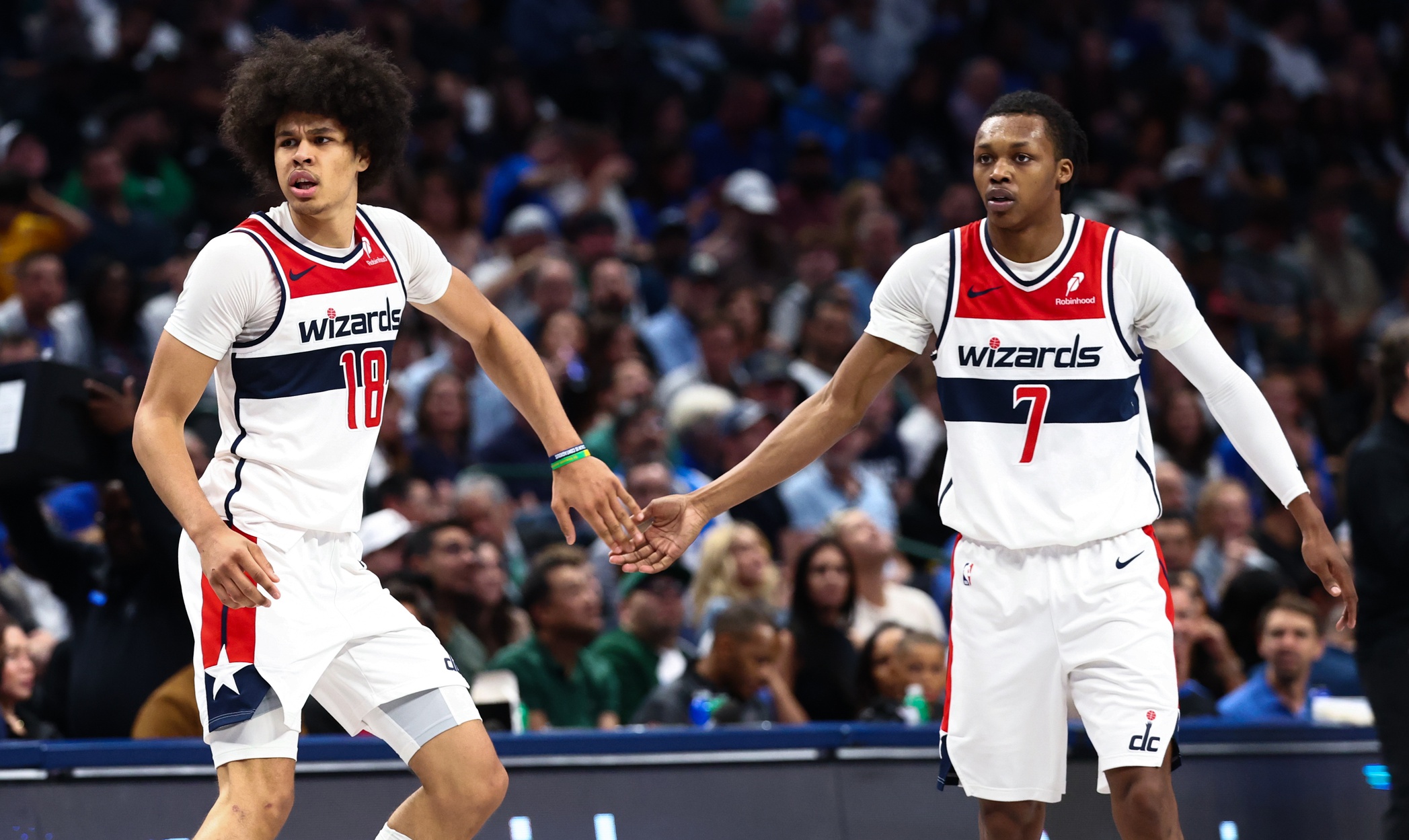 © USA Today Sports
The 2025 NBA offseason and extension periods are behind us. Minus a handful of signings here and there, NBA transactions will stay dormant until trade season opens up in mid-to-late-December. With most of the roster moves behind us for the time being, it’s time to look forward!
The 2026 NBA offseason looks like a bit of a return to form with more teams having flexibility. The 2025 offseason saw the Brooklyn Nets as the only cap space team. The Memphis Grizzlies and Milwaukee Bucks also went the cap-space route, but for direct reasons to renegotiate-and-extend Jaren Jackson Jr. and to sign Myles Turner in free agency, respectively.
After a bit of a worry that the cap might not increase as much as hoped for, the league has already nudged the projection up to a bit. Here are the current projected lines of note for the 2026-27 season:
-
Salary Cap: $166 million
-
Salary Floor: $149.4 million
-
Luxury Tax: $201.7 million
-
First Apron: $210.3 million
-
Second Apron: $223.1 million
Right now, we project six teams to have a cap space. A handful more could join them, depending on their approach to roster-building throughout this season. But here’s what really matters when it comes to projected 2026 cap space, and it’s twofold:
First, we’re talking significant cap space available this summer. These teams are in range to offer max deals to free agents. That’s huge for potential movement.
Second, and even more crucial, some of the NBA’s glamour teams are on here. Both Los Angeles teams project to have cap space, and when the Clippers and Lakers have space, things tend to happen. The Chicago Bulls are in the mix. Then, you have the rebuilding teams like the Brooklyn Nets, Utah Jazz and Washington Wizards
Now, to be fair, it’s not exactly a marquee free agent class. That’ll more likely come in 2027. But there are a handful of big-name players who could hit free agency next summer. There are also several potential interesting restricted free agents that cap space teams could pursue
And, as always, a weaker free agent class doesn’t mean having spending power is useless. With the Apron Era fully upon us, NBA teams are embracing creativity with their rosters more than ever. Trades will always be a factor, and having cap space makes you a more available trade partner than a team that is over the cap.
With all that said, here’s how things look today for 2026 spending power around the NBA. This will change throughout the season. Teams will make decisions about the future up through the trade deadline. That will create more spending power for some, while using it up for others.
(Note: These projections are made using the noted cap and tax figures above, draft pick cap holds based on ESPN’s BPI projected standings and a projection on all option and guarantee decisions by players and teams. No extensions or trades have been projected. We will call out where those types of situations could impact a team projection.)
Cap Space Teams – 6 Teams
-
Washington Wizards: $80.9 million
-
LA Clippers: $67.6 million
-
Los Angeles Lakers: $55.6 million
-
Utah Jazz: $48.4 million
-
Brooklyn Nets: $44.4 million
-
Chicago Bulls: $35.0 million
This is more like it. A bunch of teams in range of offering max contracts. Some of the NBA’s biggest markets too. This should be fun!
The Wizards approach of taking on money in exchange for draft assets could reduce this figure by a big chunk before the offseason. Washington isn’t quite ready to win just yet. That makes them a more of a trade partner than a free agency spender.
The Clippers set everything up to wipe the books clean either in 2026 or 2027. Given how miserable this season has started for LA, that could happen sooner rather than later. A hard reset is coming either this year or next year. If the Clippers delayed until 2027, they could have a whopping $137 million in cap space. But that would likely mean suffering through consecutive down seasons without control of their own first-round pick. Bet on moves coming this summer.
In order for the Lakers to get here with cap space, they’ll have to cut ties with LeBron James. Or, of course, James could make that decision for Los Angeles by retiring. This would also mean clearing the books of every other free agent, minus Austin Reaves’ cap hold and Marcus Smart opting in. But that doesn’t mean all of the other Lakers would be gone. They’d just take care of them using cap space or the Room Exception. Or, as we’ve seen before, that cap space could be used to get a co-star for Doncic and Reaves.
Utah has been setting up to make a free agency run for a while now. They’re not nearly as bad as the Wizards or Nets, but the Jazz aren’t quite ready to go all in either. This projection includes clearing the books of all free agents, except for Walker Kessler. Given that leaves pretty much Lauri Markkanen and rookie scale guys, Utah should have a lot of spending power.
The Nets are very likely to have significant cap space for a second straight summer. Some of this could go to retaining their own free agents again (Day’Ron Sharpe, Ziaire Williams), but Brooklyn will have lots of room to act as a clearing house for unwanted salaries for tax and apron teams. Just send some draft picks or young talent with those undesirable deals.
Chicago can get to a good chunk of spending power without sacrificing either Coby White or Ayo Dosunumu. This factors in both players’ cap holds staying on the books. It would mean renouncing veterans like Nikola Vucevic, Jevon Carter, Kevin Huerter and Zach Collins, among others. Some of them could return, or the Bulls could pivot towards a big addition to their young core.
Swing Cap Space and Non-Taxpayer Mid-Level Exception Teams – 1 Team
The Pistons probably won’t go the cap space route. That would mean clearing the books of a lot of guys who are rotation players. Instead, expect Detroit to stay over the cap, but to still have enough room to use a chunk of the Non-Taxpayer MLE to spend. Life is good for the league’s most pleasant surprise.
Non-Taxpayer Mid-Level Exception Teams – 8 Teams
As per usual, this group features a mix of title contenders, playoff contenders and rebuilding teams.
You have playoff contenders like Miami, Milwaukee, Phoenix, Portland and San Antonio. They’re in good shape to add a player or two to their rotations, even if they re-sign a few key free agents.
The Hornets and Pelicans are rebuilding. Charlotte might seem a bit surprising to be here, but they’ve got a lot of rookie deals, plus a few extensions on their books. The Pelicans are still carrying a few high-priced veteran salaries. If either of these teams moves off long-term money before the trade deadline, they could be cap space teams.
Then we have Sacramento. As it stands, the Kings don’t have a path towards cap space. But they aren’t overly expensive, which is a good thing. They’re just kind of stuck in the middle. If they clear out some long-term salary, they’d have a chance at cap space. But Sacramento hasn’t really operated that way for a while now.
Swing Non-Taxpayer Mid-Level Exception Teams and Taxpayer Mid-Level Exception Teams – 4 teams
This is a smaller group than usual. As teams look towards cap space or have loaded up with long-term salary, the semi-expensive group has shrunk.
Atlanta is good now and they’ve got pretty good flexibility. A lot here will depend on what happens with Trae Young and Kristaps Porzingis. If they both come back on big numbers, the Hawks will probably have the Taxpayer MLE. If only one returns, then the NTMLE is in play. If by chance, and it’s a slight chance, both Young and Porzingis leave, the Hawks could vault all the way to being a cap space team (with around $39 million to spend).
Boston and Indiana are the gap-year teams. Both are playing without their superstars. The Celtics have hung in there, while several additional injuries have sunk the Pacers. For Boston, a lot will depend on what happens with their roster through the trade deadline. If they move off money, they could have the NTMLE to spend. If not, they could then look to take on money next year, when the team will be better positioned to win.
The Pacers projection is mostly about what happens with Bennedict Mathurin. If he re-signs, Indiana is probably looking at the Taxpayer MLE. If Mathurin leaves, they’ll have the NTMLE to spend to replace him.
Philadelphia is kind of in the middle of this group. They’re playing well, but they’re also carrying a lot of large, long-term salary. They also have Kelly Oubre Jr. and Quentin Grimes hitting free agency. If even one of them is back, the Taxpayer MLE could be all the Sixers have to spend. If both are back, they’ll be pushing up against the second apron. If neither return, the NTMLE is fully in play.
Taxpayer Mid-Level Exception Teams – 4 teams
The Rockets have a bit of flexibility, but they’d presumably like to re-sign Tari Eason. That means it could be tight to use even the Taxpayer MLE while filling out the roster. Maybe a move to shed some salary to free up flexibility could be in the cards here.
The Grizzlies are in a weird spot. They aren’t even likely to be a luxury tax team, because their roster is pretty full. Memphis also has two first-round picks in the 2026 NBA Draft. That means the Grizzlies won’t be spending much more than the Taxpayer MLE, if even that much.
Minnesota’s team salary should come down enough that they’ll be able to use the Taxpayer MLE. They might even be able to use a chunk of the Non-Taxpayer MLE, but that doesn’t seem very likely. They should still be able to add a helpful player either way.
Toronto has a lot of long-term money on the books, plus they’ve had extensions and re-signings over the last couple of years. They could possibly use the NTMLE, but they won’t want to go into the tax just yet. That means it’s more likely the Taxpayer MLE to fill a backend rotation spot.
Swing Taxpayer Mid-Level Exception Teams and Second Apron Teams – 5 teams
These are some of the best teams in the NBA. All are playoff contenders, with a few being top-tier title contenders.
Denver doesn’t have a lot of flexibility. If they re-sign Peyton Watson, they’ll be well over the second apron. If Watson walks, the Nuggets could finagle a little flexibility to use the Taxpayer MLE. Look for a salary dump, either at the trade deadline or the opening of the offseason, to free up some wiggle room here.
The Warriors are dancing around the second apron. If Al Horford opts in, it’ll be a couple of minimum deals to fill out the roster. If Horford opts out, or retires, the team could use the Taxpayer MLE to replace him, then fill out with minimum.
The Knicks projection is wholly dependent on what happens with Mitchell Robinson. If Robinson re-signs, New York is a second-apron team. If Robinson walks, the Taxpayer MLE could be used to replace him.
The Thunder will have some transition happening. The team again has a bunch of first-round draft picks coming (three or four, depending on where the Jazz land), and their roster remains mostly full. They’ve also got a handful of major free agents. If OKC re-signs everyone, they’ll probably be a second-apron team. But they’ve got moves to make to keep the core together without spending getting out of hand. Life remains very good for the Thunder, and very scary for the rest of the NBA.
Orlando has added a lot of long-term money to the books through extensions and trades. They could free up some flexibility by shedding some salary, but this team is still going to be pretty expensive. There’s even the possibility of going over the second apron, but don’t expect the Magic to go quite that far. Not until they prove they can be a Finals contender.
Second Apron Teams (no signing exceptions) – 2 Teams
This group continues to shrink. It went from about six teams to three teams. Now, only the Cavs seem certain to be a second apron team.
Cleveland is very good, but they are also wildly expensive. They’ve got three guys on max deals, and three key role players on sizable contracts. If the Cavaliers don’t make a Finals run this year, they’re not going to stay this expensive. No idea who goes, but they won’t run it back again for a third year with this same pricey core group.
Dallas is surprisingly expensive, given they are struggling mightily right now. Anthony Davis an Kyrie Irving make up the bulk of the spending, but extensions for P.J. Washington and Daniel Gafford are kicking in too. Cooper Flagg makes a lot on his first-overall pick rookie scale deal. And then you have aging role players like Klay Thompson and Caleb Martin with deals around the NTMLE. The Mavs won’t be this expensive for a team that is scuffling. Look for the moves to offload salary to start at the trade deadline, and to continue into the offseason, as a new front office rebuilds the team around Flagg.