


.png)


 NEWS
NEWS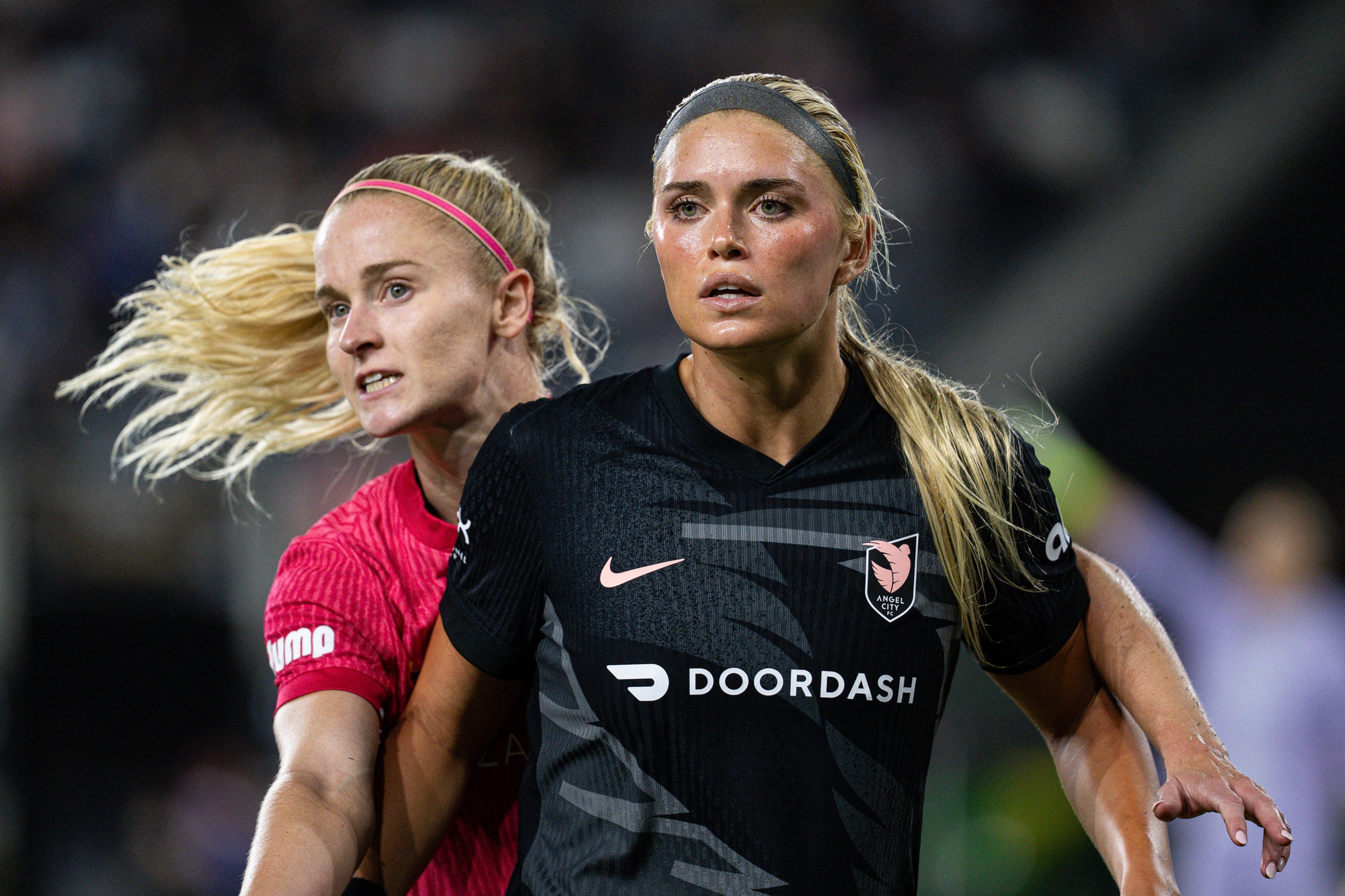 © USA Today Sports
Building off of the Evolution of NWSL Salaries and Roster Rules, here’s an extensive view into the improvement of NWSL player contracts (SPA’s) and player’s rights since the league formed in 2013.
Contracts
In the inaugural season, all contracts (that were announced) were single year contracts. Teams had the ability to waive players at any time prior to the roster freeze. Ahead of the 2014 season, the NWSL began to see contracts for one-year with one-year club options. The league also introduced the only caveat on waiving that teams were required to have a ‘favorable’ exit physical.
The 2016 season marked the first time that guaranteed contracts popped up in the verbiage of the roster rules. Along with it came the rules on buying out guaranteed contracts: during the offseason, a club could buy out one guaranteed contract without impacting salary cap and during the season, the buyout amount would be charged against the club’s salary cap.
A majority of contracts 2014 or later were one year with one year club options until 2020 expanded on the contract rules allowing three year contracts with no more than one option year, but could be 3+1. So a player could be signed to a 2+1 contract, but not a 1+2 contract. The 2020 season also marked the lifting of a limit on a team’s number of guaranteed contracts although the league never officially published what that limit was in prior years.
In 2021, the rules around guaranteed contracts evolved once again, updating the buyout clause so that teams could exercise a buyout during the season without impacting the salary cap.
Also as a part of the 2020 roster rules being updated, player contracts were no longer permitted to include “additional work” (for example, performing at camps, etc.). This was expanded upon in 2022 in the first ratified CBA so that any additional work up to $15,000 per player wouldn’t count toward the salary cap.
The latest CBA, which was ratified last August, has all new player contracts are required to be guaranteed and there is language around players who are on remaining semi-guaranteed contracts being able to receive severance pay if their contracts are terminated early for reasons other than misconduct.
Playing Rights
As a reminder, from 2013 through the 2021 season, there were Federation Allocated players. Each year these players were signed to contracts ahead of the season, and their salaries were subsidized by their National Team Federation (U.S., Canada, or Mexico). The unfortunate consequence that came with this system is that these allocated players were basically tied to their teams if they wanted to play in the U.S. and had little to no autonomy for where they would be playing.
Outside of Allocated players, there wasn’t verbiage in the Roster Rules about clubs retaining player rights until the 2015 rule that once preseason begins, teams had to make a decision on non-contracted players whose rights they held within 10 days once the player reports. In 2016, this window was expanded to 15 days, but in 2018 the league removed the limit entirely.
The 2016 season also marked the first sighting verbiage around clubs retaining the rights to a player until the next preseason following the expiration of a contract as long as attempts to re-sign a player was made. Along with this came the ‘Right of First Refusal’ where ‘the club who attempted to sign the player maintains a Right of First Refusal to acquire the player in the event she is subsequently signed to an NWSL contract.’
The 2022 CBA changed things dramatically, Allocation ended, free agency was defined, and for any player eligible to be a free agent, new contract option years must be mutual options (instead of club).
2022 Free Agency:
- In 2023, individuals who have six years of service with the NWSL will receive full Free Agency;
- In 2024, individuals who have three years of service in the NWSL will receive Restricted Free Agency; and
- In 2024, individuals who have five years of service in the NWSL will receive full Free Agency.
Full or unrestricted free agency is what is considered free agency in most other sports leagues. Restricted free agency is where the right’s holding team has 7 days to match an offer by another team or the player can sign elsewhere.
Last August’s CBA once again changed the landscape dramatically, giving collegiate players the right to choose where they wanted to play with the elimination of the Draft starting with the 2025 season. It also gave immediate unrestricted free agency for all players.
Minors in the NWSL
You can’t talk about player’s rights in the NWSL without talking about the progression of players under 18 years of age joining the league.
In 2018, the Roster Rules included the ability for teams to place foreign minors on discovery lists, given that the player would turn 18 before the end of the next transfer window. Example: Player A turns 18 on July 5 (which is during the transfer window). They would’ve been discovery eligible any time after the close of the previous transfer window, provided the contract begins July 5th and arrival of ITC.
Three years later in 2021, a 15-year old Olivia Moultrie successfully sued the NWSL for her right to play in the league, she was made eligible for the discovery process, and the OL Reign were able to secure her rights due to discovery order. The Reign then traded Moultrie to Portland for a third-round draft pick — definitely under market value — but she was able to sign a three year contract with the team that she had spent multiple years training with.
The next season, a 17-year old Jaedyn Shaw joined the Washington Spirit preseason and started looking at how she could enter the league. In July 2022, the NWSL allowed Shaw to enter via the discovery process, but San Diego was ahead of Washington in the discovery order and the teams were not able to come to an agreement on the terms of a trade for her rights. Shaw would then become the youngest player to score in their NWSL debut.
A few months later, the NWSL announced the U18 Entry Mechanism to allow players under 18 years of age to sign with a team of their choice. Teams were limited to two U18 players and unlike international spots, these spots were not tradeable. Ahead of the 2024 season, the U18 Entry has expanded to four spots per team. Since the mechanism's creation, 17 players have used it to join the league.
Loans
For the first two seasons of the NWSL, loans out of the NWSL were only referenced to in terms of allowing players to play elsewhere during the NWSL offseason. This was expanded upon in 2015 with a specific section for loaning NWSL players to the WPSL during the season, but all loans needed to be through the end of the NWSL season. There is nothing in the rules for 2015 which mention teams getting roster or salary cap relief with the loan.
The following year, loans outside of the league became what we now know them as, where a player can be loaned at any time to a club outside the league (subject to that federation’s transfer window), and subject to the consent of the player. These loans come with roster relief and salary cap relief.
Player’s Rights
There wasn’t much mention about how player’s rights were changing in the roster rules until 2020 when the league assuring housing and cars year around (cars being supplied were optional, but if supplied needed to be year around). Prior to this, teams supplied housing, but only during the season.
The 2022 CBA was truly groundbreaking for the players, it defined the maximum number of games in a season, guaranteed 42 days of vacation throughout the year (offseason included), and required a 7-day in-season break. It also guaranteed parental leave for new birth or adoptive parents, with leave and salary continuation for pregnant players and mental health leave for players up to 6 months. Additionally, it required that the league employ a medical director, and all teams employ Team Physician, Massage Therapist, Sports Scientist, Sports Psychologist, and Mental Health Clinician.
In 2023, the roster rules expanded on the CBA so that players on mental health leave don’t count towards the active roster.
The 2024/2025 CBA continued to build on this, with rules around workload management and specifically game frequency, travel conditions, time off, and standards for charter flights. It also changed things around team-provided housing with the Locality Cost of Living Adjustment and Supplemental Stipend (learn more here).
Closing Thoughts
Although the league has made great progress on a number of fronts over the years, there is still work to be done. The 2025 season has seen players forced to finish a game after seeing a teammate/friend collapse on the field as well as the league trying to force a match in the heat against its own competition rules/guides. The player’s physical safety needs to be a priority for the league as it continues to progress, especially if it wants to claim being ‘the best league in the world’ as the commissioner Jessica Berman keeps stating.